Seated Dumbbell Lateral Raise
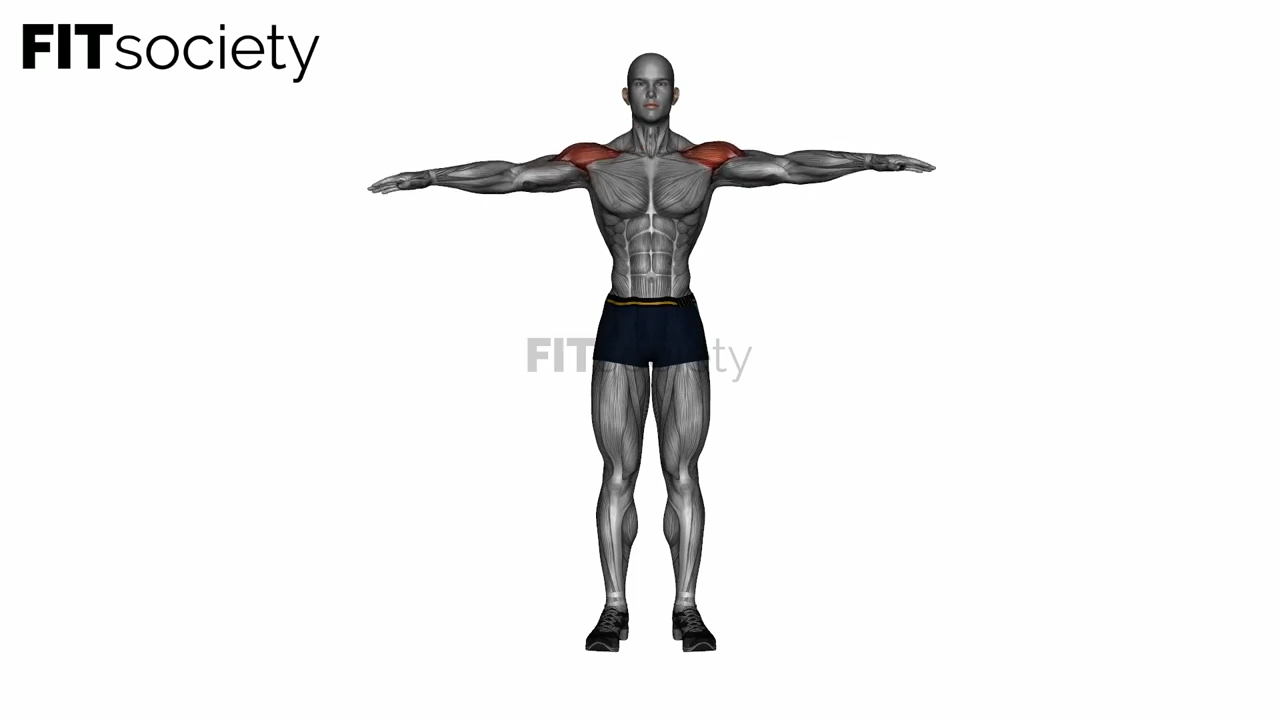
Lateral raises (also called side raises) are primarily performed to place greater emphasis on the middle head of the deltoid (shoulder muscle).
In addition to the large shoulder muscle itself, various muscles around the shoulder joint are recruited to stabilize it. Smaller stabilizing muscles such as the four muscles of the rotator cuff, as well as the larger trapezius, which pulls the shoulder joint upward.
In the arms, the biceps and triceps help stabilize the position of the forearm relative to the upper arm. The muscles in the forearms then stabilize the wrist joint to control the dumbbells or barbell.
In this variation, lateral raises are performed seated with dumbbells as resistance.
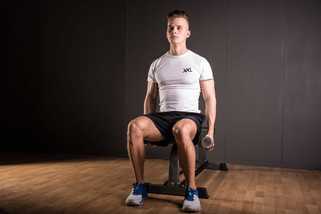
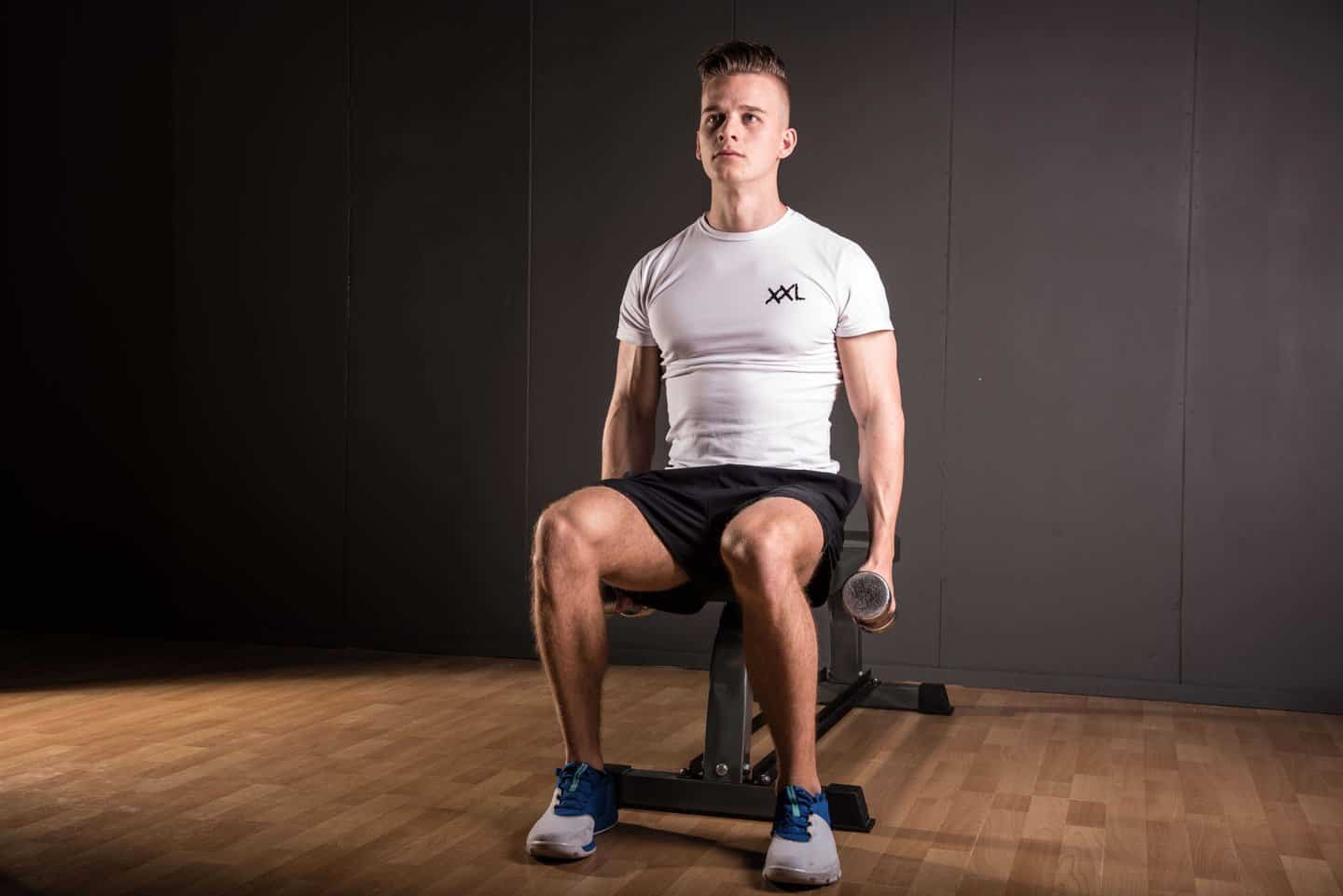
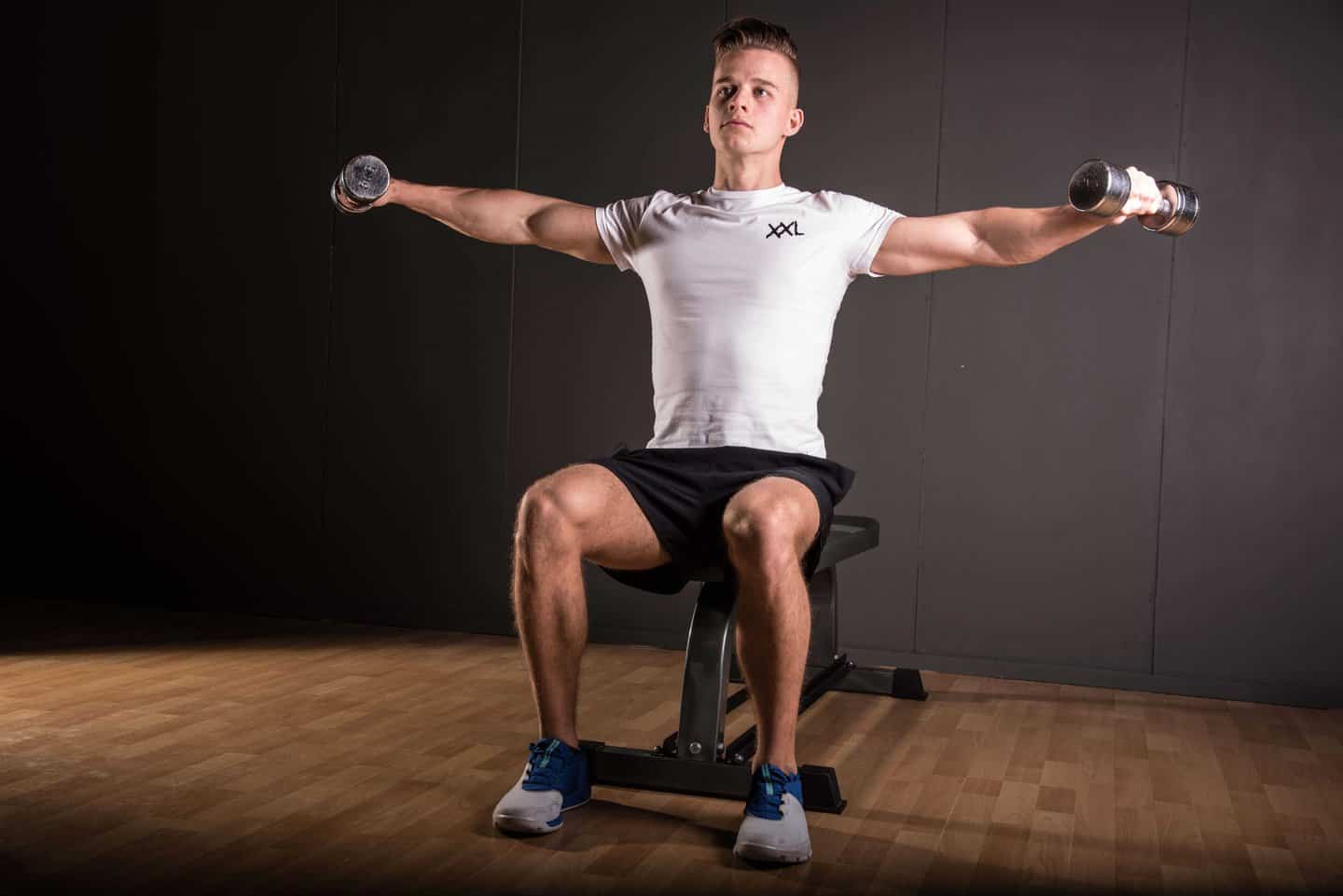
Execution seated dumbbell lateral raise
-
1
Sit with the dumbbells in your hands on a bench, with your arms able to hang freely at your sides. Keep your arms beside your body and your thumbs pointing forward (palms facing inward, 'neutral grip').
-
2
Keep your arms slightly bent beside your body.
-
3
Move your arms outward and upward. Maintain the same slight bend in your arms. Keep the rest of your body as still as possible.
-
4
Finish at the height just before your shoulders feel pinched. Keep your elbows slightly below shoulder height.
-
5
Hold here for 1–2 counts.
-
6
Lower your arms in a controlled manner over 2–3 counts until you feel there is no more resistance (so do not bring them all the way back against your body).
-
7
Repeat.
Seated dumbbell lateral raise
Muscles involved:
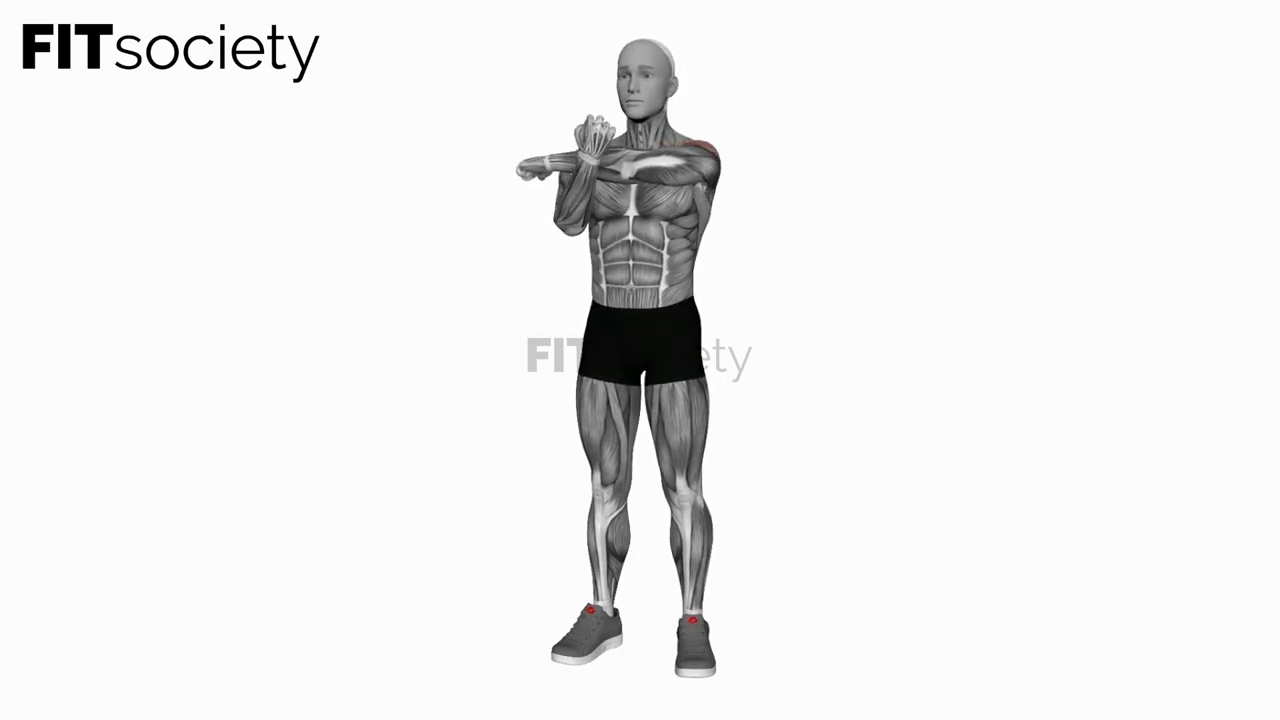
Shoulder joint:
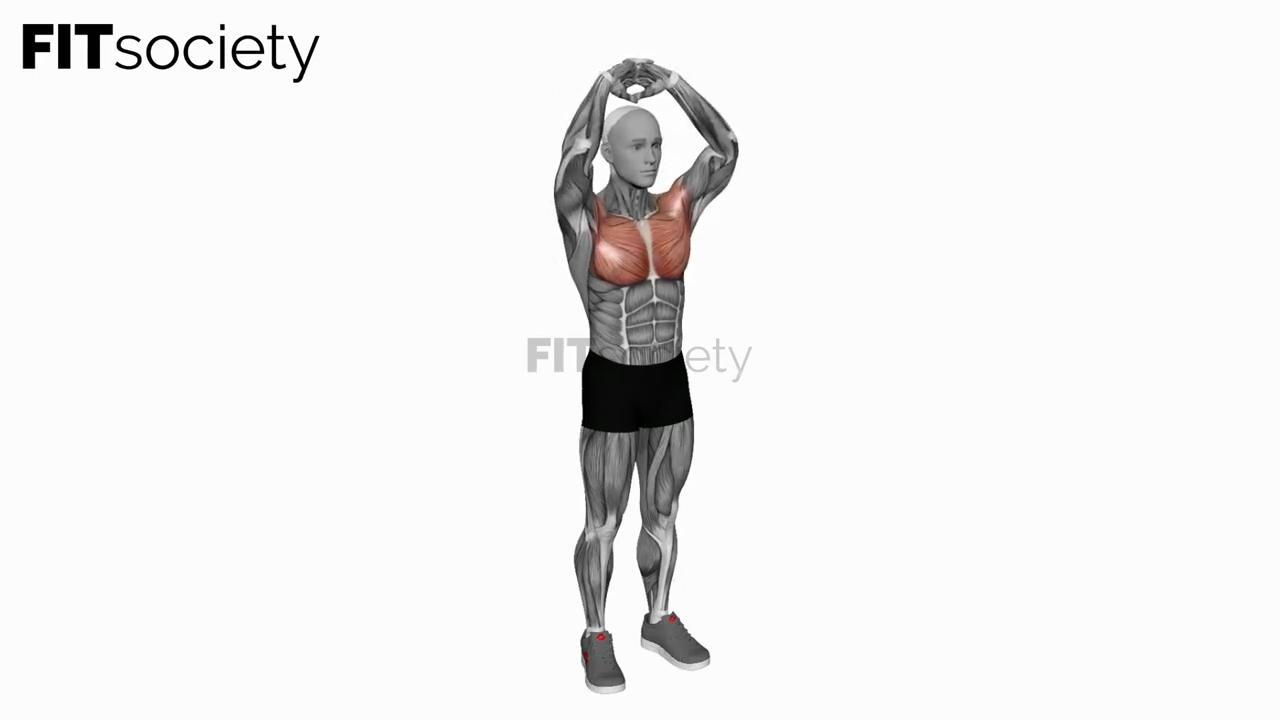
Chest:
Arms
Abdomen:
(Lower) back and spine:
Seated dumbbell lateral raise technique
"For the side of the shoulder"
The deltoid shoulder muscle pulls on the upper arms from three directions. Lateral raises are usually performed by people who want to train the 'middle' of the shoulder with them. However, (sparse) EMG measurements show that the anterior head also does most of the work during lateral raises (while the posterior head works almost as hard as the middle head). The difference between the contribution of the different heads is nevertheless much smaller than, for example, during the shoulder press.
Arms bent or straight
The more extended your arms are, the farther your hands are from you, and the heavier the weight they hold becomes. Lateral raises with straight arms can therefore be heavier than lateral raises with a slightly heavier weight and bent arms. Normally, you want to make the exercise more challenging through proper execution, which would mean extending your arms as much as possible.
However, the more you extend your arms, the greater the stress on the elbow joint and the muscles that need to stabilize it. Bending your arms slightly more can make it easier to focus fully on your upper arms.
Keep your wrist at elbow height
Rotating the shoulder inward or outward reduces the contribution of the middle head of the deltoid. If your wrist is higher than your elbow (at the highest point of the exercise), your shoulder is externally rotated and the anterior head works harder. If your wrist is (significantly) lower than your elbow, your shoulder is internally rotated and the posterior head works harder.
Lift, don't swing
Because you move the weight primarily outward during the first part of the exercise, the muscles do not yet have to work very hard. Gravity begins to pull harder as the weight rises. The endpoint of the exercise is therefore the most difficult. Unfortunately, this point is often neglected.
A common mistake during lateral (and front) raises is performing the exercise ballistically. The arms are thrown outward with a swinging motion, and momentum then helps bring the arms farther upward. At the top, the weight is barely held and is simply allowed to fall back down. Sometimes you even see the legs being used to generate momentum.
This is not a way to make the shoulder muscles work. It is a way to lift a weight with as little effort as possible. The shoulders then only have to work at the top of the movement, while the way down (the eccentric phase) is almost completely neglected.
Instead, raise the weight in a controlled manner. You should be able to hold the weight still for a few counts at every point in the movement; if not, you are training with too much weight. At the top of the movement, actually hold the weight for 1 to 2 counts. Then lower it in a controlled manner over about 3 counts. Keep the rest of your body as still as possible to prevent 'cheating'.
The seated variation makes cheating more difficult. The legs cannot help, and the extent to which the torso can be brought backward is limited by the backrest.
Alternatives
Run your fitness business with more structure
- Planning, member management and coaching in one platform
- Built for coaches, studios and gyms
- Fewer separate tools, more overview