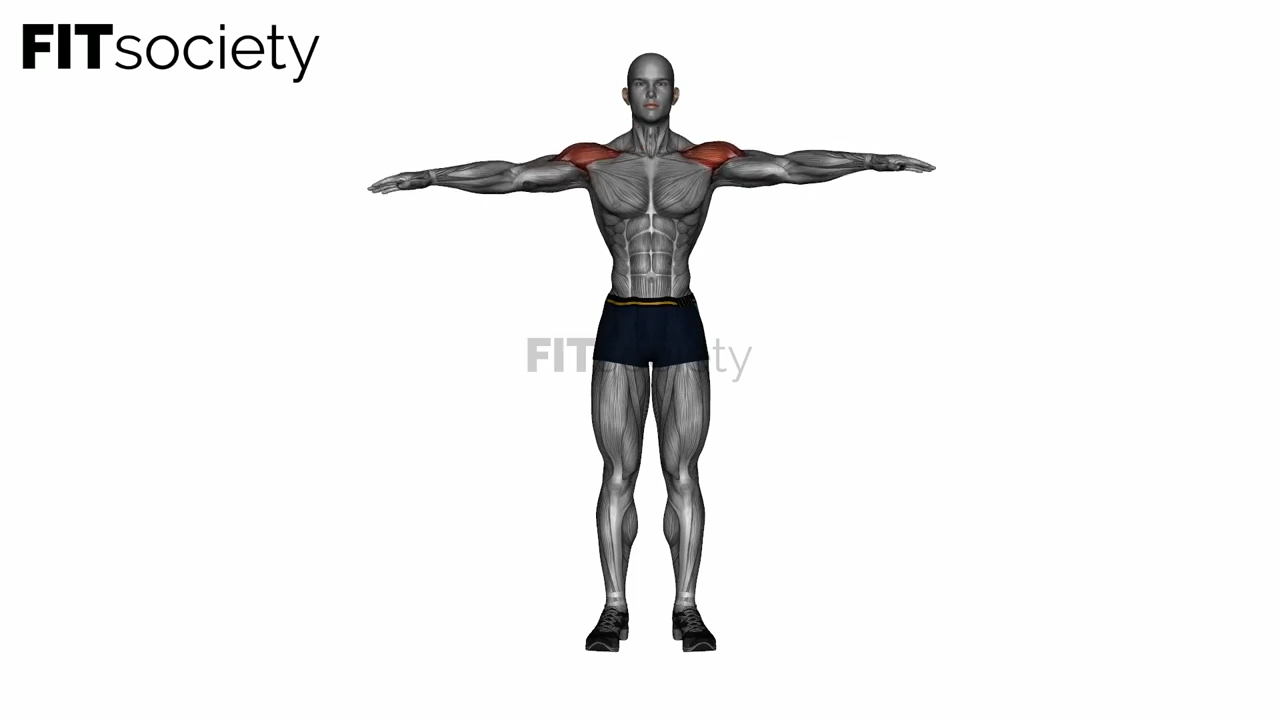
Seated Cable Bent-Over Fly
The seated cable bent-over rear-delt (or reverse) fly, also called the bent-over cable side raise, is an exercise targeting the rear head of the deltoid (shoulder muscle). The middle head and, to a lesser extent, the front head also assist in this movement but are activated less.
Many other muscles assist in bringing the elbows and shoulders backward, as well as in maintaining the bent-over position. The latissimus dorsi plays a role in bringing the elbows backward.
The biceps, triceps, brachialis, and brachioradialis assist in stabilizing the arm. In this seated variation, the core and legs provide less stabilization than in the standing variation. Using the cable causes the higher resistance to occur earlier in the exercise than when using dumbbells.
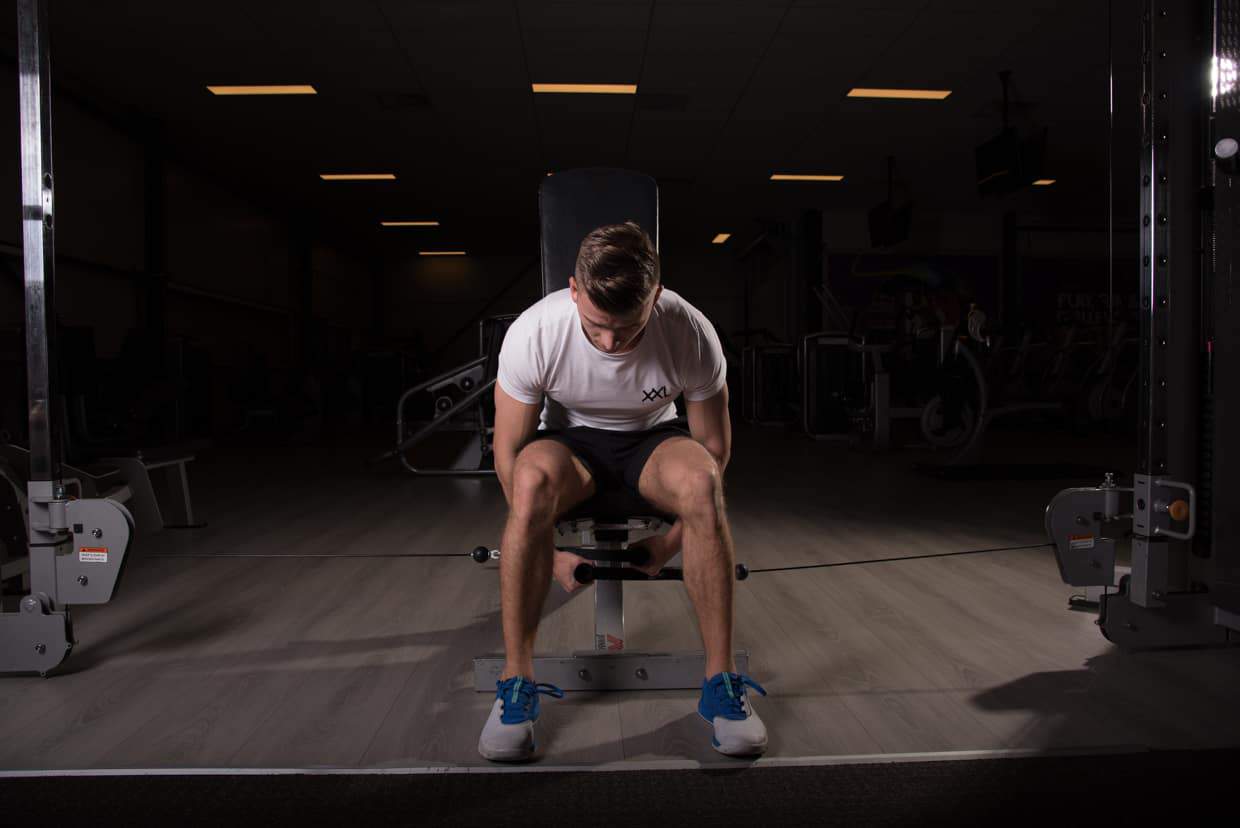
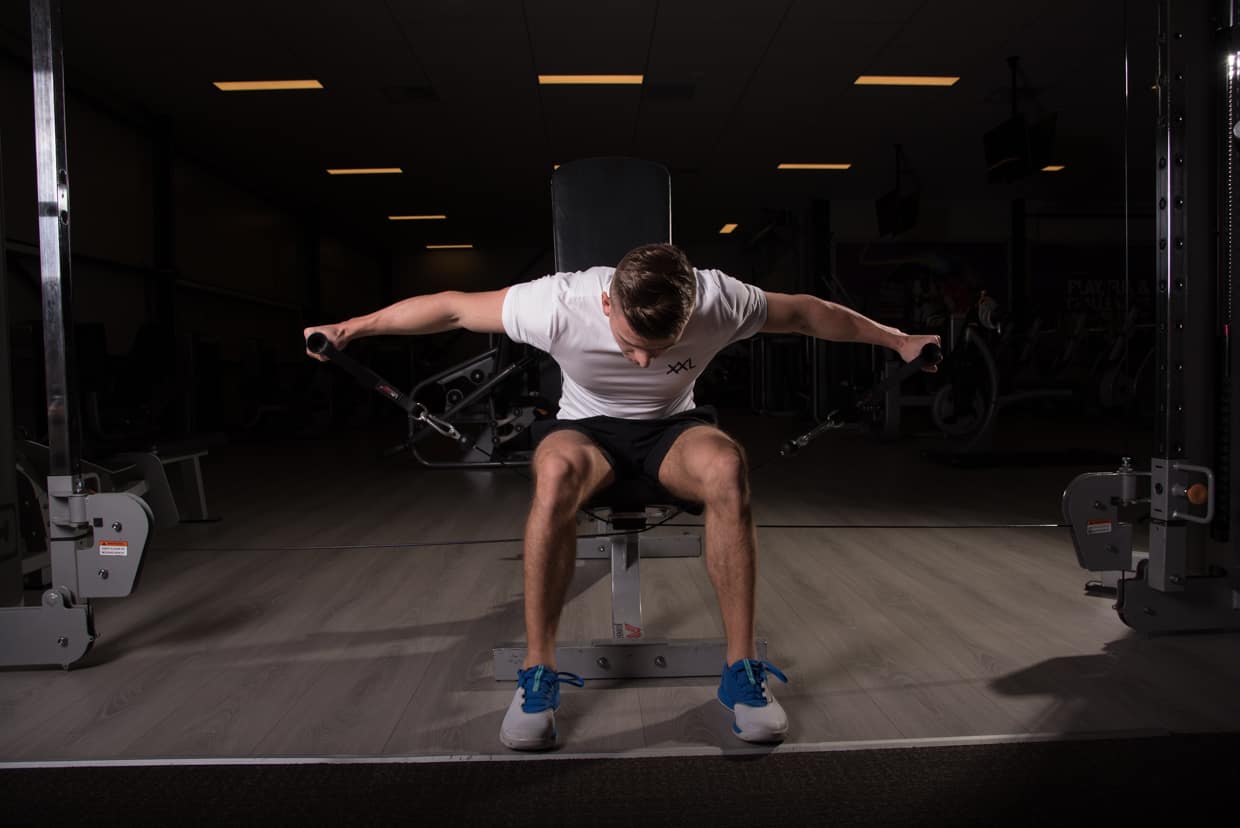
Seated cable bent-over fly execution
-
1
Begin the exercise by bringing your elbows outward and backward, slightly below shoulder height.
-
2
Controlled, return your hands to the starting position.
Seated cable bent-over (rear-delt) fly / reverse fly
Muscles involved:
Back and shoulder joint:
- Deltoid (especially rear head)
- Rotator cuff (subscapularis, supraspinatus, infraspinatus, and teres minor)
- Levator scapulae
Arms:
- Triceps
- Biceps
- Forearm muscles
Back:
- Latissimus dorsi (the broad back muscle)
- Trapezius (especially middle)
- Rhomboids (rhomboid muscles beneath the trapezius)
Seated cable bent-over fly setup
- Place a bench in the middle of the cable machine.
- Make sure the front of the bench is on the imaginary line between both cables.
- Place the pulleys in the lowest position and attach the single handles.
- Grasp the handles on either side and sit on the edge of the bench.
- Bend forward until your lower abdomen makes contact with your thighs.
- Bring your hands together underneath your legs and switch handles so that your left hand holds the right cable.
- Look at a point diagonally in front of you on the floor so that your head remains in a neutral position relative to your torso.
Seated cable bent-over fly technique
Bent-over side raises are very similar to the rear-delt row. Both exercises target the rear head of the shoulders. With side raises, however, the bend in the arms can be kept constant. With the barbell rear-delt row, the arms are bent and extended, causing the biceps to work harder. In addition, the range of motion when using dumbbells is greater at the beginning of the exercise than with a barbell. The cables cause the elbows to be pulled mainly outward, which isolates the shoulders more from the contribution of the latissimus dorsi.
Prevent this from becoming an exercise for the legs, glutes, and lower back by allowing them to assist. Therefore, try to ensure that only your arms and shoulders move during this exercise. Also, do not bend farther forward while lowering the weight and then allow the glutes and lower back to assist when pulling it upward.
Alternatives
- Barbell lying rear-delt row
- Dumbbell lying rear-delt row
- Standing bent-over side raise
Run your fitness business with more structure
- Planning, member management and coaching in one platform
- Built for coaches, studios and gyms
- Fewer separate tools, more overview