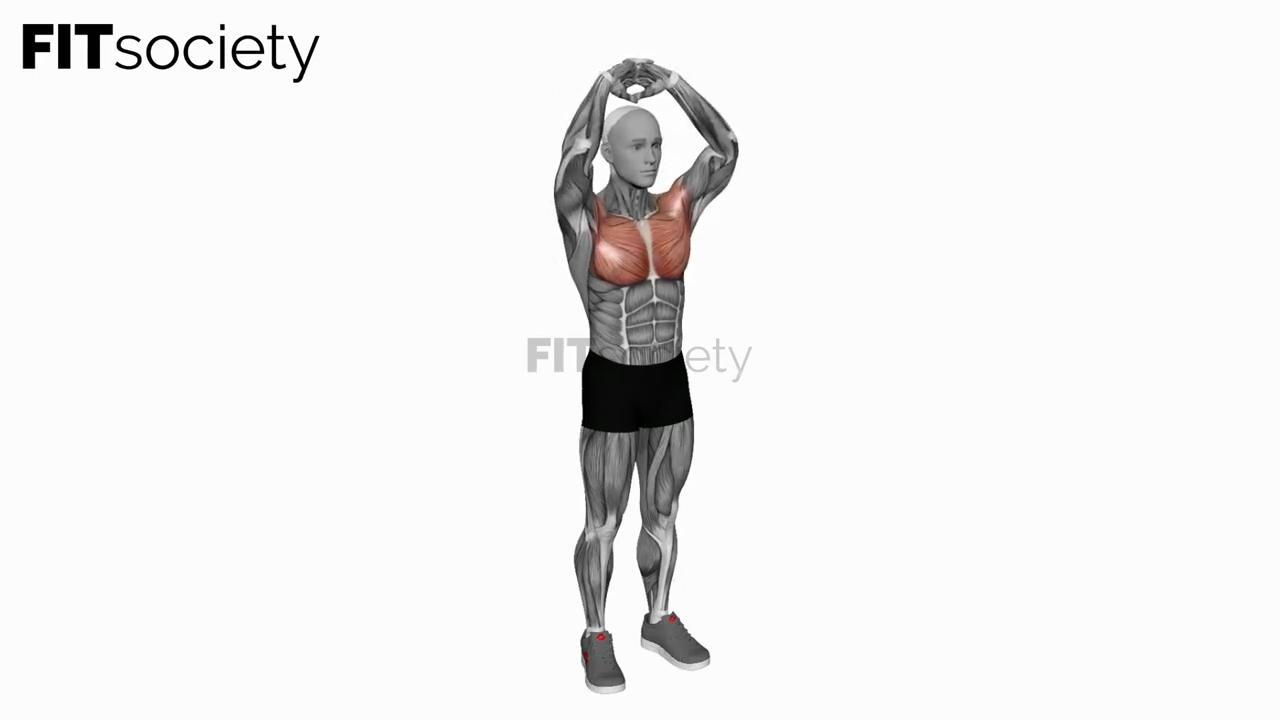
Pike Press
The pike press, also called a Pike push up, falls somewhere between a shoulder press and a push up in terms of exercise. In other words, between a handstand push up and a normal push up. A handstand push up is, after all, a shoulder press using body weight as resistance. The adjusted angle therefore places more emphasis on the shoulders and upper fibers of the chest. The middle and lower fibers receive less emphasis.
The pike press up brings the upper body almost into the position of a handstand push up while the feet maintain contact with the floor. Besides reducing the amount of weight supported, this also allows the chest muscles to contribute more actively than in a handstand.
Although lighter than a handstand push up is the pike press is considerably more difficult than a normal push-up. Therefore, start from a normal push up and gradually increase the distance between your hands and feet in small steps. Also use a soft surface or a cushion.
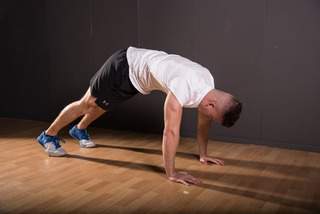
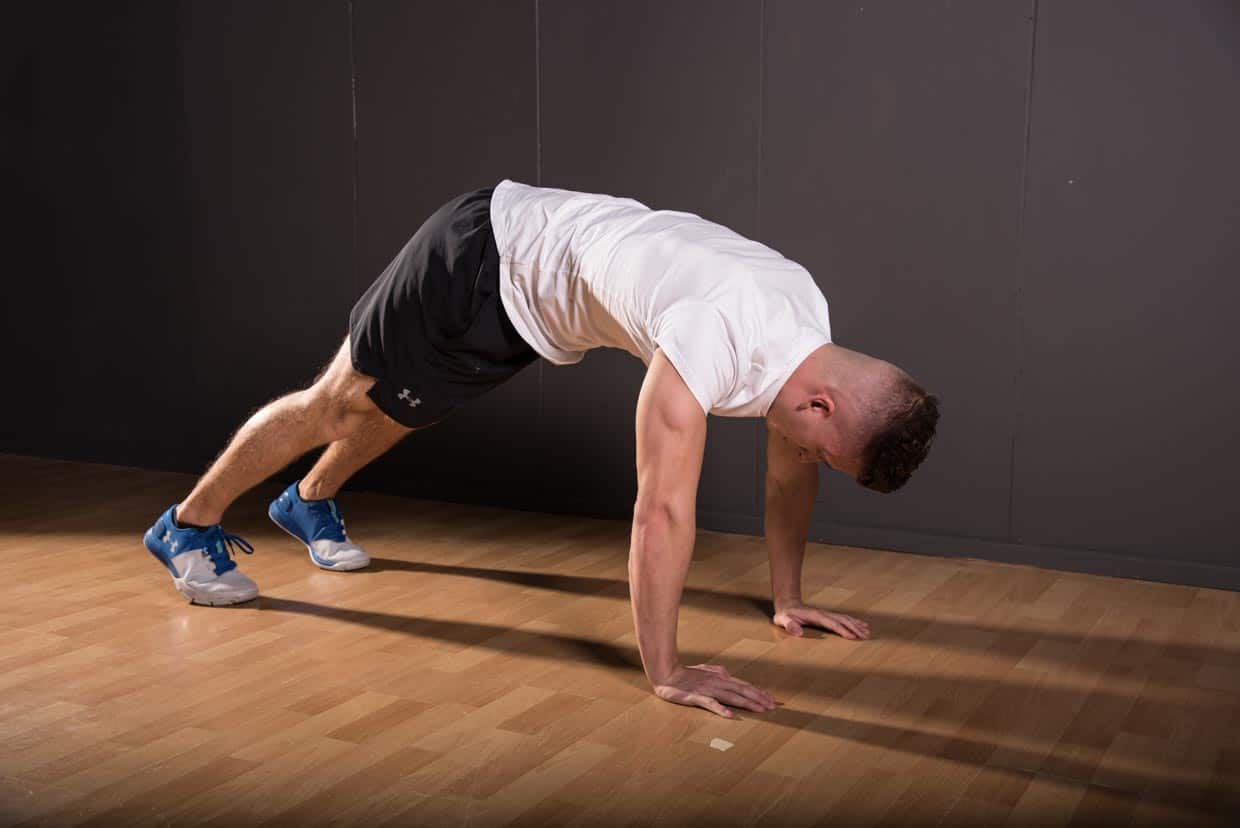
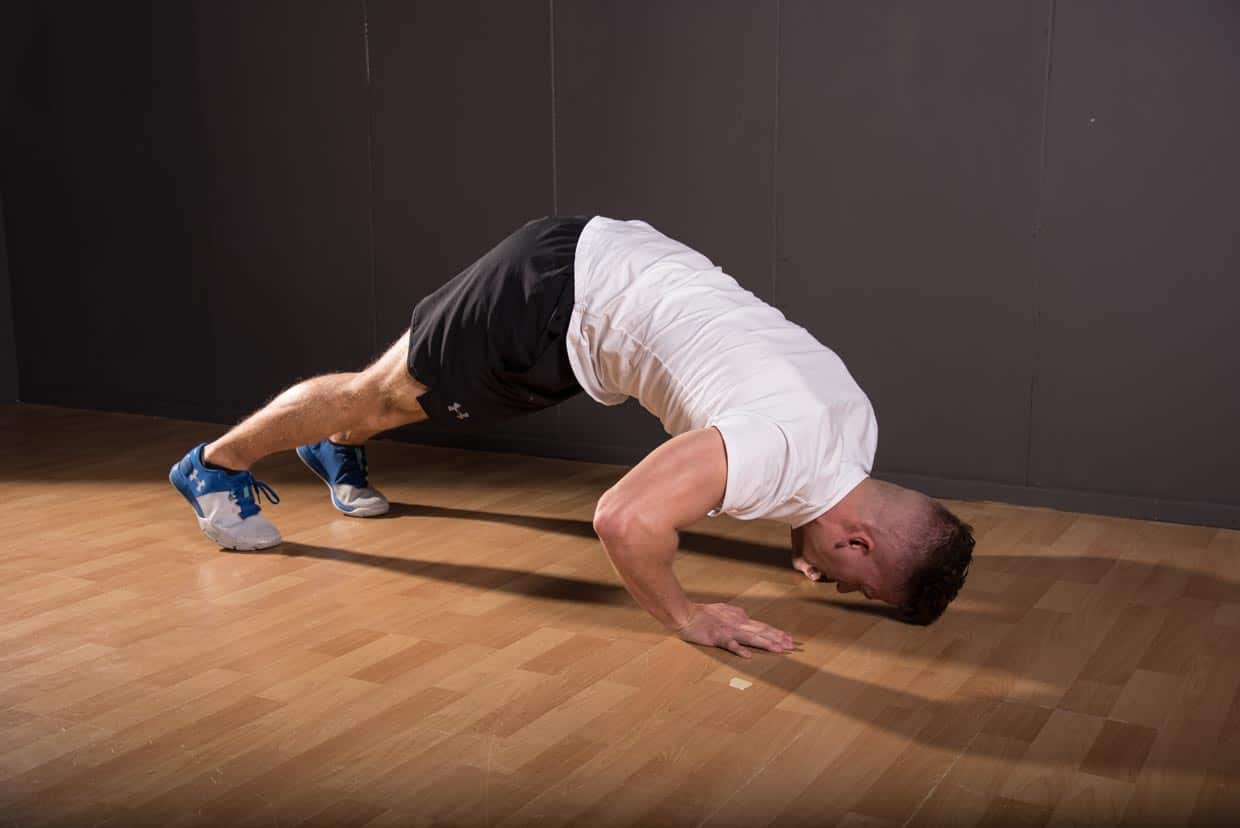
Pike Press up execution
-
1
Assume the push up position. In other words, a plank position with the arms extended directly under the shoulders. The hands slightly wider than shoulder-width.
-
2
Now bring your feet a fair distance toward your hands (distance depends on experience).
-
3
Keep your gaze directed at the point between your hands.
-
4
Lower yourself in a controlled manner by bending your arms, with the elbows moving backward. Lower yourself until your head almost touches the floor.
-
5
Push yourself up until your arms are almost straight.
Pike Press
Active muscles:
- Anterior deltoid (front fibers of the shoulder muscle)
- Pectoralis major (large chest muscle)
- Triceps brachii
- Serratus anterior
- Coracobrachialis (coracobrachialis muscle)
Stabilizing muscles:
- Rotator cuff (stabilizing shoulder muscles, supraspinatus, subscapularis, teres major, teres minor)
- Serratus
- Trapezius
- Biceps brachii
- Latissimus dorsi
- Erector spinae
- Hamstrings
- Abdominal muscles
- Gluteal muscles
Pike Press up technique
That this exercise carries a certain risk is obvious. Or rather, between the hands. To prevent your head from crashing onto the hard floor, you can take the necessary precautions. For example, prevent being surprised by the higher resistance than with a normal push up. As mentioned, do this by gradually decreasing the distance between your hands and feet.
But even when you know how difficult the exercise is, you can get into trouble because you train hard and want to go to your maximum. If you can no longer manage, lower yourself onto one forearm so that you fall sideways toward your shoulder instead of forward onto your head.
Alternatives
- Decline pike press
- Push up
- Clap Push up
- Handstand push up
- Handstand push up between benches
Run your fitness business with more structure
- Planning, member management and coaching in one platform
- Built for coaches, studios and gyms
- Fewer separate tools, more overview