Cable Rope Upright Row
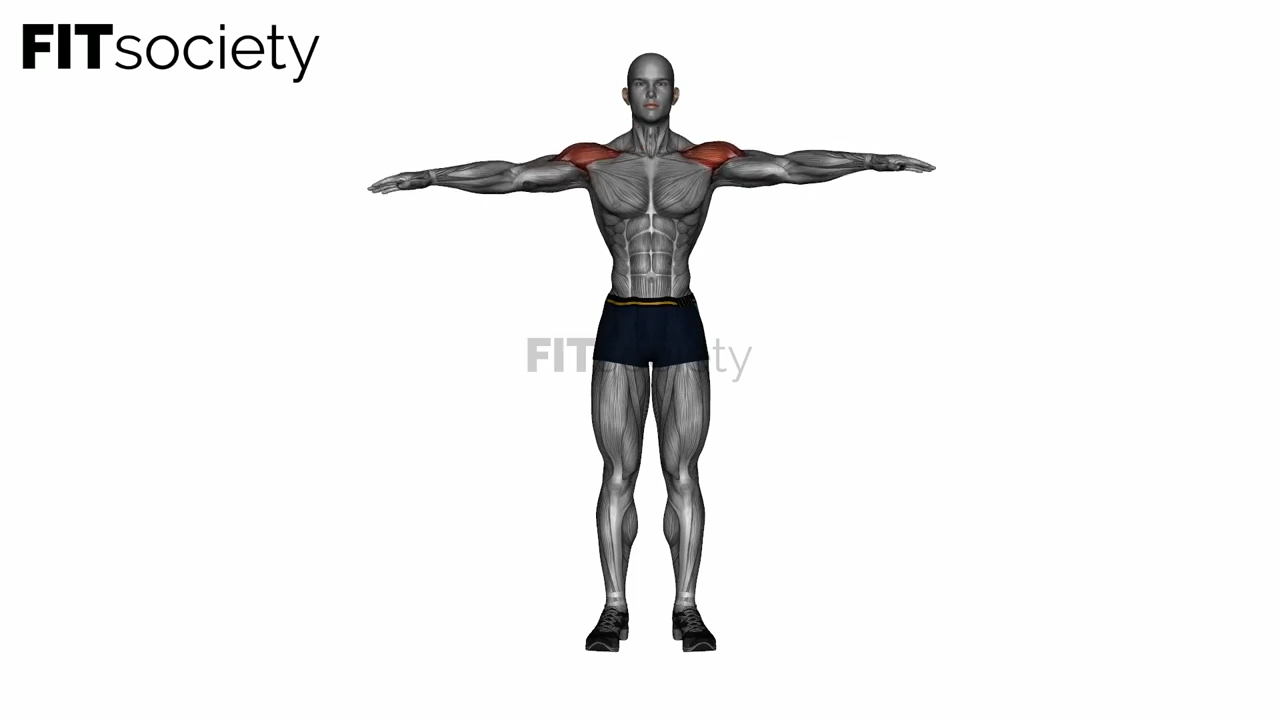
The upright row is an exercise targeting all heads of the deltoid (shoulder muscle). Although it is mainly performed for the rear head of the shoulder, studies show that the middle and front heads work approximately equally hard. Nevertheless, it is not surprising that this exercise is focused on the rear. Most other shoulder exercises activate the front and middle heads to a much greater extent than the rear head.
Naturally, other muscles assist as well. The (upper part of the) trapezius and the levator scapulae help with elevating the shoulder blades. The biceps, brachialis, and brachioradialis help with flexing the arm.
In this variation, a cable is used to provide resistance, with a rope instead of a bar.
Cable rope upright row execution
-
1
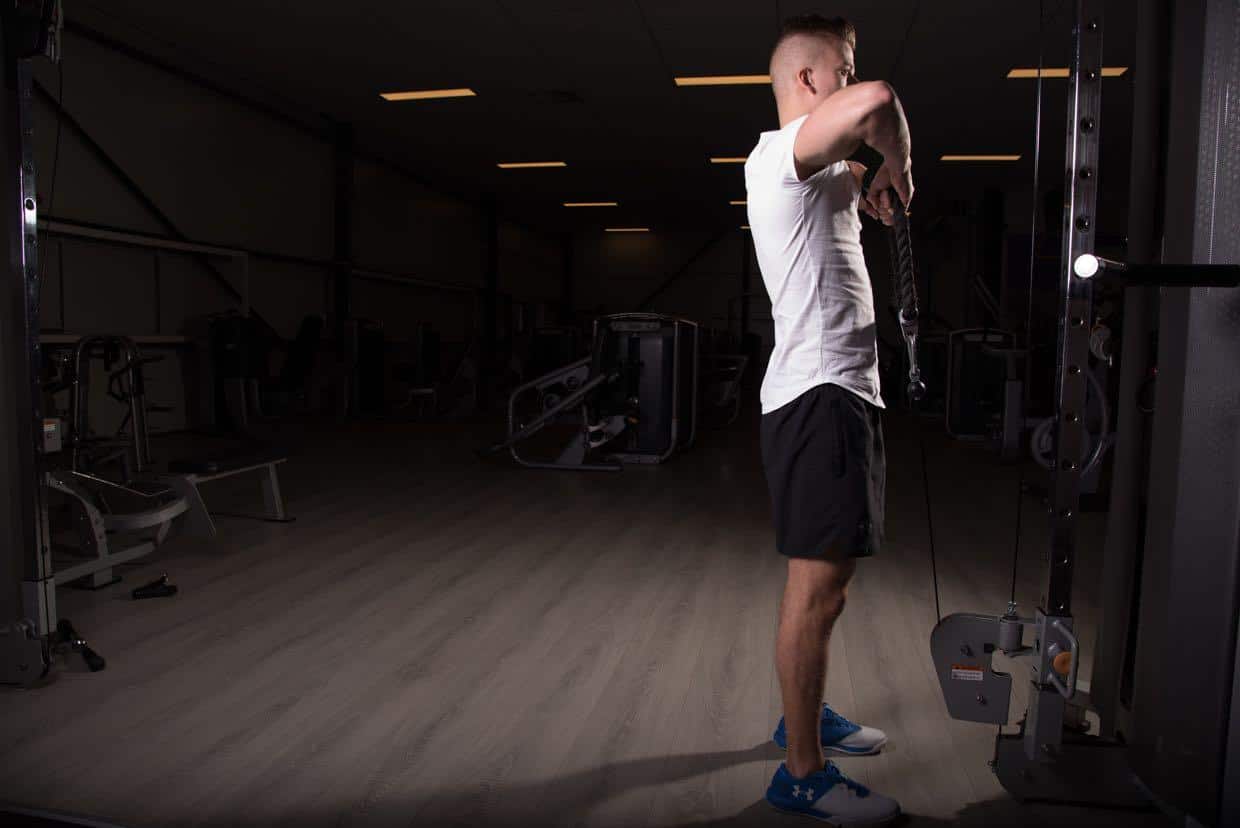
Raise your elbows to just below shoulder height.
-
2
Lower the rope back to the starting position under control.
Cable rope upright row
Targeted muscles:
Back and shoulder joint:
- Deltoid (all heads)
- Rotator cuff (subscapularis, supraspinatus, infraspinatus, and teres minor)
- Levator scapulae
Arms:
- Biceps
- Forearm muscles
Back:
- Trapezius
The upright row is an exercise targeting all heads of the deltoid (shoulder muscle). Although it is mainly performed for the rear head of the shoulder, studies show that the middle and front heads work approximately equally hard. Nevertheless, it is not surprising that this exercise is focused on the rear. Most other shoulder exercises activate the front and middle heads to a much greater extent than the rear head.
Naturally, other muscles assist as well. The (upper part of the) trapezius and the levator scapulae help with elevating the shoulder blades. The biceps, brachialis, and brachioradialis help with flexing the arm.
In this variation, a cable is used to provide resistance, with a rope instead of a bar.
Cable rope upright row setup
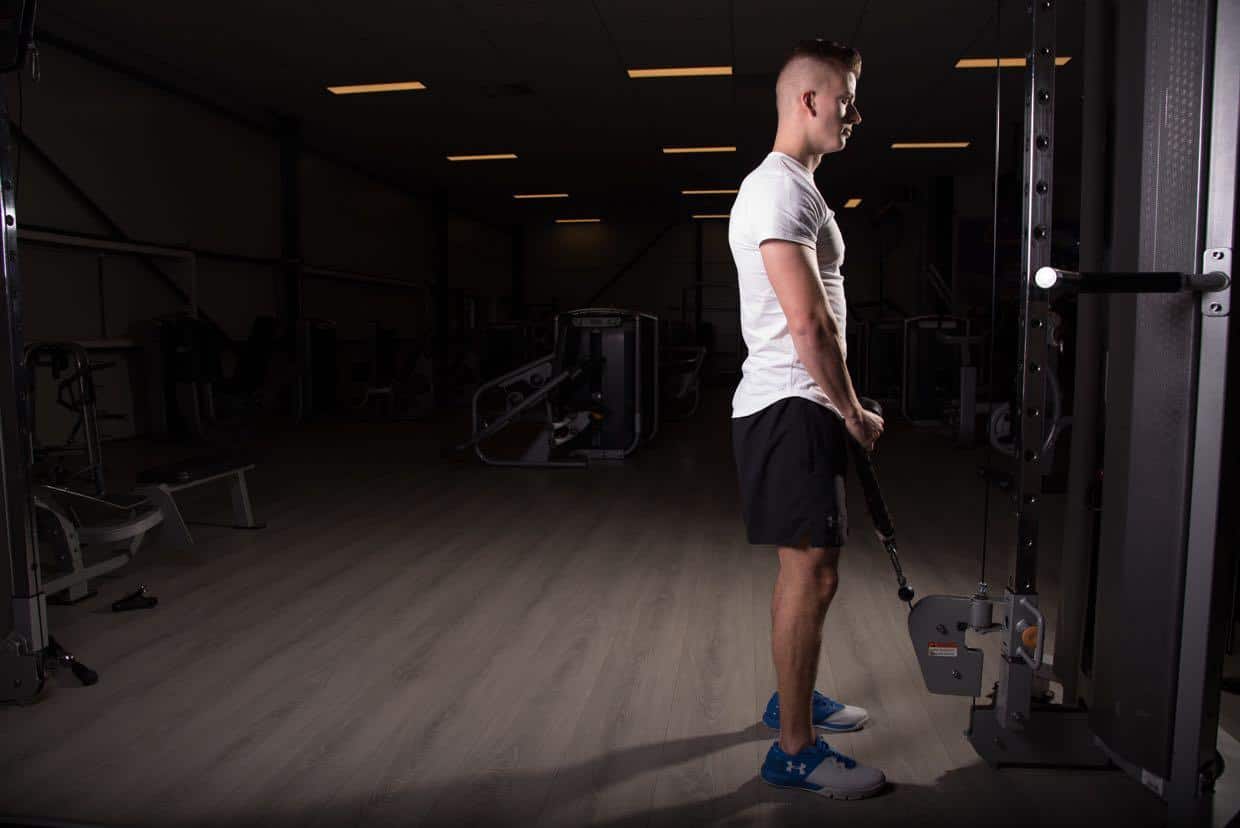
- Set the pulley to the lowest position and attach the double rope to it.
- Stand upright with your feet shoulder-width apart, facing the cable.
- Grasp the rope with your thumbs pointing upward.
Cable rope upright row technique
Why use a rope?
Performing the exercise with a rope may prevent the wrist discomfort that some people experience when using a bar. However, this may also be prevented by placing the hands farther apart on the bar.
The upright row (with the barbell in front of the body) has often been associated with shoulder injuries. However, this risk can be reduced or even prevented.
Many shoulder injuries are caused by impingement of the shoulder joint. The likelihood is high when the upper arms are raised toward or above shoulder level and internally rotated.
By using a narrow grip on the (barbell) bar, the shoulders are not only internally rotated, but it is also possible to bring the elbows above shoulder level. A high risk, therefore. Unfortunately, many people who perform this exercise with the double rope keep their hands very close together.
By keeping the hands in front of the elbows, the shoulders are externally rotated, and it is impossible to raise the elbows too high.
An additional benefit is that the muscles themselves (shoulders and trapezius) appear to show greater activity with the wider grip (at least when using a bar). More effective and safer, therefore. You can find more information here.
Alternatives
- Cable wide-grip upright row
- Barbell rear delt raise
- Barbell upright row
- Dumbbell upright row
Run your fitness business with more structure
- Planning, member management and coaching in one platform
- Built for coaches, studios and gyms
- Fewer separate tools, more overview