Curtsy Squat
The curtsy squat or lunge most closely resembles a rear (or reverse) lunge in terms of movement, but may be better compared with side lunges. Like all lunges, it engages a large number of muscles, with the leg muscles playing an important role. As with side lunges, more lateral force is generated. This lateral pressure and resisting it requires more effort from the muscles that move the legs inward (adductors) and the muscles that move them outward (abductors). The latter action is primarily performed by the smaller muscles in the glutes. For so-called adduction, these are muscles on the inside of the thighs.
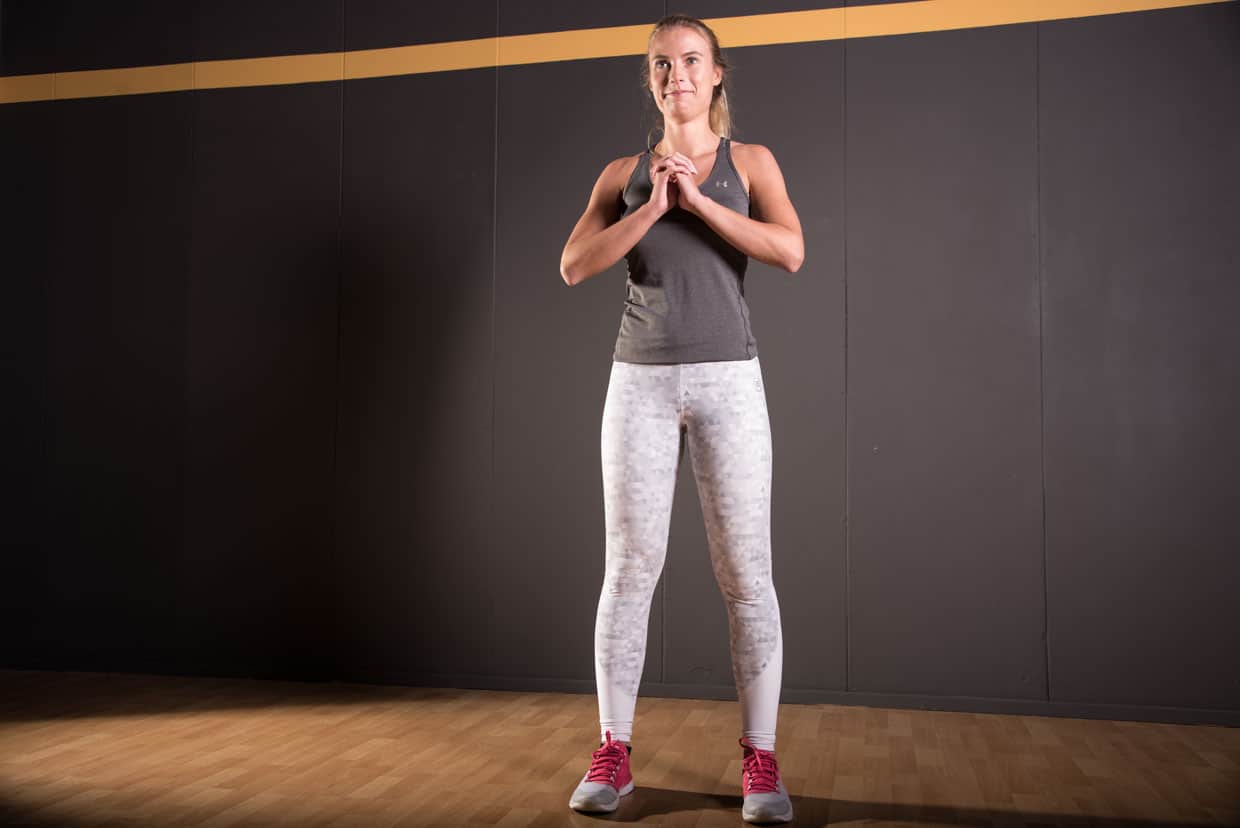
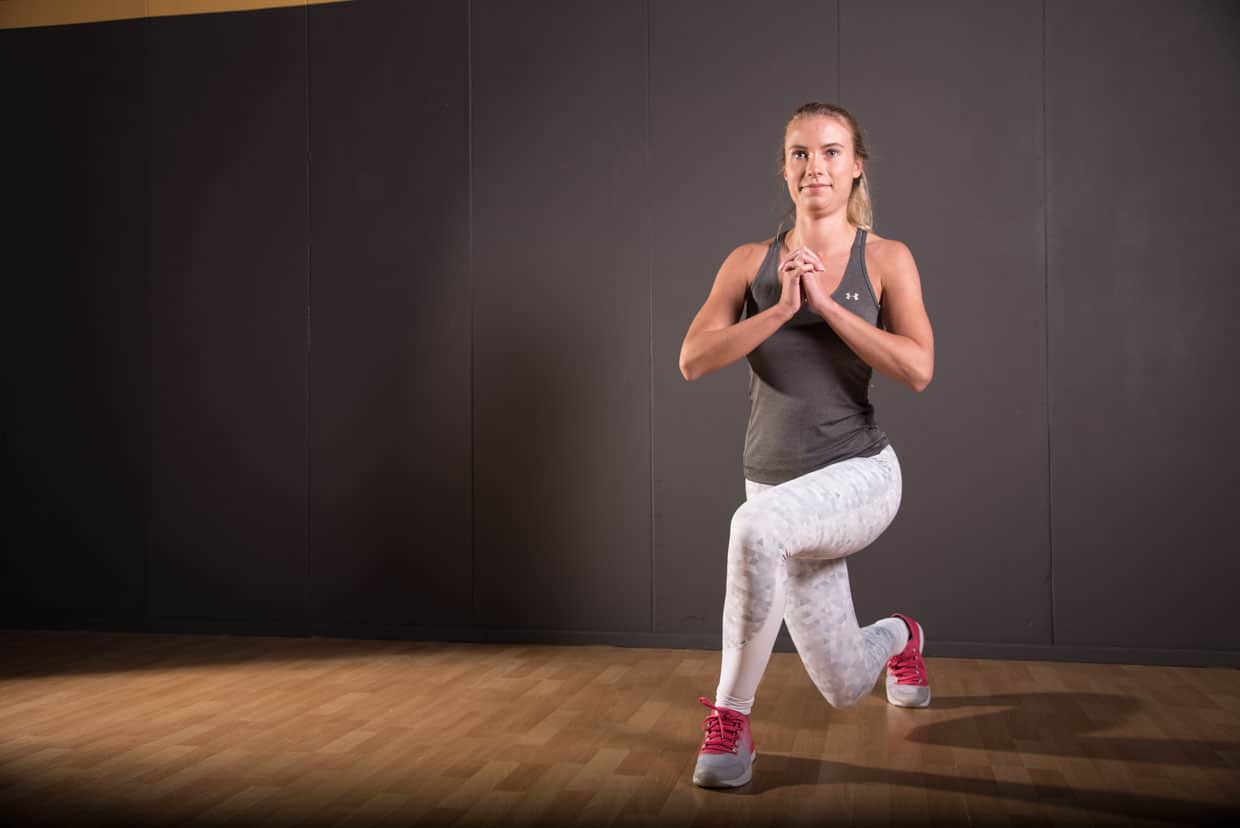
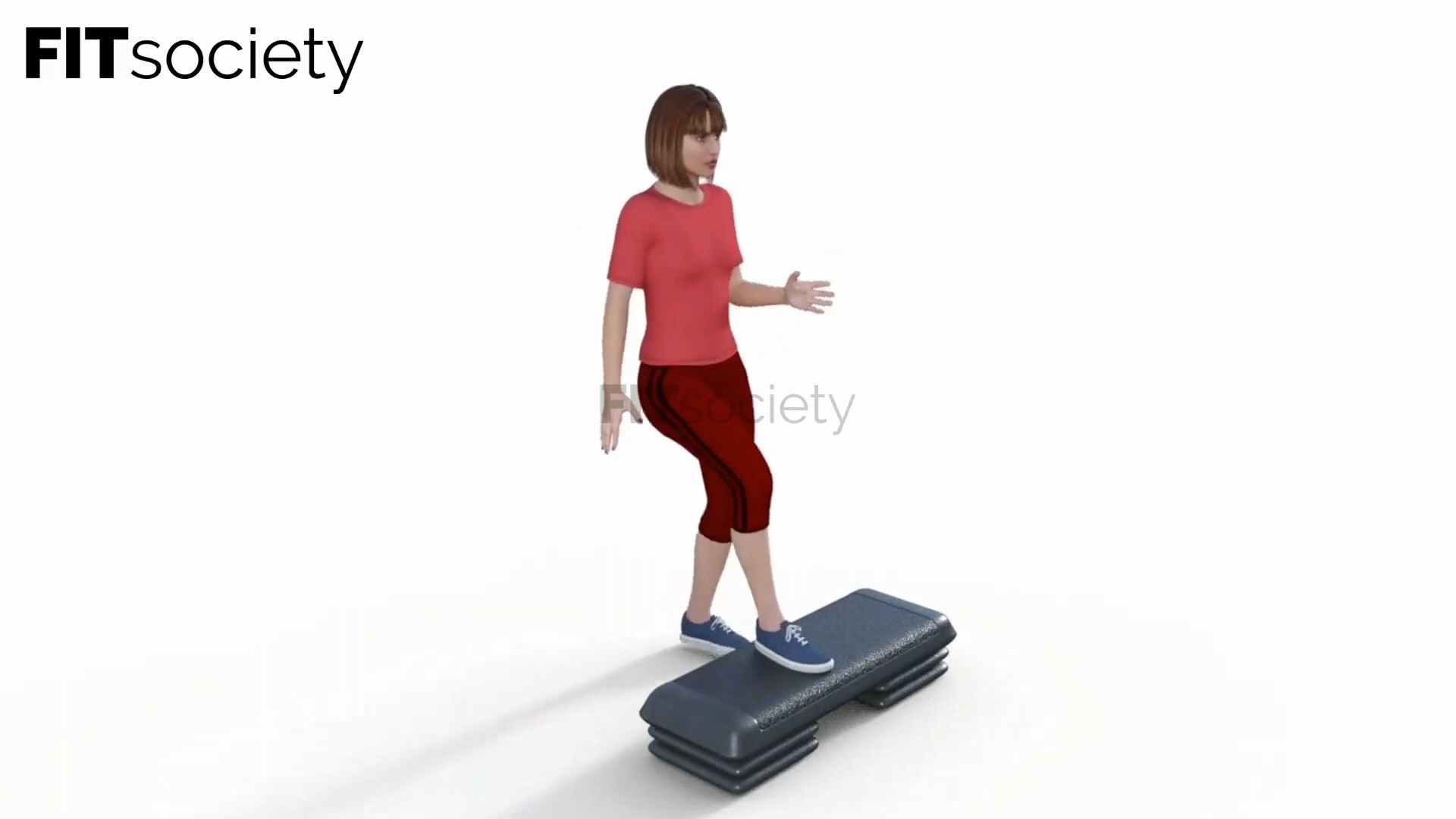
Curtsy squat/lunge execution
-
1
Keep your arms crossed in front of you or, as shown in the photo, 'as if you were bowing to the king'.
-
2
Bring your foot backward as with rear lunges, but now cross it behind your standing leg. Make sure to cross far enough for balance.
-
3
Lower yourself until your knee almost touches the ground.
-
4
Push yourself straight up from your standing leg and bring your rear foot back to the starting position.
Curtsy squat/lunge
Muscles involved:
Legs:
- Quadriceps (vastus lateralis, vastus medialis, vastus intermedius and rectus femoris)
- Hamstrings
Glutes:
- Gluteus maximus, medius and minimus
Pelvis:
- Iliacus (hip flexor)
- Psoas major (hip flexor)
Calves:
- Gastrocnemius
- Soleus
Abdominals:
- Rectus abdominis (straight abdominal muscle)
- External oblique (external oblique abdominal muscle)
- Internal oblique (internal oblique abdominal muscle)
- Transversus abdominis (transverse abdominal muscle, 'corset muscle')
Lower back and spine:
- Erector spinae
- Lumbar multifidus
- Quadratus lumborum
Curtsy squat/lunge technique
Why curtsy squats/lunges?
Curtsy lunges, like side lunges, can primarily be performed for functional reasons. For example, to support another sport. Quick lateral movements are common in many sports, after all.
In some cases, you may see a variation of the curtsy squat/lunge in which the foot brought backward does not make contact with the ground. In that case, greater stabilizing effort is required from the muscles involved, which may again primarily serve functional purposes.
Alternatives
- Side lunges
- Walking lunges
- Rear lunges
- Split squat
- Single-leg split squat
Run your fitness business with more structure
- Planning, member management and coaching in one platform
- Built for coaches, studios and gyms
- Fewer separate tools, more overview