Glute Bridge on Stability Ball
The glute bridge on a stability ball trains hip extension while the feet rest on an unstable support. The glutes and hamstrings lift the pelvis, while the trunk muscles help keep the body aligned. Compared with the floor version, the ball requires more control to prevent the feet and hips from shifting.
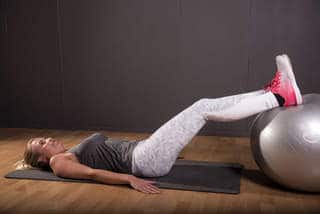
Execution
-
1
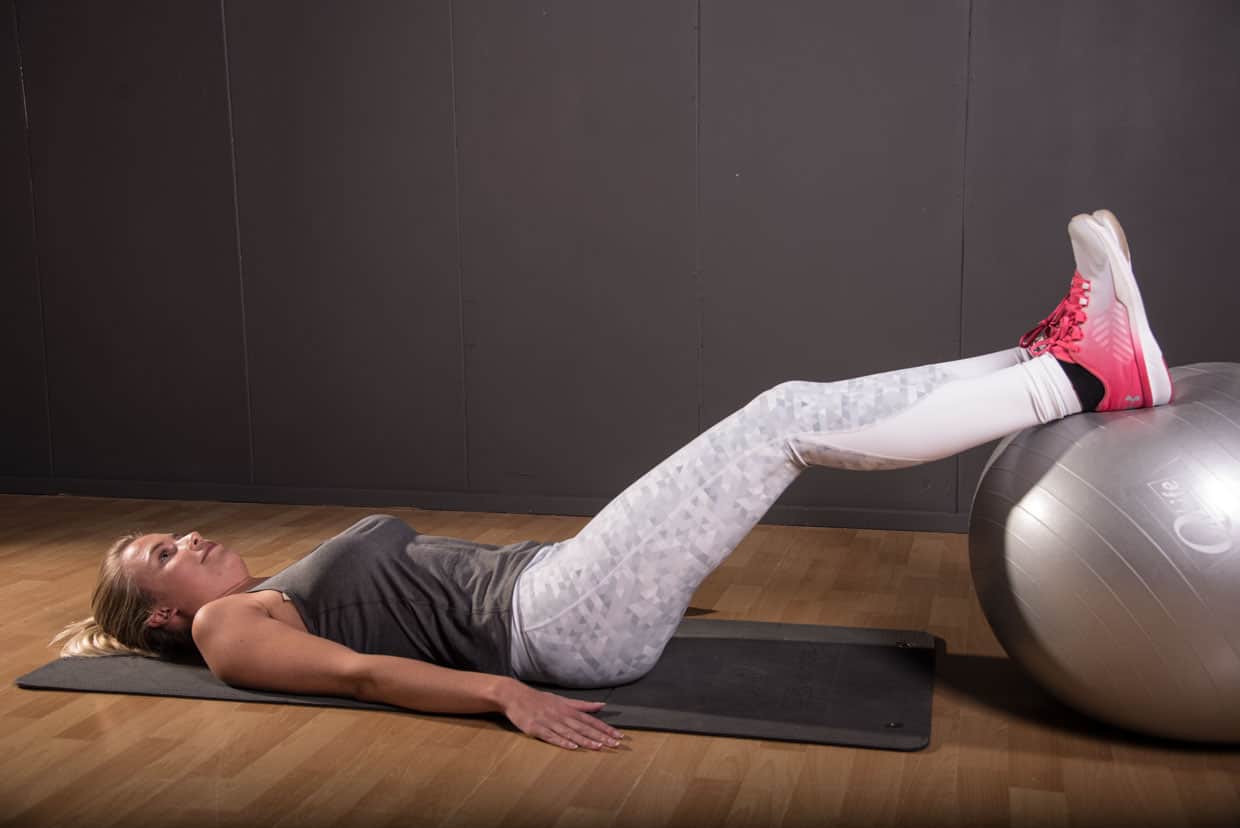
Lie on your back on the floor with your arms beside you.
-
2
Place your heels hip-width apart on the stability ball. Keep your knees slightly bent and position the ball where you can control it.
-
3
Press through your heels and lift your pelvis until your trunk and thighs form a straight line.
-
4
Lower your hips slowly to just above the floor, then repeat.
Muscles worked
- Gluteal muscles: gluteus maximus, medius and minimus.
- Hamstrings: biceps femoris, semitendinosus and semimembranosus.
- Spinal erectors and abdominal muscles for trunk stability.
Technique
Keep the ball still rather than pulling it towards you as in a leg curl. Finish by extending the hips, without arching the lower back to lift higher. Use a shorter range or return to a floor bridge if the ball repeatedly rolls away.
Alternatives
- Floor glute bridge.
- Hip thrust.
- Back extension.
- Bird dog.
Run your fitness business with more structure
- Planning, member management and coaching in one platform
- Built for coaches, studios and gyms
- Fewer separate tools, more overview