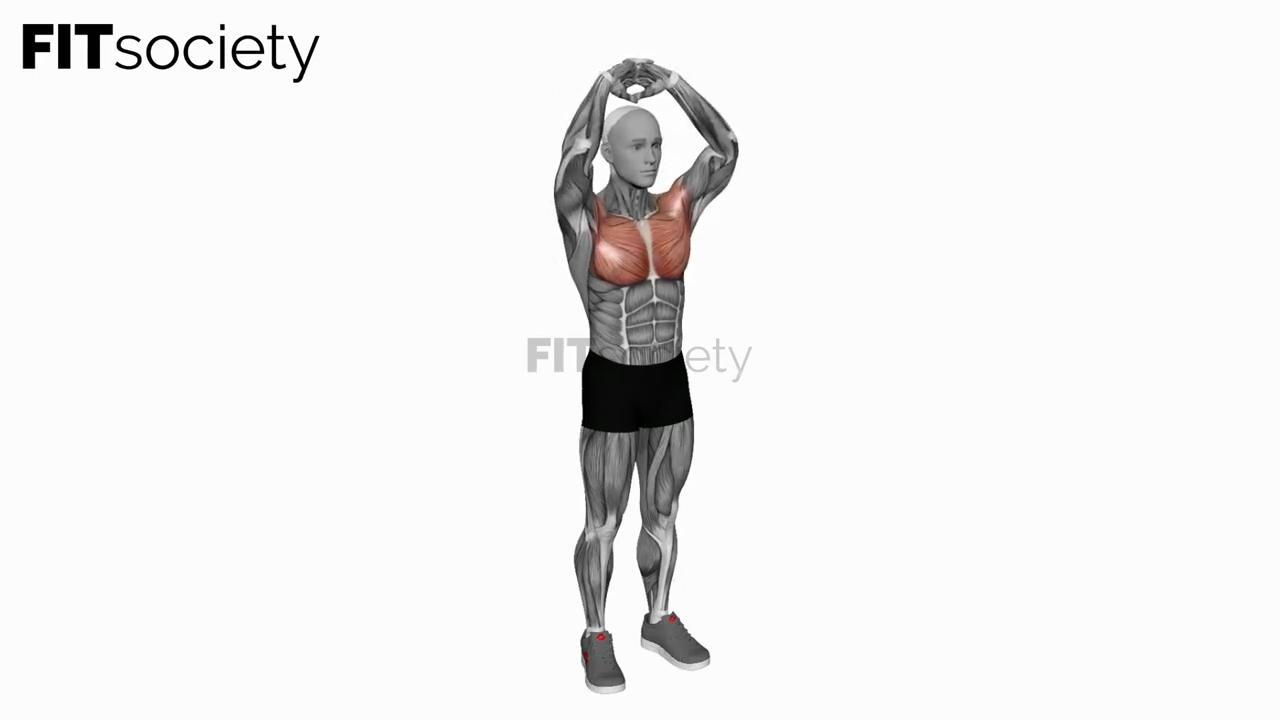
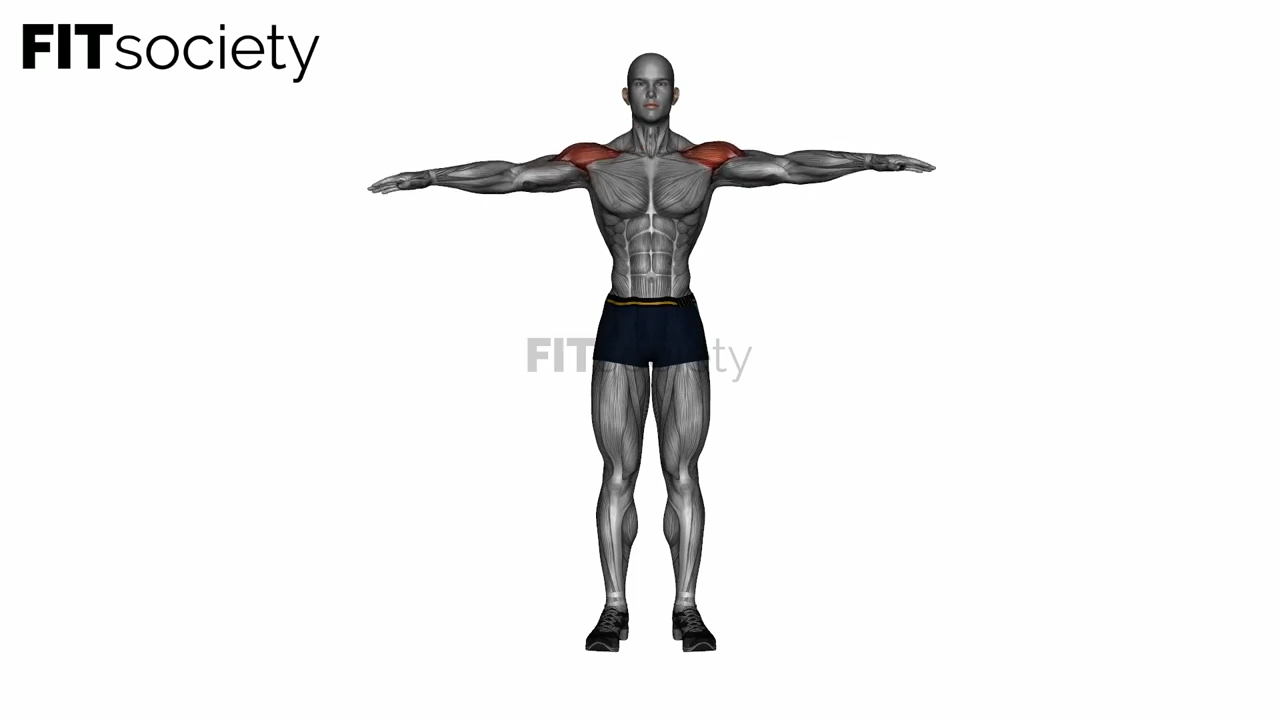
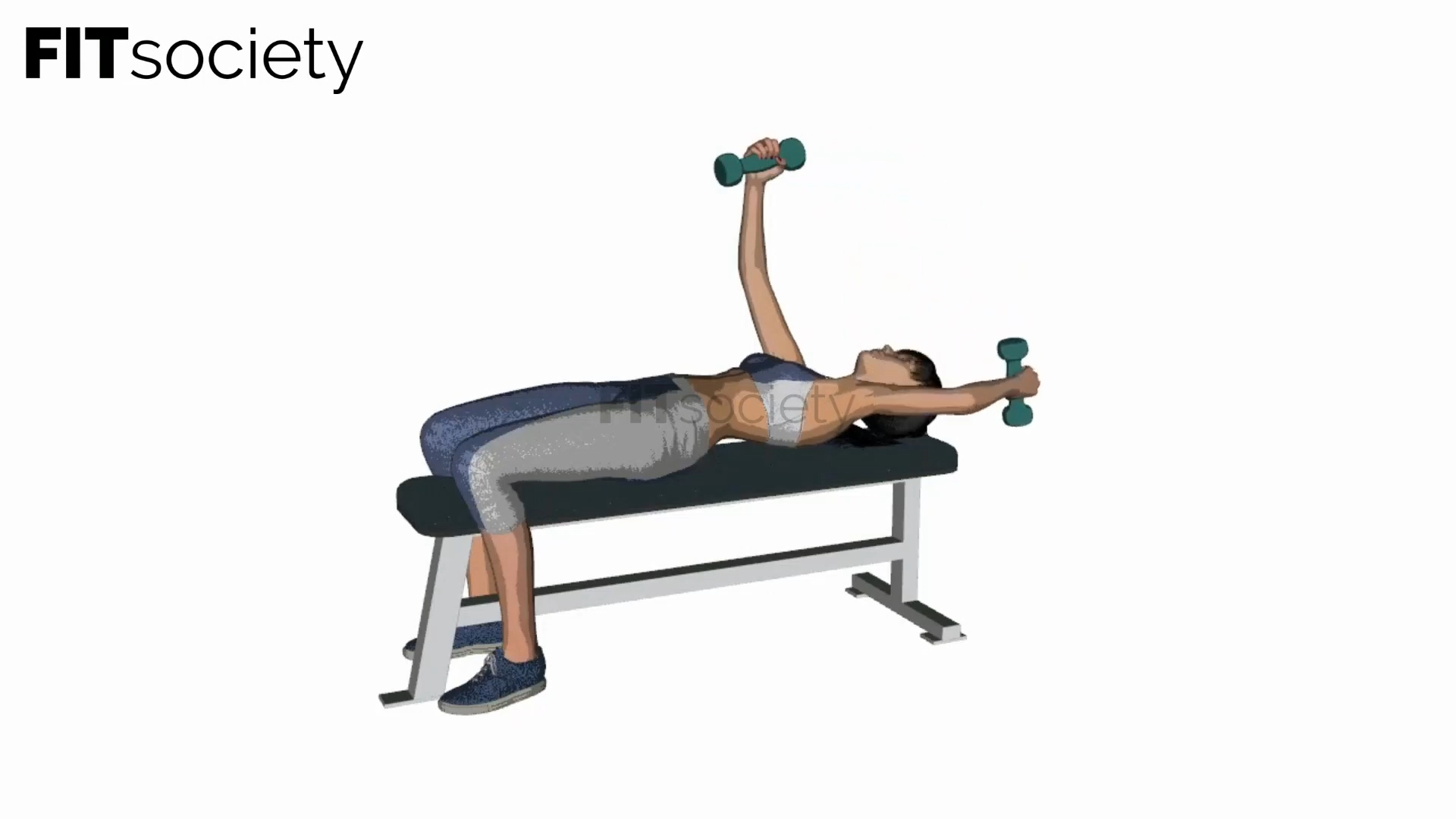
Machine Chest Press
The bench press, or 'bench pressing', is one of the most popular exercises in strength training. It is a compound exercise that engages several large muscle groups. The chest muscles and front of the shoulder muscles are engaged to pull the upper arm forward and inward. The triceps are engaged to extend the arms. In addition, muscles in the shoulders, back, and lower back work along to stabilize your body and the weight.
The machine chest press is a machine that offers an exercise similar to the bench press, with some important differences.
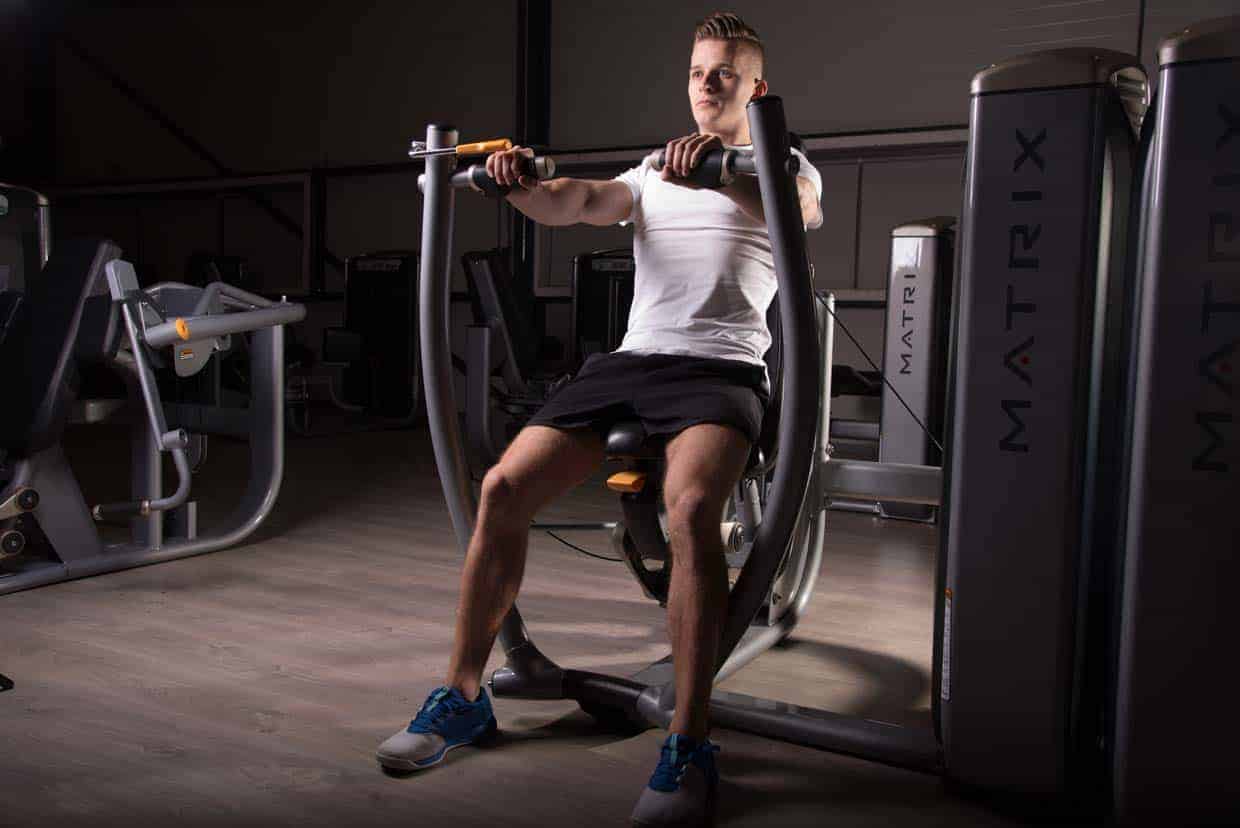
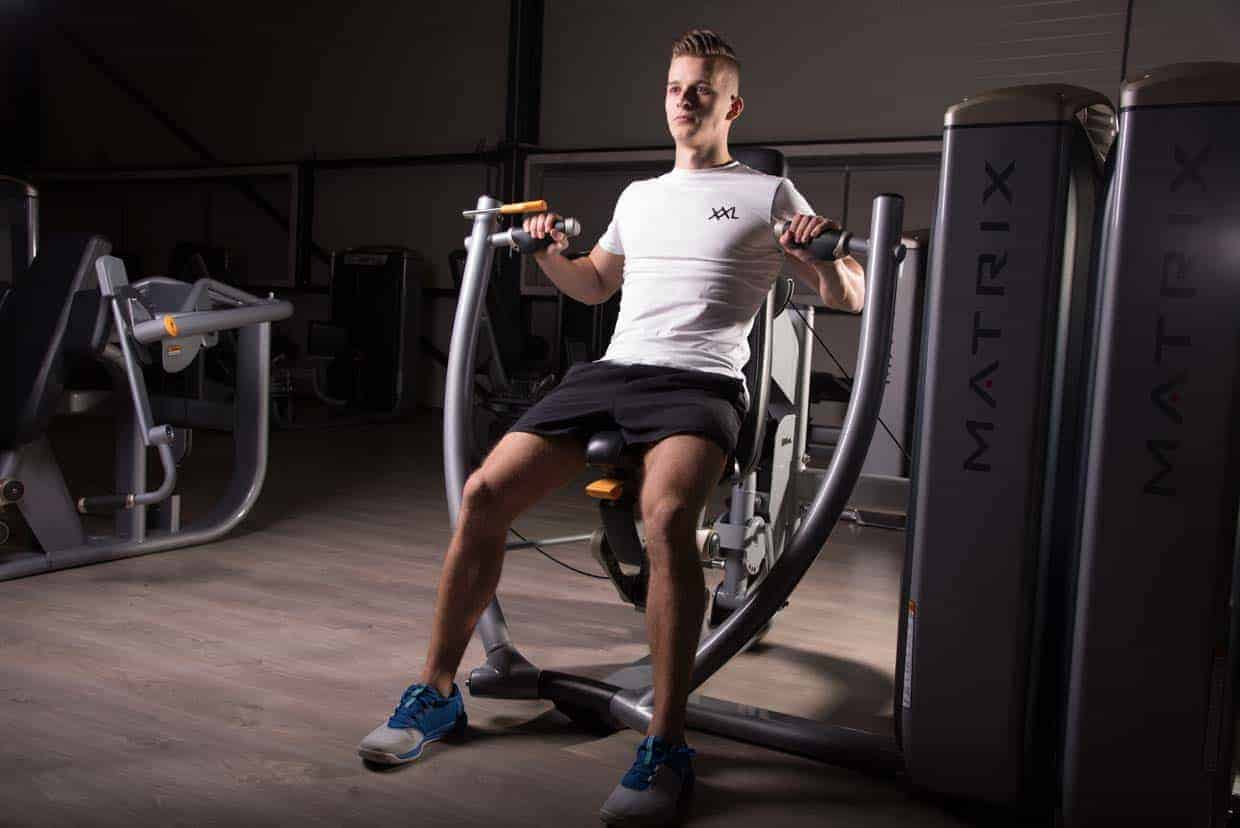
Machine chest press execution
-
1
Grasp the handles with a pronated grip (palms facing downward). The elbows move out to the sides but remain below shoulder level; if not, the seat is set too low.
-
2
Push explosively until your arms are (almost) extended. Do not lock out your arms; maintain a slight bend.
-
3
Bring your arms back until your elbows are beside or slightly behind your torso, depending on your shoulder mobility.
Machine chest press
Active muscles:
- Pectoralis major (large chest muscle)
- Pectoralis minor (depending on execution)
- Anterior deltoid (front fibers of the shoulder muscle)
- Triceps brachii
- Serratus anterior
- Coracobrachialis (coracoid-arm muscle)
Stabilizing muscles:
- Rotator cuff (stabilizing shoulder muscles, supraspinatus, subscapularis, teres major, teres minor)
- Serratus
- Trapezius
- Biceps brachii
- Latissimus dorsi
- Core muscles
Machine chest press preparation
- Set the seat to the correct height. The handles should then be approximately level with the bottom of the chest.
- If you are not familiar with the machine, first check the operation of any locking mechanism.
- Choose the appropriate weight for the desired number of repetitions.
- Sit firmly, with your back against the backrest.
Machine chest press technique
Using the machine instead of free weights, as in the bench press, means among other things that the muscles have to stabilize less. There is no bar that can tilt, and the movement path is fixed. In addition, you do not have to worry about getting into trouble during a final exhausted repetition.
This means you can concentrate mentally and physically on the exercise's primary movement. This makes the exercise not only a safer alternative for beginners. It is also a convenient alternative if you want to train heavy and be able to train to the limit without a partner.
The angle of the exercise makes it comparable to the flat bench press. There is often room for variation in grip.
A narrow grip (shoulder-width and narrower) requires greater engagement of the triceps and front shoulders. A wider grip increases the engagement of the pectoralis major.
Alternatives:
- Dumbbell bench press
- Cable chest press
- Smith machine bench press
Run your fitness business with more structure
- Planning, member management and coaching in one platform
- Built for coaches, studios and gyms
- Fewer separate tools, more overview