Dumbbell Pullover
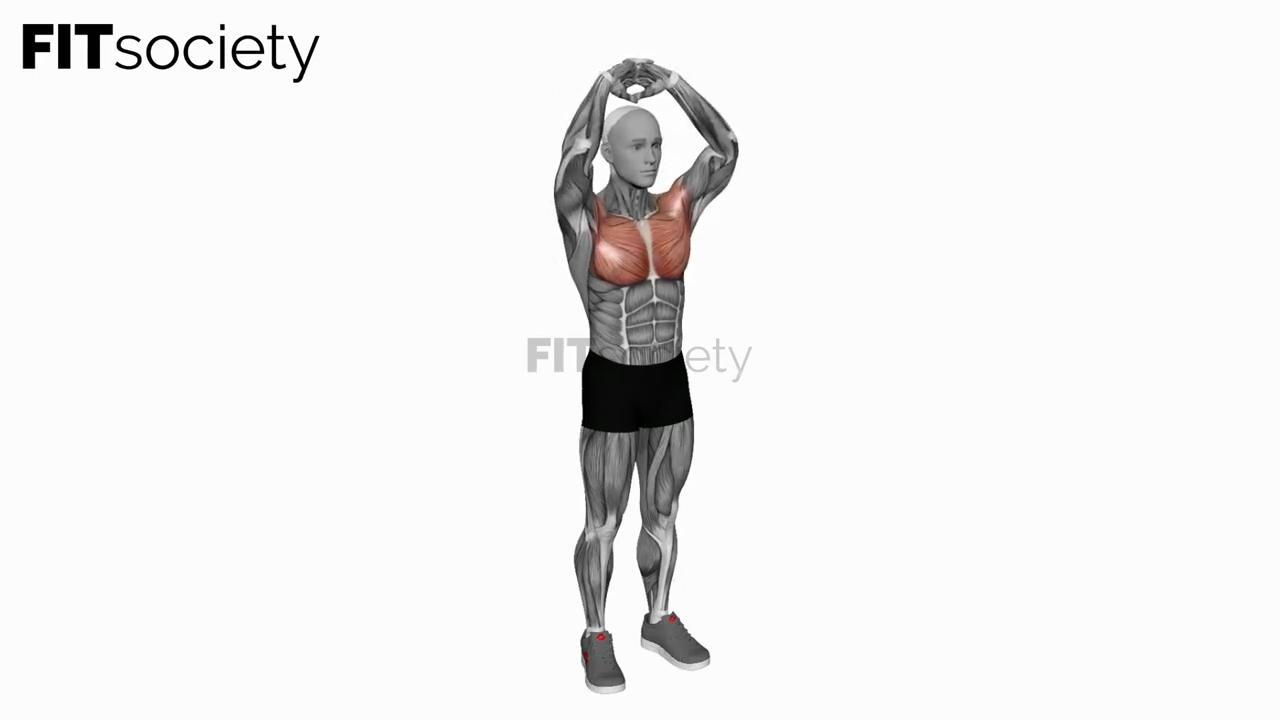
The dumbbell pullover is an exercise that primarily activates the chest muscles, but also the latissimus dorsi and serratus. It therefore fits into both a back workout and a chest workout. In addition to the pectoralis major, the smaller pectoralis minor is also engaged to rotate the shoulders forward and downward.
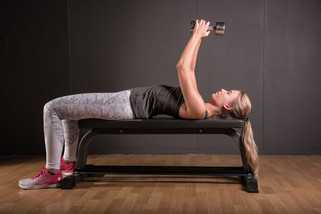
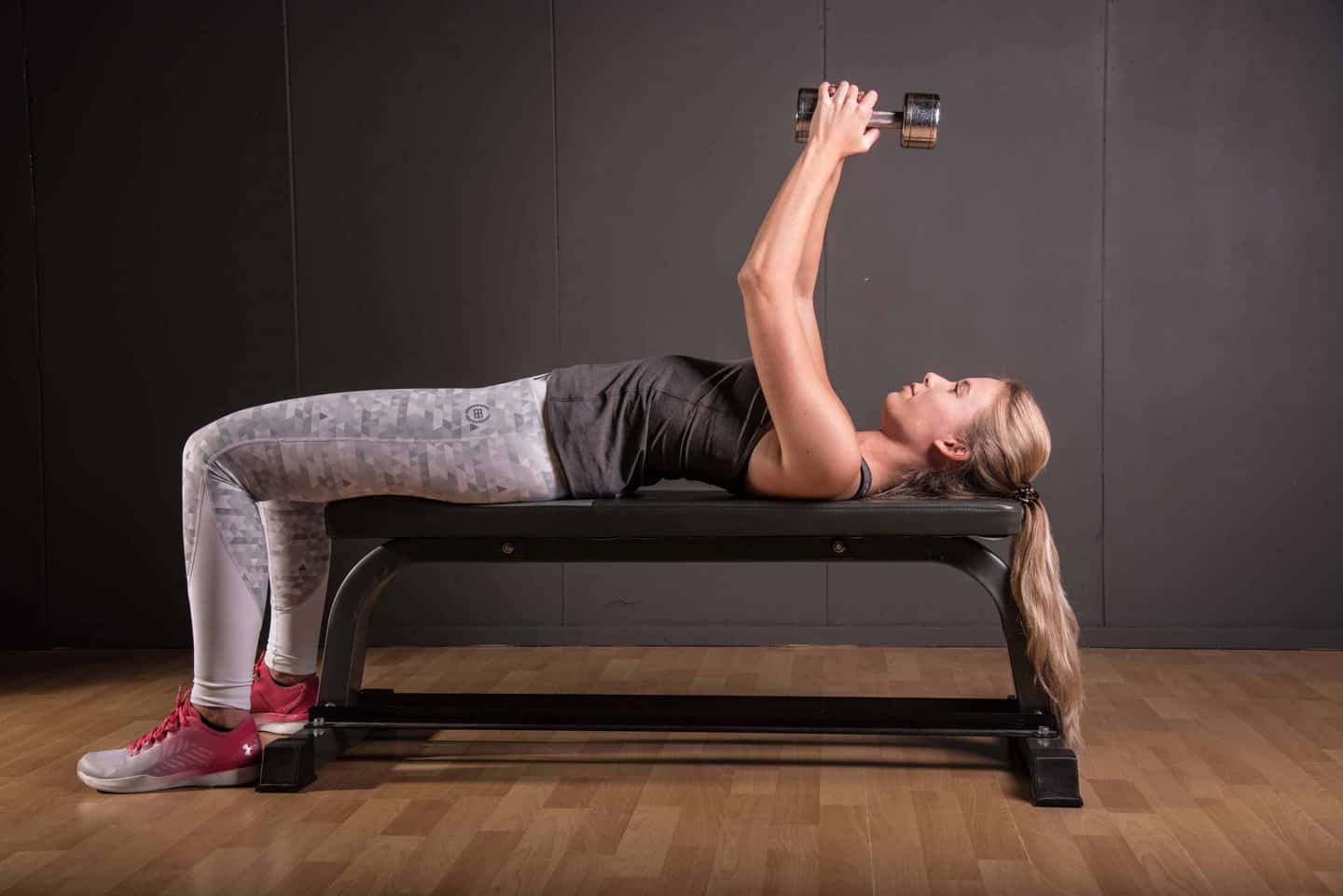
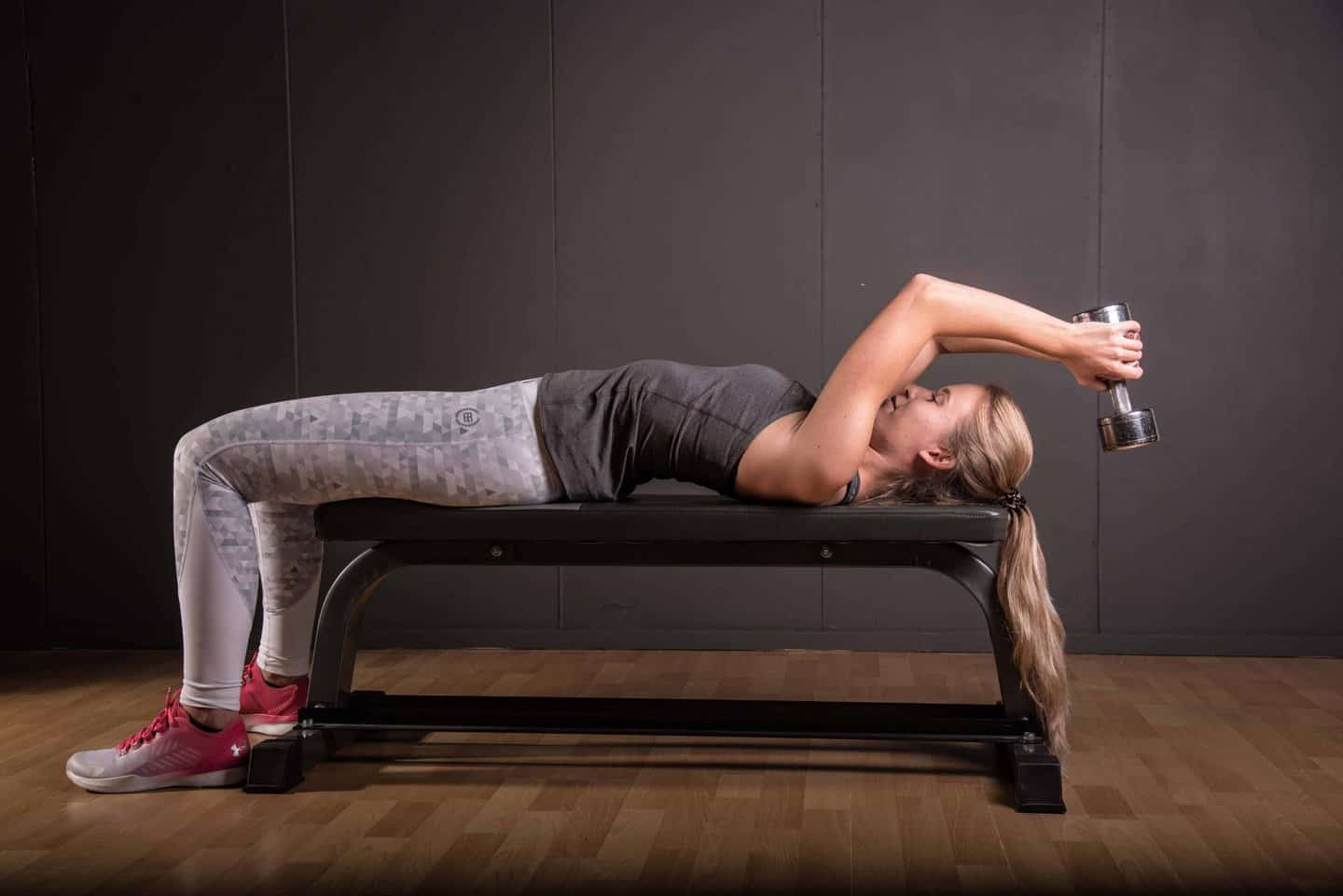
Dumbbell pullover execution
-
1
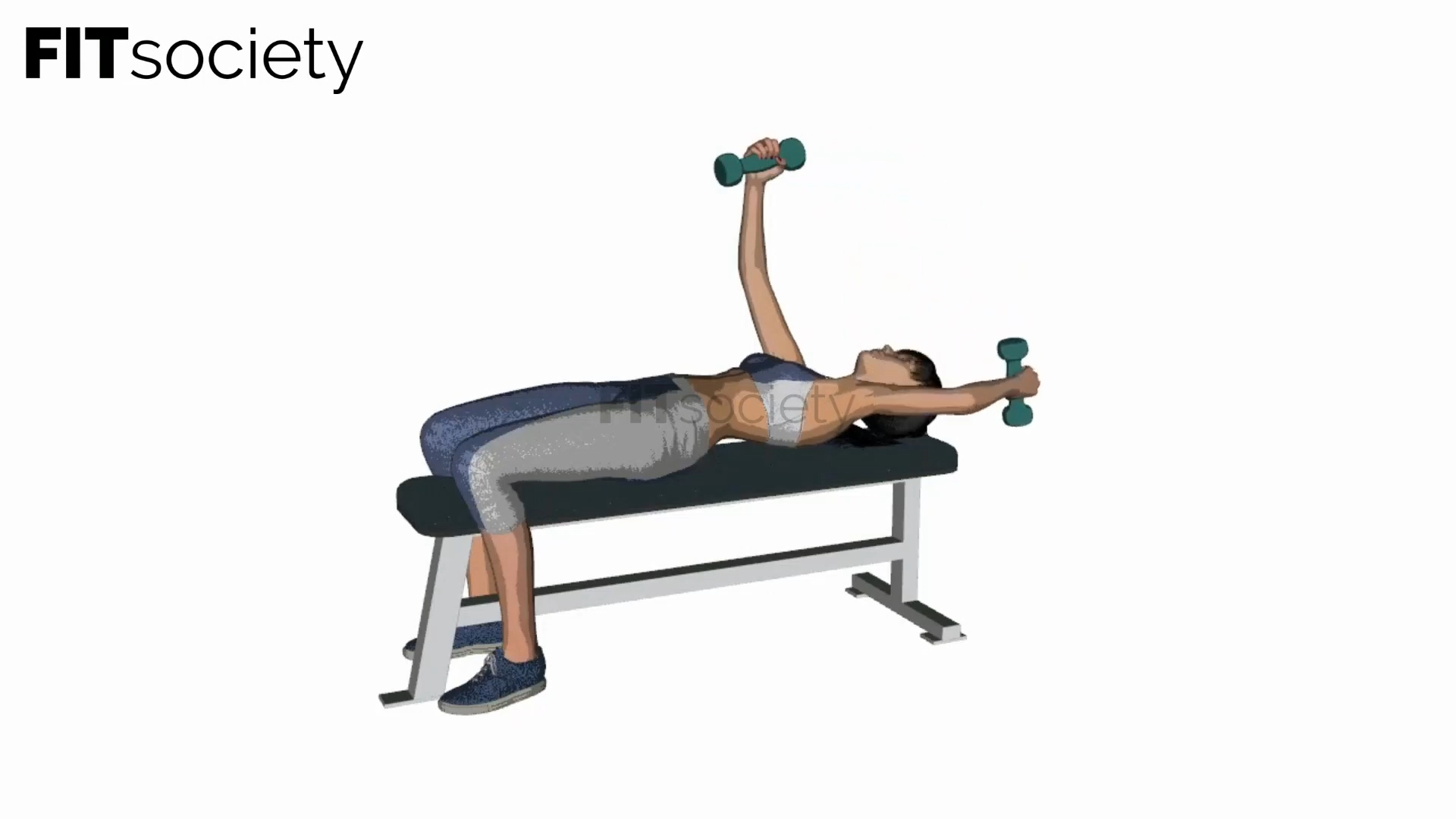
Push the dumbbell straight up by almost straightening your arms. Keep a bend in your elbows. This is your starting position.
-
2
Move the dumbbell backward by bringing your upper arms toward your ears until you feel a full stretch in the latissimus dorsi.
-
3
Bring your arms back up. Focus on pulling your elbows upward and forward.
Dumbbell pullover
Active muscles:
- Latissimus dorsi (the large back muscle)
- Pectoralis major and pectoralis minor (chest muscles)
- Serratus
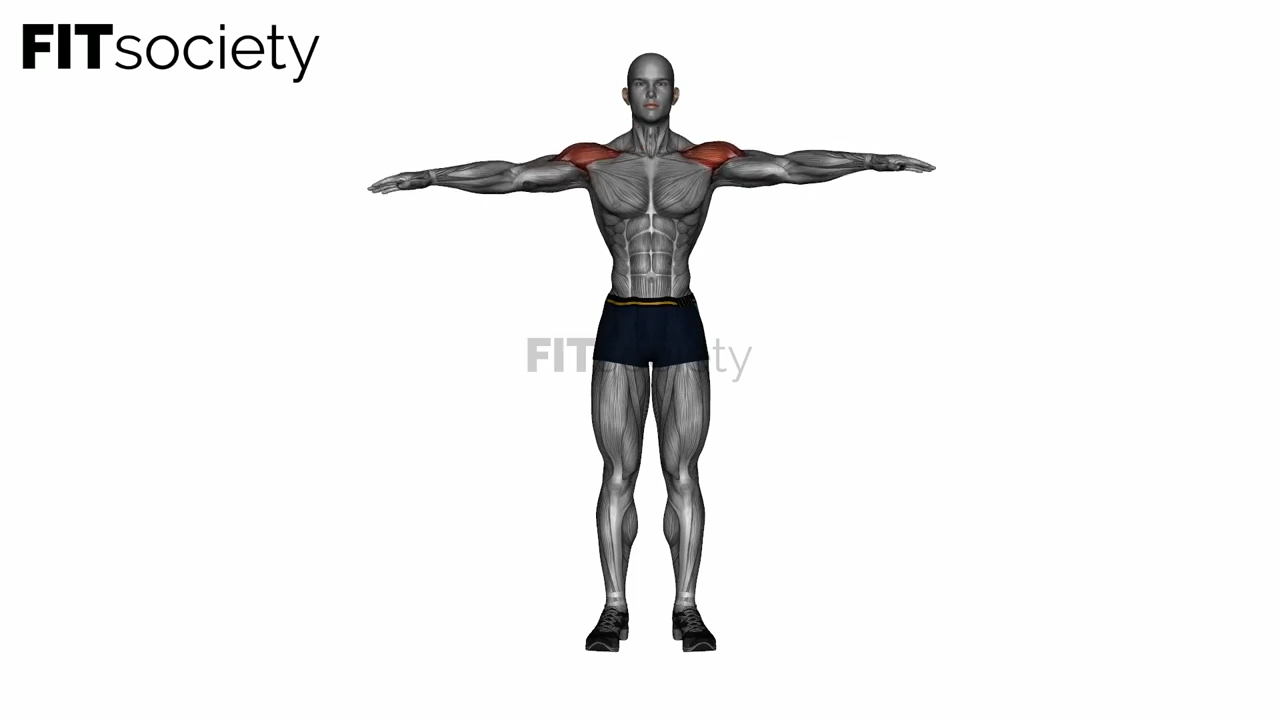
- Deltoideus (the 'deltoid-shaped' shoulder muscle, especially the rear)
- Rotator cuff (stabilizing shoulder muscles: supraspinatus, subscapularis, teres major, teres minor)
Dumbbell pullover setup
- Sit on the end of a bench with the dumbbell.
- Lie back and place the dumbbell upright on your abdomen.
- Turn your hands inward (thumbs toward your nose and then toward your abdomen). Place your hands under the upper part of the dumbbell. The thumbs are on either side at the back, and the fingers are on the side facing your face. The thumbs and fingers of both hands overlap, forming a bowl.
Dumbbell pullover technique
The dumbbell pullover is technically a fairly difficult exercise and is therefore often performed incorrectly.
The dumbbell pullover is sometimes turned into a kind of tricep extension. The arms are bent on the way down and straightened again on the way up. This unnecessarily loads the triceps. Bending the arms means the back and chest muscles have to work less, causing the exercise to lose some of its effectiveness. Therefore, keep your arms at the same angle throughout the entire movement. Emphasize moving your elbows rather than your hands.
Use the correct movement path and pay close attention to where you experience resistance. The disadvantage of using a dumbbell is that you lose resistance relatively quickly due to the angle of your arms. Therefore, do not bring the dumbbell unnecessarily far forward when there is already no resistance. Stop the upward and forward movement at the point where you feel the resistance decreasing.
Keep your wrists relaxed so that the angle of your hands relative to the dumbbell can change freely during the exercise.
About pullover exercises:
All pullover exercises activate the latissimus dorsi, the chest muscles, and the serratus (those nicely striated muscles on your sides, above your ribs). Some people do these exercises as part of a back workout, others during a chest workout, and still others to have an even more impressive 'mid section' at a low body-fat percentage.
The different variations can shift the emphasis among the different muscles involved.
Cables provide tension throughout the entire movement. In the dumbbell variation, the tension disappears when the weight is directly above you (when lying decline, you can go a little farther). But even before that point, most of the resistance has already been lost. With cables, you can maintain it almost all the way to your legs.
The lying cable variation (like the machine version) is more suitable for training the back because it remains under tension longer, while other variations involve the chest more (according to some EMG studies).
Alternatives
- Barbell pullover
- Dumbbell pullover
- Standing cable pullover
Run your fitness business with more structure
- Planning, member management and coaching in one platform
- Built for coaches, studios and gyms
- Fewer separate tools, more overview