Cable Standing Chest Press
The bench press, is one of the most popular exercises in strength training. The chest muscles and front deltoids are engaged to pull the upper arm forward and inward. The triceps are engaged to extend the arms. Muscles in the shoulders, back, and lower back assist in stabilizing your body.
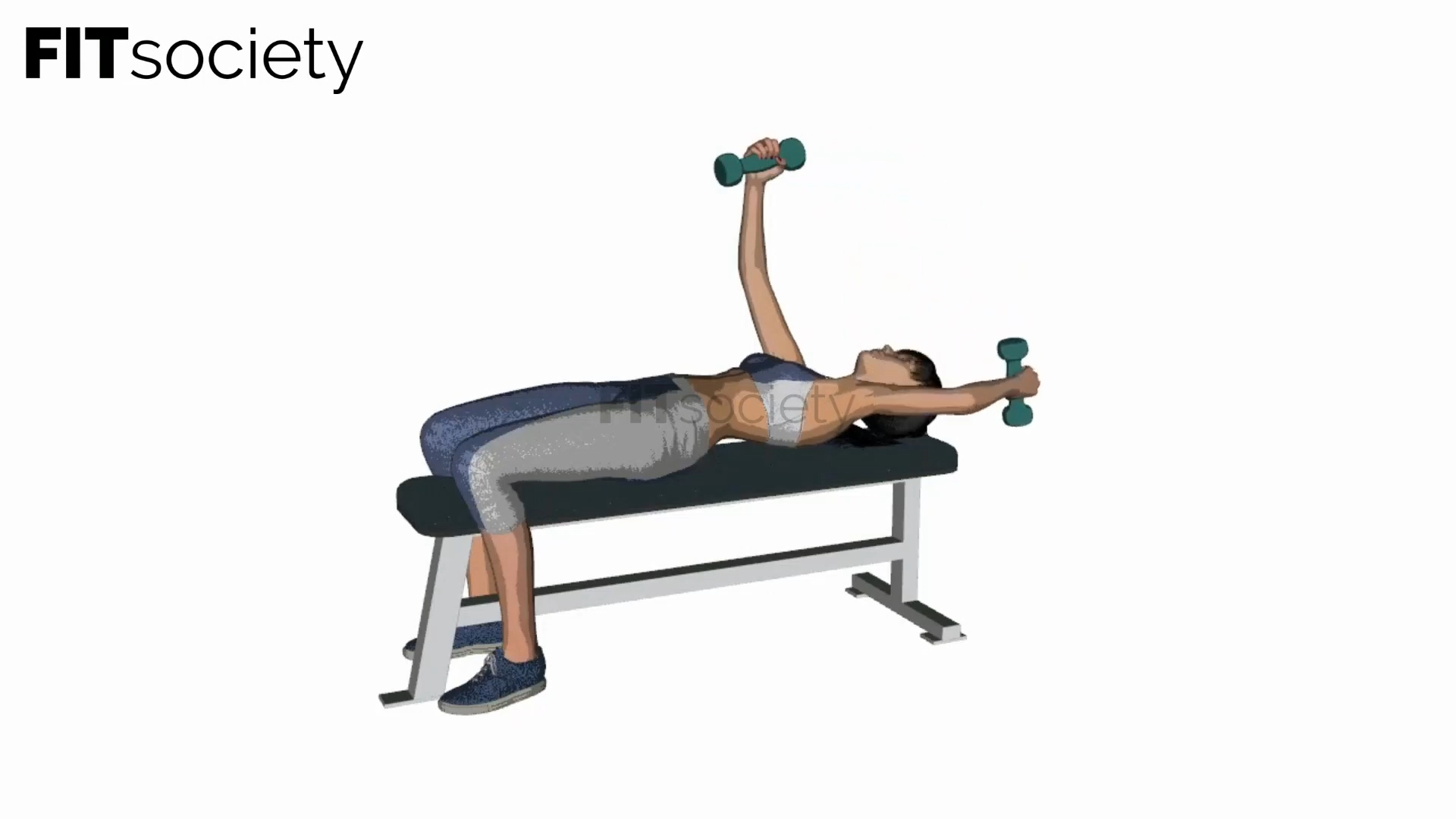
Bench press generally refers to the most classic barbell variation, fully called the Barbell bench press. Alternatives are the dumbbell (bench) press and this cable chest press.
There are some advantages to this cable variation. The tension is distributed differently than with free weights. At the end, the hands are not only pulled back toward the body, as gravity does with barbells and dumbbells. With cables, they are also pulled outward. To resist this outward force, the chest muscles must continue working for longer. With free weights, it is mainly the triceps that work hard in the final part.
A disadvantage is the limited amount of resistance that can be used. The cables tend to pull your body backward, which cannot happen when you are lying on a bench. With high resistance, remaining standing can require more effort than the exercise itself. The lying variation is then a better alternative.
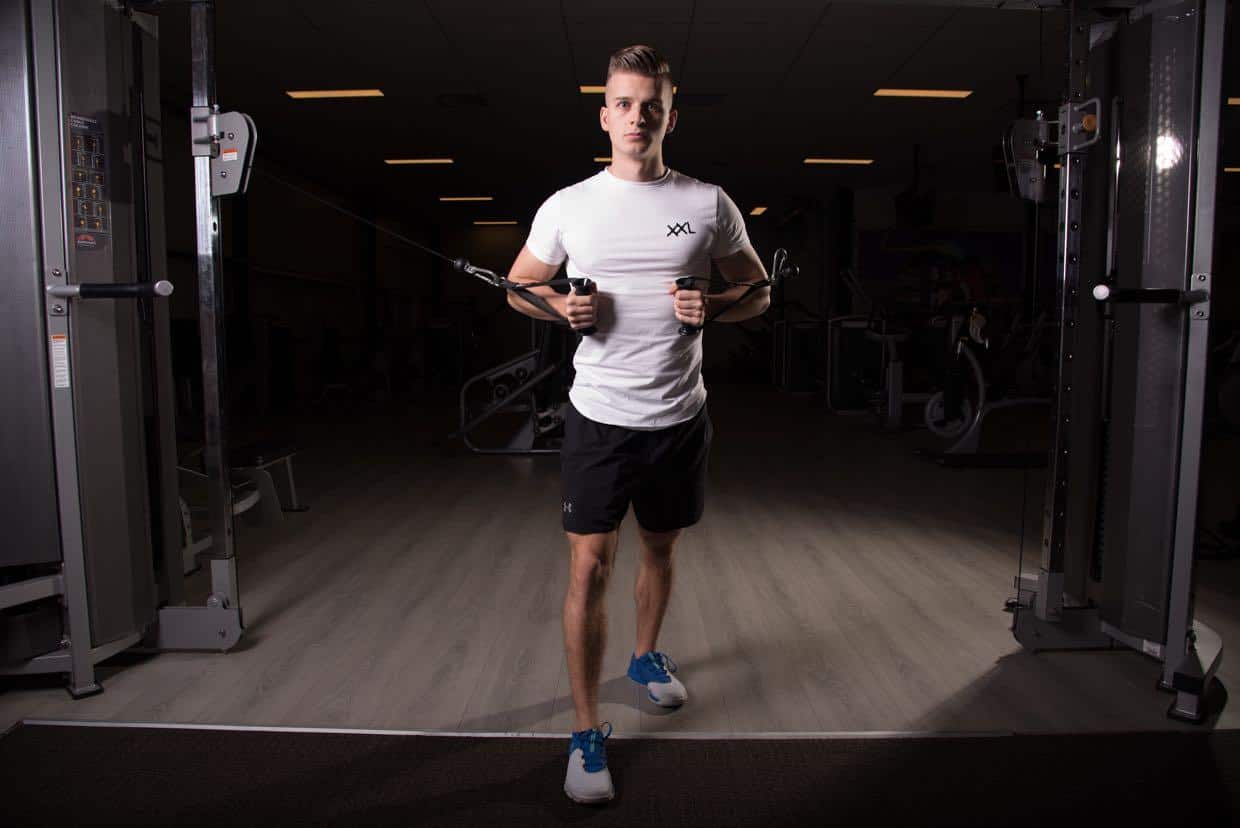
Cable Standing Chest Press
Active muscles:
- Pectoralis major (chest muscle)
- Anterior deltoid (front fibers of the shoulder muscle)
- Triceps brachii
- Serratus anterior
- Coracobrachialis
Stabilizing muscles:
- Rotator cuff (stabilizing shoulder muscles: supraspinatus, subscapularis, teres major, teres minor)
- Serratus
- Trapezius
- Biceps brachii
- Latissimus dorsi
- Core muscles
Cable Standing Chest Press instructions
- Set the pulleys of the cable machine at chest height. Make sure that the same weight is selected on both sides.
- Stand directly in the middle with both handles in your hands, keeping your hands close to your sides.
- Place one foot well forward and position your feet hip- or shoulder-width apart. Keep your upper body upright.
- Bring your elbows outward, as in a “chicken dance,” until they are slightly below shoulder height. Now move your hands slightly outward until they are directly in front of your elbows or pointing slightly inward. Keep your palms facing downward. This is your starting position.
- Push both hands forward and inward. Your arms should then be almost straight, with your hands in front of your chest.
- Controlled, bring your arms back to the starting position.
Cable Standing Chest Press technique
Do not bring your shoulders and elbows too far backward during the return movement. The safer option is to bring your elbows back to shoulder level. Rotating the shoulders farther outward may increase the risk of injury, depending on shoulder mobility.
Also prevent shoulder injuries by avoiding placing the cables, and therefore the arms, too high. Keep your elbows below shoulder height.
Alternatives:
- Dumbbell bench press
- Incline bench press
- Bench press smith machine
Run your fitness business with more structure
- Planning, member management and coaching in one platform
- Built for coaches, studios and gyms
- Fewer separate tools, more overview