Cable Seated Fly
So-called fly exercises are popular exercises for isolating the chest muscles as much as possible. The primary function during this exercise is pulling the upper arms forward with the pectoralis major. Because the arms maintain the same curvature throughout the movement, the triceps are required much less than during the bench press. The biceps must remain under tension continuously to keep the arms slightly bent.
Flyes can be performed with dumbbells, machines, or cables.
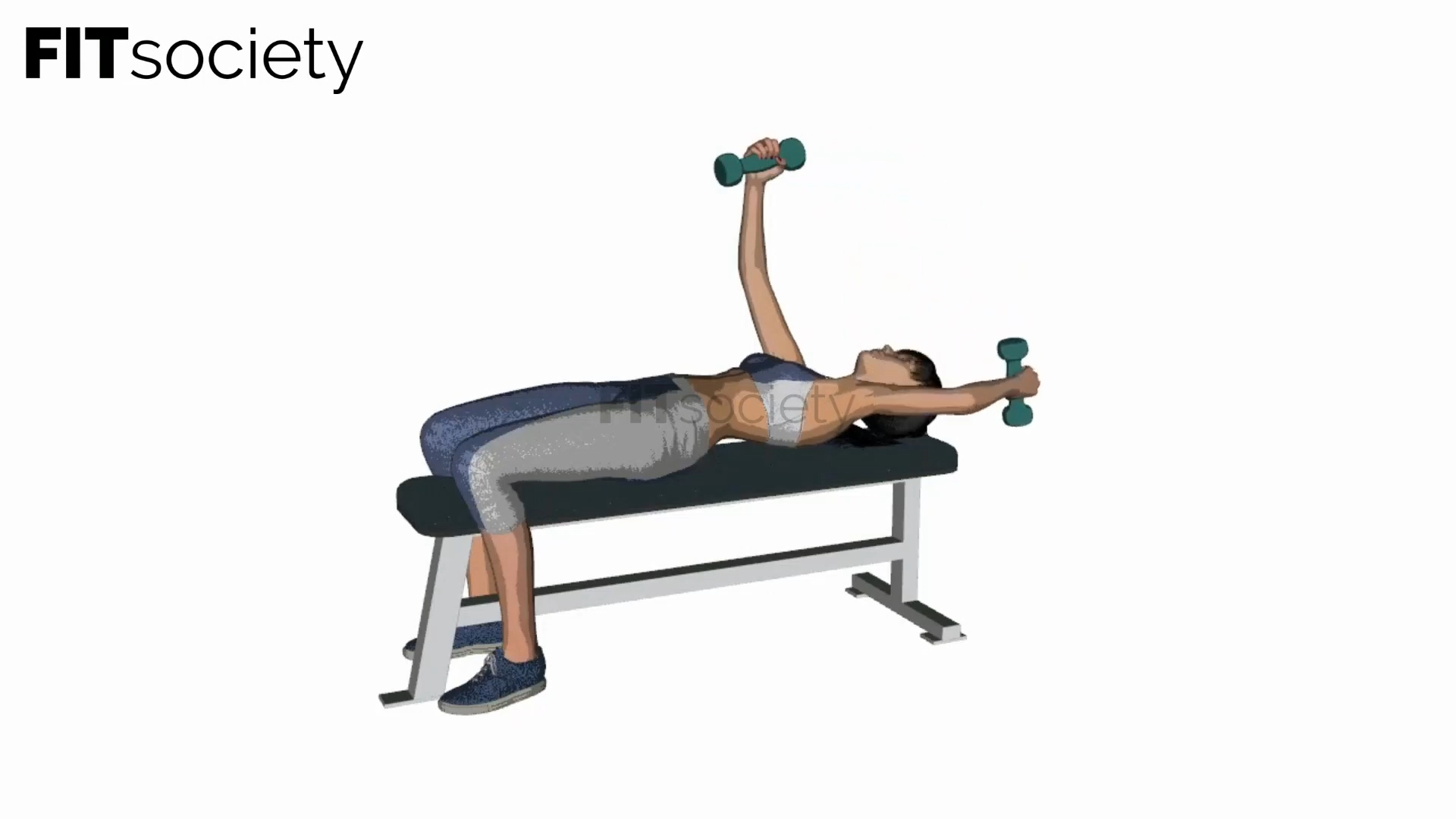
An advantage of the cable and machine variations is the constant tension that is maintained even at the end of the exercise. In the lying dumbbell variation, this tension is lost at the end of the movement.
Cables also allow you to make the exercise somewhat larger. The hands can also cross in front. This variation is called the cable crossover flyes.
Besides the standing variation, the exercise can also be performed seated or lying on a bench. The seated and lying variations have the advantage that you need to use your core less to maintain your position.
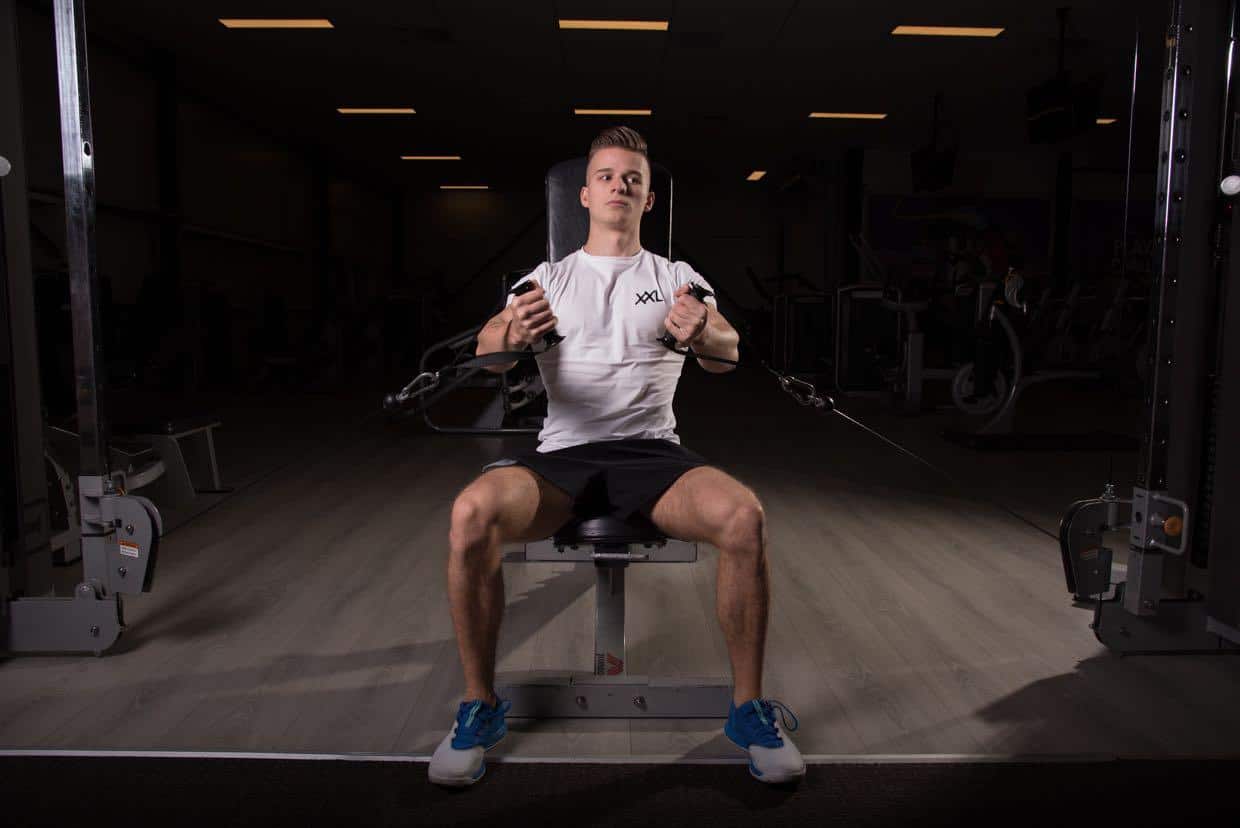
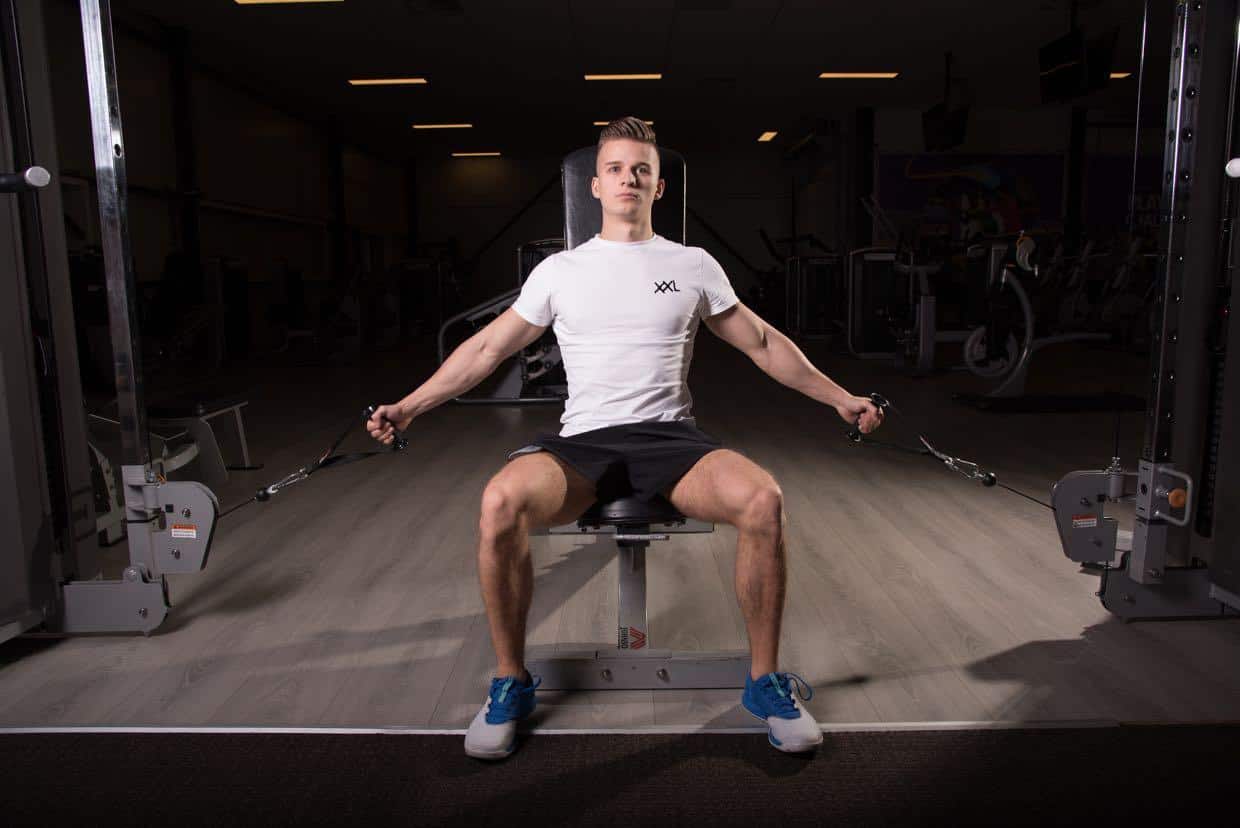
Cable Seated Fly execution
-
1
Bring your hands together as if hugging a tree. If desired, cross your hands over each other to create a crossover variation. Keep your arms slightly bent and maintain this curvature throughout the movement.
-
2
Controlledly return your hands to the starting position.
Cable Seated Fly
Active muscles:
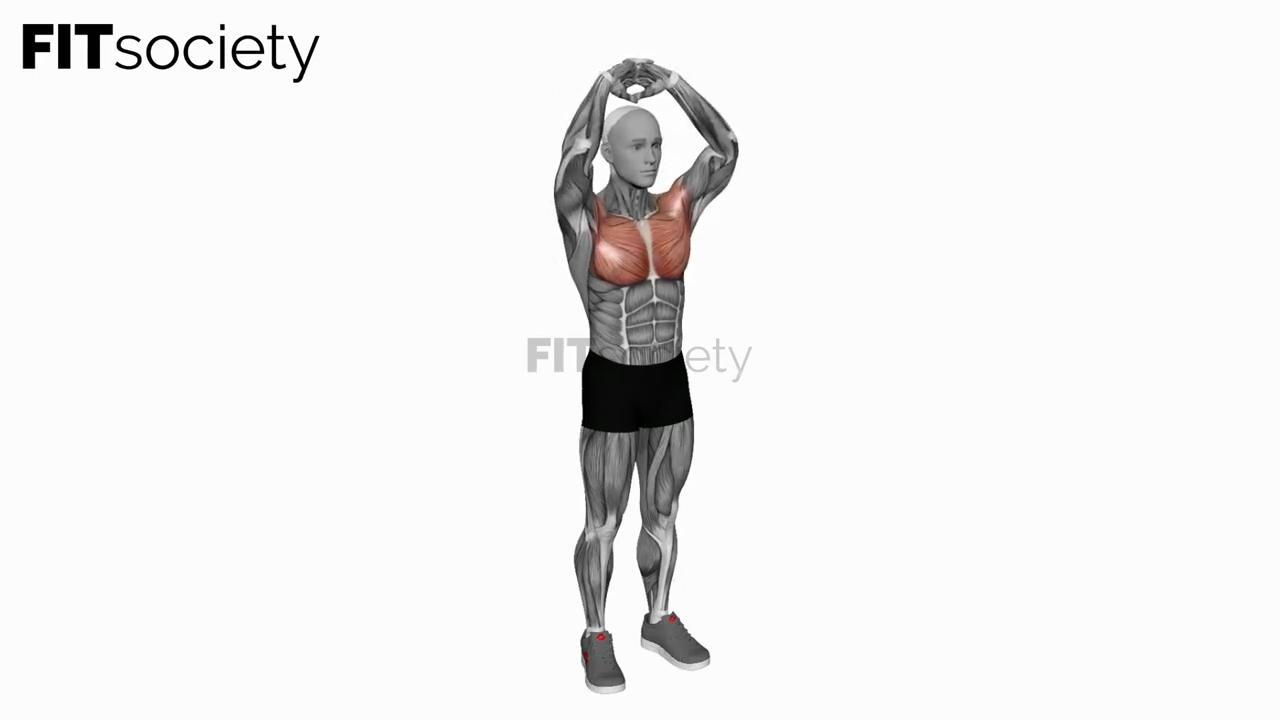
- Pectoralis major (chest muscle)
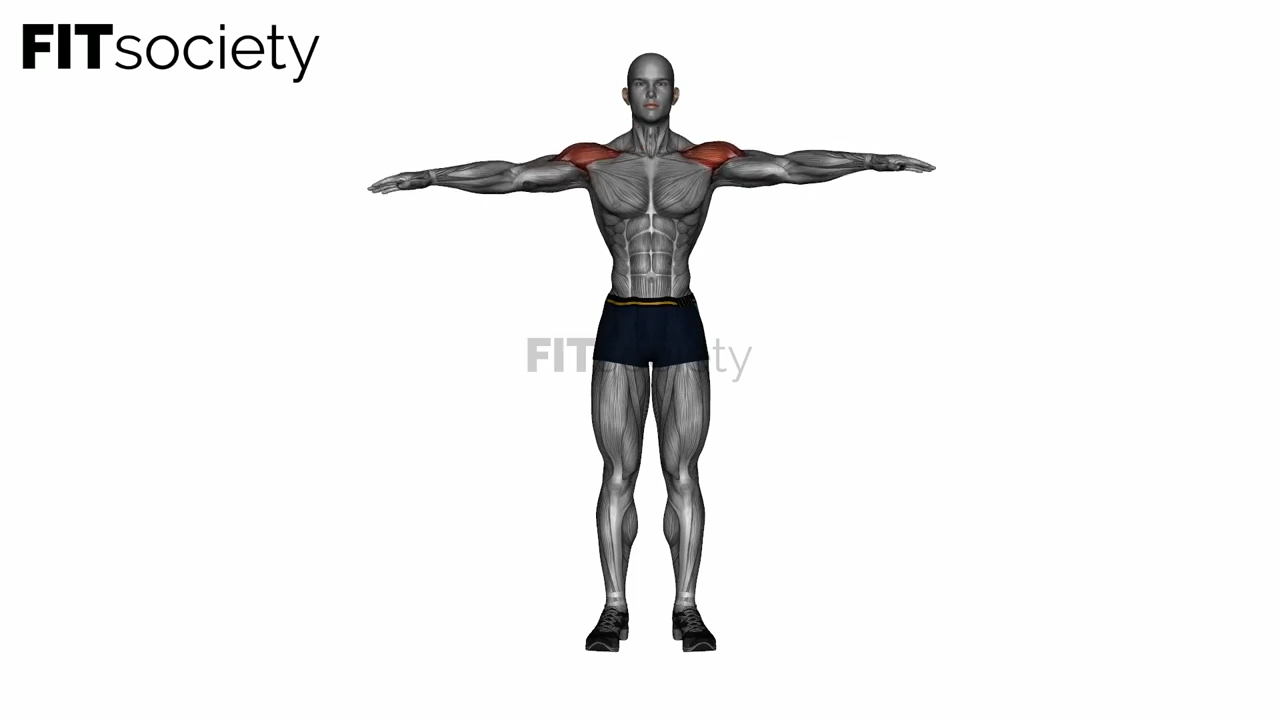
- Anterior deltoid (front fibers of the shoulder muscle)
- Serratus anterior
- Coracobrachialis
Stabilizing muscles:
- Rotator cuff (stabilizing shoulder muscles, supraspinatus, subscapularis, teres major, teres minor)
- Biceps brachii
- Serratus
- Trapezius
- Triceps brachii
- Latissimus dorsi
- Core muscles
Cable Seated Fly setup
- Attach the single handles to both sides of the cables.
- Place a bench in the middle of the cable rack. Check the height of your shoulders when seated and position the pulleys in the cable rack at that height.
- Make sure the backrest of the bench is exactly between the pulleys or slightly in front of this point, depending on shoulder mobility.
- Hold both handles, step over the bench with both legs, and then sit down.
- Check again that you are seated properly in the middle and straight, with your knees not angled to the left or right. Your hands are already being pulled to both sides by the cables, so they are already in the starting position. Make sure your elbows do not come higher than your shoulders.
Cable Seated Fly execution technique
One of the most common mistakes in this exercise is bending and straightening the arms. Do not straighten your arms when bringing your hands backward; keep them under tension. This prevents you from having to bend them again on the way forward and thereby prevents excessive use of the biceps.
Another common mistake is intending to perform a cable (crossover) fly but turning it into a cable chest press. The hands then start with the palms facing downward (pronated) instead of inward (neutral). The movement itself is then more of an upward push, as in the bench press, rather than a hugging movement.
As mentioned, you can turn a cable fly into a cable crossover fly by letting the hands cross each other. This can make the balance of the exercise more difficult. Because of the width of the hands and handles, one arm must pass underneath or over the other. This should therefore be alternated. Crossing makes the exercise technically more difficult and can distract from good execution.
Keep your elbows below shoulder level in the starting and ending positions. This is to prevent excessive involvement and a shoulder position that is more prone to injury.
Do not bring your elbows too far backward at the beginning and end of the movement. They should not move far beyond the torso. A safe starting point is to the torso. Depending on shoulder mobility, you can move slightly farther back for a larger range of motion.
Alternatives:
- Dumbbell fly
- Cable crossover fly
- Cable seated fly
- Cable lying fly
Run your fitness business with more structure
- Planning, member management and coaching in one platform
- Built for coaches, studios and gyms
- Fewer separate tools, more overview