Dumbbell Biceps Curl
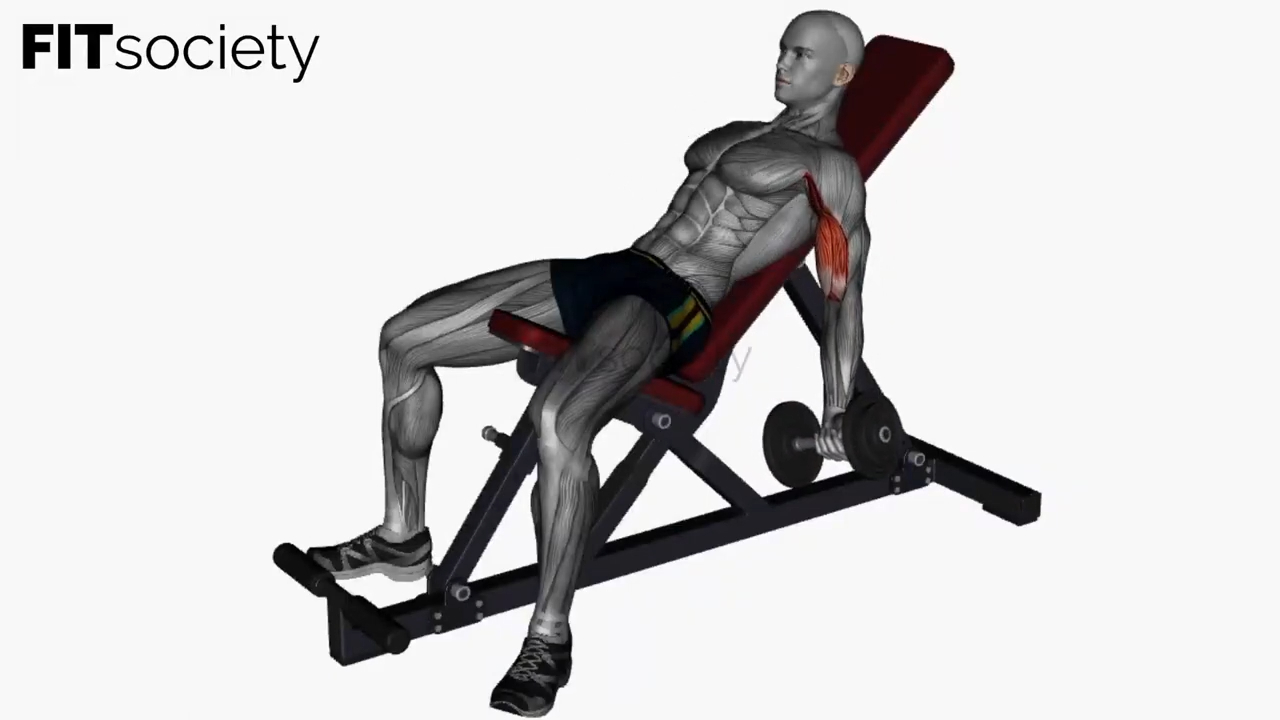
The dumbbell biceps curl is perhaps one of the most popular exercises for the biceps. This is not entirely unjustified. The dumbbell biceps curl can be performed in different ways. The difference between a seated or standing execution, for example. When standing, the core muscles have to work more to stabilize. The standing execution also makes it easier to ‘cheat’ by throwing the upper body backward during the upward movement.
Other variations involve the position of the wrists. The best-known execution uses a rotation, causing the grip to change during the exercise. The outward rotation of the wrist ('external rotation') engages two functions of the biceps brachii. The variation in which the palms continue to face forward and upward and no rotation takes place requires only flexion of the arm ('flexion', the only function of the deeper brachialis).
The variation in which the palms remain turned inward and/or downward places more emphasis on the brachioradialis, which runs along the forearms, and the wrist extensors.
The exercise can be performed with both hands simultaneously or alternately.
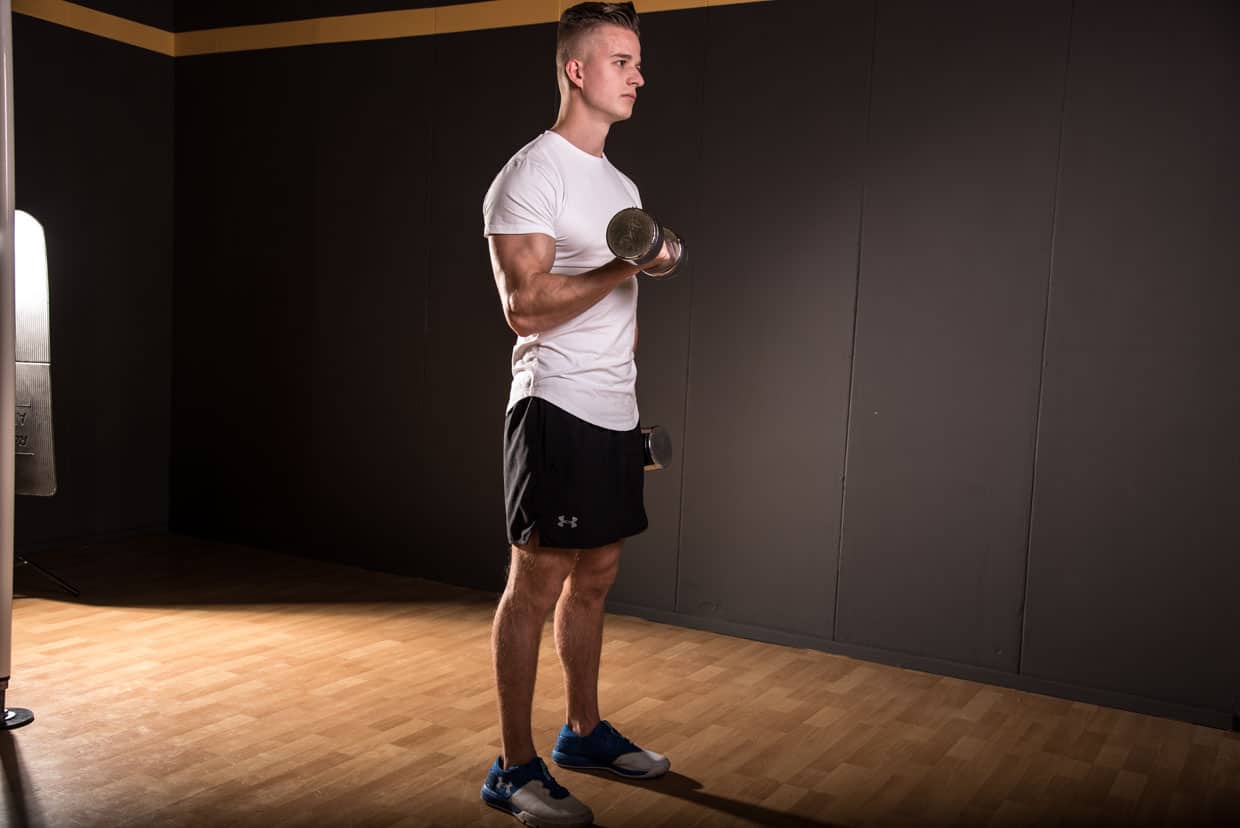
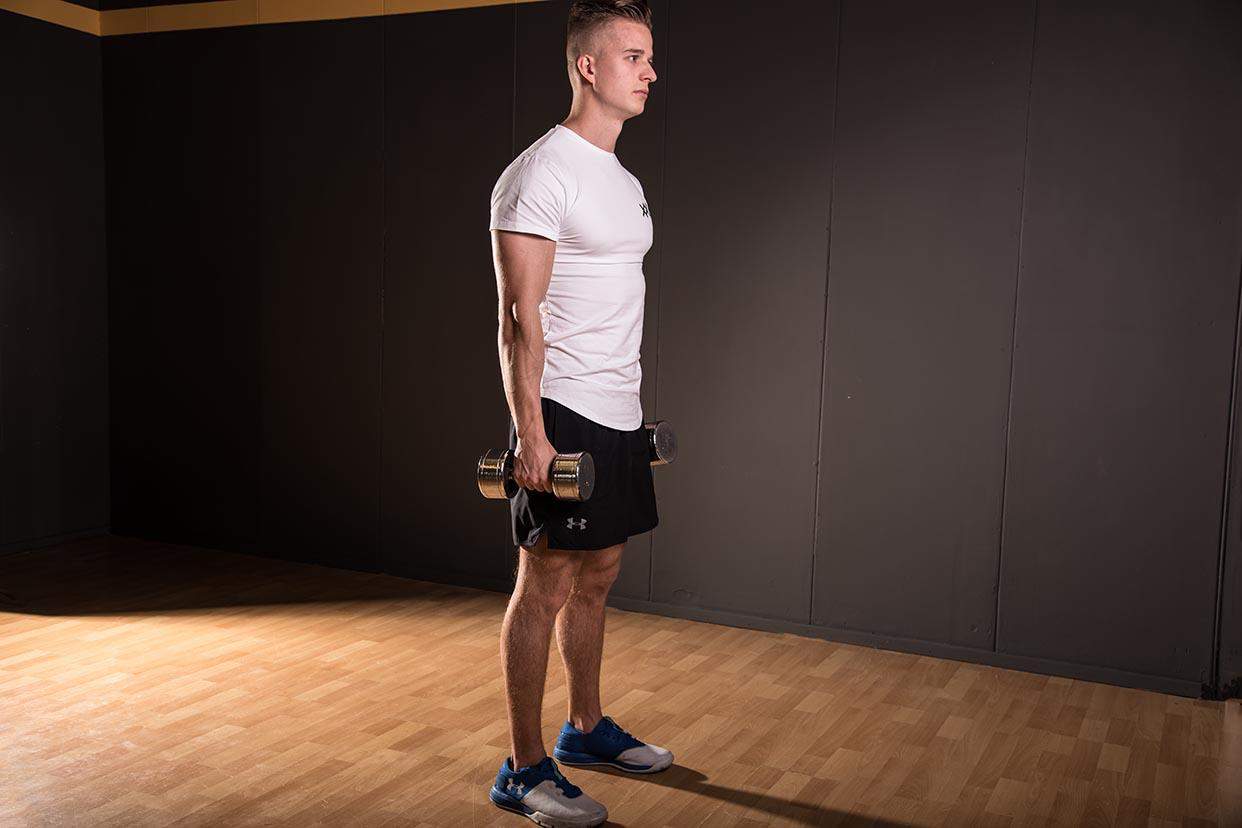
Dumbbell biceps curls execution
-
1
Choose the appropriate dumbbell weight.
-
2
Stand firmly, feet shoulder-width apart, knees slightly bent
-
3
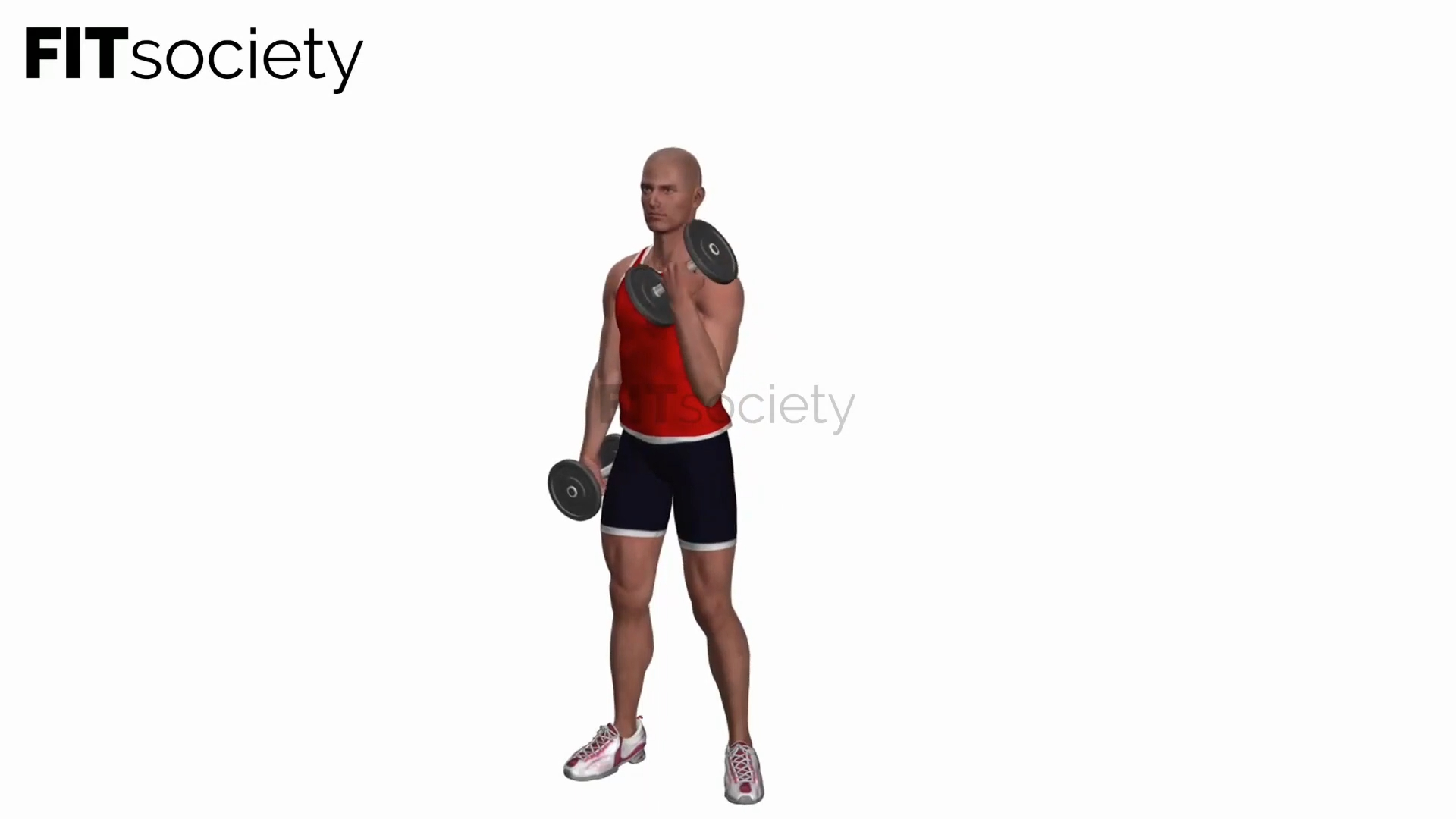
Hold the dumbbells beside your body in a neutral position (palms facing you, thumbs pointing forward)
-
4
Bring one dumbbell forward and upward by moving (only) the forearm forward. During the movement, rotate the hand outward so that the thumb points outward at the end of the movement.
-
5
Continue until just before the point at which you lose tension in the biceps at the top of the movement.
-
6
Lower the weight in a controlled manner until the arm is almost extended, and rotate the hand back to a neutral position during this movement.
-
7
Repeat with the other hand.
Dumbbell biceps curls
Active muscles:
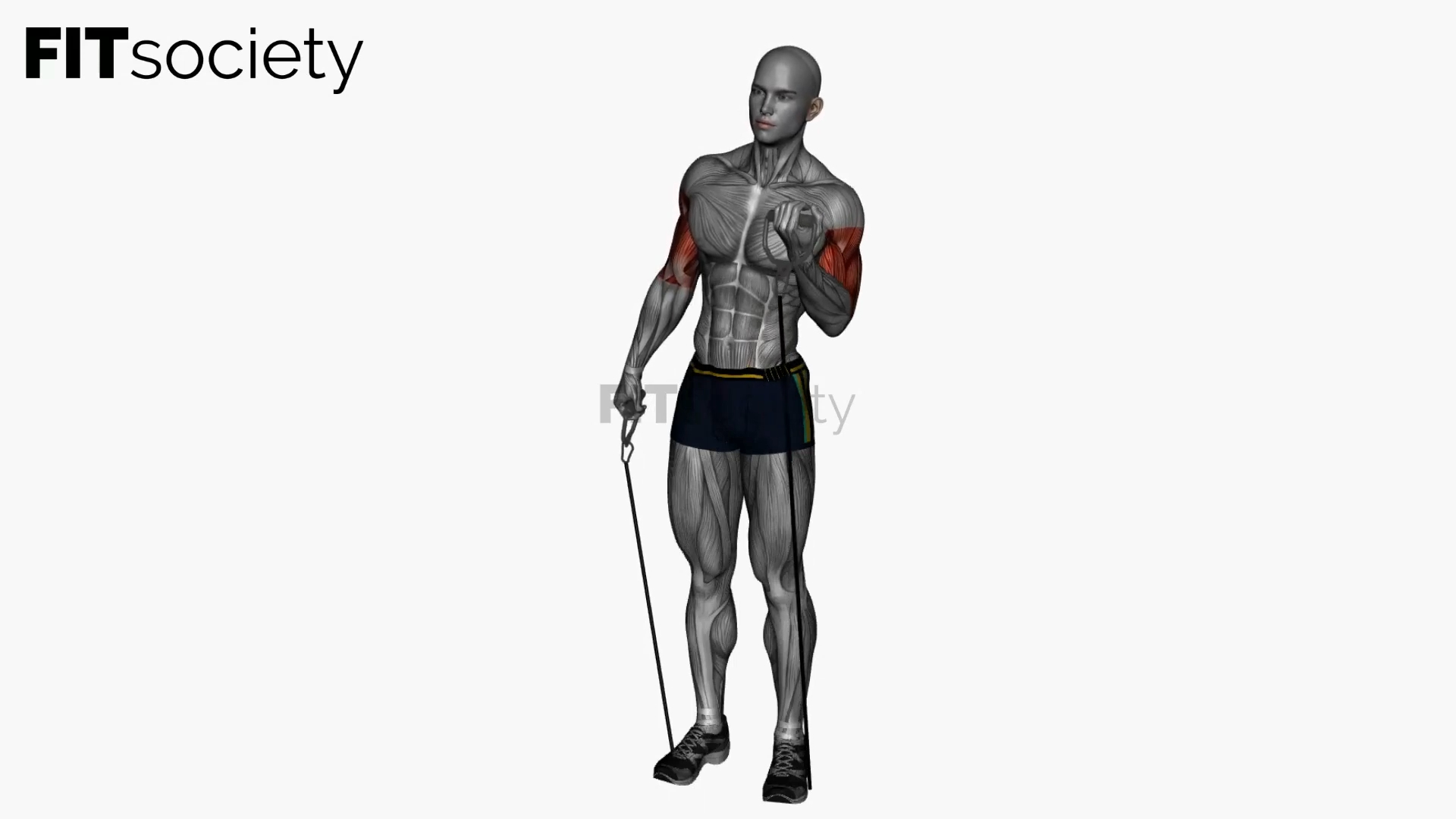
- Biceps brachii, brachialis and brachioradialis.
- Forearms
- Shoulders (especially the front)
- Core (stabilizing)
Dumbbell biceps curls execution
Avoid allowing the upper arms to move forward. This engages the shoulders and creates momentum, thereby relieving the biceps (and reducing effectiveness).
When the dumbbells are brought too far upward, the weight comes to rest directly on the forearms. This can lead to wrist injuries. The tension is also removed from the biceps, which reduces effectiveness.
Avoid swinging your body to get the weight upward. This reduces effectiveness and increases the risk of injury.
Possible alternatives
- Barbell biceps curls
- Cable biceps curls (facing the cable rack, short bar)
- Cable biceps curls (back facing the rack, short bar)
Run your fitness business with more structure
- Planning, member management and coaching in one platform
- Built for coaches, studios and gyms
- Fewer separate tools, more overview