Bayesian Biceps Curl
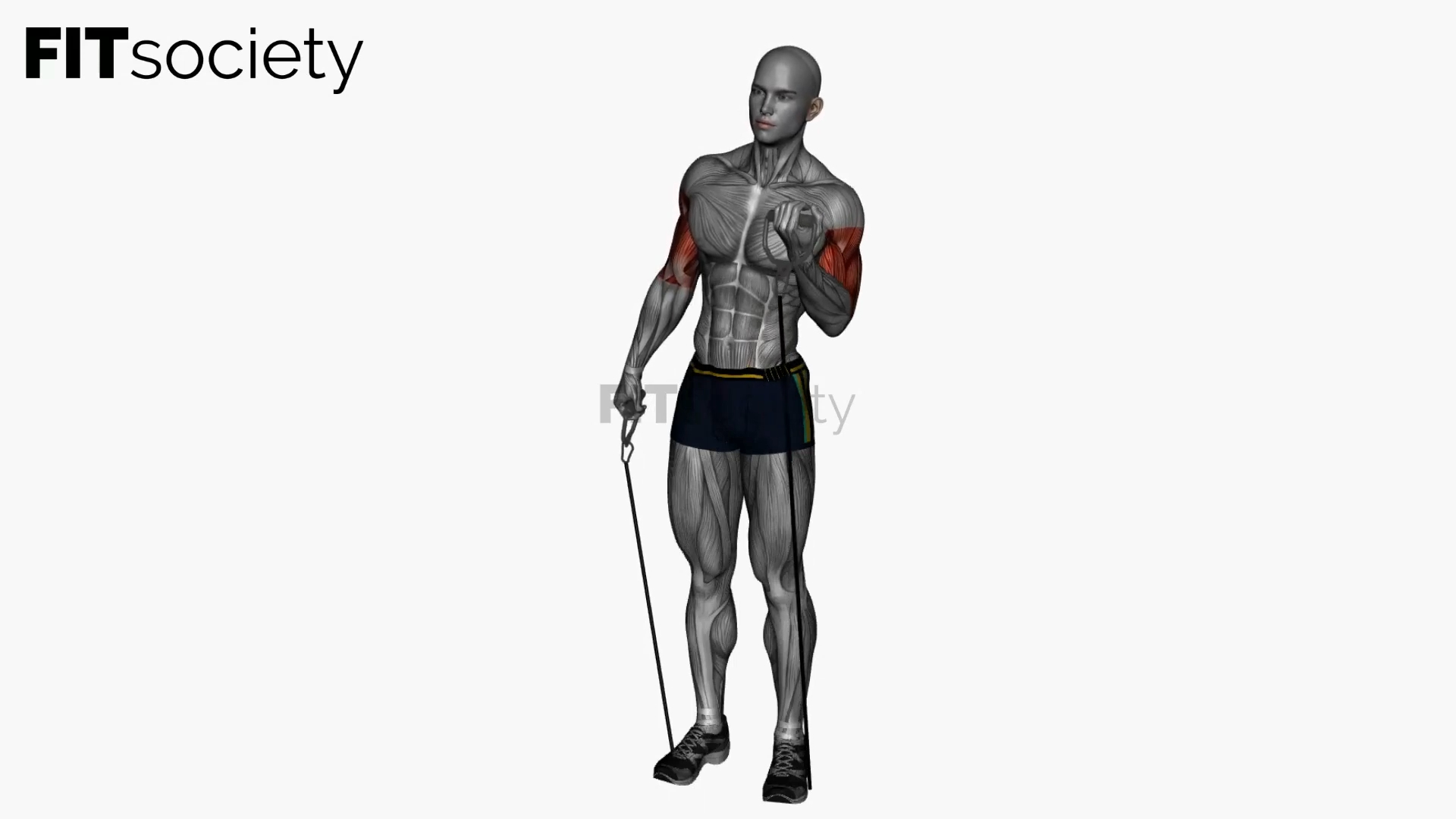
The Bayesian biceps curl is performed in several different ways. In most cases, it is performed as a normal one-arm cable curl with your back facing the rack. A curl exercise for the biceps in which the cable should provide more constant resistance than dumbbells. This does not mean that the resistance remains continuously the same. It varies depending on the angle at which you pull the cable.
Due to the circular movement, this angle changes during the exercise. In this variation, where you face away from the rack, the resistance is greatest mainly during the first part of the exercise.
There is also a variation of this exercise in which you begin facing the rack (Cable one arm bicep curls, front). Most of the resistance then occurs later in the movement due to the adjusted angle of the cable.
Some consider the Bayesian biceps curl a variation of the one-arm cable curl intended to increase the contribution of the long head of the biceps. This variation is also called the behind-the-back cable curl.
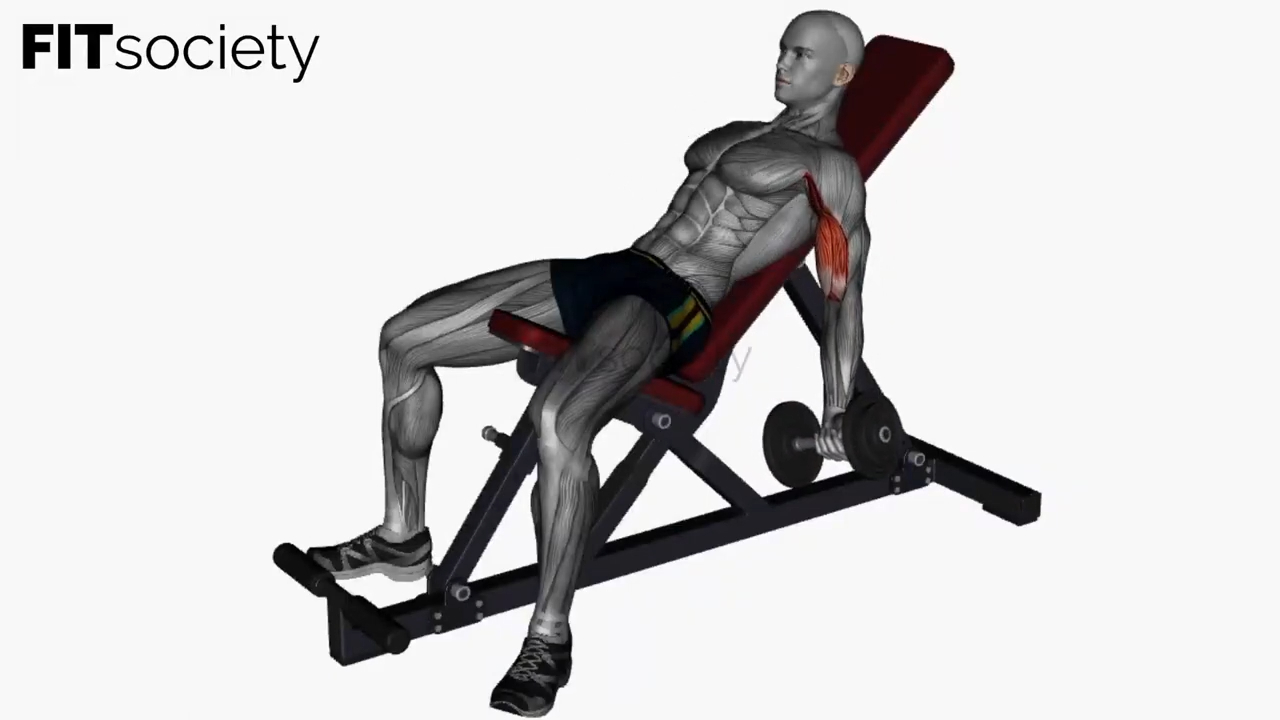
For this variation, the exercise is performed with the elbows behind the torso instead of beside it. You also generally stand somewhat farther from the rack. The long head (outer side) of the biceps crosses not only the elbow joint but also the front of the shoulder joint. Moving the upper arm backward therefore stretches this long head. This results in so-called ‘passive insufficiency’. The stretch creates a favorable relationship between the length of the head and tension, allowing it to contribute more and become more isolated. This variation can be compared with the incline dumbbell biceps curl.
Because most people assume the execution of the normal one-arm cable curl, we will describe the exercise here as such.
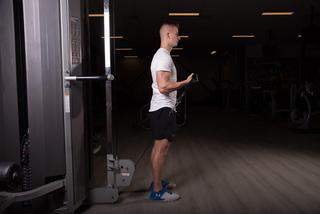
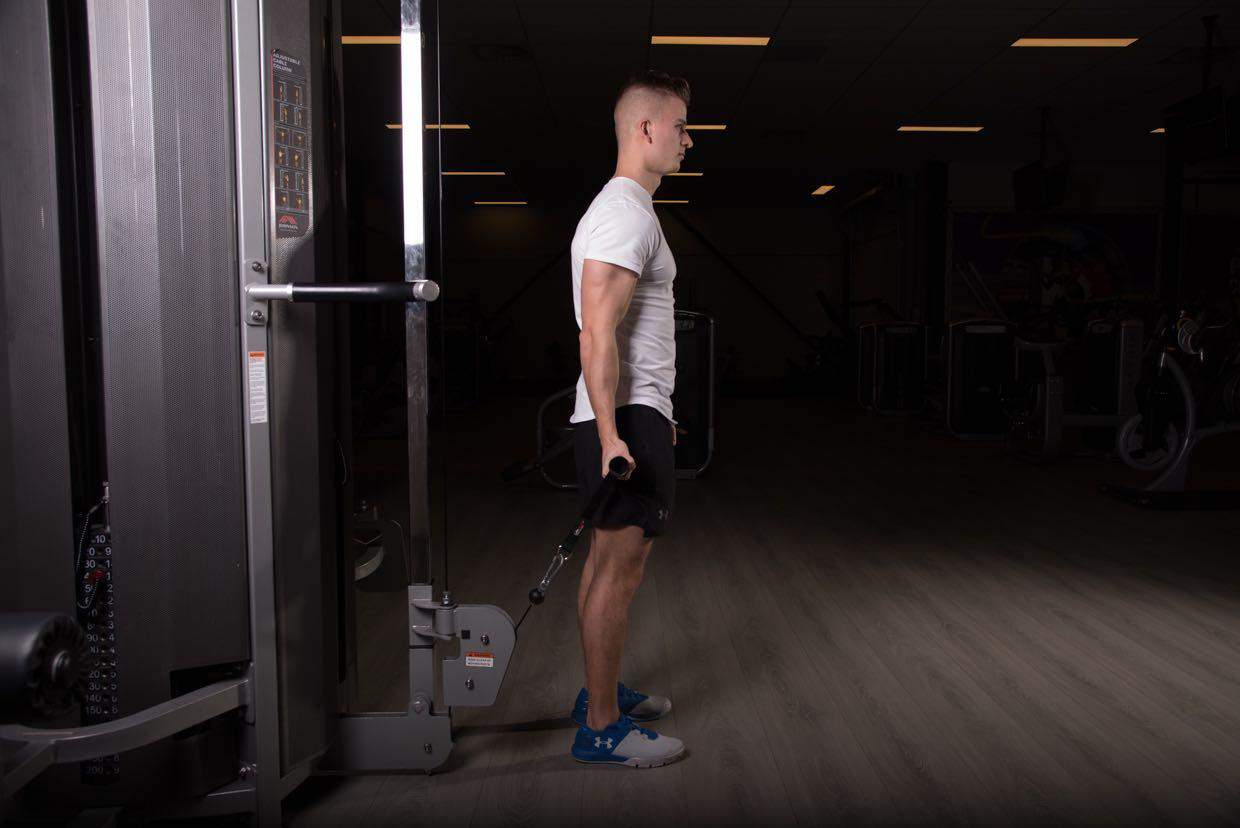
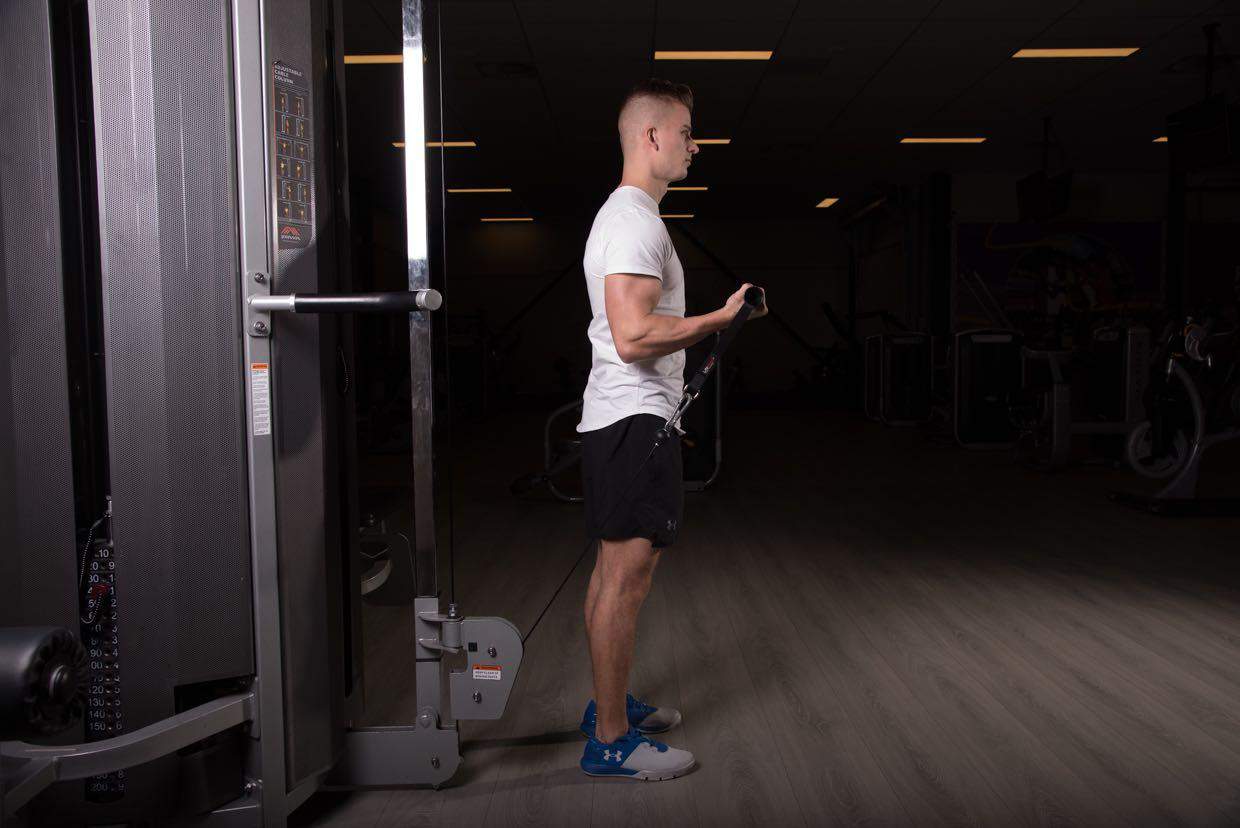
Bayesian biceps curl execution
-
1
Select the appropriate weight in the cable rack and make sure the pin is securely in place
-
2
Attach a single handle to the cable
-
3
Stand firmly with your back facing the rack. Place your feet shoulder-width apart, next to each other or one in front of the other (to prevent yourself from being pulled backward).
-
4
Grip the handle with your palm facing upward. Keep your elbow by your side.
-
5
Bring the cable handle forward and upward by moving (only) your forearm forward.
-
6
Continue until just before the moment when you lose tension in the biceps at the top of the movement.
-
7
Lower the weight under control until the arm is almost fully extended.
Bayesian biceps curl technique
Prevent the upper arms from moving forward with you. This engages the shoulders and creates momentum that actually reduces the load on the biceps (thereby reducing effectiveness). Do not move your upper body forward to perform the exercise; instead, use a lighter weight.
When the cable is brought too far upward, you lose tension in the biceps, which reduces effectiveness.
Possible alternatives
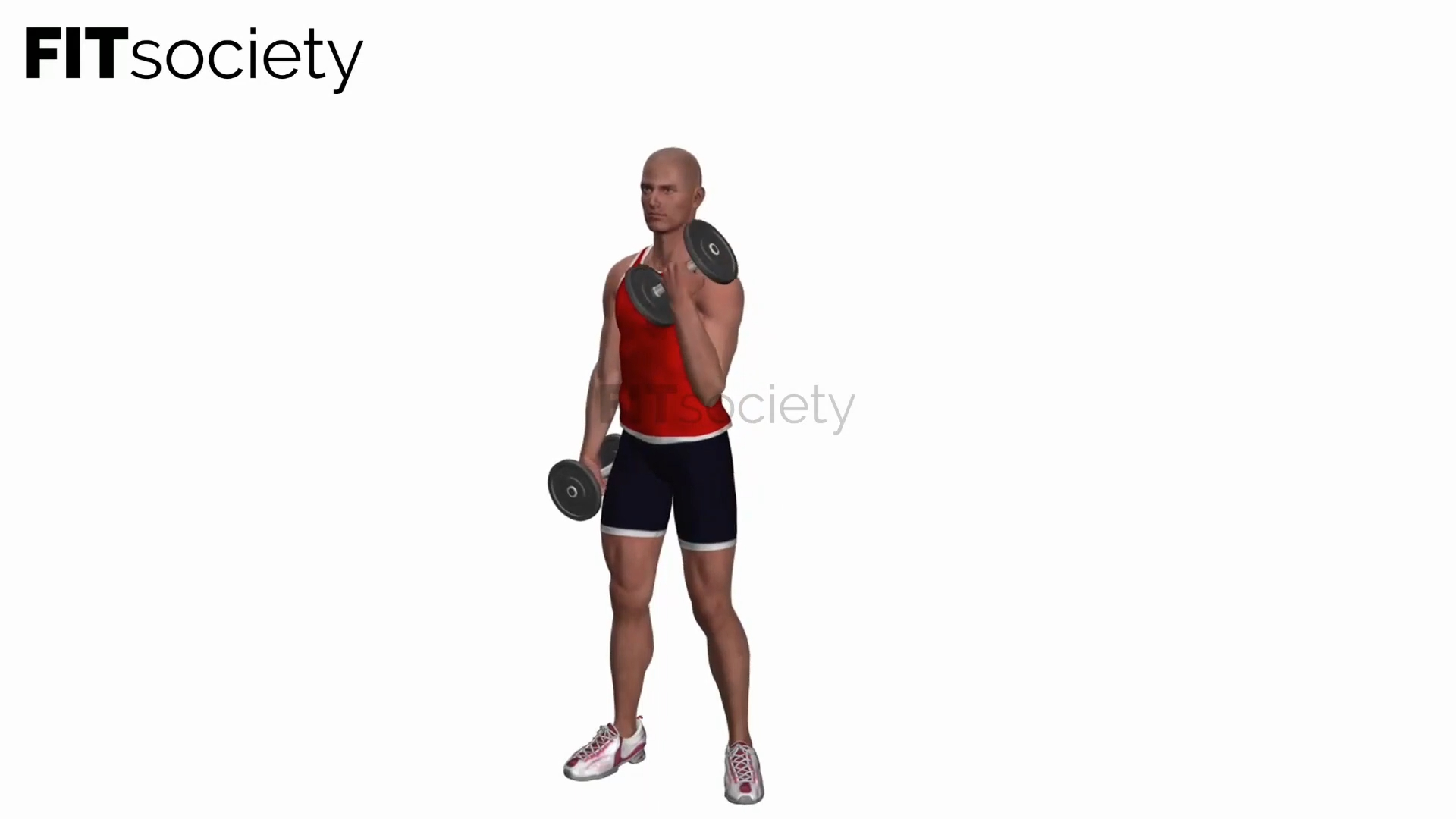
- Dumbbell biceps curls (palms facing forward/upward)
- Cable bar curls (rear)
Run your fitness business with more structure
- Planning, member management and coaching in one platform
- Built for coaches, studios and gyms
- Fewer separate tools, more overview