Barbell Preacher Curl
Barbell preacher curls are an isolation exercise for the biceps. The exercise was devised by bodybuilders in the 1960s as a way to isolate the biceps. Placing the upper arms on the sloped bench prevents you from cheating by bringing the shoulders forward. It also prevents you from using your upper body to assist the movement from the torso. Opinions differ on the optimal execution, as in many cases. For example, the correct height of the arm pad relative to the chest, as well as how wide the elbows should be placed on it and how wide the hand grip should be.
The long head of the biceps runs not only across the elbow joint but also across the front of the shoulder joint. Because the elbows are positioned in front of the torso rather than beside it in this exercise, the long head of the biceps is already partially shortened. This makes maximum effort for this head impossible ('active insufficiency'). Other muscles must therefore assist more as well (the short head of the biceps, the brachialis, and the brachioradialis).
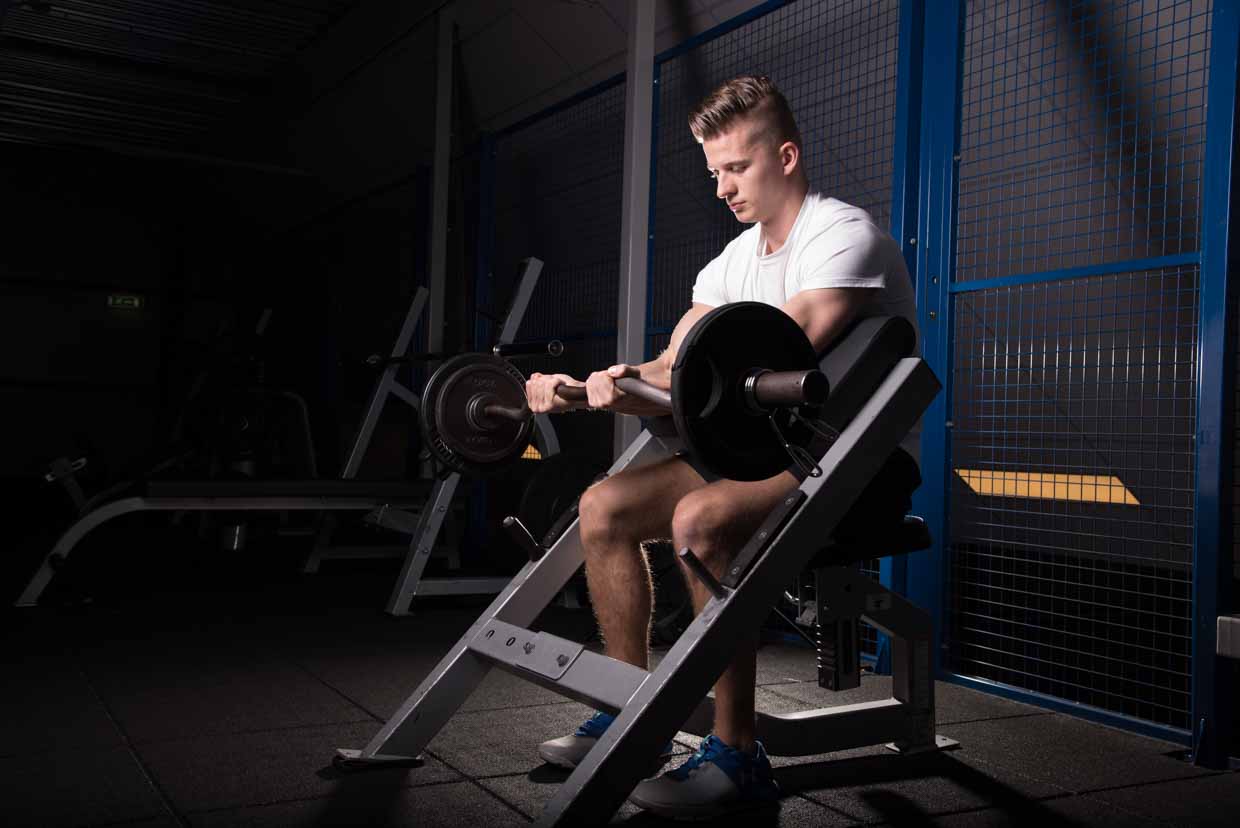
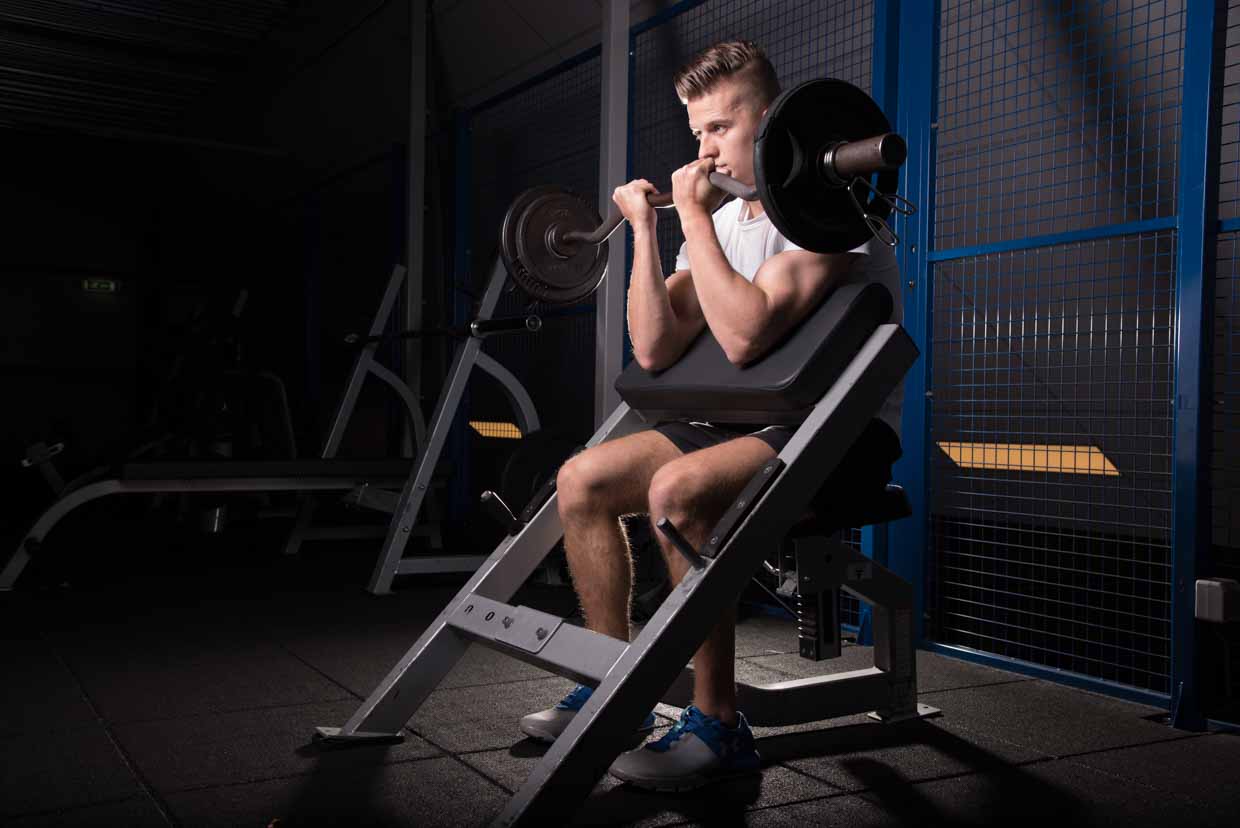
Barbell preacher curl execution
-
1
Load the appropriate weight onto a barbell and place it in the holders of the preacher bench.
-
2
Adjust the seat to the appropriate height so that the arm pad is approximately level with the lower chest.
-
3
Grasp the bar over the arm pad while leaning forward and sit down so that the arms are in the starting position.
-
4
Move the bar forward and upward.
-
5
Continue until just before you lose tension on the biceps at the top of the movement.
-
6
Lower the weight under control until the arms are almost straight.
-
7
Come up on the last repetition to return the barbell to the rack.
Barbell preacher curls
Active muscles:
- Biceps brachii, brachialis, and brachioradialis.
- Forearms
Barbell preacher curl technique
A straight bar can create an unnatural angle between the hand and forearm. A wider grip can alleviate this somewhat, making this exercise slightly safer than the normal barbell curl. However, the EZ bar, the curved bar, is often preferred.
When you take the bar to get into the starting position, avoid fully straightening the arms. Keep them slightly bent. Fully straightening must be avoided throughout the movement, but this often already goes wrong when getting into the starting position and starting the exercise with straight arms. The same can happen when you finish and return the barbell to the lower rack after the last repetition. Hence the tip to stand up when doing this.
When the bar is raised too far during the exercise, the weight rests directly on the forearms. This can lead to wrist injuries. The tension is also removed from the biceps, which reduces the effectiveness.
Possible alternatives
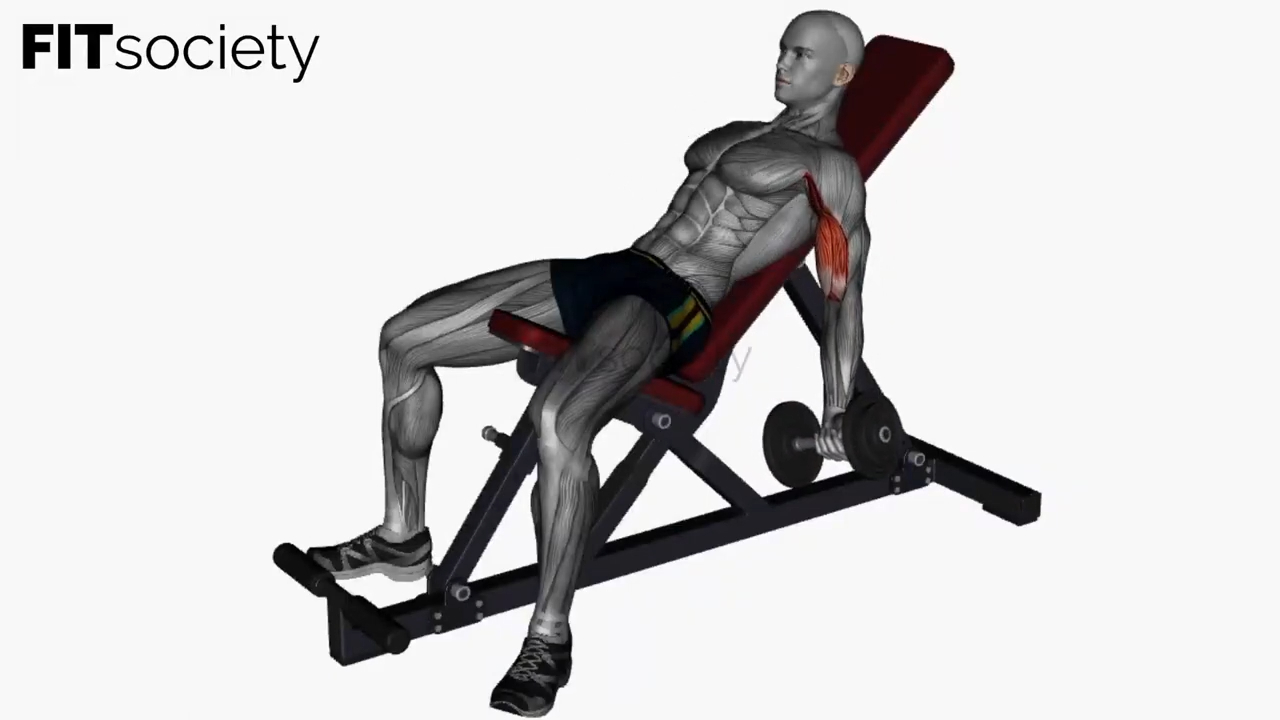
- Concentration curls (palms facing forward/upward)
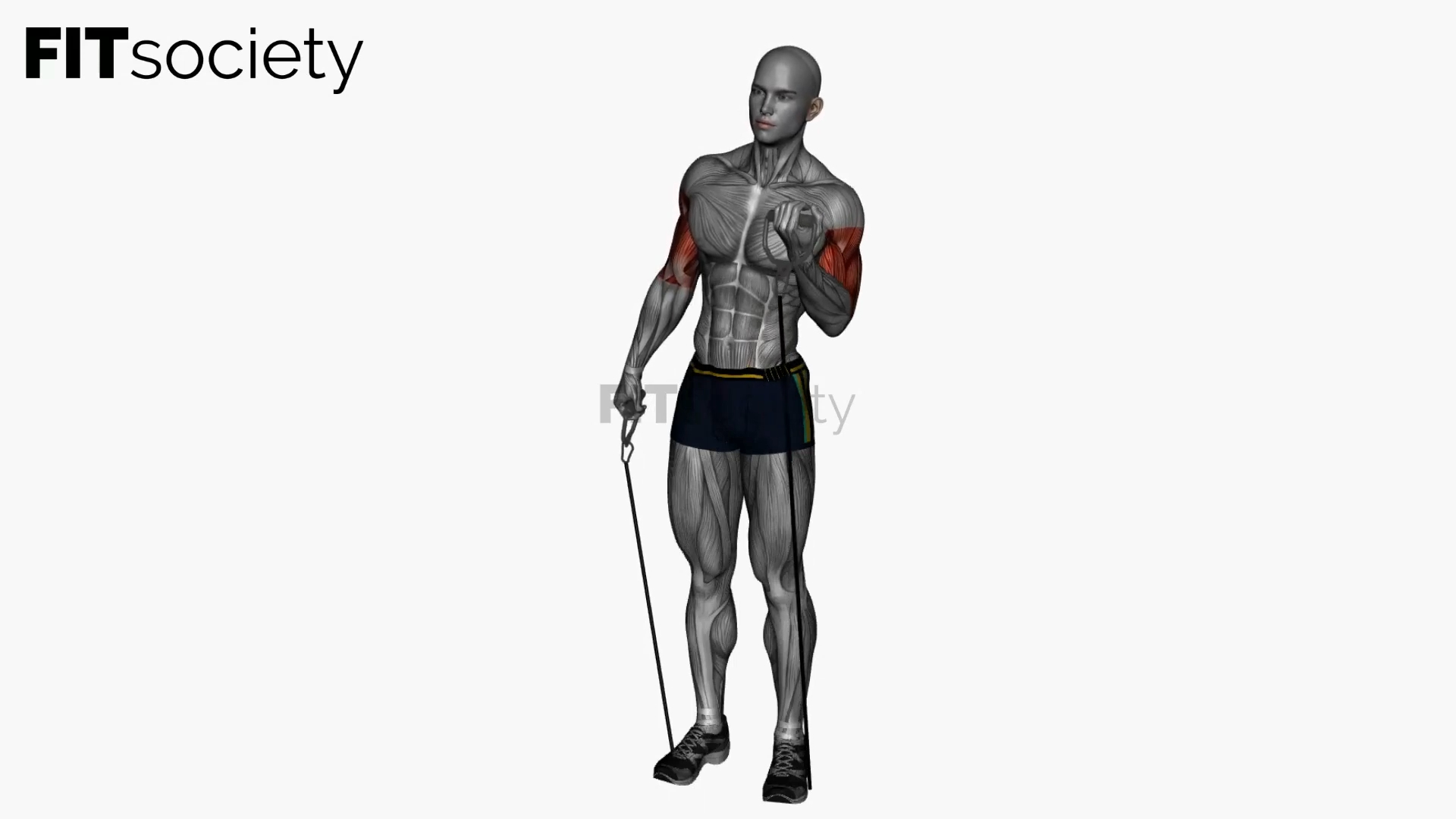
- Cable bicep curls (back toward the cable rack, short bar)
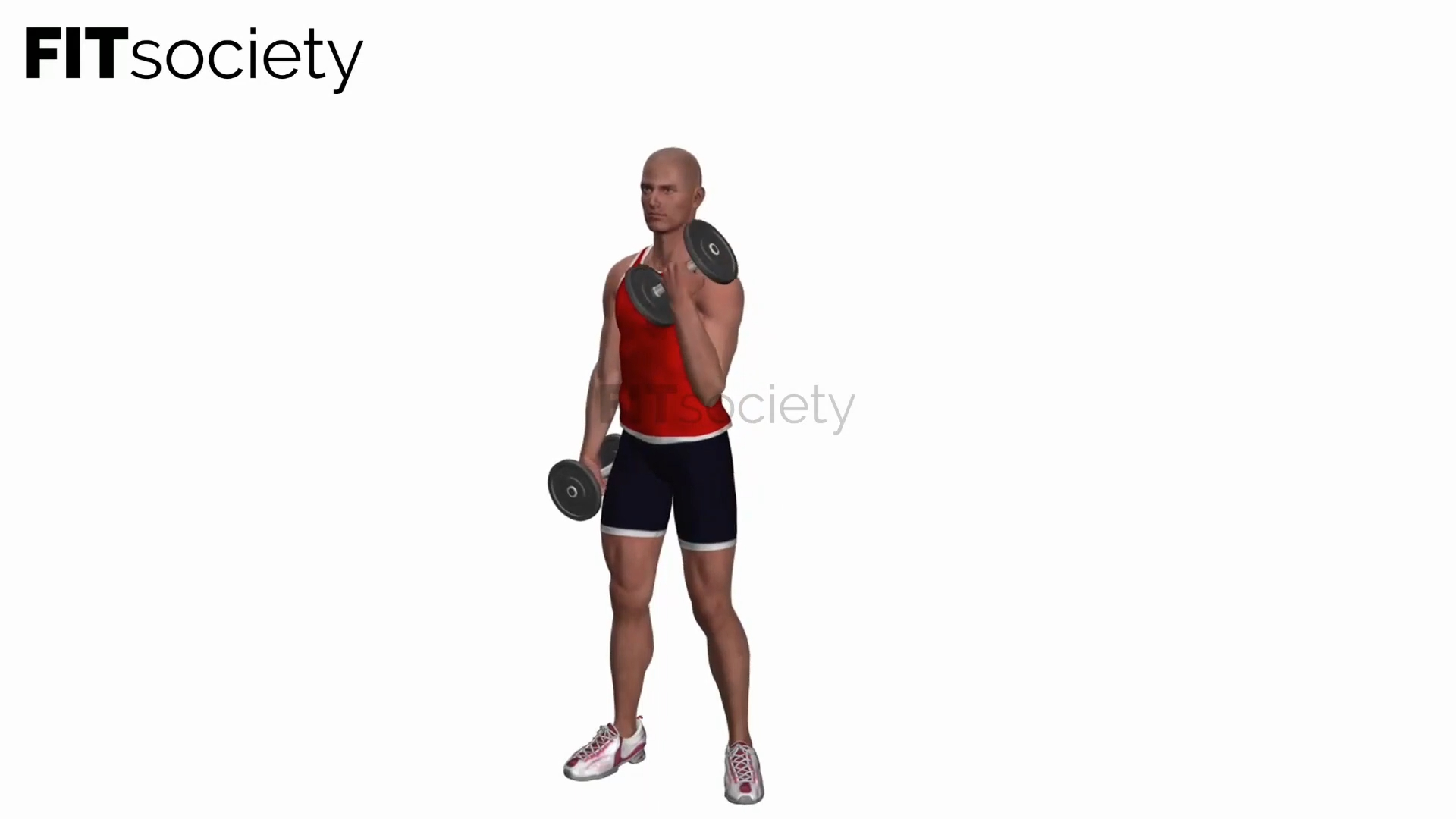
- Barbell curls
Run your fitness business with more structure
- Planning, member management and coaching in one platform
- Built for coaches, studios and gyms
- Fewer separate tools, more overview