Which fitness trends for 2027 deserve a place in your gym or studio’s next 90 days? Start with one member problem, then choose at most two small pilots that fit your staff, space and budget. Use the worksheet below to make the decision reviewable before adding another commitment.
ACSM’s report of 20 October 2026 puts wearables first, exercise apps second and group classes seventh, previously thirteenth. Professional observations do not predict local demand or establish product effectiveness.
Start with a local baseline
A trend can suggest a question; your own operation must supply the evidence. Review a comparable recent fortnight: who asked for a different class time, which booked visits were attended, and how long did follow-up take? Record the period and counts, including missing records. Separate a member’s request from your interpretation of it.
Choose one question per pilot. “Can we offer a usable later class without displacing existing bookings?” is easier to assess than “Should we invest in group fitness?” For a digital pilot, ask whether members can complete the agreed check-in and whether coaches have time to respond.
Copy this decision worksheet for each proposal
- Member need and evidence: Who has the problem? Record requests, attendance or interviews, their dates and the limits of the sample.
- Existing delivery capability: What can you deliver with current skills, equipment and tools? List what still needs checking.
- Staff preparation: Who needs a briefing, practice or training? Reserve preparation and cover time before opening bookings.
- Timetable and space: Name the slot, room, setup and changeover allowance. Check competing uses and existing commitments.
- Pilot cost: Set a spending ceiling including paid staff time, direct costs and any displaced activity. Separate estimates from actual costs.
- Accountable owner: Name one decision-maker and a deputy, with a weekly time allowance.
- Success measure: Write the numerator, denominator and baseline period: attended visits divided by booked visits, for example. Record staff minutes alongside participation.
- Review and stop decision: Set dates and your own continuation criteria before launch. State what would trigger revision, postponement or stopping.
A shared document is sufficient. Use the weekly client check-in template for follow-up questions and the combined PT and group timetable guide to examine scheduling conflicts.
A hypothetical studio with a real limit
Consider the fictional Cedar Studio: two coaches, one multipurpose room, a maximum of four additional staff hours per week and €1,500 for a 90-day test, with no equipment purchase. All figures and choices in this example are hypothetical, not reported business results.
- Pilot one: Offer 12 volunteers a weekly check-in through the studio’s existing communication tools. Coach Alex owns it, reserving one hour weekly and an illustrative €450 allowance for paid time. Record completed check-ins out of those requested and actual coach minutes. Participation is voluntary; agree what information is useful rather than collecting every available metric.
- Pilot two: Move one existing weekly group class to a later, member-requested slot after consulting affected attendees. Coach Sam reserves two additional hours weekly for preparation and coordination, with an illustrative €900 paid-time allowance. Compare bookings, attended visits and disruption with the original slot’s baseline.
That leaves one staff hour weekly and €150 unallocated. The allowances are example constraints, not wage benchmarks: Cedar must calculate whether its actual staff costs fit before approving either pilot. Digital follow-up uses no extra floor space but creates response work; moving a class tests timing but may inconvenience regulars.
A third proposal, buying wearable hardware, waits. It adds purchasing and support decisions before Cedar has established a member need. Deferring it preserves room to finish and evaluate the two smaller tests.
Turn the worksheet into a 90-day sequence
- Days 1–14: Record the baseline, consult staff and members, complete both worksheets and approve only proposals that fit the limits.
- Days 15–30: Brief the people involved and rehearse the handoff. Explain dates, expectations and how participants can raise problems.
- Days 31–60: Run the pilots, logging attendance, responses, staff time, actual costs and exceptions weekly. Change one operational variable at a time and note it.
- Days 61–90: Compare results with the baseline and agreed criteria. Continue, revise and retest, or stop; record the reason and who communicates the decision.
If your shortlisted idea involves a specialist format, use the reformer beginner onboarding worksheet or the HYROX station bottleneck dry run before committing resources.
Bring the actual process to a demo
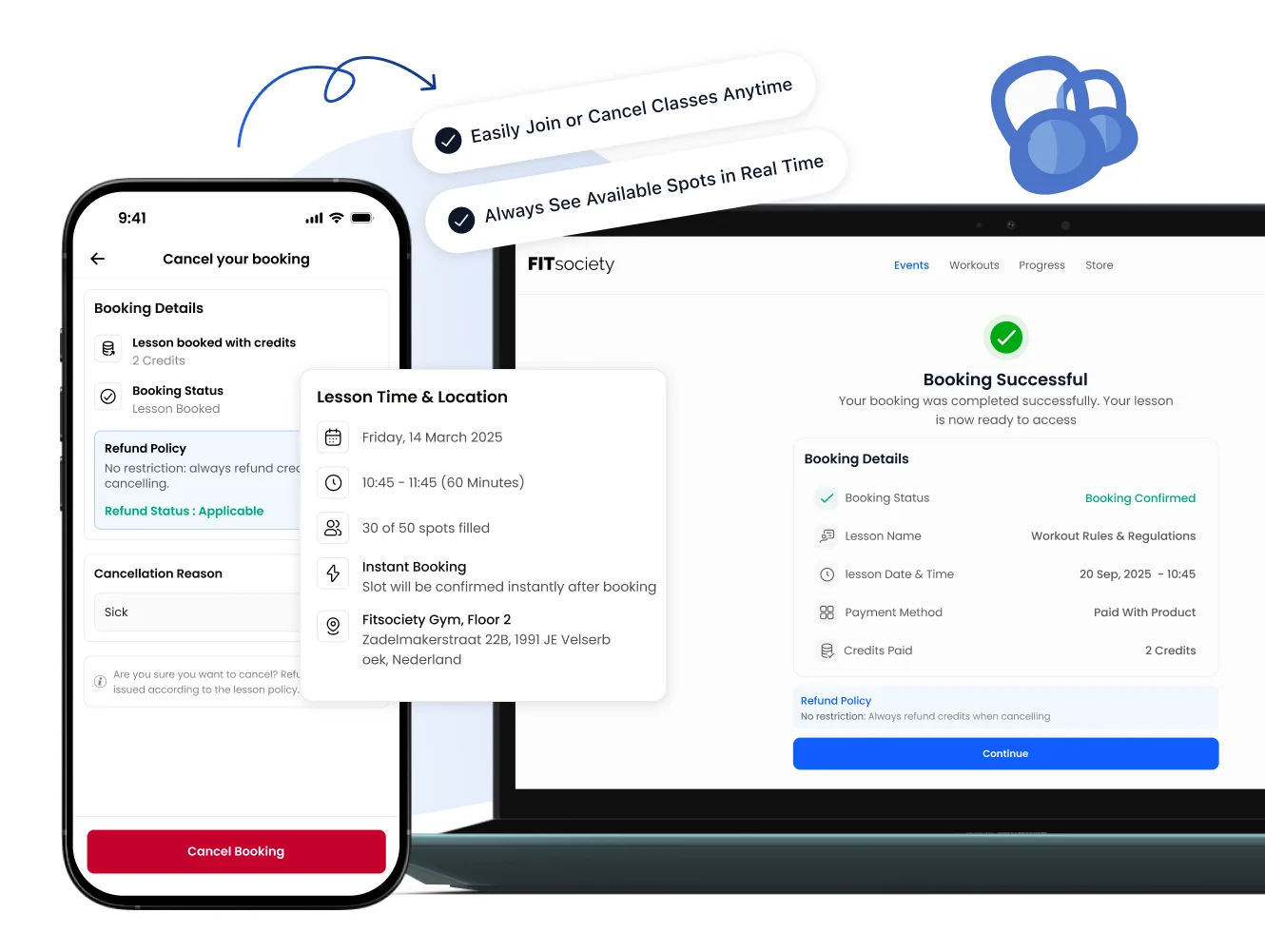
Compare your requirements with FITsociety gym software. Bring the completed worksheet and a real timetable to a demo, then assess which parts of your process the software supports and what your team must organise.
Frequently asked questions
Must we follow the highest-ranked trend?
No. Local member evidence, delivery capability and available resources determine whether a pilot deserves attention.
How many trends should we test at once?
One may be enough. Add a second only when each has an owner, a separate measure and sufficient staff time.
What if the baseline records are incomplete?
Note the gap and collect a comparable baseline first. Avoid presenting a before-and-after comparison as conclusive when the records differ.
Does this require new software?
No. You can maintain the worksheet manually and evaluate software after defining the process and requirements.