A member wants to train twice a week, has 45 minutes per session and is unsure what kind of plan fits. Another member already follows a workout but wants to understand an instruction or find an alternative when equipment is unavailable.
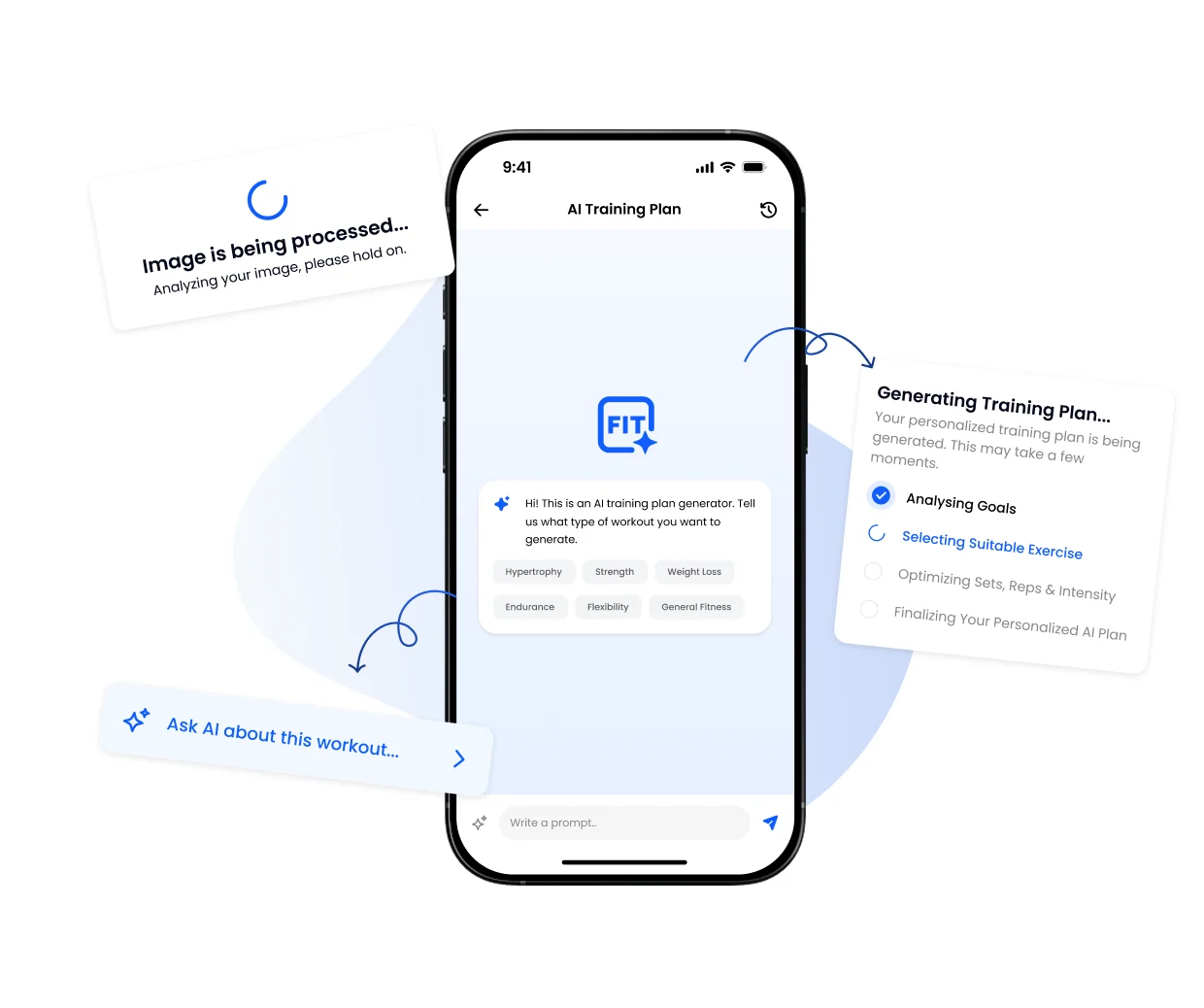
These are different questions. The first is about building a plan; the second comes up during an existing workout. In the FITsociety app, members with active Client AI access can do both: create a training plan and ask questions about an exercise or workout.
A plan starts with the member’s real week
“Create a training plan” does not provide much context. A goal, available time, experience and equipment make the request more useful. The feature gathers this information through questions and allows the member to add preferences.
A useful answer might be:
I want to train twice a week and have about 45 minutes per session. I train at a gym, have limited experience with structured plans and want to build strength. Clear explanations help me.
This is sample input, not training advice. After answering the questions, the member confirms that the plan can be generated. The plan is then saved in FITsociety instead of remaining as a separate piece of text that still needs to be copied into an app.
Different questions arise during a workout
Having a plan does not make every instruction immediately clear. Workout AI can connect a question to the available exercise or session information.
| Situation | Specific question |
|---|---|
| An instruction is unclear | What does the rest time for this exercise mean? |
| Equipment is unavailable | The listed machine is occupied. Which alternative could I discuss with my coach? |
| The member wants to understand the structure | How do the exercises in this workout work together? |
| The member wants feedback | Can you explain what information you use when commenting on this workout? |
A specific question is more useful than “Is this good?”. Encourage members to describe what is unclear and what is happening in practice.
Workout feedback is not camera analysis
The AI uses the information available for the exercise or workout. It does not automatically watch through the camera or confirm that the member is performing an exercise correctly.
Use AI questions for explanation and to make a question more precise. Personal observation, medical concerns and major changes to a coaching plan remain topics for the coach or another suitable professional. An AI answer does not automatically change a coach-assigned plan.
Agree on three things in advance
1. When does the member use a self-created plan?
Decide whether it is for independent training, an additional session or a proposal you will review together. Be explicit about which plan takes priority.
2. Which questions should come back to the coach?
A short explanation may help a member continue. Doubts about form, persistent symptoms or changes to an agreed plan need personal contact.
A simple message to members:
Use AI to ask for an explanation and make your question specific. If you want to change the plan we agreed on or are unsure about your form, discuss it with me first.
3. How will you review the experience?
At the next contact moment, ask which explanation helped and which question remained unanswered. This gives the conversation a concrete starting point.
Introduction checklist
- Check that Client AI is active for your organisation and the individual member.
- Show where the member can create a plan and ask a workout question.
- Explain which information helps: goal, experience, time and equipment.
- Give one example question relevant to that member.
- Agree how a self-created plan relates to the coaching service.
- Explain when personal contact is needed.
- Review the experience at the next contact moment.
Frequently asked questions
Does every member automatically have access?
No. Client AI must be available for the organisation and active for that member. Check the licence settings before presenting the feature.
Does AI automatically change the coach’s plan?
No. Asking a workout question does not automatically change an agreed plan. A member can complete a guided intake and confirm a newly generated plan, so agree which plan will be followed.
Does AI assess exercise form through the camera?
The feature described here is not camera analysis. It uses the available exercise and workout information. Assessing form still requires personal observation.
The value is in the combination: members gain more support for independent training while expectations around coaching remain clear.
See personal training software, online coaching software and AI food recognition, or request a demo.