Dumbbell Upright Row
The dumbbell upright row is an effective exercise for strengthening your shoulders and upper back. What makes this exercise unique is that it not only isolates your muscles but also contributes to better posture and shoulder stability.
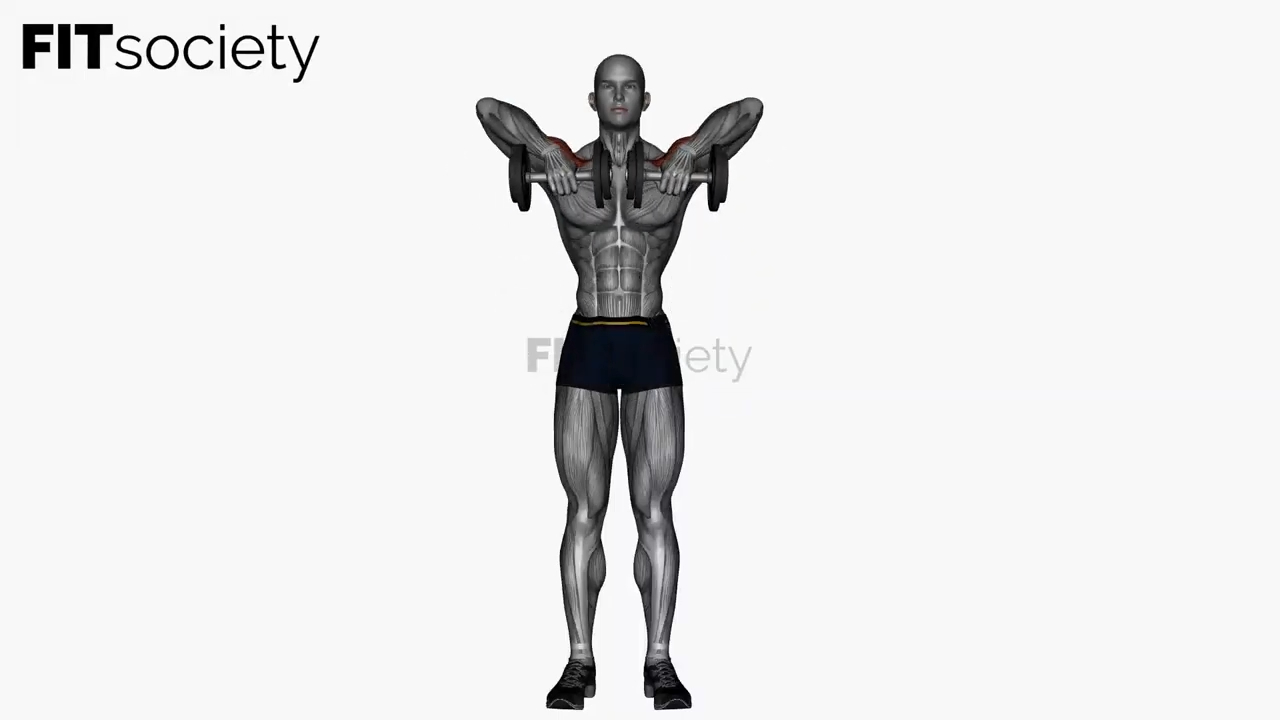
Execution
-
1
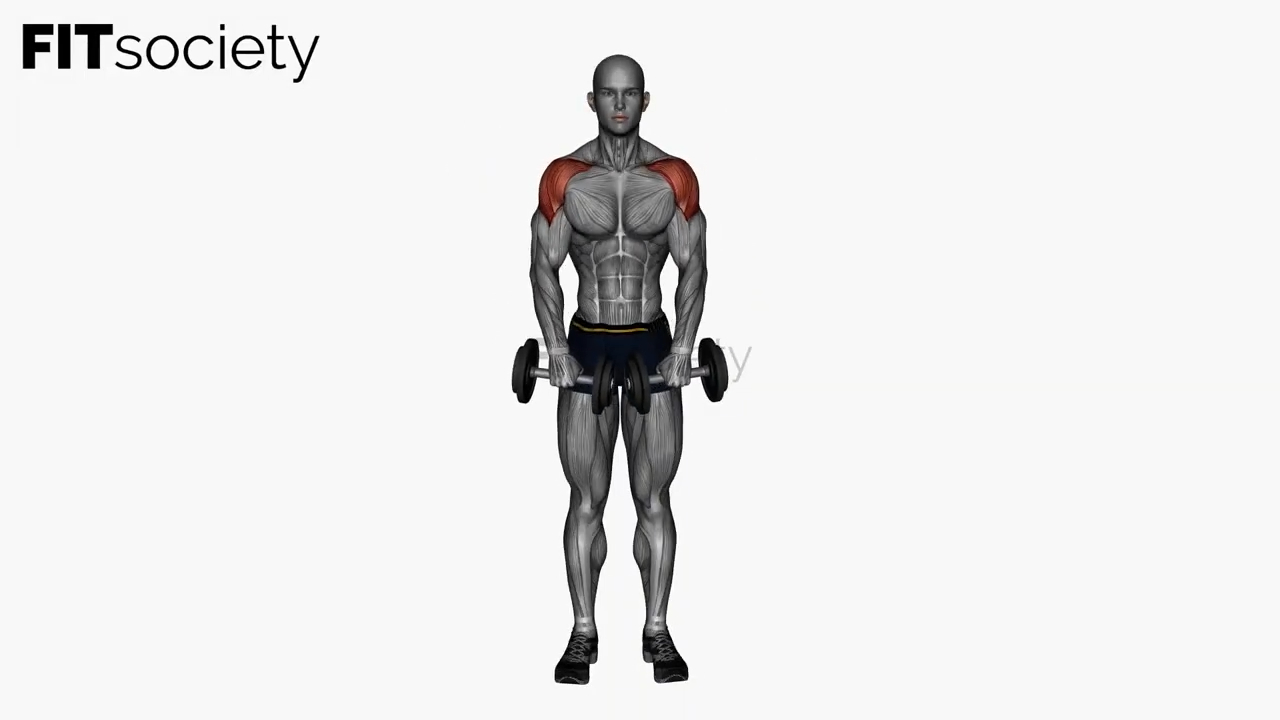
Stand upright with your feet shoulder-width apart and hold a dumbbell in each hand in front of your thighs, with your palms facing you.
-
2
Inhale and pull the dumbbells upward toward your chin by moving your elbows up and out. Keep your hands close to your body.
-
3
Briefly hold the top position, then exhale as you slowly lower the dumbbells back to the starting position.
-
4
Repeat for the desired number of repetitions.
Benefits
In addition to strengthening the shoulders and upper back, the upright row also improves functional strength that is useful in everyday life and other sports. It also helps improve mobility in the shoulder joints.
Common Mistakes
- ! Using too much weight: Start with a lighter weight to ensure proper form.
- ! Performing the movement too quickly: Perform the movement in a controlled manner to achieve maximum muscle activation.
- ! Keeping the elbows too low: Make sure your elbows are always the highest point of the movement.
Primary Muscles
This exercise primarily targets the deltoids (shoulders), specifically the anterior and lateral heads. The trapezius (upper back) and biceps are also engaged.
Possible Alternatives
If you want to adjust the intensity or simply add some variety to your workout, you can also perform the upright row with a barbell, kettlebells, or even a resistance band. Another variation is the high pull, which uses a similar movement but focuses on speed and explosiveness.
Run your fitness business with more structure
- Planning, member management and coaching in one platform
- Built for coaches, studios and gyms
- Fewer separate tools, more overview