Bent-Over Dumbbell Rear Delt Fly
The Bent-Over Dumbbell Rear Delt Fly is an effective exercise for strengthening the rear shoulders. In addition to targeting the deltoids, this exercise also engages the upper back and trapezius for a comprehensive upper-body workout.
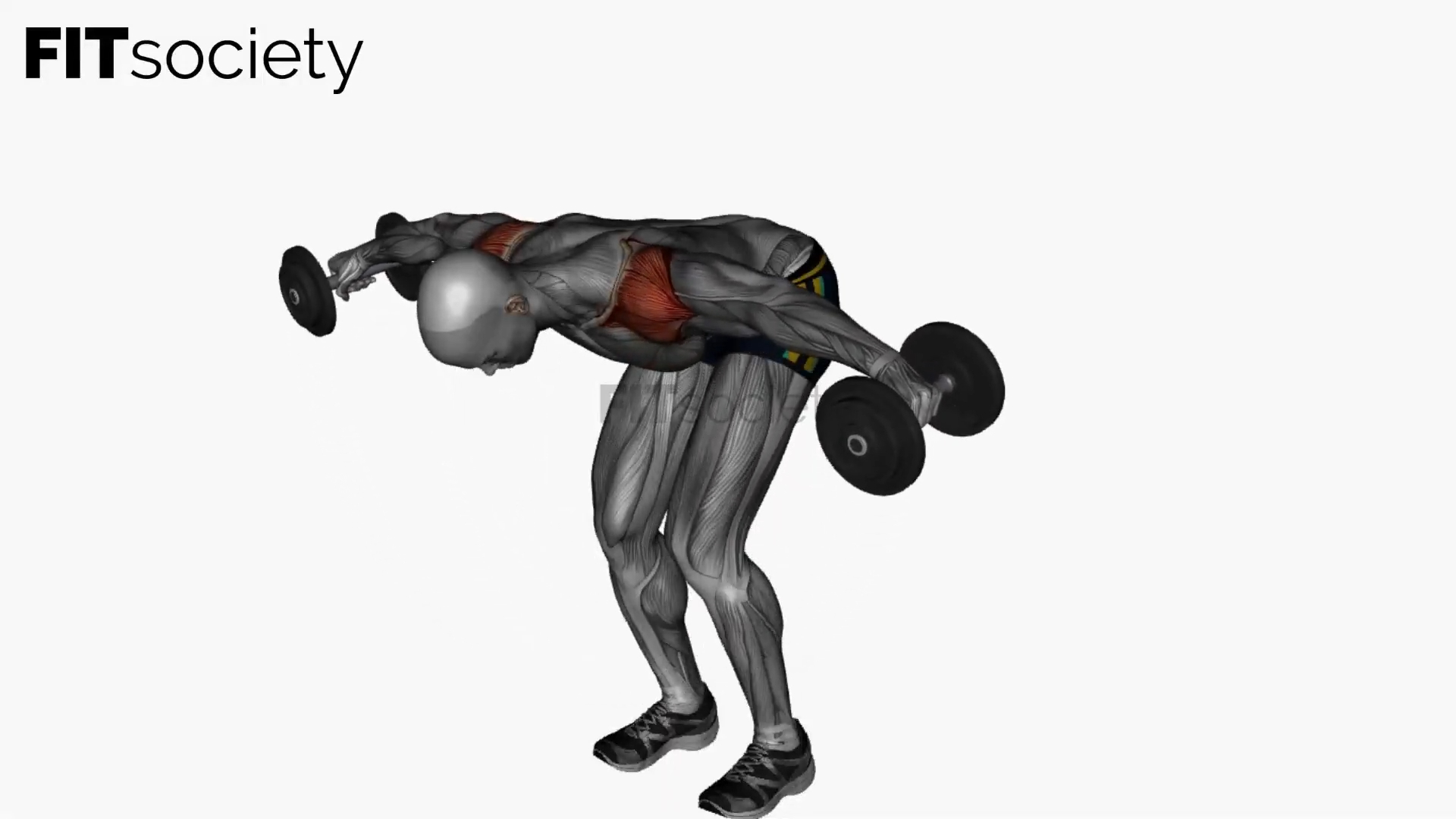
Execution
-
1
Begin by picking up a pair of dumbbells and stand with your feet shoulder-width apart.
-
2
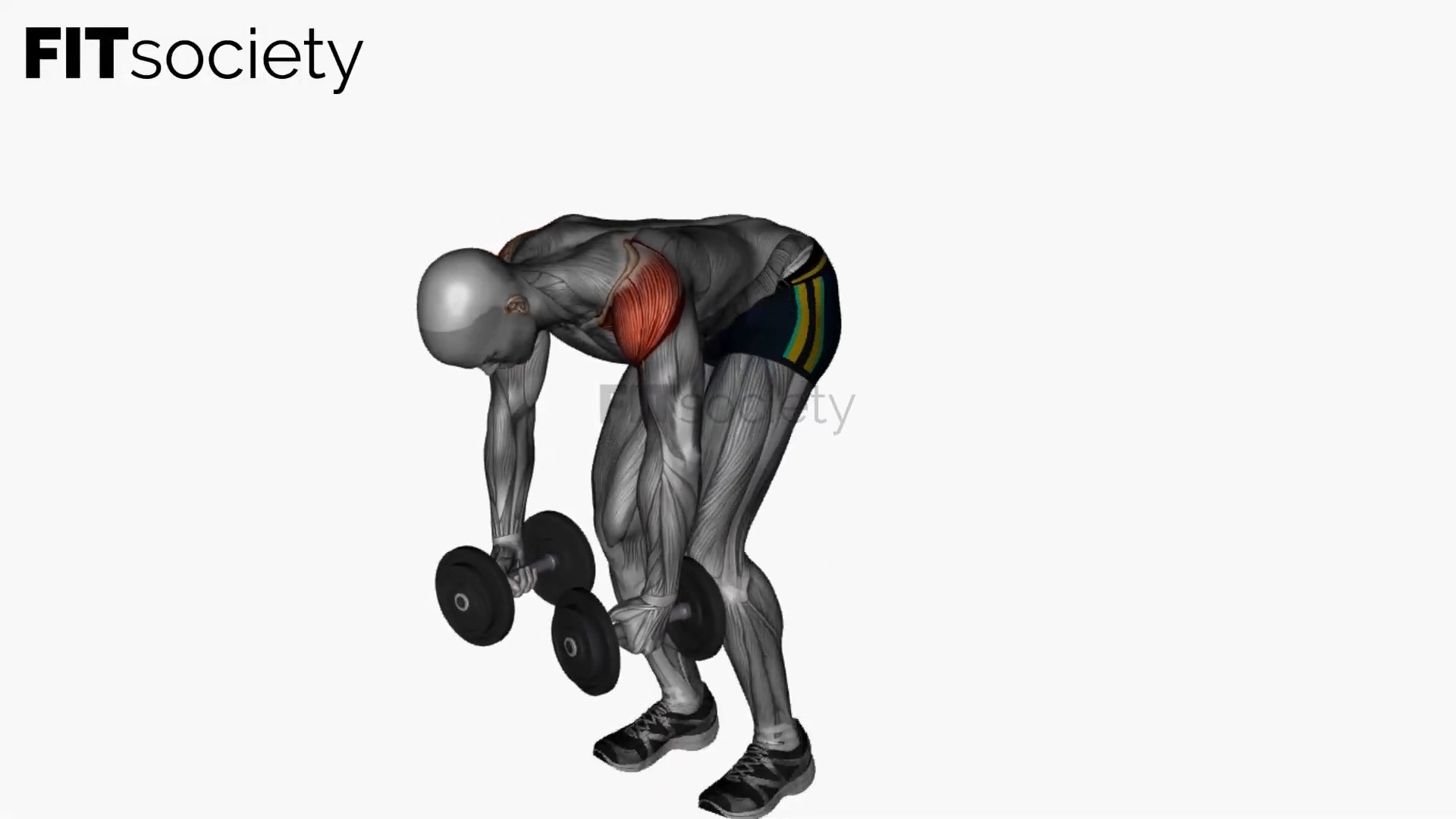
Bend your knees slightly and hinge forward at your hips, keeping your back straight. Let your arms hang straight beneath your shoulders with the dumbbells in your hands.
-
3
Exhale and raise the dumbbells out to the sides until your arms are parallel to the floor, with a slight bend in your elbows.
-
4
Squeeze your shoulder blades together at the top and briefly hold this position.
-
5
Inhale and slowly and controllably lower the dumbbells back to the starting position.
Benefits
- Improves posture by strengthening the upper back and shoulders.
- Helps create balanced shoulder development.
- Increases shoulder-joint stability.
Common Mistakes
- ! Using too much weight, which can lead to poor form and possible injuries.
- ! Not squeezing the shoulder blades together at the top.
- ! Not keeping the back straight during the exercise.
Primary Muscles
This exercise primarily targets the rear deltoids (back of the shoulders), but also trains the rhomboids and trapezius in your upper back.
Possible Alternatives
- If the dumbbells are too heavy, try the exercise with resistance bands for lighter resistance.
- For a greater challenge, try the exercise on one leg for additional balance and core stability.
- Use a cable machine for constant resistance throughout the entire movement.
Run your fitness business with more structure
- Planning, member management and coaching in one platform
- Built for coaches, studios and gyms
- Fewer separate tools, more overview