Reverse Dumbbell Lunge
Lunges could be considered squats on one leg. Like the squat, it is a compound exercise that involves multiple joints. However, during lunges, you hardly need to lean forward from the hips. As a result, the lower back and hamstrings work relatively less hard, while more emphasis is placed on the quadriceps.
Lunges can be performed in different ways. In this variation, you perform the lunges with dumbbells as additional weight and step backward and return.
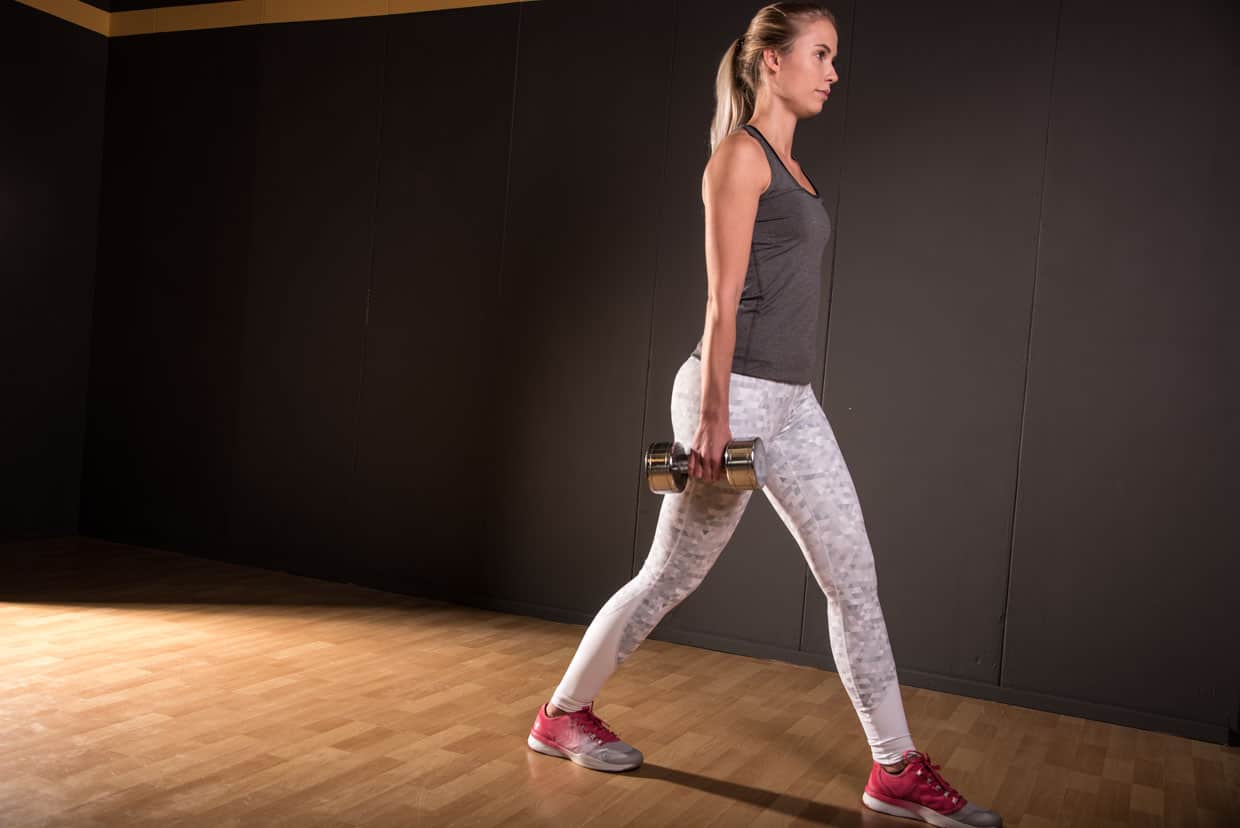
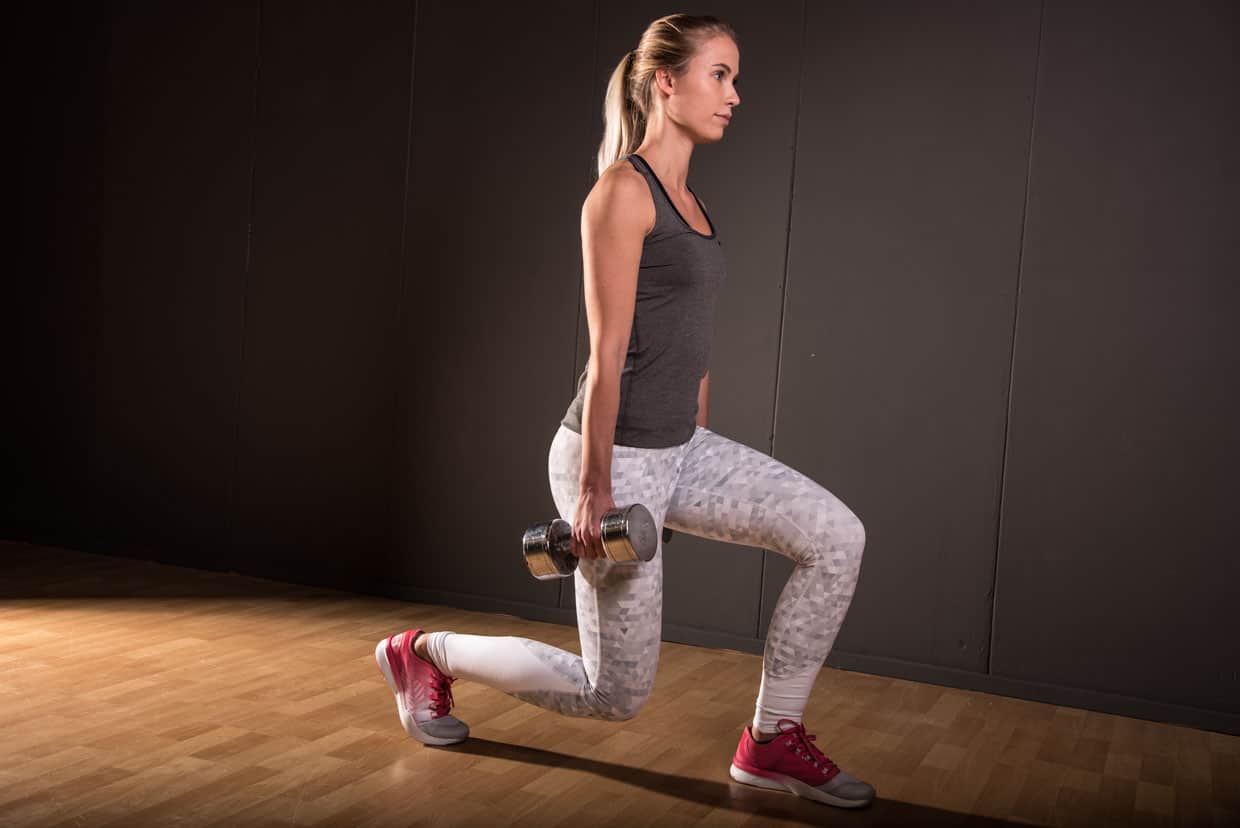
Dumbbell rear lunge / reverse dumbbell lunge execution
-
1
Hold the dumbbells beside your body with relaxed arms.
-
2
Place your feet approximately shoulder-width apart.
-
3
Focus on the knee of the standing leg. Try to keep it in the same place as you step backward with the other leg and then lower yourself. With the correct step length, both knees end at a 90-degree angle. Important: Keep your feet shoulder-width apart throughout the entire movement. A common mistake is stepping too narrowly, which makes it much more difficult to maintain balance.
-
4
Push yourself upward by driving straight up through your front leg and bringing the rear leg forward. Try to push forward as little as possible from the rear leg.
-
5
Repeat with the other leg.
Dumbbell rear lunge / reverse dumbbell lunge
Muscles involved:
Legs:
- Quadriceps (vastus lateralis, vastus medialis, vastus intermedius and rectus femoris)
- Hamstrings
Glutes:
- Gluteus maximus, medius and minimus
Pelvis:
- Iliacus (hip flexor)
- Psoas major (hip flexor)
Calves:
- Gastrocnemius
- Soleus
Abdomen:
- Rectus abdominis (abdominal muscle)
- Obliquus externus abdominis (external oblique muscle)
- Obliquus internus abdominis (internal oblique muscle)
- Transversus abdominis (transverse abdominal muscle, 'corset muscle')
Lower back and spine:
- Erector spinae
- Lumbar multifidus
- Quadratus lumborum
Dumbbell rear lunge / reverse dumbbell lunge technique
Safety
- The lunge may require sufficient practice in terms of execution and balance. Therefore, build up the weight gradually and first practice without additional weight.
- A common mistake is not placing the feet wide enough when stepping forward. This makes it much more difficult to maintain balance.
Which lunge?
As mentioned, lunges can be performed in different ways. Walking lunges have the practical disadvantage that you need free space. You can avoid this by stepping forward and back in place. This places even more pressure on the knee joint than rising and stepping forward. It forces you to work more from the ball of the foot rather than pushing from the heels.
Reverse, or rear, lunges are performed less often, but may deserve preference more often.
Alternatives
- Walking lunges
- Barbell rear lunges
Run your fitness business with more structure
- Planning, member management and coaching in one platform
- Built for coaches, studios and gyms
- Fewer separate tools, more overview