Leg Press
Like the squat, the leg press is a compound exercise; an exercise that involves multiple joints and muscle groups. This is also evident from the long list of muscles involved, as listed above. However, because the upper body is in a fixed position, it is easier to concentrate on using the legs. In addition, involvement of the lower-back muscles remains limited compared with squatting.
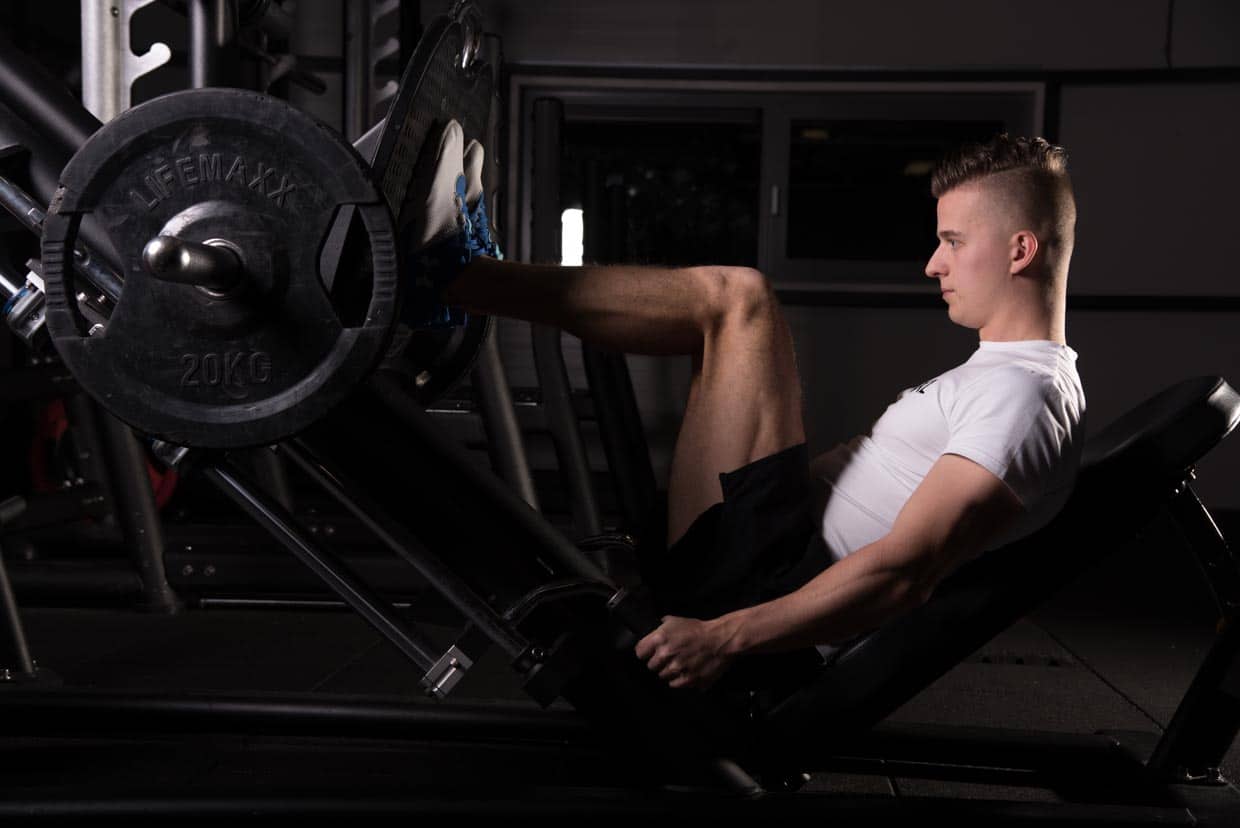
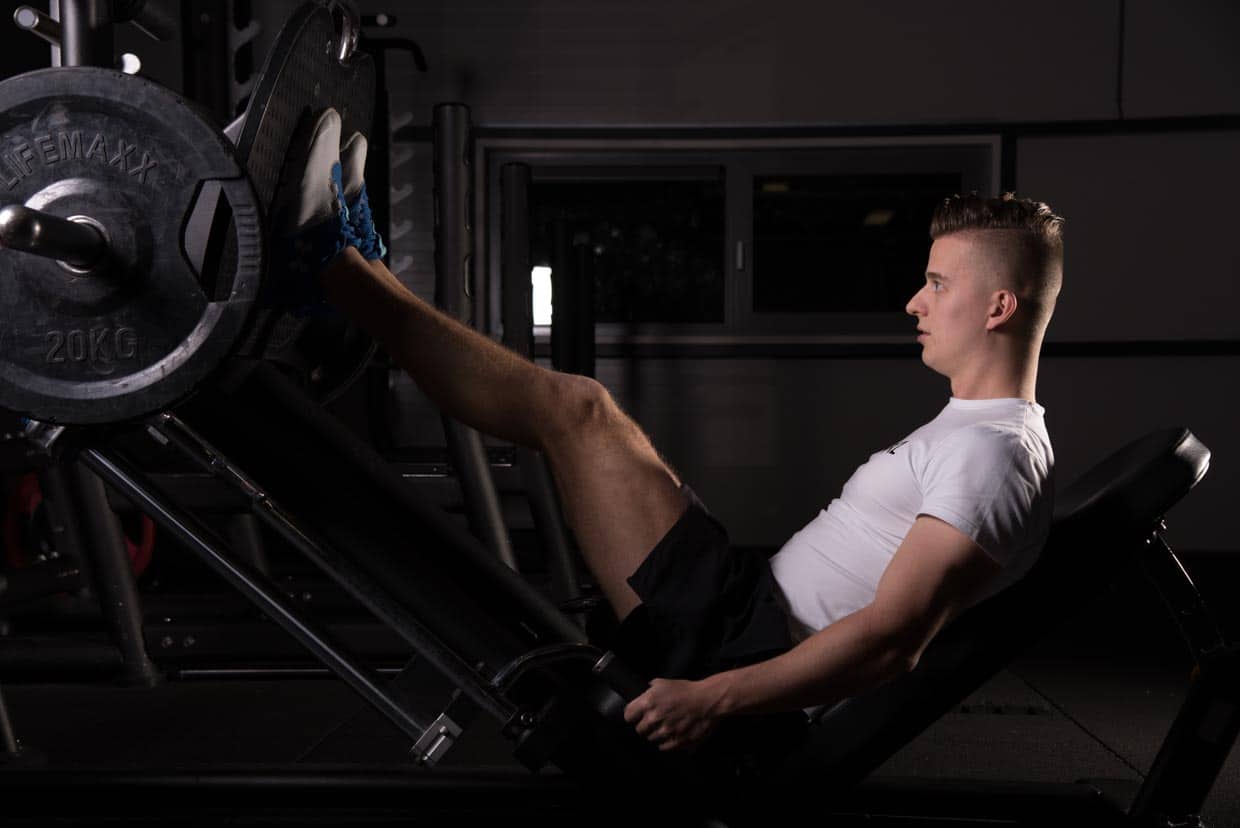
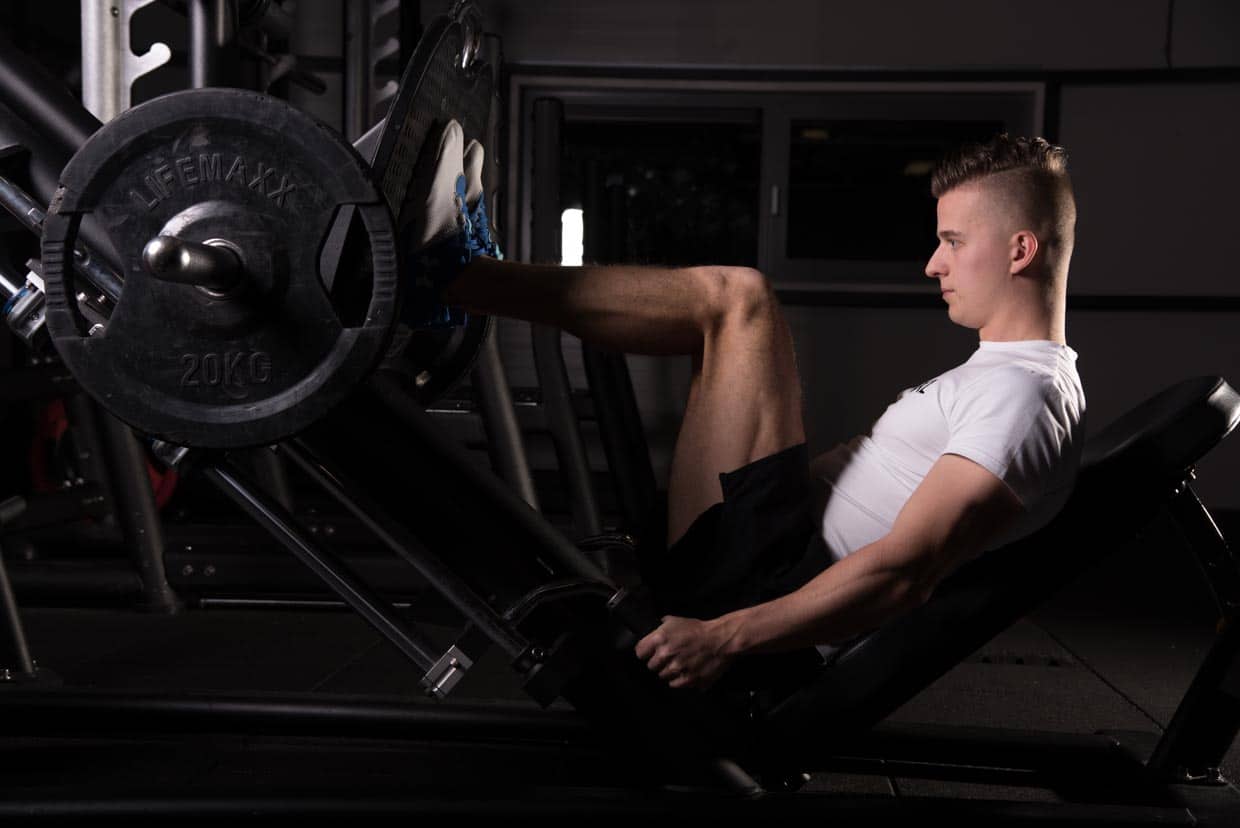
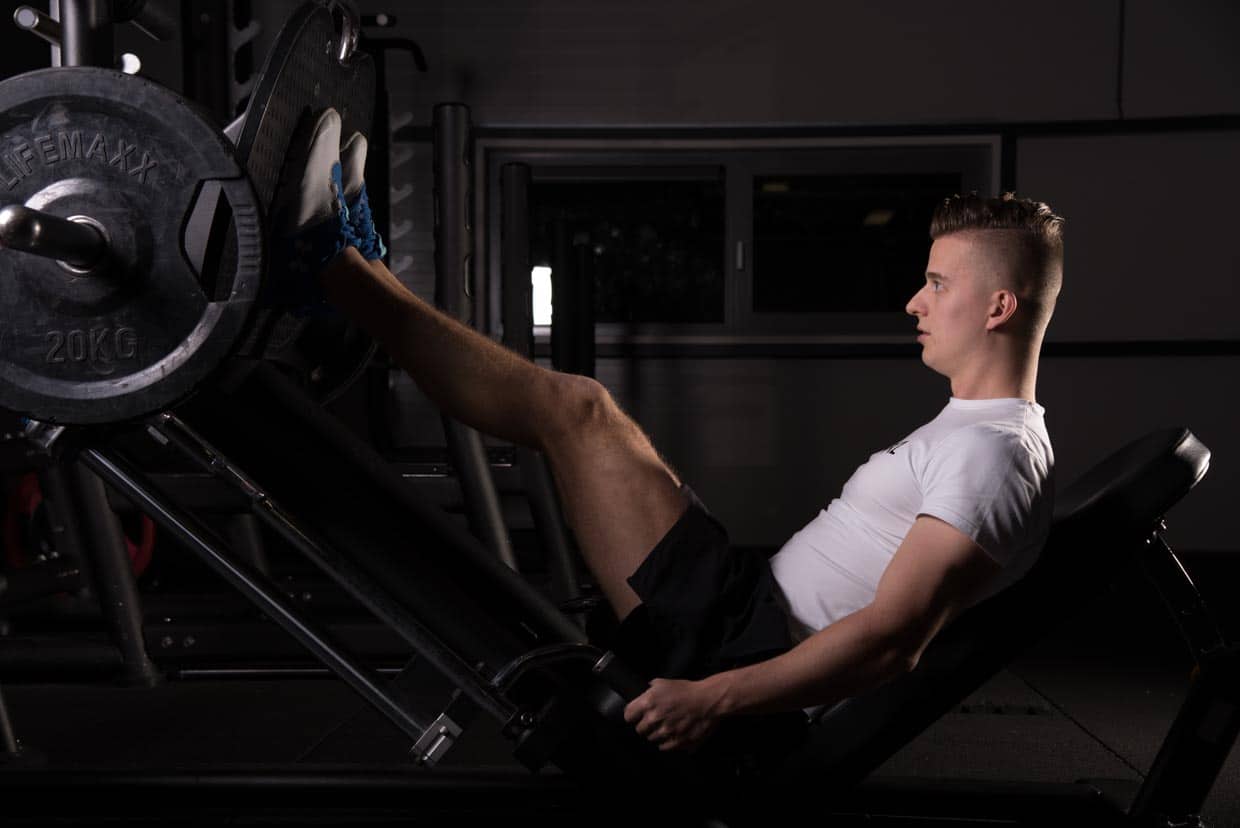
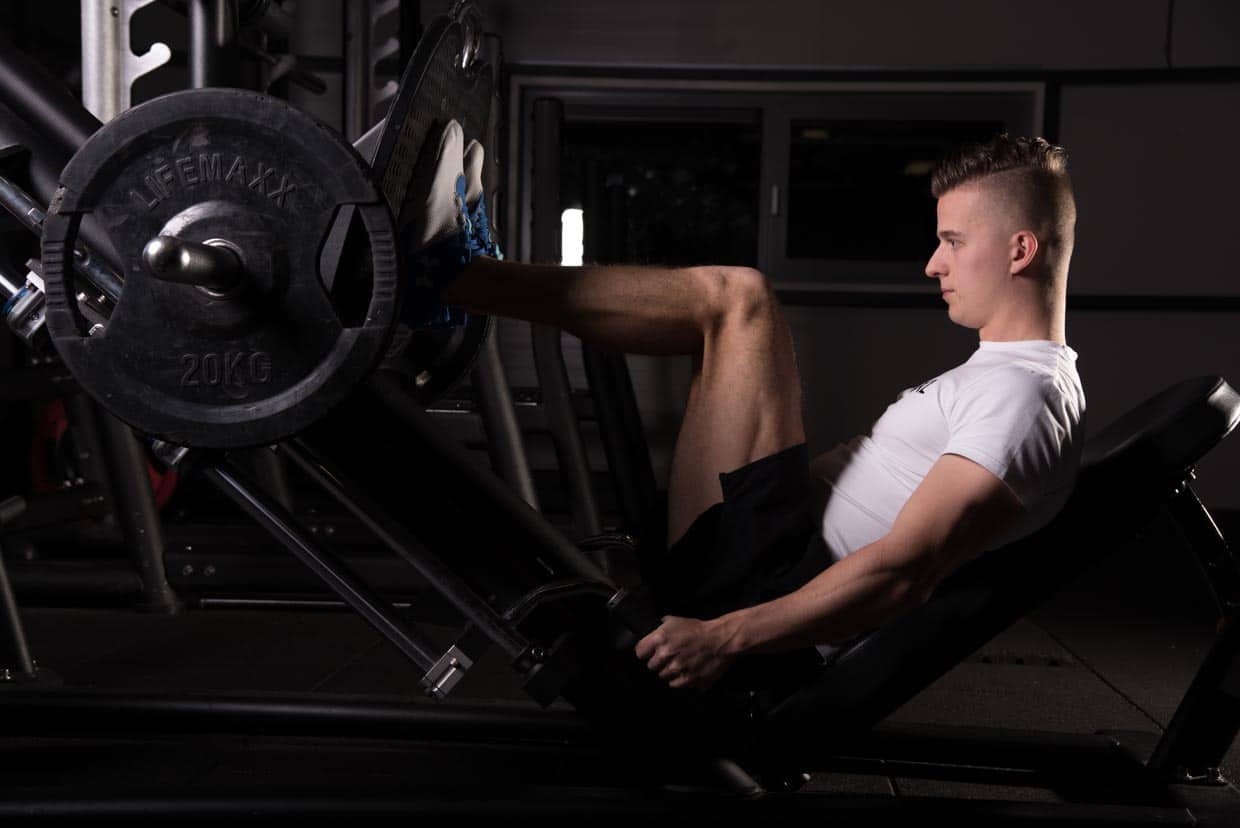
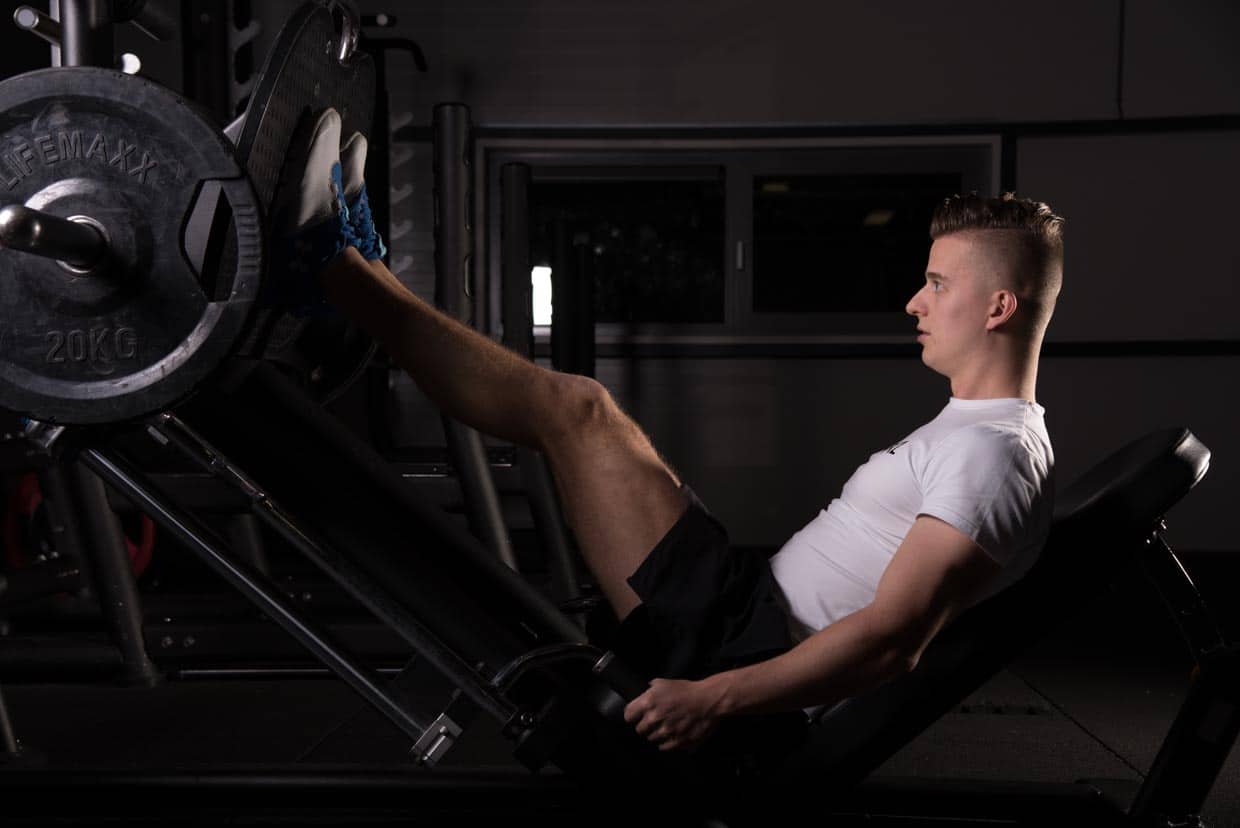
Leg press execution
-
1
Familiarize yourself with the machine's locking function and read the instructions. Make sure you know how to lock the weight in an emergency.
-
2
Place your upper back, lower back, and head straight against the backrest.
-
3
Place your feet approximately shoulder-width apart, with your knees aligned with your feet. Do not place your feet too low on the platform (see notes).
-
4
Let your arms hang by your sides or grasp any handles.
-
5
Push the weight out and disengage the lock.
-
6
Lower the weight under control until your thighs touch your torso.
-
7
Push forcefully until your legs are almost straight.
Leg Press
Muscles involved:
Legs:
- Quadriceps (vastus lateralis, vastus medialis, vastus intermedius, and rectus femoris)
- Hamstrings
Glutes:
- Gluteus maximus, medius, and minimus
Pelvis:
- Iliacus (hip flexor)
- Psoas major (hip flexor)
Calves:
- Gastrocnemius
- Soleus
Abdomen:
- Rectus abdominis (rectus abdominis muscle)
- External oblique (external oblique abdominal muscle)
- Internal oblique (internal oblique abdominal muscle)
- Transversus abdominis (transverse abdominal muscle, 'corset muscle')
Lower back and spine:
- Erector spinae
- Lumbar multifidus
- Quadratus lumborum
Leg press technique
Ego control
There are a few common mistakes when performing the leg press. Some of these are caused by ego. In particular, using weights that are too heavy and compensating for this with poor execution. For example, by using a very short range of motion or allowing the upper body to help by pushing on the knees with the hands.
Allowing the glutes to lift off the seat while lowering the weight
You can also make the range of motion too large by excessively flexing the hips. This can place unnecessarily high pressure on the lower vertebrae of the spine, resulting in back problems. Therefore, keep your glutes and lower back in contact with the seat.
Foot placement
A higher foot placement results in relatively greater involvement of the hamstrings and glutes and lower involvement of the quadriceps. A higher foot placement reduces pressure on the knee joint while increasing pressure on the lower back. This also translates into a lower likelihood of knee problems while increasing the likelihood of back problems. Especially when you give in to the greater tendency to allow the glutes to lift off the seat while lowering the weight.
Conversely, a lower foot placement results in greater involvement of the quadriceps and lower involvement of the glutes and hamstrings. The likelihood of lower-back problems decreases while the likelihood of knee problems increases. In any case, avoid placing your feet so low that your knees extend well past the ankle joint while lowering the weight.
A wide foot placement results in greater activation of the muscles on the inside of the legs, such as the adductors.
Some studies also show greater involvement of the hamstrings with a wide foot placement, but show no difference in knee loading between a high and low foot placement.
Alternatives
- Smith machine squat
- Barbell back squat
- Hack squat
Run your fitness business with more structure
- Planning, member management and coaching in one platform
- Built for coaches, studios and gyms
- Fewer separate tools, more overview