Jump Squat
The squat is one of the best-known exercises for the legs. It is a compound exercise; an exercise that involves multiple joints and muscle groups. This is also evident from the long list of muscles involved, as mentioned above.
There can be many differences in how the squat is performed, such as with or without added weight, the type of weight, and where the weight is placed. In the jump squat, only body weight is used as resistance. In this case, the squat is extended with a jump.
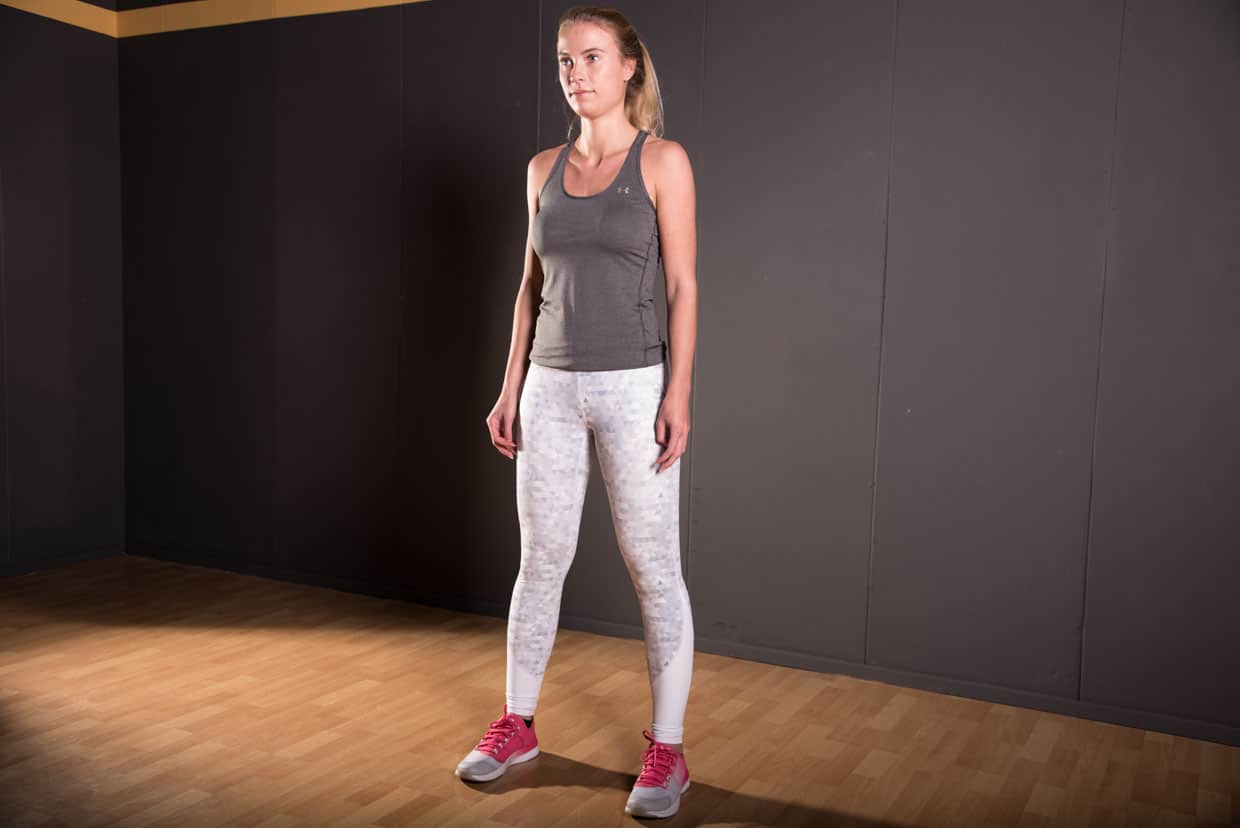
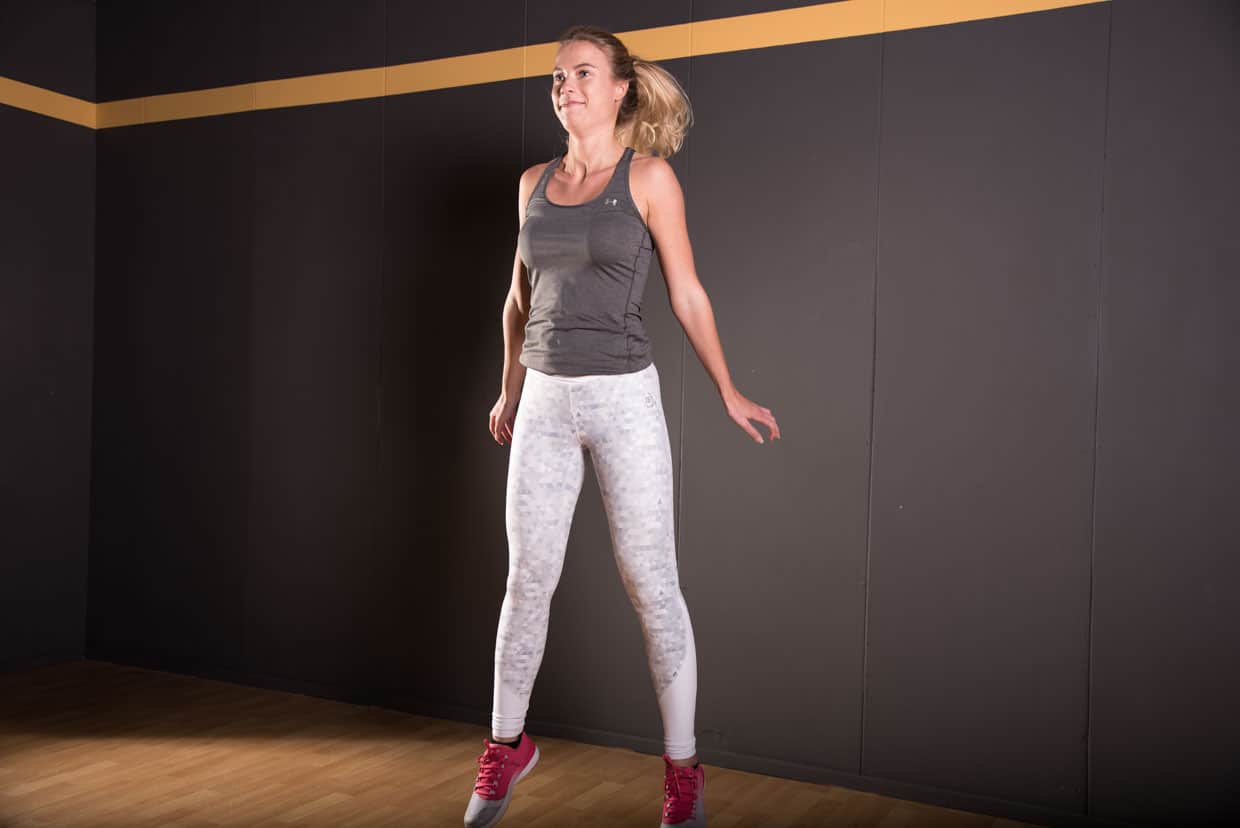
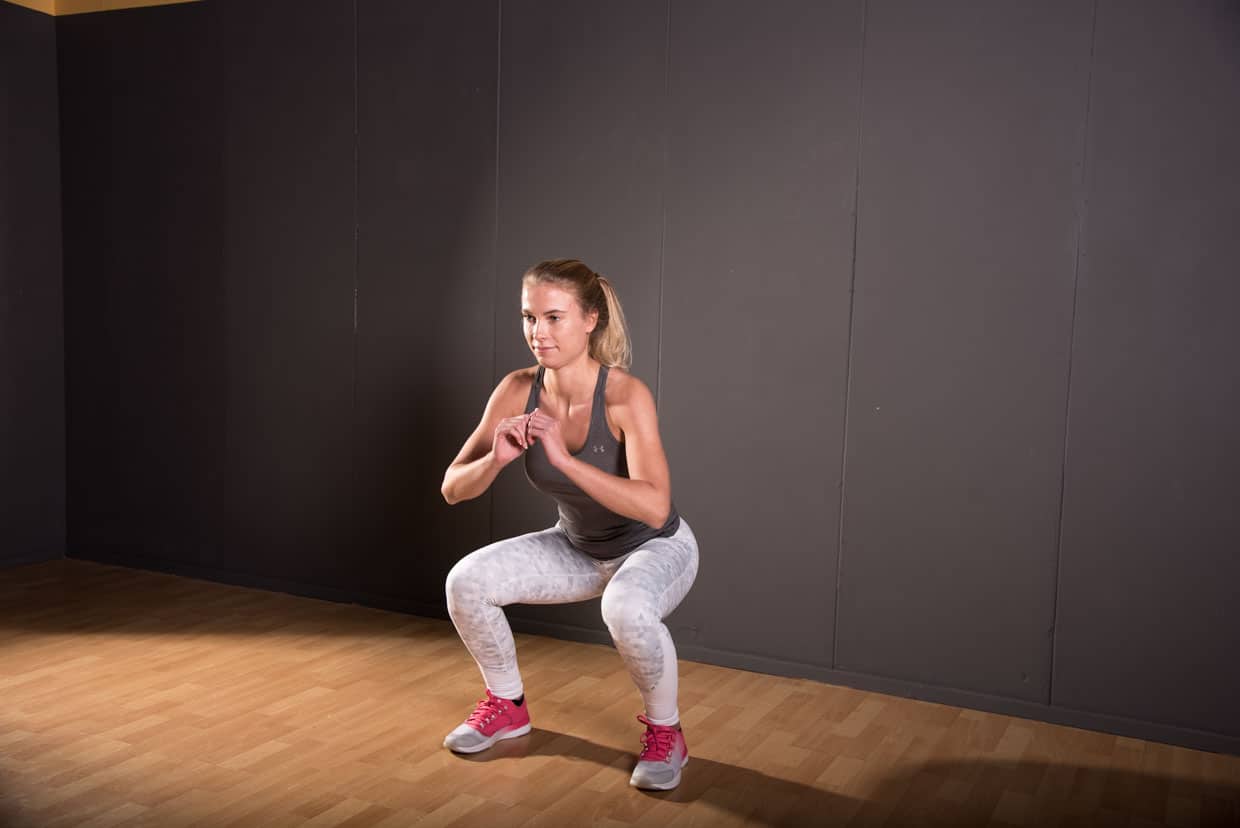
Jump Squat execution
-
1
Stand with your feet shoulder-width apart.
-
2
Lower yourself slowly as if sitting on a chair that could be pulled away at any moment.
-
3
Finish at the point where the (top of the) thighs are parallel to the floor.
-
4
Hold your arms in front of your chest, somewhat like a boxer holding their arms up in a guard position. This is your starting position.
-
5
Push yourself explosively upward by forcefully pressing your feet into the floor and jump up. In the same movement, swing your arms downward and backward.
-
6
When landing, bring your arms forward and upward again while your legs cushion the landing by finishing once more in the squat position.
Jump Squat
Muscles involved:
Legs:
- Quadriceps (vastus lateralis, vastus medialis, vastus intermedius, and rectus femoris)
- Hamstrings
Glutes:
- Gluteus maximus, medius, and minimus
Pelvis:
- Iliacus (hip flexor)
- Psoas major (hip flexor)
Calves:
- Gastrocnemius
- Soleus
Abdomen:
- Rectus abdominis (rectus abdominis muscle)
- External oblique (external oblique abdominal muscle)
- Internal oblique (internal oblique abdominal muscle)
- Transversus abdominis (transverse abdominal muscle, 'corset muscle')
(Lower) back and spine:
- Erector spinae
- Lumbar multifidus
- Quadratus lumborum
Jump Squat technique
‘Plyometric exercise’
The jump makes the jump squat a plyometric, or explosive, variation of regular squats. It is therefore suitable when developing explosive strength is more important than maximal strength, muscle growth, and/or muscular endurance. This makes jump squats an exercise often used to support other sports, where increasing, among other things, jumping power is an obvious goal.
Arm position and movement
The example photo and execution description assume that the arms make a countermovement. The arms swing downward while the body is launched upward. This movement is comparable to a skier pushing off with their ski poles.
Alternatively, the arms can extend the movement. The hands then start low and are thrown upward during the jump, like a basketball player going up for a shot.
Alternatives
- Iron Mikes
- Goblet squat
- Dumbbell squat
- Barbell Back Squat
Run your fitness business with more structure
- Planning, member management and coaching in one platform
- Built for coaches, studios and gyms
- Fewer separate tools, more overview