Barbell Side Lunge
In side lunges, also called lateral lunges, you step sideways into a lunge instead of forward or backward. This sideways push requires more effort from the muscles that move the legs inward (adductors) and the muscles that move them outward (abductors). The smaller muscles in the glutes are primarily responsible for the latter action. Adduction is performed by muscles on the inside of the thighs.
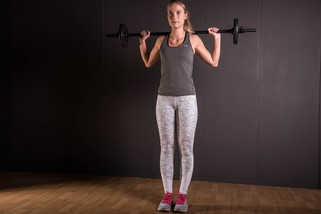
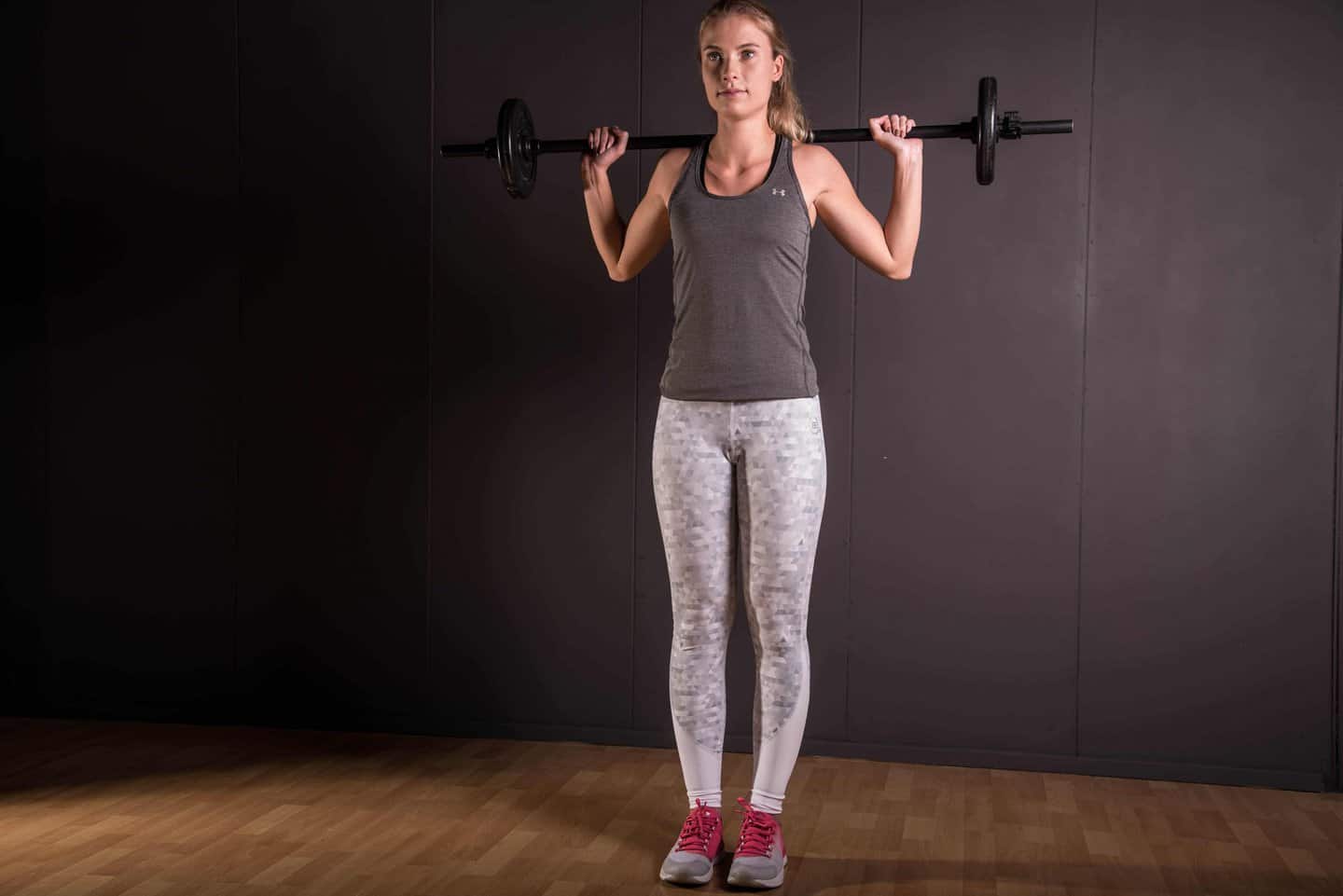
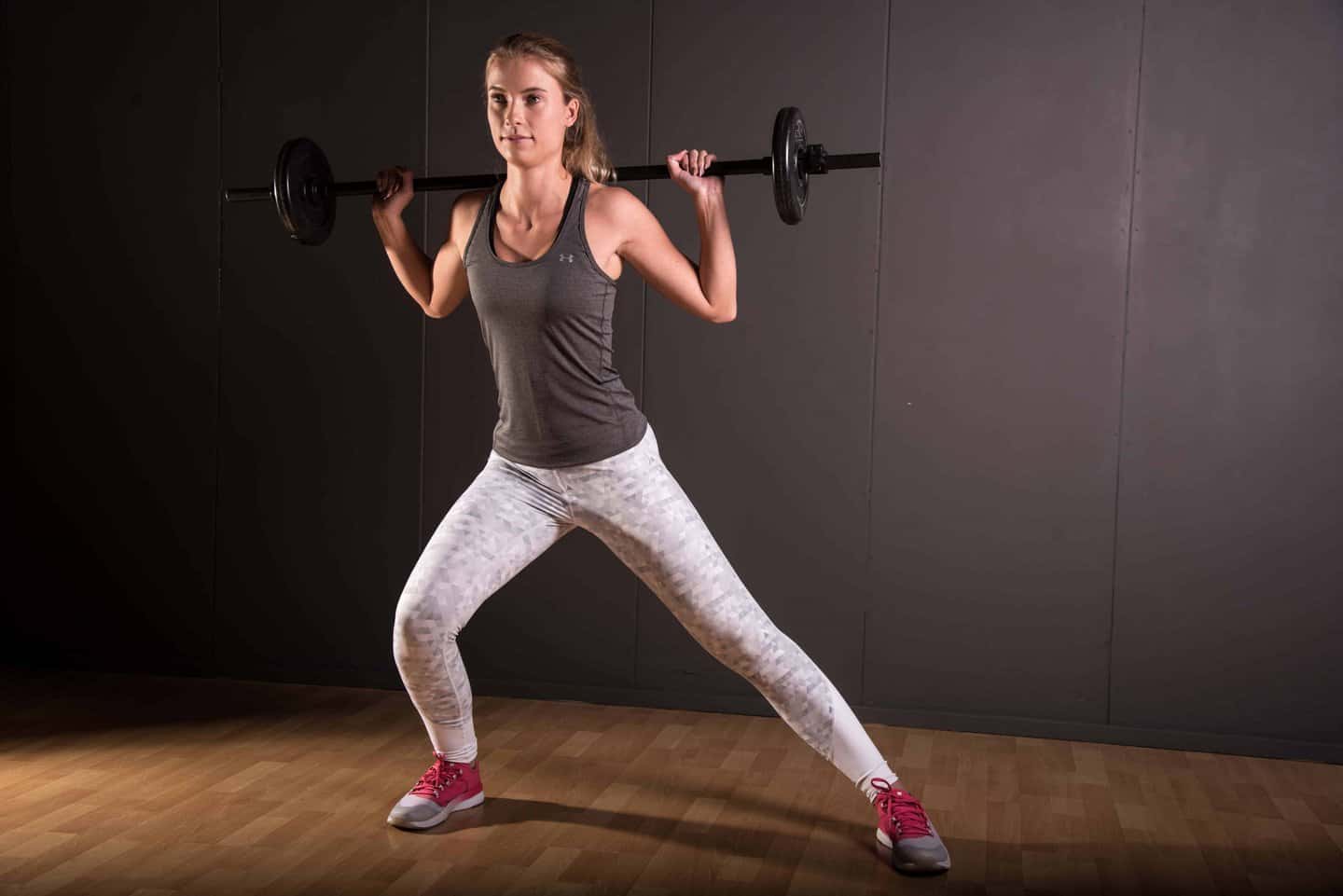
Barbell side lunge execution
-
1
Place the barbell with the selected weight in the squat rack hooks (secure the plates). Choose a height that allows you to step out with the weight easily.
-
2
Step under the barbell and place it across your upper back or at neck height.
-
3
Make sure you are positioned exactly in the center of the barbell. Position your head in the center and place your hands parallel on the barbell (by looking at the markings on the barbell).
-
4
Stand with your feet approximately shoulder-width apart.
-
5
Push yourself up to lift the barbell out of the hooks and carefully take a few small(!) steps backward to give yourself room for the exercise.
-
6
Step out to the side and lower yourself until the (top of the) thigh is parallel to the floor. Prevent your torso from leaning sideways; keep it upright as during a normal lunge or squat.
-
7
Push yourself upward and back inward from the heels.
-
8
Repeat with the other leg.
Barbell side lunge
Muscles involved:
Legs:
- Quadriceps (vastus lateralis, vastus medialis, vastus intermedius and rectus femoris)
- Adductors (including adductor brevis, adductor longus, adductor magnus, pectineus and gracilis)
- Hamstrings
Glutes:
- Gluteus maximus, medius and minimus ('abductors')
Pelvis:
- Iliacus (hip flexor)
- Psoas major (hip flexor)
Calves:
- Gastrocnemius
- Soleus
Abdomen:
- Rectus abdominis (rectus abdominis muscle)
- Obliquus externus abdominis (external oblique muscle)
- Obliquus internus abdominis (internal oblique muscle)
- Transversus abdominis (transverse abdominal muscle, 'corset muscle')
Lower back and spine:
- Erector spinae
- Lumbar multifidus
- Quadratus lumborum
Barbell side lunge technique
Safety
- Make sure the plates are secured.
- The lunge may require practice in terms of execution and balance. Therefore, gradually build up the weight and first practice without additional weight.
Why side lunges?
Side lunges can primarily be performed for functional reasons. For example, to support another sport. Fast lateral movements are common in many sports.
Alternatives
- Curtsy squat
- Walking lunges
- (Barbell) Side lunge
Run your fitness business with more structure
- Planning, member management and coaching in one platform
- Built for coaches, studios and gyms
- Fewer separate tools, more overview