Standing Cable Pullover
The standing cable pullover is an exercise that primarily activates the chest muscles, latissimus dorsi, and serratus. It therefore fits into both a back workout and a chest workout.
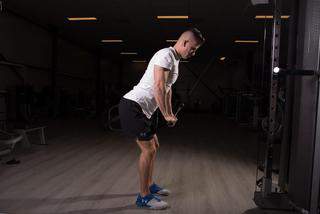
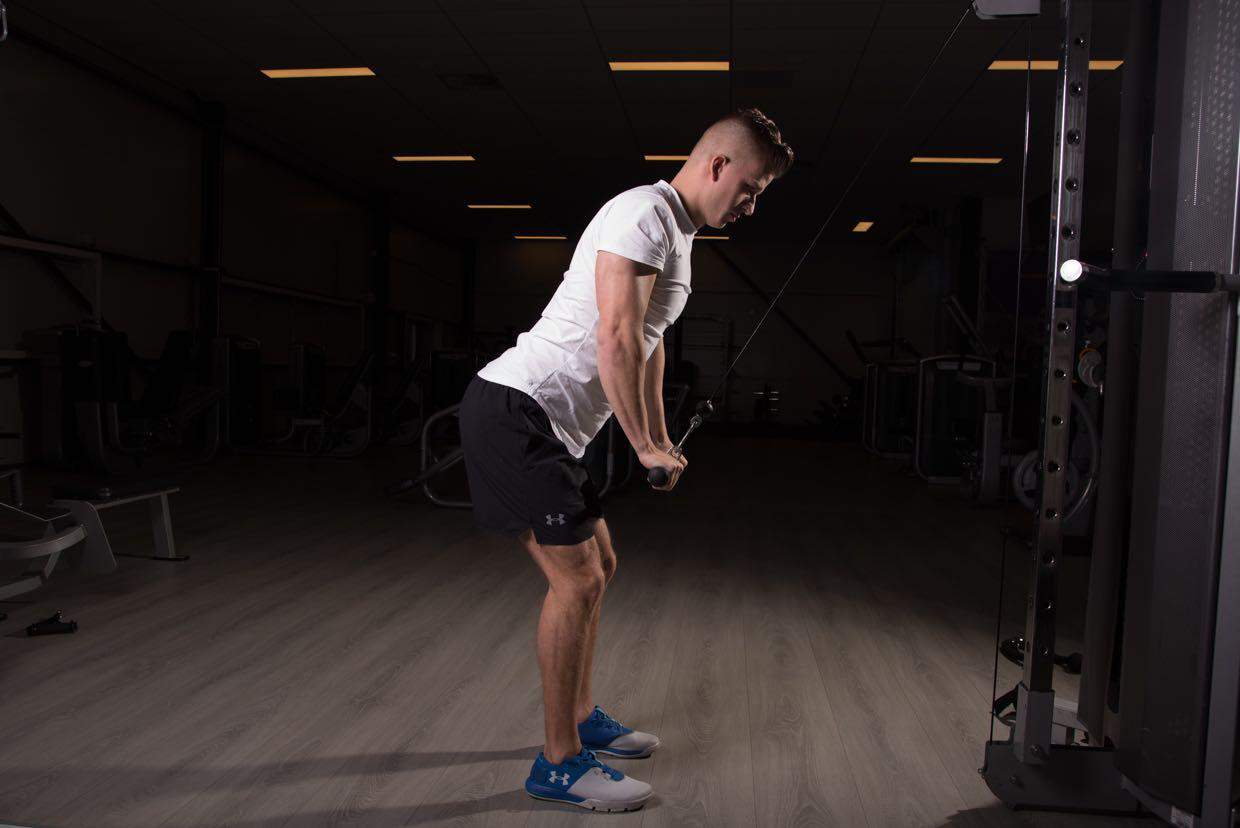
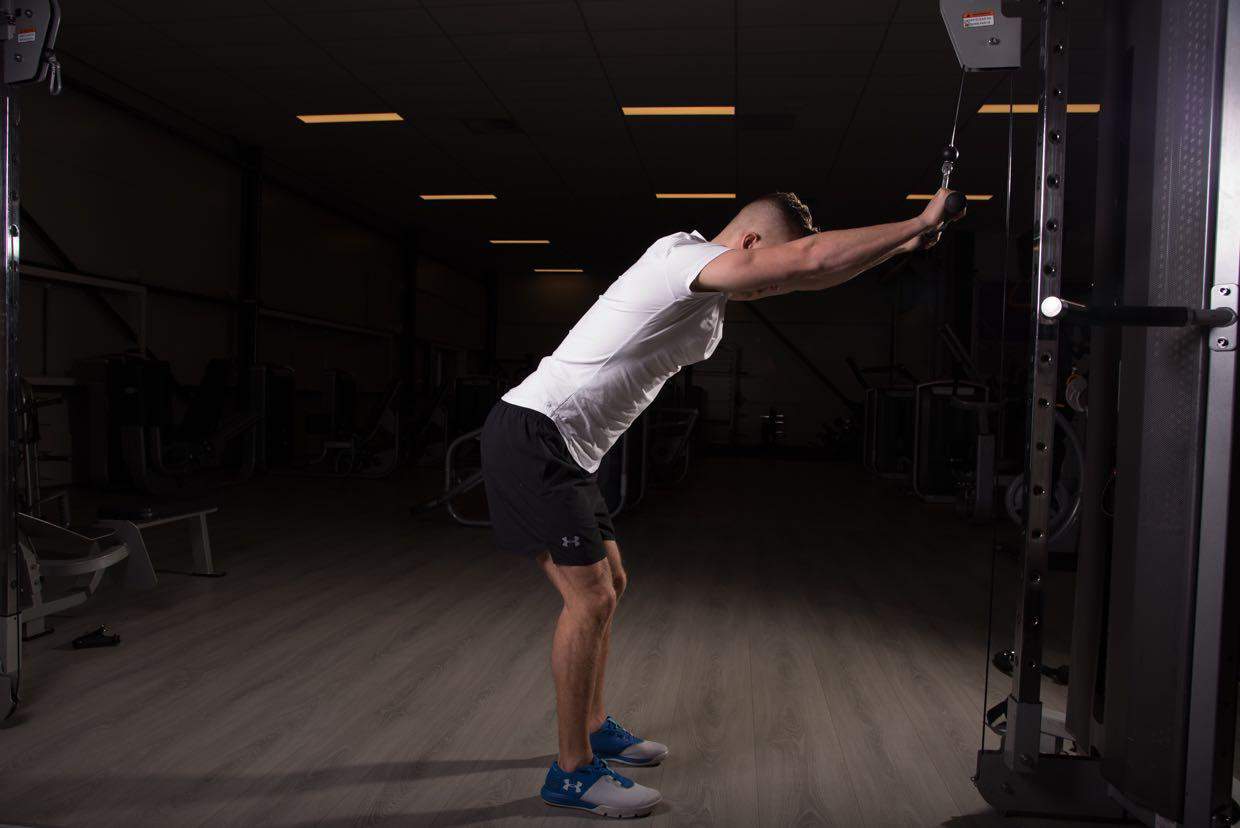
Standing Cable Pullover Execution
-
1
Set the cable pulley at the highest position.
-
2
Select the desired weight and make sure the pin is securely in place.
-
3
Attach a bar to the cable that is at least shoulder-width long.
-
4
Grip the bar with both hands using a wide grip (shoulder-width or slightly wider). Keep your legs slightly bent and your feet shoulder-width apart.
-
5
Now bend forward until your upper arms are (almost) beside your ears.
-
6
Bring your (almost) straight arms and hands downward in a semicircle.
-
7
Controlled, bring the bar back to the starting position in a semicircle.
Standing Cable Pullover
Main muscles:
- Latissimus dorsi
- Pectoralis major and pectoralis minor (chest muscles)
- Serratus
- Deltoid (the 'deltoid-shaped' shoulder muscle, especially the rear deltoid)
- Rotator cuff (stabilizing shoulder muscles: supraspinatus, subscapularis, teres major, teres minor)
Standing Cable Pullover Technique
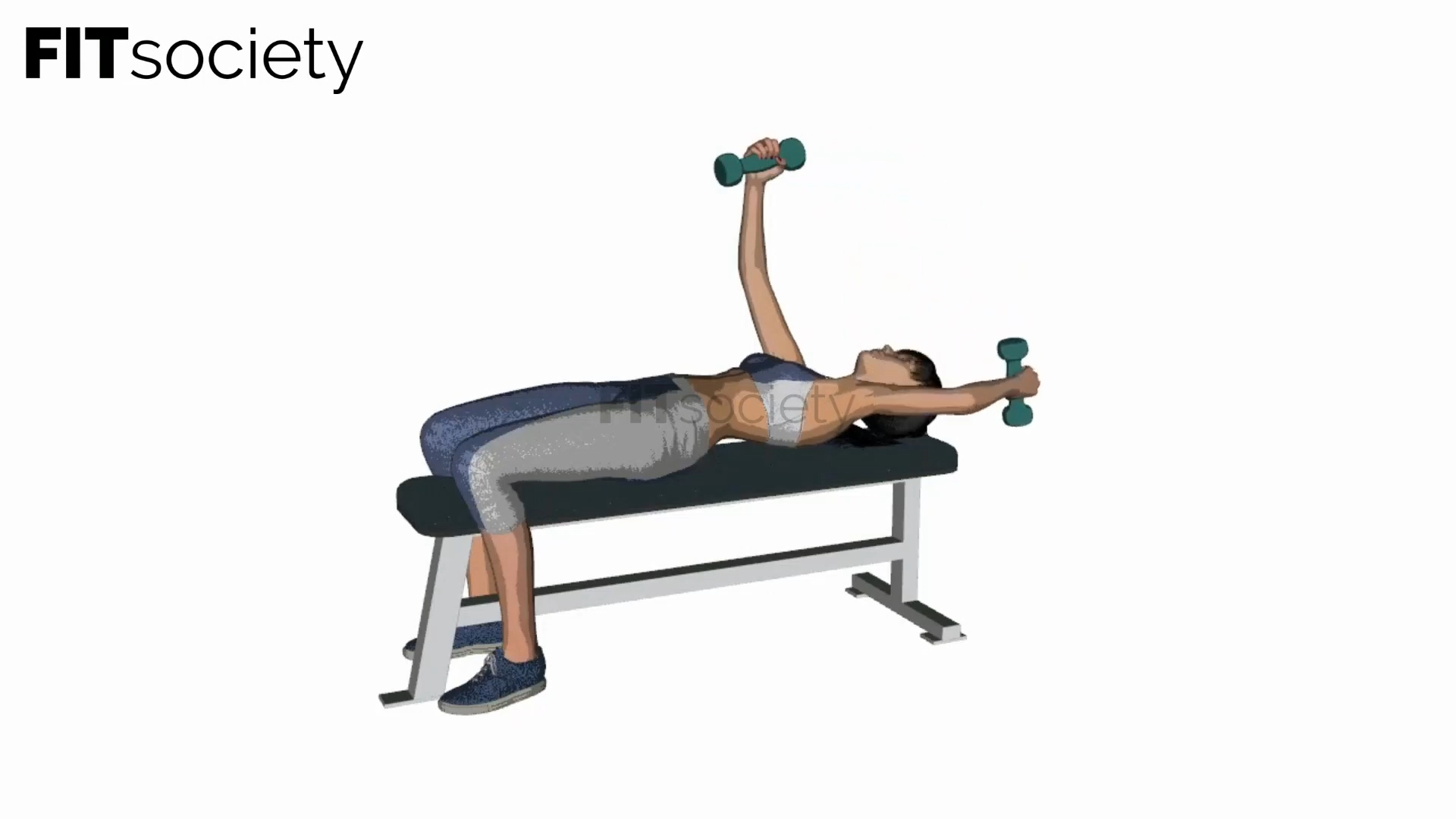
The standing cable pullover is a variation of the dumbbell and barbell pullover and, of course, the lying cable pullover. All these pullover exercises activate the latissimus dorsi, chest muscles, and serratus (the nicely striated muscles above your ribs). Some people do them as part of a back workout, others during a chest workout, and still others to have an even more impressive 'mid section' at a low body-fat percentage.
The different variations can shift the emphasis onto the different muscles involved. The lying version in the lying cable pullover provides a greater range of motion than the standing variation. The arms can be fully extended beside the head, whereas in the standing position they must begin diagonally in front of and above you so that your arms can still pass in front of the cable rack. In the standing variation, you can address this by starting the exercise bent forward, but then you shorten the movement at the bottom because your legs get in the way sooner.
The cable provides tension throughout the entire movement. In the dumbbell variation, the tension disappears when the weight is directly above you (in a decline lying position, you can go a little farther). With cables, you can continue the movement all the way to your legs.
This cable variation (like the machine version) is more suitable for training the back because it keeps the muscles under tension longer, while other variations involve the chest more (according to some EMG studies).
Alternatives
- Barbell Pullover
- Dumbbell Pullover
- Lying Cable Pullover
Run your fitness business with more structure
- Planning, member management and coaching in one platform
- Built for coaches, studios and gyms
- Fewer separate tools, more overview