Lat Pulldown
The lat pulldown is named after the muscle primarily targeted by it: the latissimus dorsi, or the lats. The lat pulldown can be performed in several ways. It can be performed with a narrow, wide, or neutral grip (using a V-bar). The hands can be placed on the bar with the palms facing you (supinated) or away from you (pronated). There is also a variation in which the bar is pulled behind the head, although pulling it in front of the head and toward the chest is more common.
In addition to the muscles that help pull the upper arms backward and bend the arms, the muscles in the lower back, abdomen, and glutes work to stabilize the upper body.
The trapezius helps pull the shoulder blades backward (middle fibers) and downward (lower fibers).
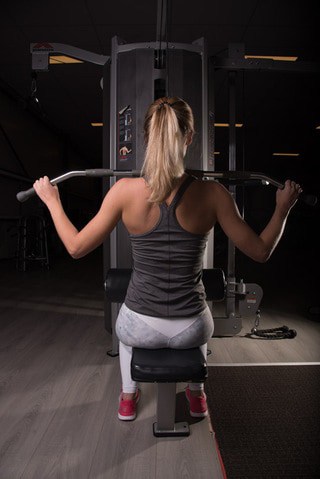
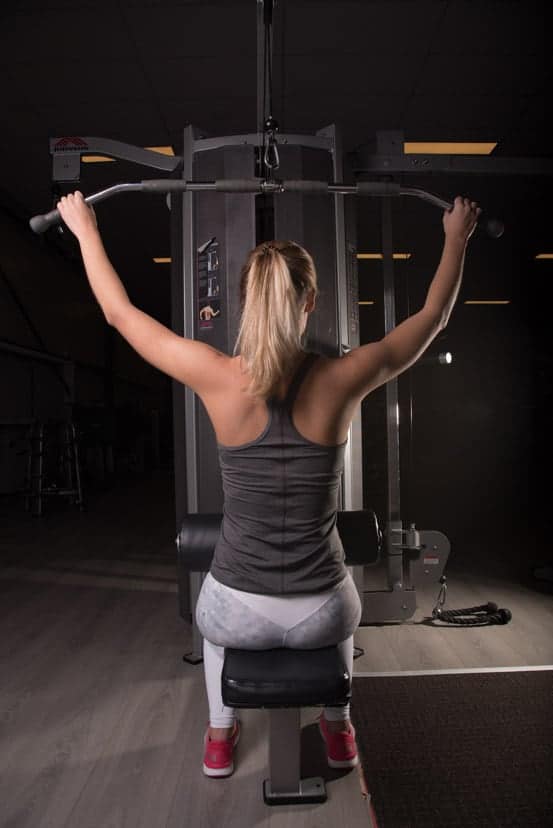
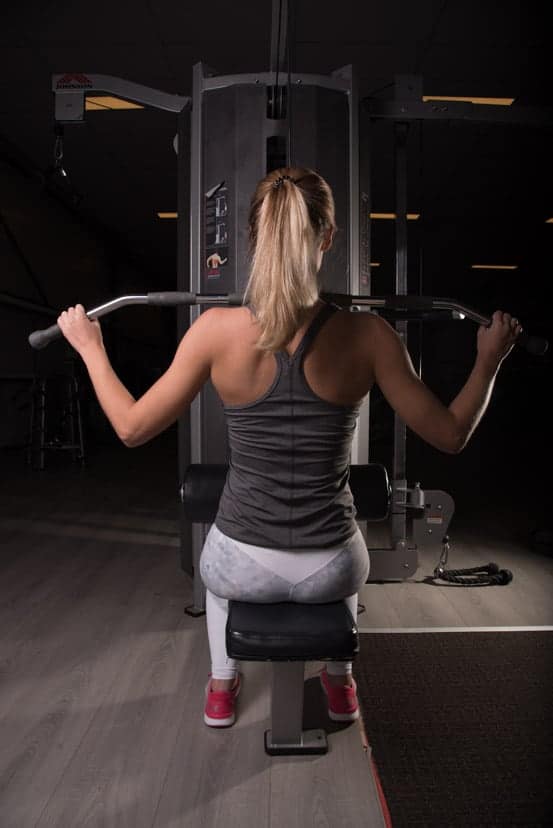
Lat Pulldown execution
-
1
Attach a wide bar to the top of the cable machine and select the appropriate weight. Make sure the pin is properly inserted.
-
2
Grip the bar with your hands slightly wider than shoulder-width apart, palms facing away from you. Sit down.
-
3
Lean your upper body slightly backward (no more than 45 degrees!) to assume the starting position.
-
4
Pull the bar and cable down until your elbows come alongside or slightly past your body.
-
5
Return the bar in a controlled manner by (almost) straightening your arms
Lat Pulldown
Primary muscles:
- Latissimus dorsi (lats)
- Trapezius (traps, especially lower portion)
- Deltoideus (deltoids, especially posterior portion)
- Rhomboideus (rhomboids beneath the trapezius)
- Biceps brachii, brachialis, and brachioradialis (elbow flexion)
- Rotator cuff (stabilizing shoulder muscles: supraspinatus, subscapularis, teres major, teres minor)
Lat Pulldown technique
Many studies have examined different variations of the lat pulldown. The results have not always been consistent. However, there are a few things we can say with reasonable certainty that you should avoid, as well as some things that are recommended.
The lats appear to be engaged more when the body leans slightly backward rather than remaining upright. However, leaning back more than 45 degrees turns it into a shoulder exercise. Perhaps even more importantly, you should maintain this angle throughout the entire exercise. Therefore, do not bring your upper body forward and upward as you straighten your arms. This prevents the most common form of cheating in this exercise: throwing the body backward to create momentum and allow your body weight to assist.
Another common mistake beginners make is using too large a range of motion. Instead of stopping when the bar reaches the chest, it is pulled down to the waist. That final part adds little or nothing to the contribution of the back, but primarily loads the triceps.
Alternatives
- Pull-ups
- Chin-ups
Run your fitness business with more structure
- Planning, member management and coaching in one platform
- Built for coaches, studios and gyms
- Fewer separate tools, more overview