Hip Extension
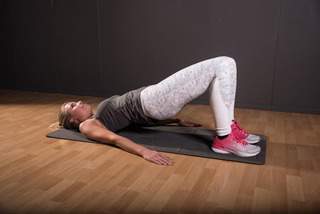
During the hip extension, you push your glutes upward to bring your thighs and torso into one line. The glutes and hamstrings are primarily responsible for this action (except the short head of the biceps femoris). Other muscles in the abdomen and along the spine mainly provide stabilization.
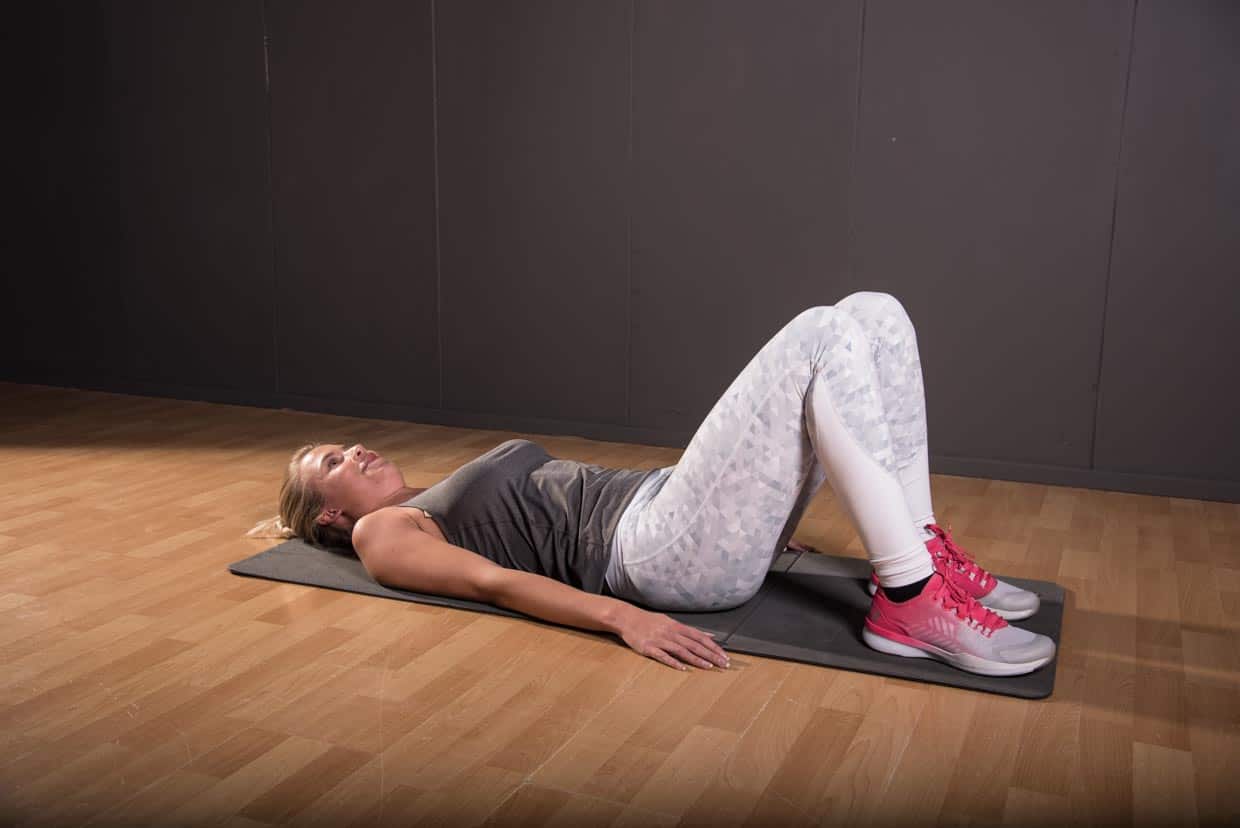
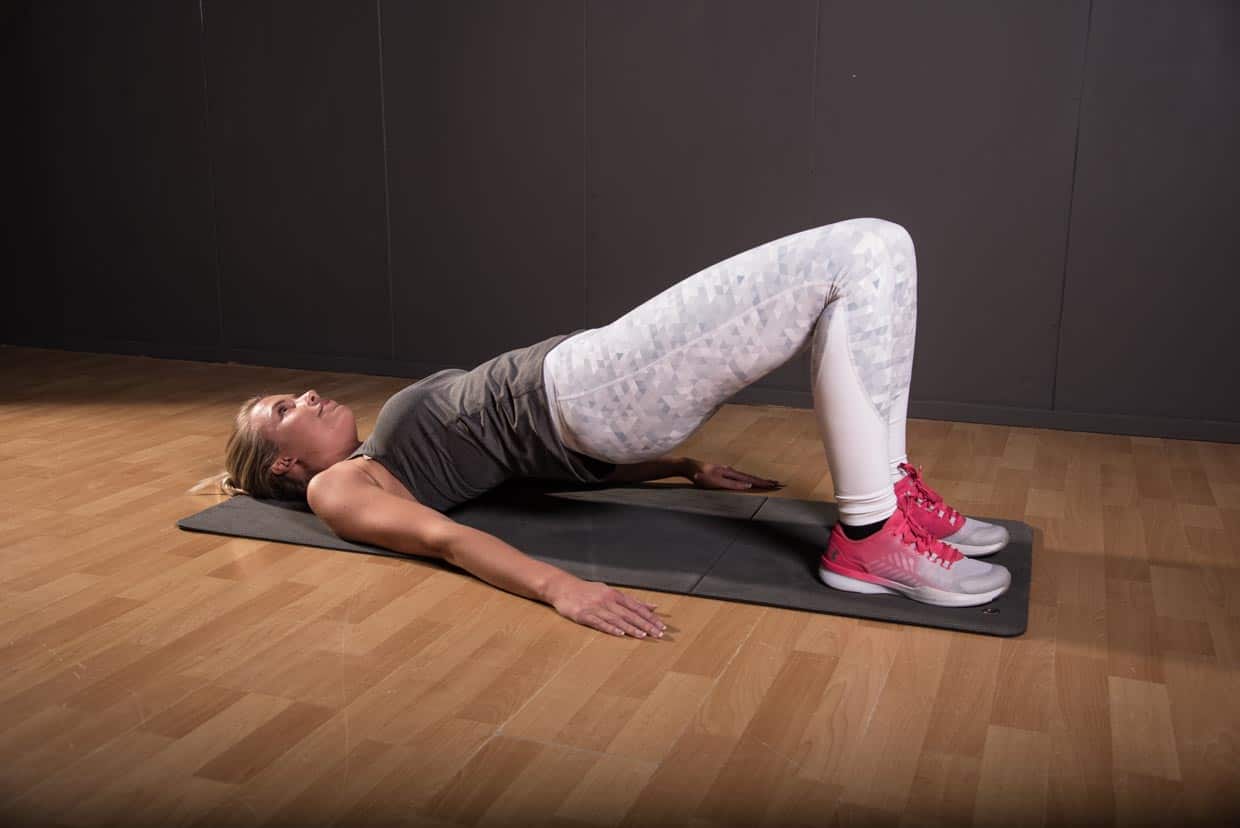
Hip extension
Muscles involved:
Legs:
- Hamstrings
- Quadriceps (vastus lateralis, vastus medialis, vastus intermedius, and rectus femoris)
- Sartorius
Glutes:
- Gluteus maximus, medius, and minimus
Pelvis:
- Iliacus (hip flexor)
- Psoas major (hip flexor)
Calves:
- Gastrocnemius
- Soleus
Abdominals:
- Rectus abdominis (straight abdominal muscle)
- External oblique (external oblique abdominal muscle)
- Internal oblique (internal oblique abdominal muscle)
- Transversus abdominis (transverse abdominal muscle, 'corset muscle')
Lower back and spine:
- Erector spinae
- Lumbar multifidus
- Quadratus lumborum
How to perform the hip extension
- Lie on your back with your feet flat on the floor. Your knees should form an angle of approximately 45 degrees. Place your arms alongside your torso with your palms on the floor.
- Push your pelvis upward until your thighs and torso are in one line.
- Lower yourself back down until your glutes almost touch the floor.
- Repeat.
Hip extension technique
Try to use your arms as little as possible during the exercise. Alternatively, place your hands on your chest.
Alternatives
- Unilateral hip extension
- Barbell straight leg deadlift
- Hip thrust
Run your fitness business with more structure
- Planning, member management and coaching in one platform
- Built for coaches, studios and gyms
- Fewer separate tools, more overview