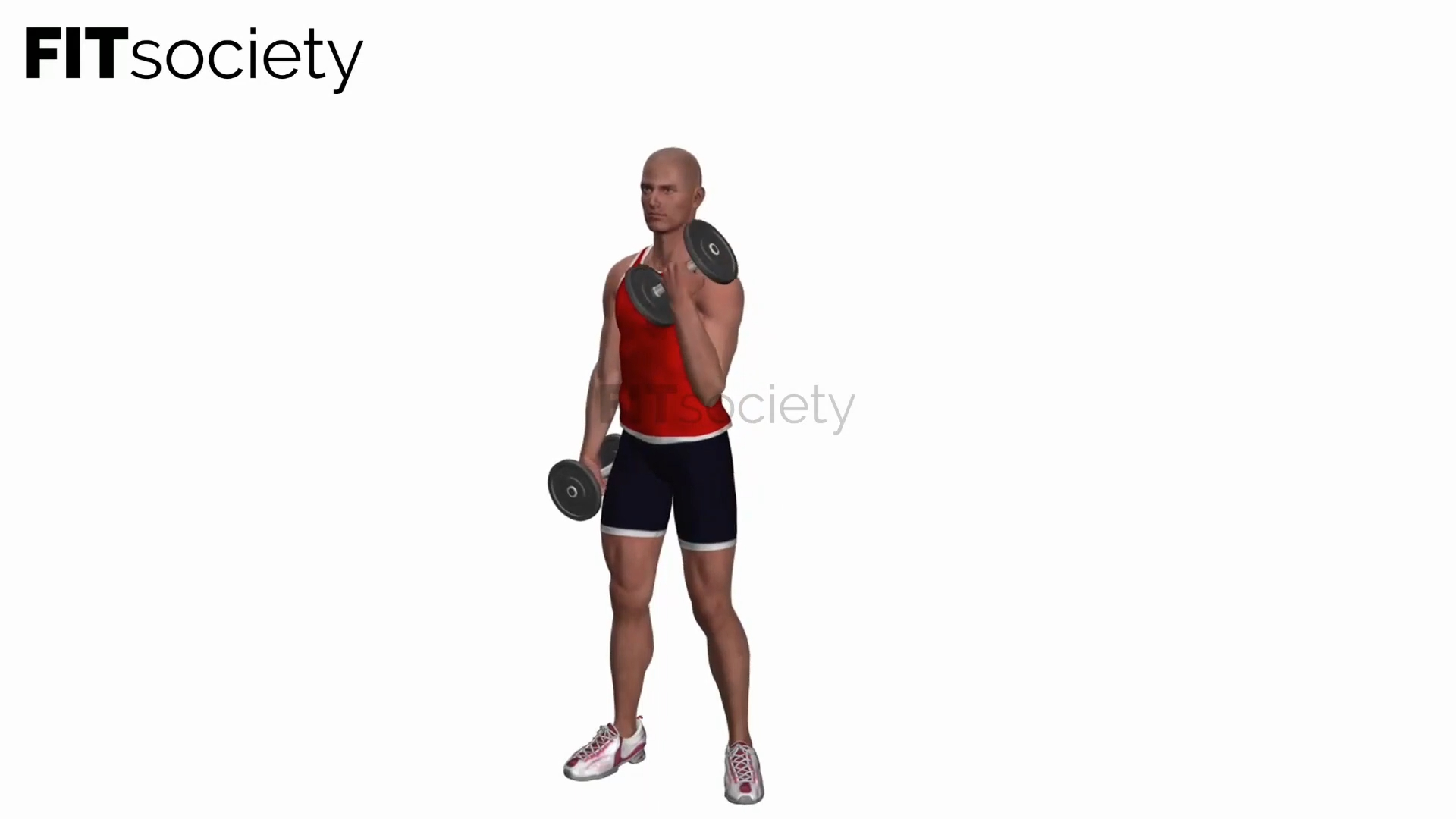
Dumbbell Prone Reverse Curl
This variation of the biceps curl emphasizes the extensor muscles of the forearms and the brachialis muscle.
Because the elbow is positioned in front of the torso rather than beside it in this exercise, the long head of the biceps is already partially shortened. This muscle runs not only across the elbow joint but also across the shoulder joint. Because it is already shortened at the start of the exercise, it cannot exert maximum effort (active insufficiency). The short head of the biceps and the brachialis, which continues into the forearm, will therefore have to work harder to compensate. However, the emphasis is on the forearm muscles.
The exercise can be performed alternately with one hand or with both hands simultaneously. However, with heavier weights, balance can become an issue when performing it alternately.
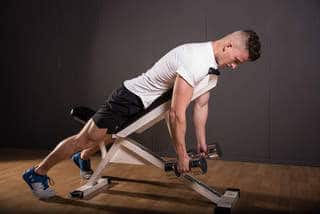
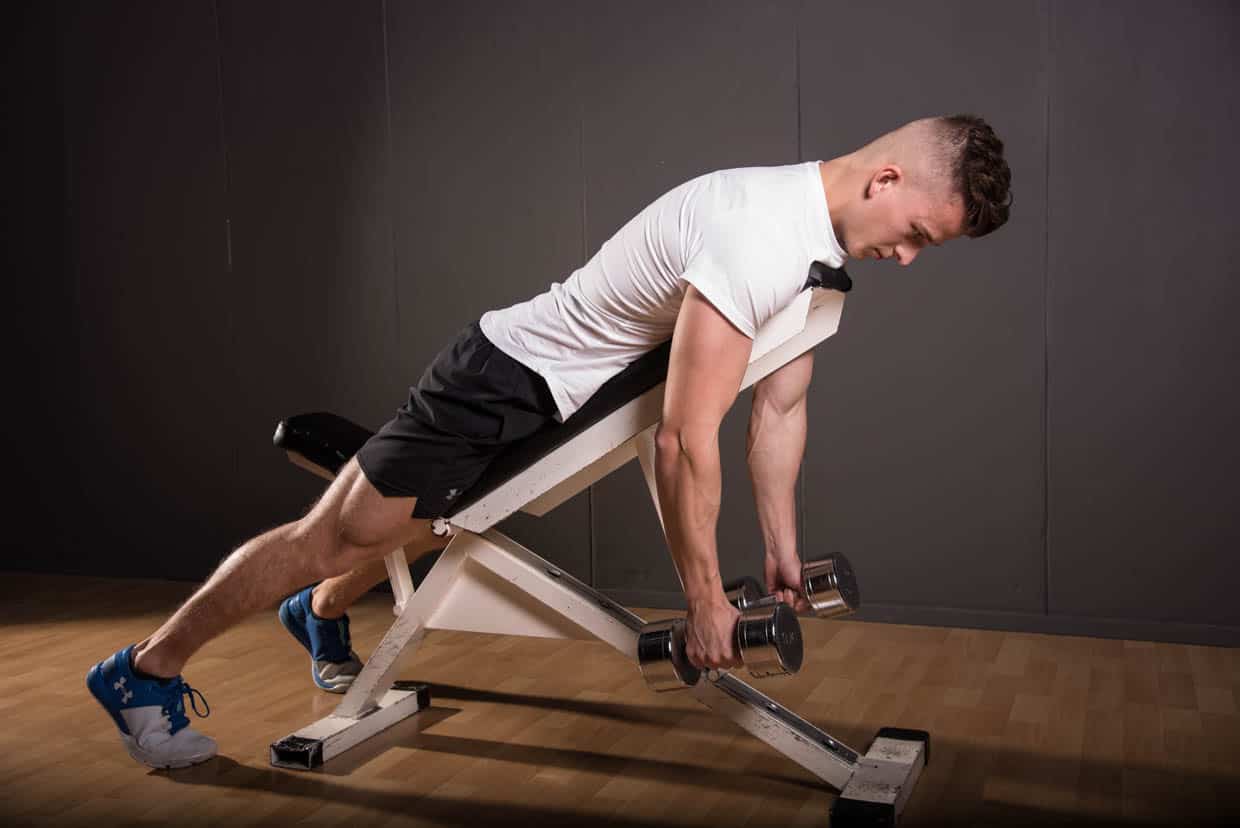
Dumbbell prone incline reverse curl execution
-
1
Choose the appropriate dumbbell weight.
-
2
Place a bench in the incline position (angled upward).
-
3
Lie chest-down on the bench. You can do this with your legs extended, anchoring your feet by standing firmly on the balls of your feet. Alternatively, you can sit on the seat. The disadvantage of this is that your face is turned toward the bench rather than extending above it. This can result in an unnatural neck angle.
-
4
Let your arms hang straight down and keep your upper arms in the same position throughout the movement.
-
5
Turn the backs of your hands forward (thumbs pointing inward). Raise your hand or hands as far as you can.
-
6
Lower your hand or hands in a controlled manner and prevent your upper arms from moving backward with them.
Dumbbell prone incline reverse curl
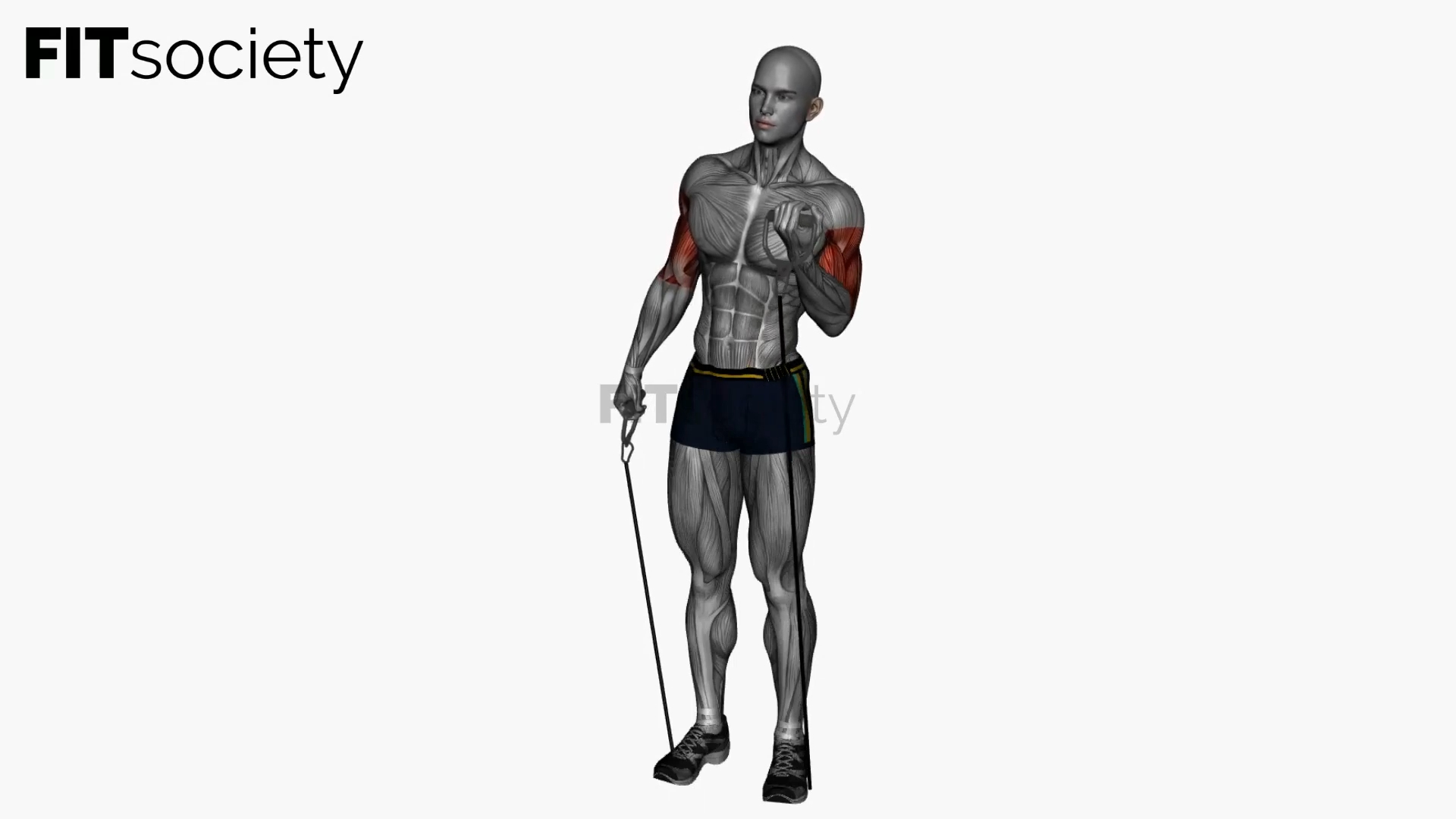
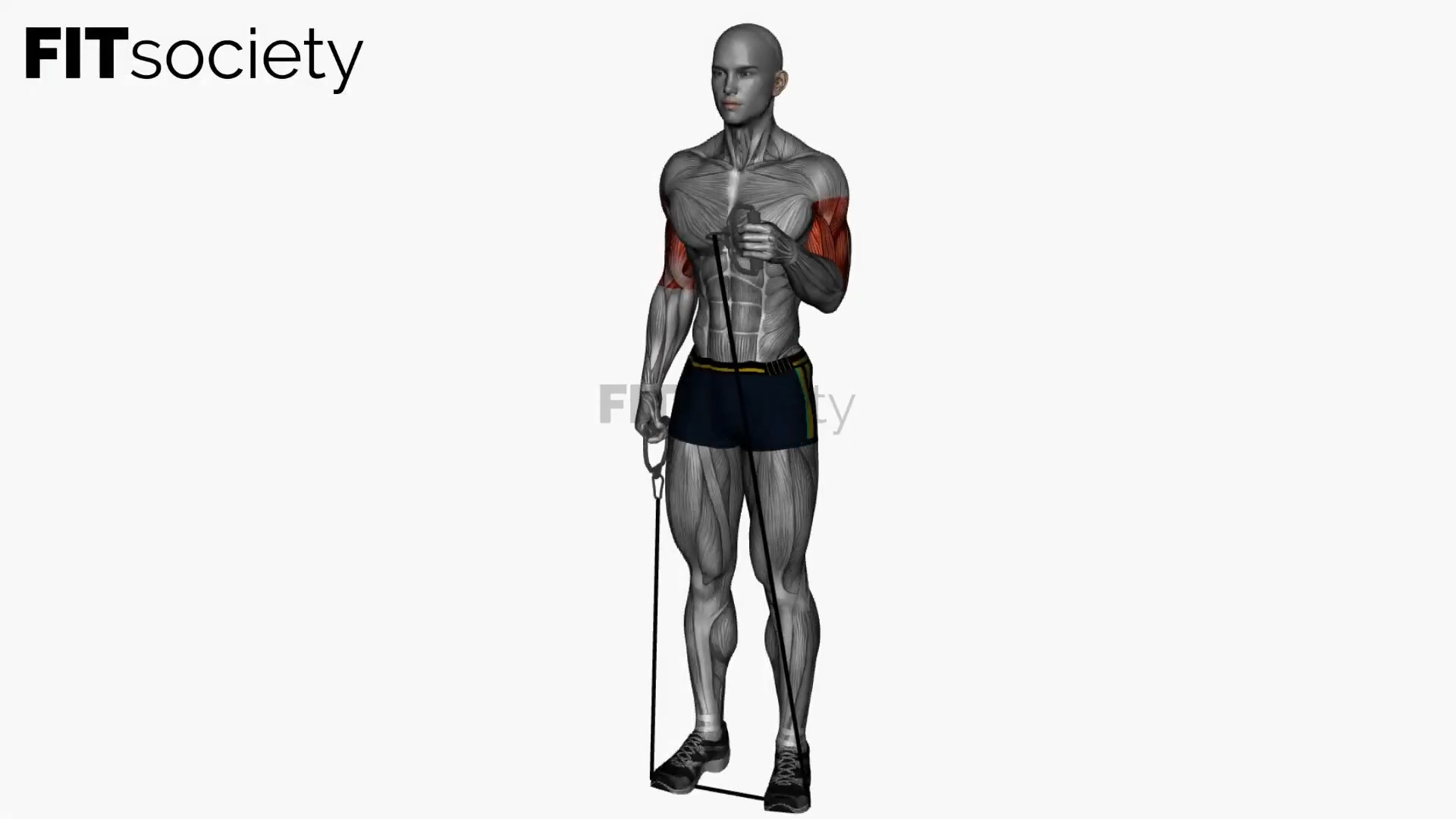
Active muscles:
- Biceps brachii, brachialis, and brachioradialis.
- Forearms (flexor muscles)
- Front of the shoulder
Dumbbell prone incline reverse curl technique
Try to keep your upper arms and elbows in the same position as much as possible. When lowering them, do not swing them backward; let them hang straight down. Otherwise, you risk activating the triceps when the arm is extended. More importantly, this allows you to use the arm as a pendulum and use the forward momentum to require less effort from the biceps (and more from the shoulders). This reduces the effectiveness of the exercise.
Possible alternatives:
- Reverse barbell curls
- Reverse dumbbell curls
Run your fitness business with more structure
- Planning, member management and coaching in one platform
- Built for coaches, studios and gyms
- Fewer separate tools, more overview