Cable Bar Reverse Curl
By performing the barbell biceps curl with the hands facing palms down/back, the biceps themselves can contribute less. The brachioradialis is the only muscle in the forearms that also crosses the elbow joint. When the forearm is rotated into this unfavorable angle for the biceps, the brachioradialis takes over a large part of the load.
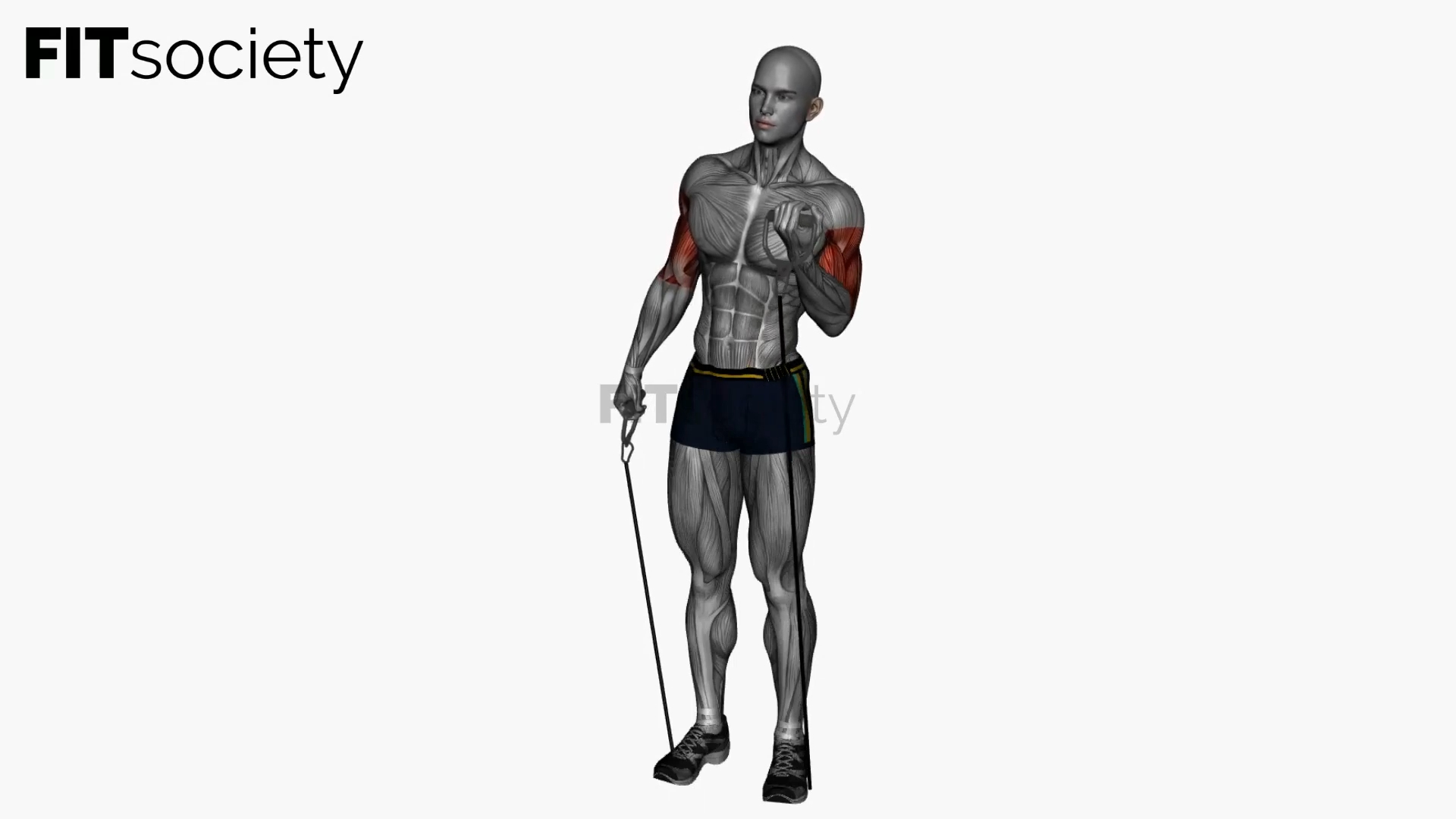
The reverse curl targets the so-called wrist extensors: the muscles on the outside of the forearm that move the knuckles toward the outside. In this variation, you perform the exercise with cables as resistance.
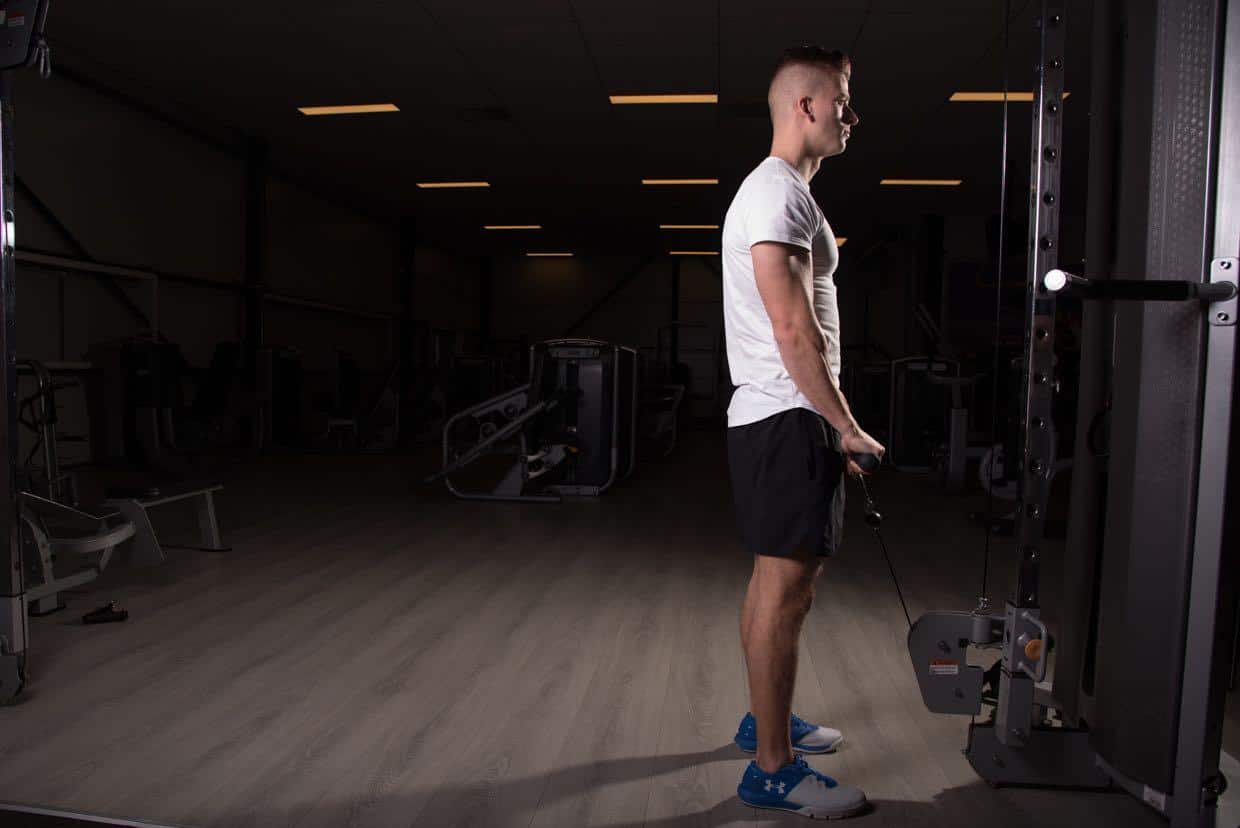
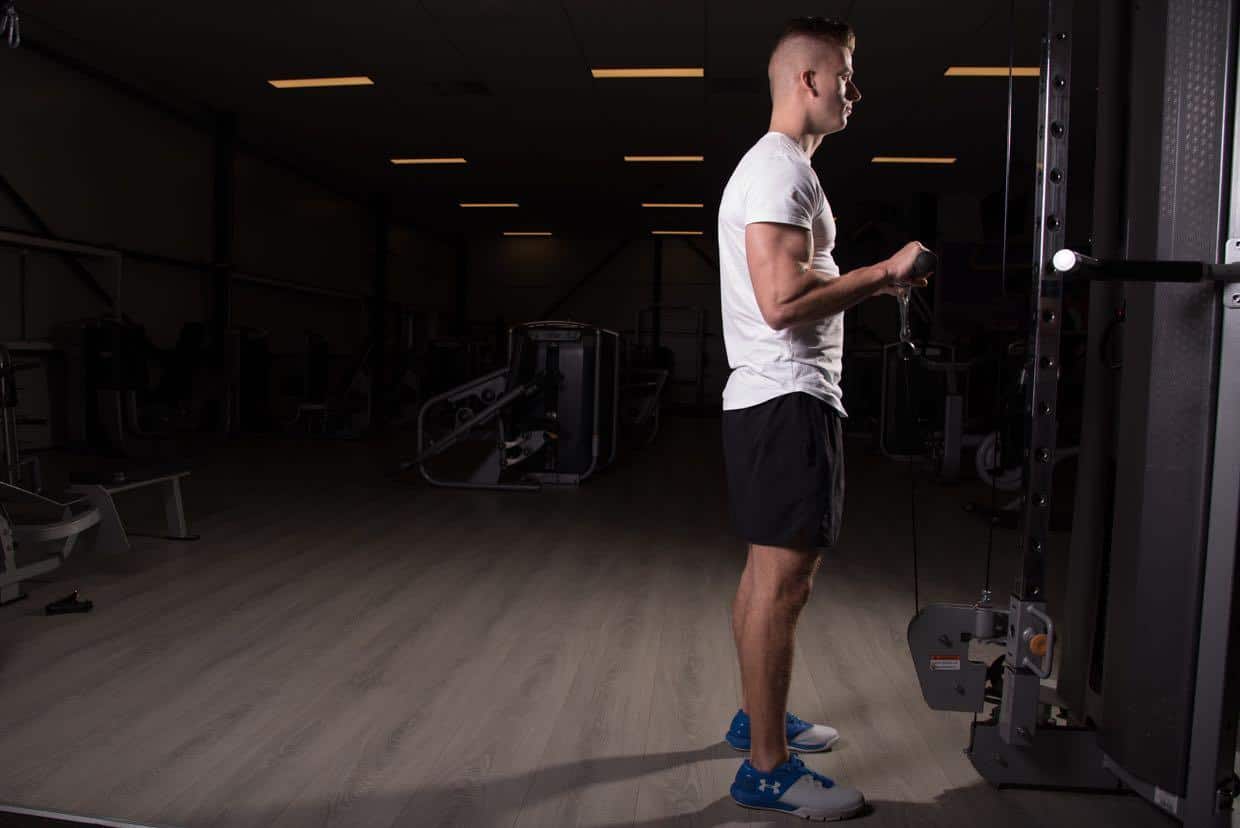
Cable reverse curl execution
-
1
Bring the hands forward and upward. Keep the upper arms and elbows as still as possible.
-
2
Continue until the wrists are slightly above elbow height.
-
3
Lower the arms back down in a controlled manner until the arms are almost straight.
Cable reverse curl
Muscles involved:
Upper arms:
- Biceps brachii
- Brachialis
Forearms:
- Wrist extensors
- Brachioradialis
Cable reverse curl setup
- Place the pulley in the lowest position and attach a (wide) bar.
- Grip the bar with the palms facing down/back (pronated grip). The hands are shoulder-width apart.
- Keep the elbows close to the sides.
Cable reverse curl technique
Besides the brachioradialis, this exercise also targets the forearm extensors. These muscles are responsible not only for extending the wrist, but also for extending the fingers.
These muscles, located mainly on the outside of the forearm, are smaller and less powerful than the flexors on the inside of the forearms. The flexors bend the wrist and fingers. Actions that you perform against resistance much more often.
During reverse curls, these extensors must keep the wrist straight and prevent it from bending under the load.
Alternatives
- Dumbbell reverse wrist curl
- Barbell reverse curl
Run your fitness business with more structure
- Planning, member management and coaching in one platform
- Built for coaches, studios and gyms
- Fewer separate tools, more overview