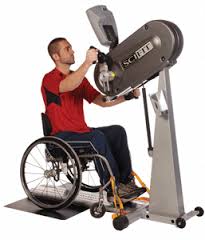
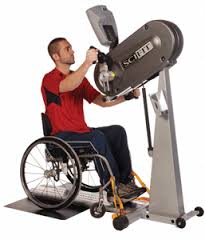
Execution
-
1
Make sure you adjust the arm ergometer to the correct height so that your shoulders remain relaxed during the exercise.
-
2
Sit or stand, depending on the type of ergometer, and grip the handles firmly.
-
3
Begin rotating the handles in a smooth motion, as if you were cycling with your hands.
-
4
Keep your back straight and your gaze forward; avoid looking down.
-
5
Start slowly and gradually increase the speed or resistance for a more intense workout.
-
6
Continue for the desired amount of time or number of repetitions.
Benefits
- Improves cardiovascular fitness.
- Increases muscle strength and endurance in the upper body.
- Is a good exercise for rehabilitation after an injury.
- May help burn calories and support weight loss.
Common Mistakes
- ! Starting too quickly, causing you to become fatigued quickly.
- ! Gripping the handles too tightly, which can lead to forearm fatigue.
- ! Shrugging the shoulders, which can cause tension.
Important Muscles
- Biceps
- Triceps
- Deltoid muscles (shoulders)
- Trapezius (upper back)
- Pectoralis major (chest)
Possible Alternatives
- Change the direction of rotation to train different muscle groups.
- Add intervals by alternating between high intensity and rest periods.
- If you do not have access to an arm ergometer, you can use a rowing machine or hand weights for a similar workout.
Run your fitness business with more structure
- Planning, member management and coaching in one platform
- Built for coaches, studios and gyms
- Fewer separate tools, more overview