Seated Row
The seated row is a very effective and therefore popular exercise that primarily targets the latissimus dorsi. To isolate this muscle group as much as possible, the exercise is usually performed with a V-bar. This allows for a natural grip while keeping the elbows low throughout the exercise.
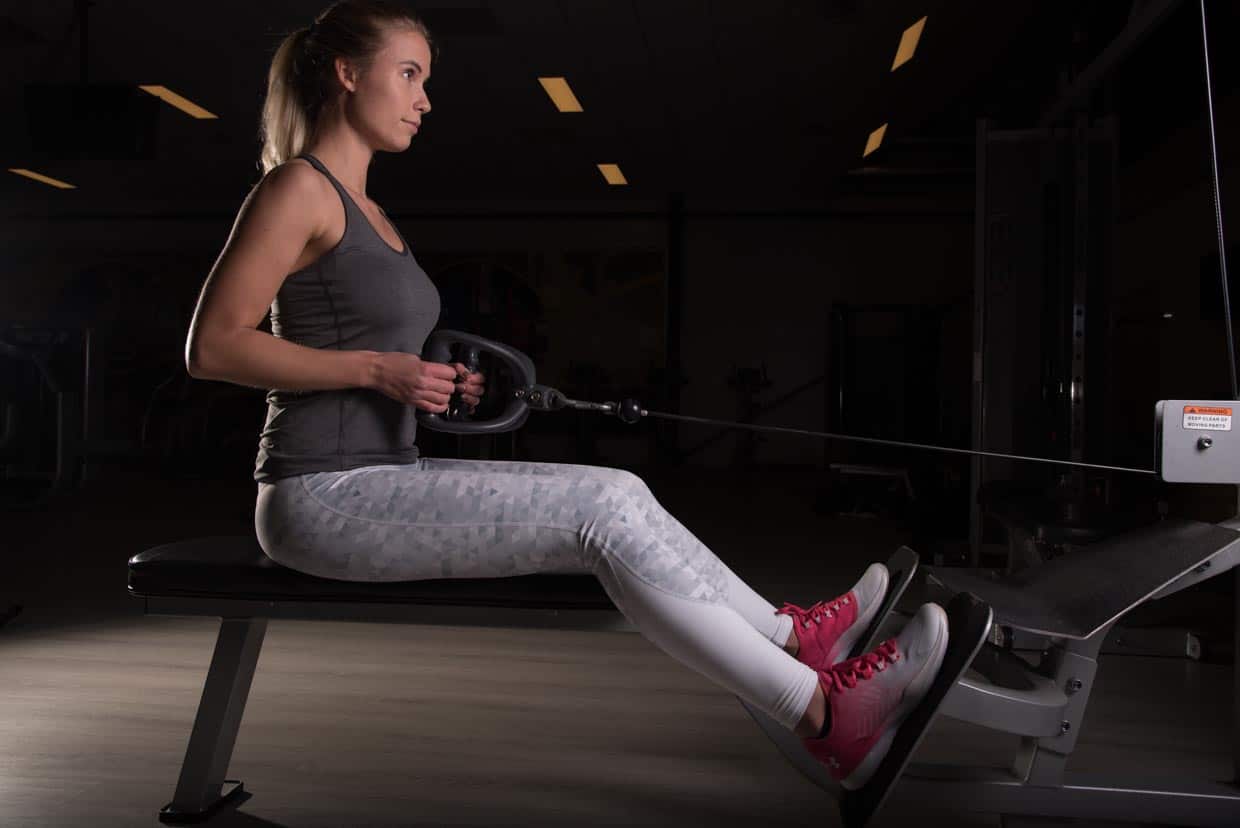
Seated Row Execution
-
1
Select the appropriate weight on the cable machine and make sure the pin is securely in place. Attach the V-bar to the cable.
-
2
Sit with your legs slightly bent and your feet on the designated footplate.
-
3
Grip the V-bar. The first time, you will need to bend forward with your entire upper body to do this.
-
4
Now bring your upper body into the starting position by sitting upright with your arms extended and leaning slightly backward.
-
5
Begin the exercise by pulling your elbows toward and past your sides.
-
6
Controlled, return your hands to the starting position by extending your arms.
Seated Row
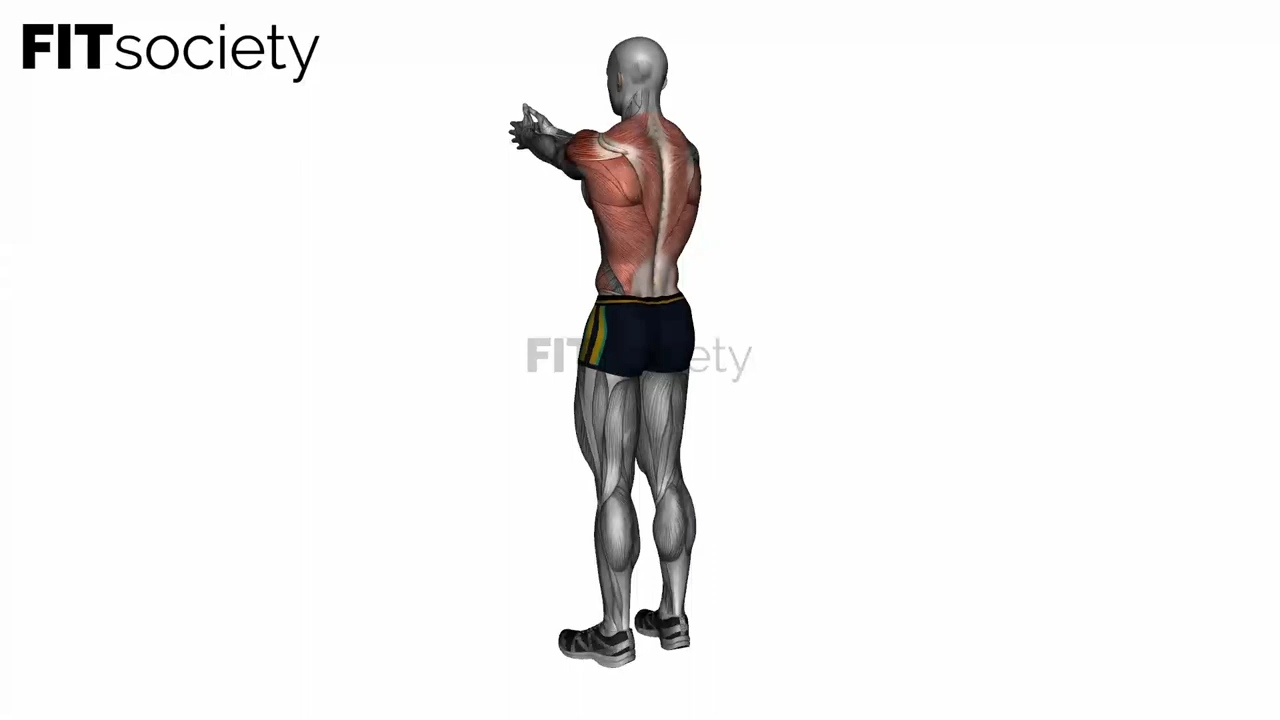
Main muscles:
- Latissimus dorsi
- Deltoids (especially the rear deltoids)
- Trapezius (especially the middle trapezius)
- Rhomboids
- Biceps brachii, brachialis, and brachioradialis (elbow flexion)
- Rotator cuff (supraspinatus, subscapularis, teres major, teres minor)
The seated row is a very effective and therefore popular exercise that primarily targets the latissimus dorsi. To isolate this muscle group as much as possible, the exercise is usually performed with a V-bar. This allows for a natural grip while keeping the elbows low throughout the exercise.
Seated Row Technique
This execution of the exercise primarily targets the latissimus dorsi. Raising the elbows shifts more emphasis to the rear deltoids. Therefore, keep them as low as possible.
You can often see two different variations of the seated row:
- Fixed upper body
- Moving upper body.
When the upper body moves forward and backward during the exercise, the erector spinae and muscles in the lower body that align the upper body with the legs, such as during a deadlift, perform more work. These include the glutes and hamstrings. This can be considered a more functional variation of the exercise, in which you also train coordination between the muscles in the lower and upper back. For example, this may be useful when training for an actual rowing competition.
The fact that all these muscles in the lower back and glutes assist means that the relative involvement of the latissimus dorsi is reduced. If the lower body initiates the movement and creates momentum, the latissimus dorsi only needs to complete the movement. To isolate the latissimus dorsi as much as possible, keep your upper body still and concentrate solely on pulling your elbows backward. Keep your body tilted slightly backward to avoid arching your lower back.
You can increase or decrease the involvement of the trapezius and rhomboids by moving or not moving the shoulder blades, respectively.
Alternatives
- Cable Kneeling Row
- Seated Row Wide Grip
- Dumbbell Row
- Barbell Bent-Over Row
- T-Bar Row
Run your fitness business with more structure
- Planning, member management and coaching in one platform
- Built for coaches, studios and gyms
- Fewer separate tools, more overview