Seated Arnold Press
The Seated Arnold Press is a dynamic shoulder exercise named after Arnold Schwarzenegger. This exercise combines a shoulder press with a rotating movement, creating a unique challenge and stimulation for the shoulder muscles.
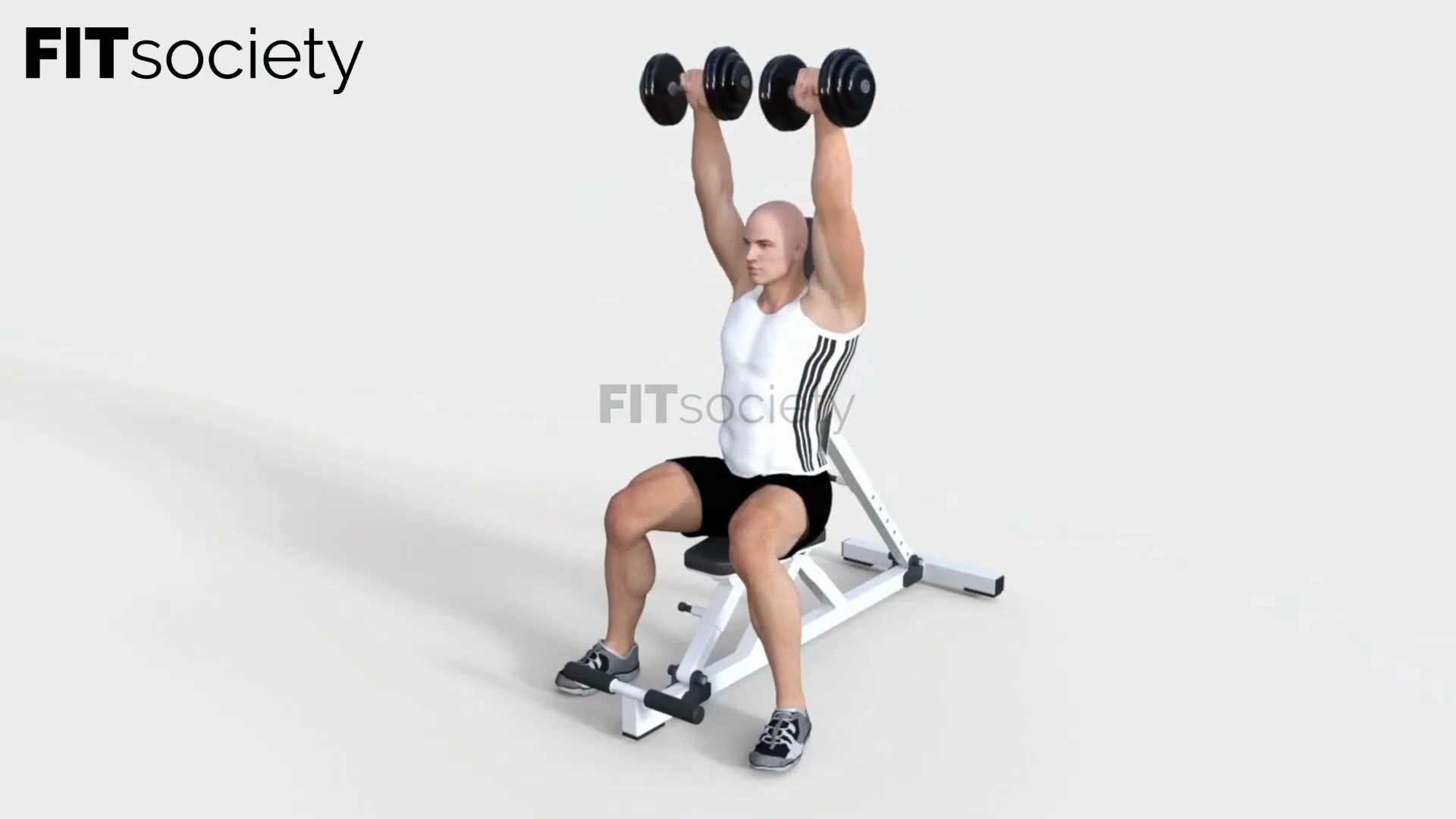
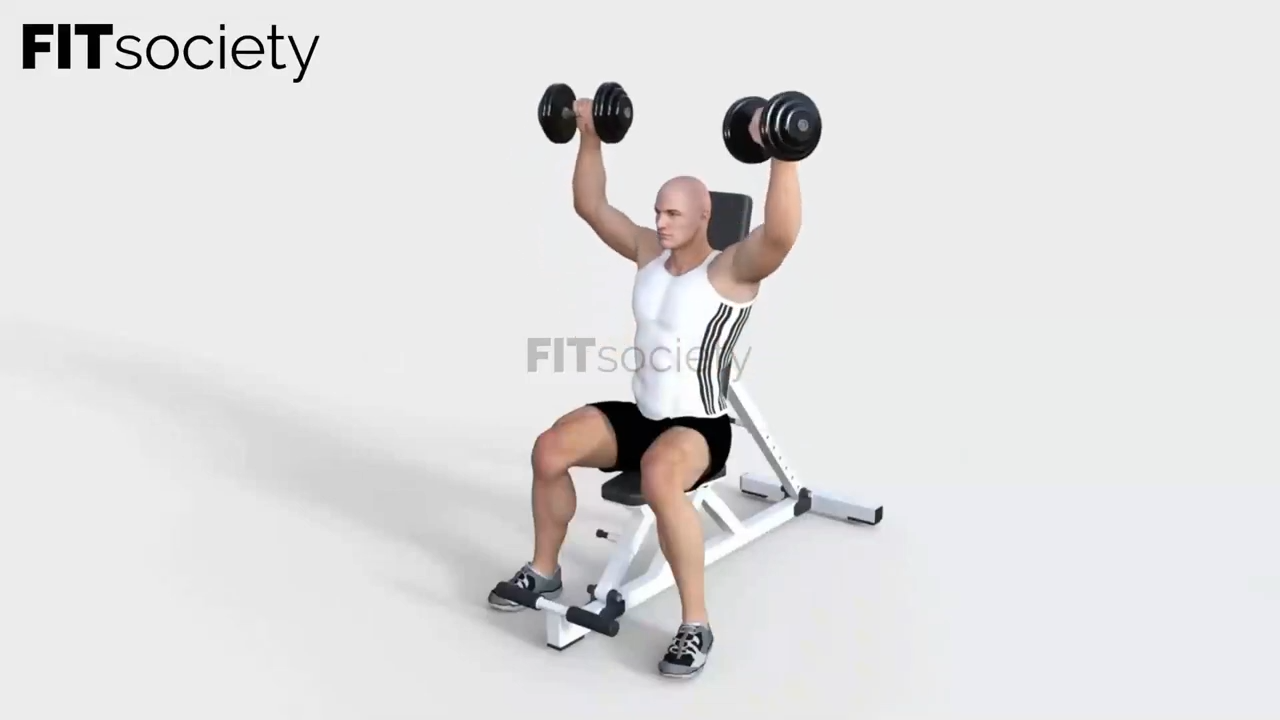
Execution
-
1
Sit upright on a bench with your back straight and your feet firmly on the floor.
-
2
Begin with a dumbbell in each hand, your palms facing you, at shoulder height.
-
3
As you press the dumbbells upward, rotate your hands so that your palms face away from you at the end of the movement.
-
4
Slowly and controllably lower the dumbbells back to the starting position while rotating your hands again so that your palms face you.
-
5
Repeat for the desired number of repetitions.
Benefits
- Improves shoulder stability and mobility.
- Stimulates the muscles from different angles through the rotating movement.
- Helps develop balanced muscle growth around the shoulders.
Common Mistakes
- ! Moving the weights up and down too quickly: use a controlled movement.
- ! Using weights that are too heavy: this can lead to poor form and possible injuries.
- ! Not fully rotating the palms: make sure to complete the rotation for maximum effectiveness.
Primary Muscles
The Seated Arnold Press primarily trains the deltoids (shoulders), but also engages the trapezius (neck), serratus anterior (side of the chest), and triceps (back of the upper arm).
Possible Alternatives
- Standing Arnold Press: For those who want to challenge core stability further.
- Arnold Press with dumbbells: For a variation that requires more balance and coordination.
- Lighter weights and more repetitions: For a focus on endurance and muscle tone.
Run your fitness business with more structure
- Planning, member management and coaching in one platform
- Built for coaches, studios and gyms
- Fewer separate tools, more overview