Leg Extension
The leg extension is the only exercise that allows the quadriceps muscles to be trained in isolation from muscles such as the hamstrings, glutes, abdominals, and lower back.
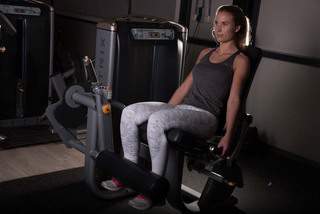
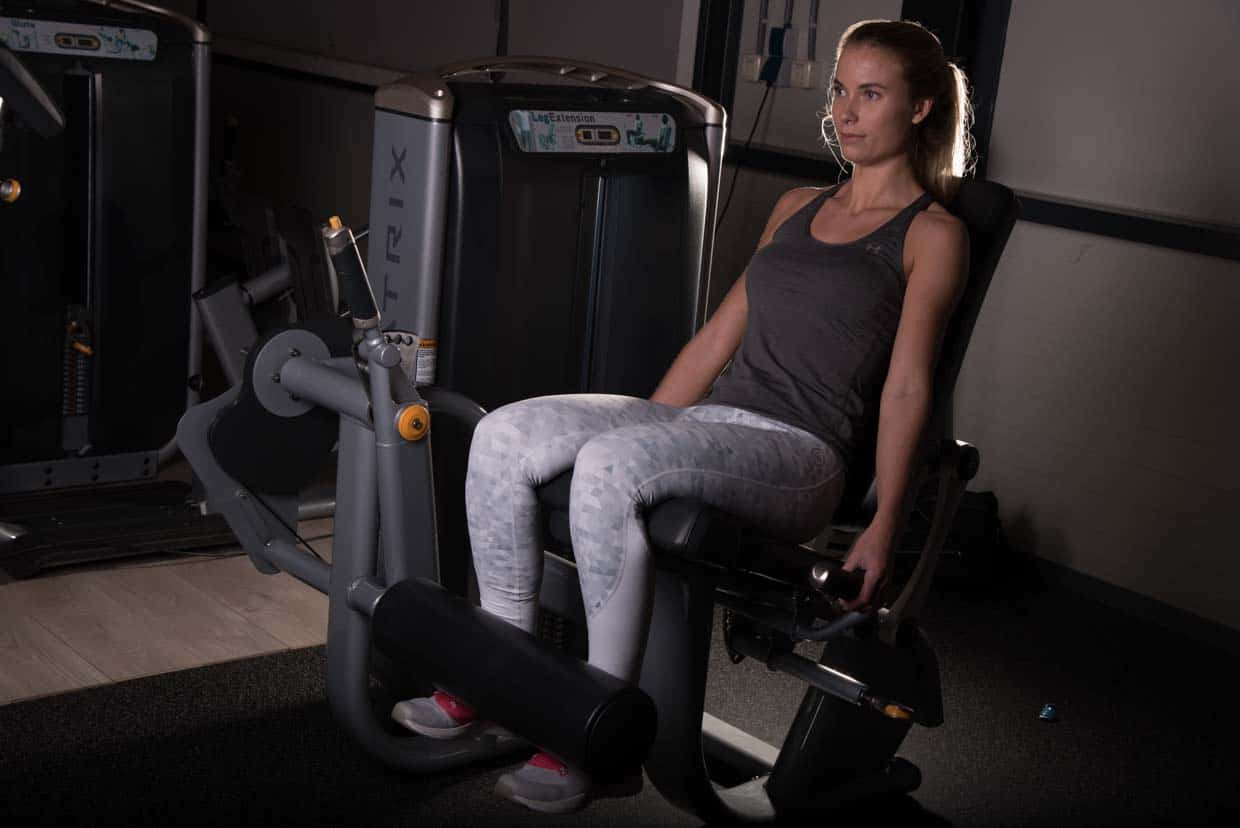
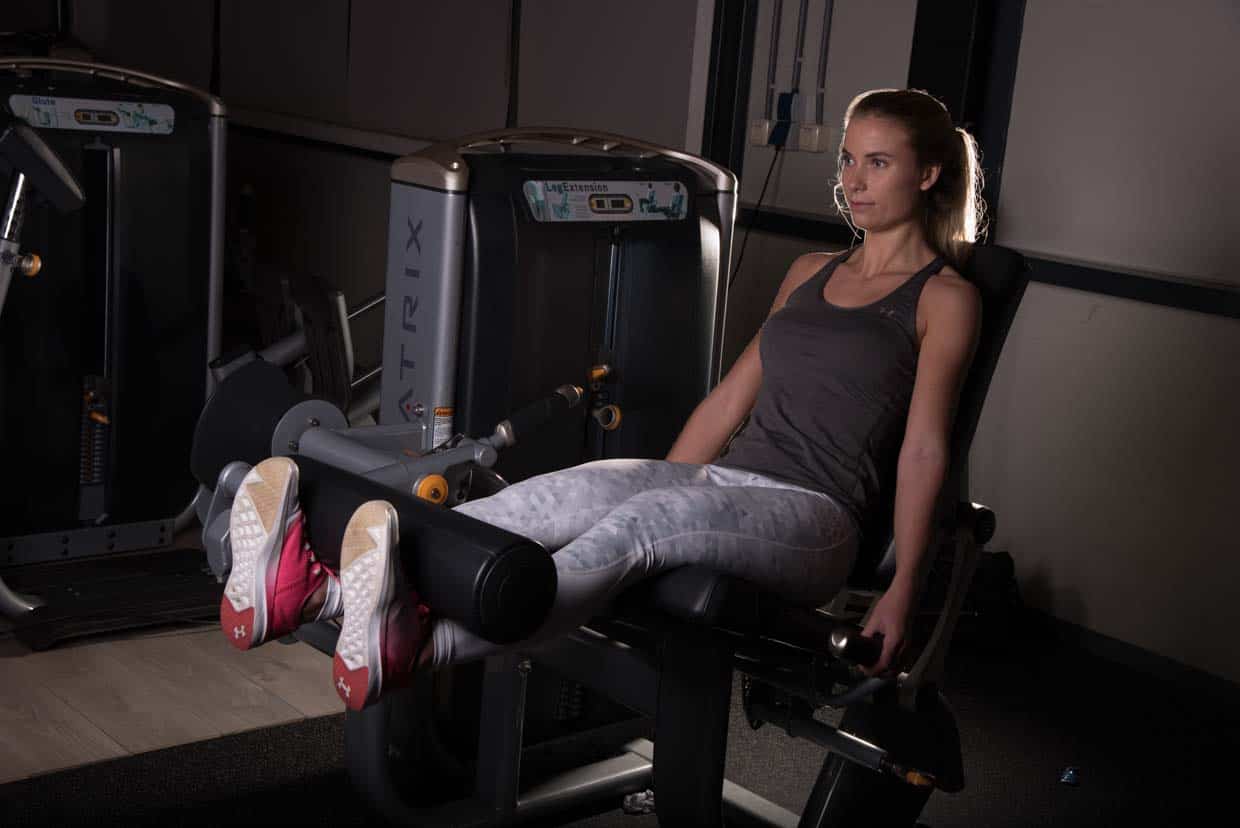
Leg Extension Execution
-
1
Push your feet forward and upward until your legs are almost straight.
-
2
Lower your feet back down and backward in a controlled manner until just before the resting point (therefore maintaining tension).
Leg Extension
Muscles involved:
Legs:
- Quadriceps (vastus lateralis, vastus medialis, vastus intermedius, and rectus femoris)
Leg Extension Setup
(also see the instructions on the machine):
- Adjust the seat to the correct distance. Your knees should be level with the machine's pivot point.
- Adjust the foot pad to the correct height so that it rests at the point where the shin meets the top of the foot.
- Sit down and position the foot pad as far back as possible before securing it.
- ‘Lock yourself in’ by gripping the handles firmly.
Leg Extension Technique
The rectus femoris is the only quadriceps muscle that crosses two joints. In addition to extending the knee, it also functions to bring the leg forward and upward. In a seated position, as during seated leg extensions, it is therefore the only one already shortened because the leg is already raised forward. In this state of so-called ‘active insufficiency’, the already shortened muscle cannot produce maximal force. This means that the other quadriceps muscles must take over part of this load.
During squats and the leg press, the rectus femoris is also already shortened before the leg is extended at the knee. When you descend into the squat, your thighs move forward, after all. The difference from leg extensions, however, is that the thighs become aligned with the torso again while rising from the squat and while pushing out during the leg press. While the rectus femoris is shortened at the knee during the upward movement/push, it is lengthened at the pelvis. As a result, compared with leg extensions, there is less ‘active insufficiency’ and the rectus femoris can produce more force.
Leg extensions are therefore not a complete alternative to exercises such as the leg press and squat and should instead be viewed as an addition.
Alternatives
- Cable leg extension
- Unilateral leg extension
Run your fitness business with more structure
- Planning, member management and coaching in one platform
- Built for coaches, studios and gyms
- Fewer separate tools, more overview