Dumbbell Hip Thrust (Version 2)
The Dumbbell Hip Thrust is a powerful exercise aimed at strengthening your glutes and hamstrings. This dumbbell version adds extra resistance, making your muscles work harder and helping you get more out of your workout.
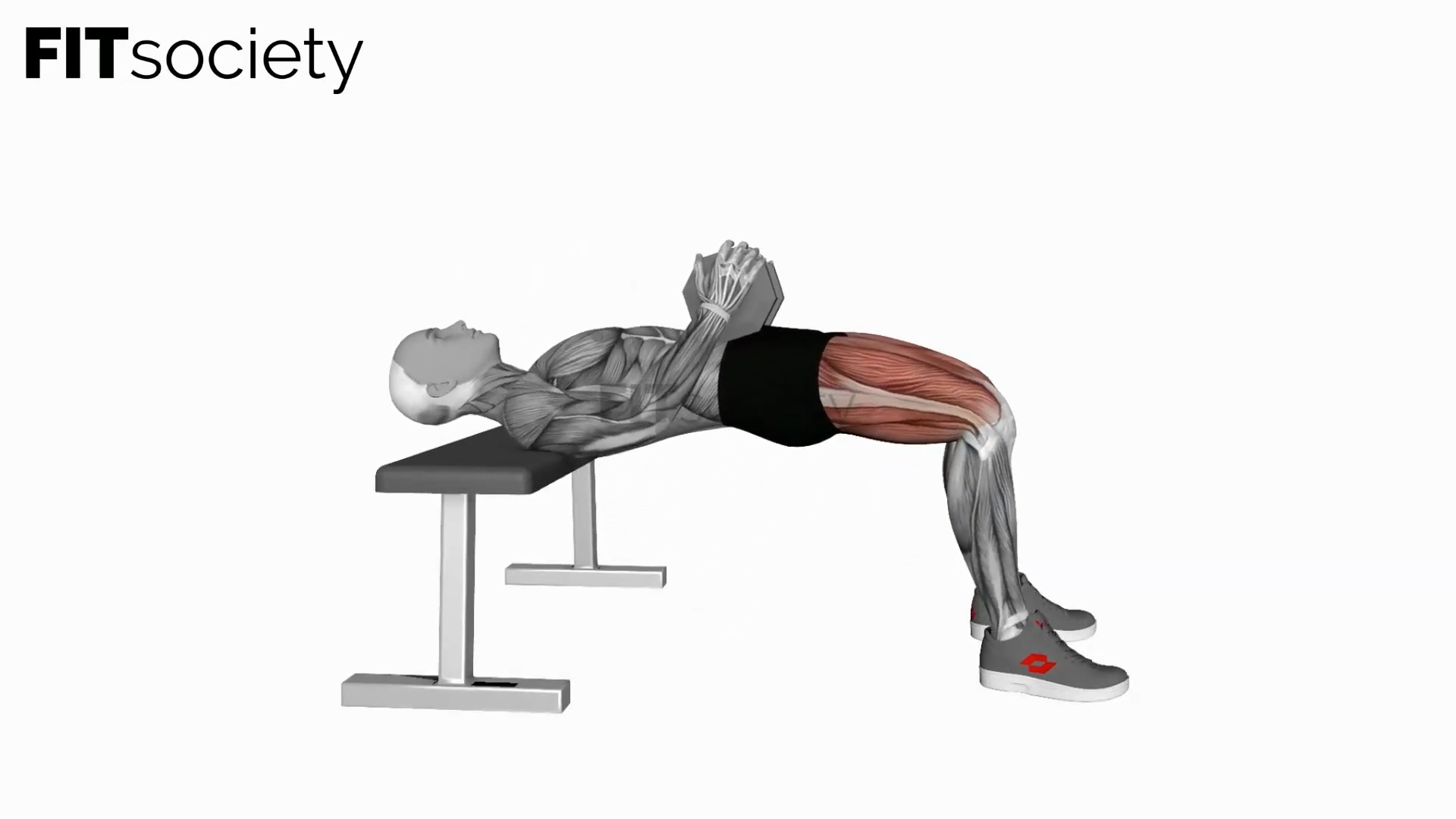
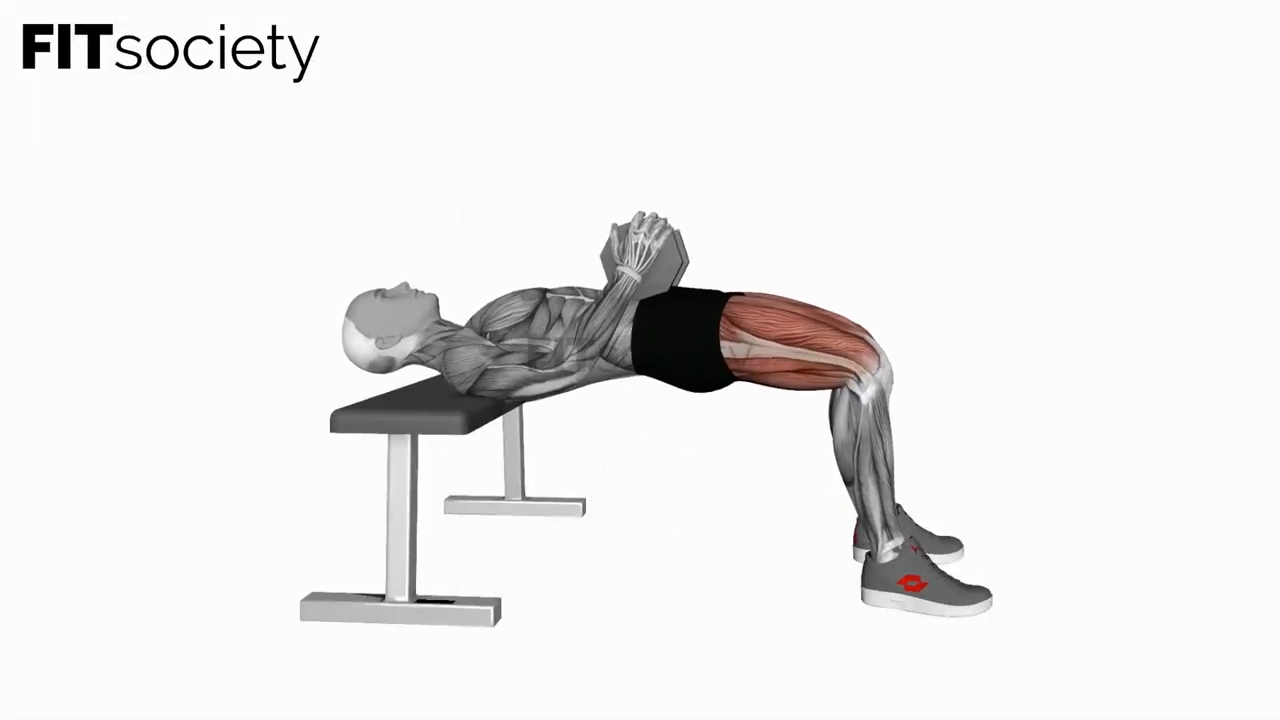
Execution
-
1
Find a flat bench and place a dumbbell on your lap. Sit with your back against the bench, your feet flat on the floor and hip-width apart.
-
2
Roll the dumbbell toward your hips so that it rests comfortably on your pelvis.
-
3
Lean back and place your shoulder blades against the bench. This is your starting position.
-
4
Inhale and drive through your heels, lifting your hips by contracting your glutes. Lift until your body forms a straight line from your shoulders to your knees.
-
5
Hold this position briefly, then slowly lower your hips back to the starting position.
Benefits
- Improves the strength and shape of your glutes.
- Increases core and lower back stability.
- May help improve your posture.
- Adds variety to your workout and prevents boredom.
Common Mistakes
- ! Moving too quickly: Focus on a controlled movement to train the muscles effectively.
- ! Hips too high: Do not drive your hips too high, as this can lead to overloading your lower back.
- ! Straining the neck: Keep your neck in a neutral position to prevent tension.
Primary Muscles
This exercise primarily targets the gluteus maximus (the largest glute muscle), but the hamstrings and lower back muscles are also engaged.
Possible Alternatives
- For a lighter variation, perform the exercise without weight.
- To increase the intensity, try a heavier dumbbell or add a resistance band around your knees.
Run your fitness business with more structure
- Planning, member management and coaching in one platform
- Built for coaches, studios and gyms
- Fewer separate tools, more overview