Dumbbell Curls
Dumbbell curls are a classic strength exercise that targets the development of the biceps. This exercise is not only effective for building muscle mass, but also improves grip strength and overall arm function.
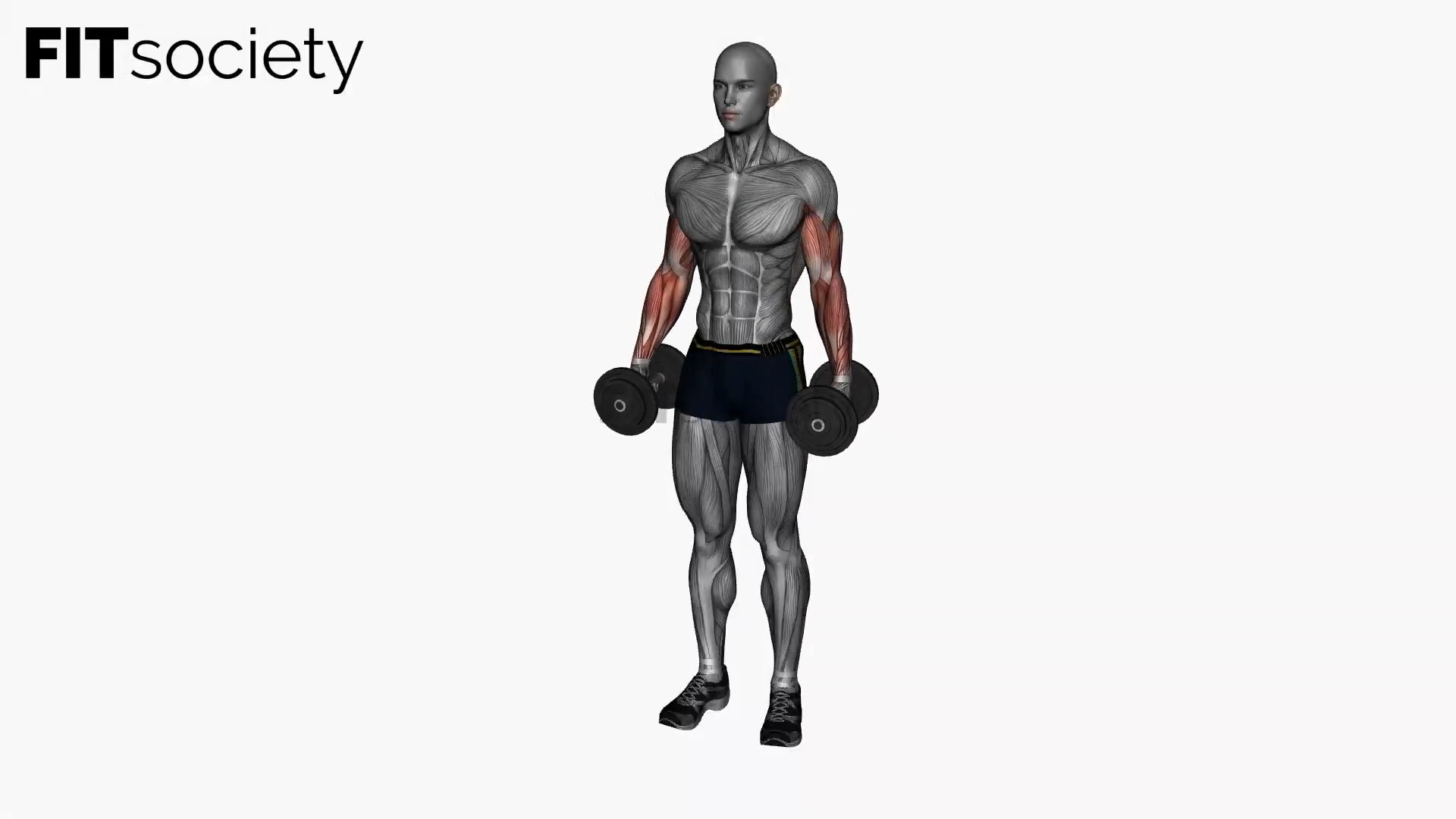
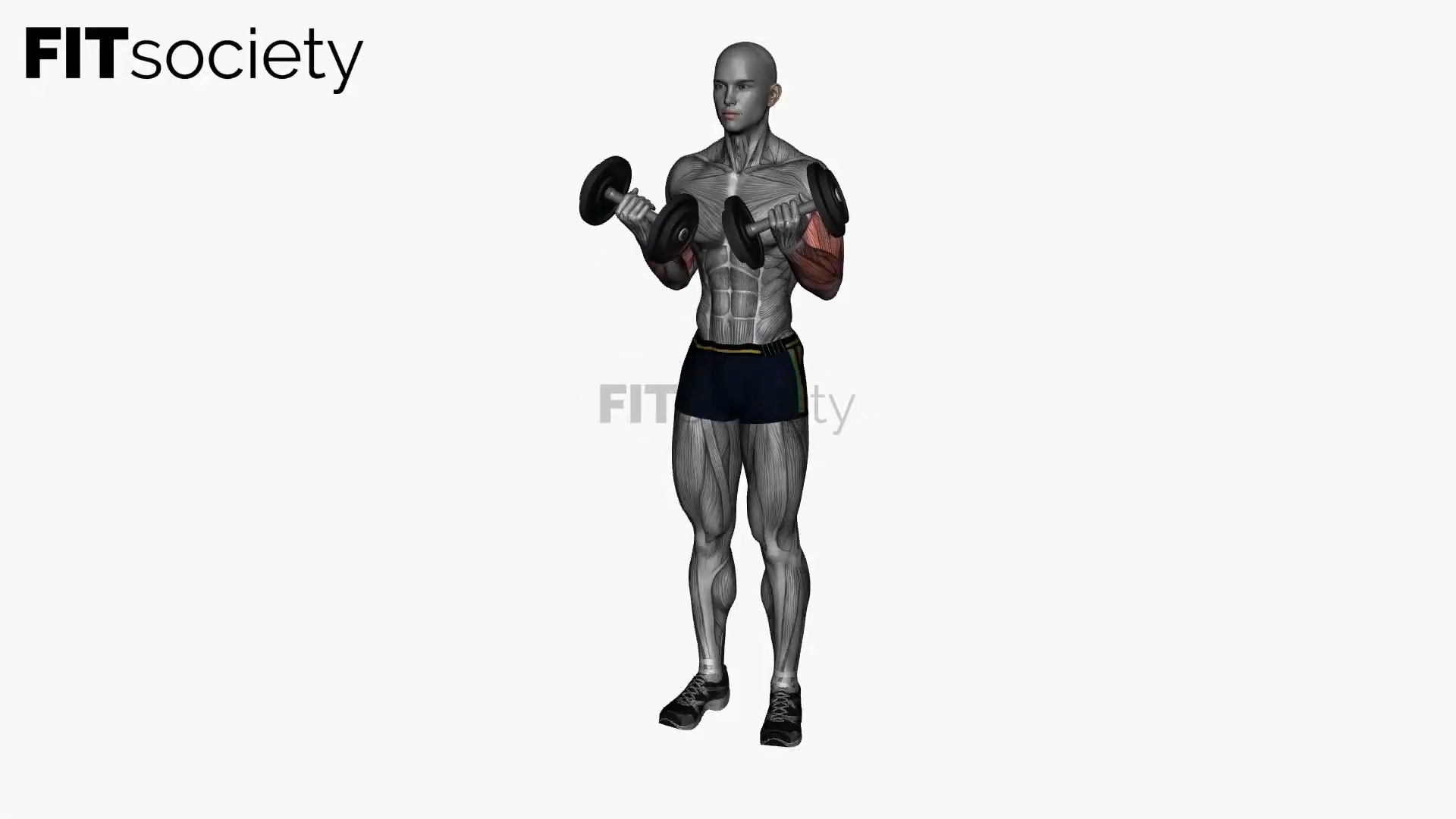
Execution
-
1
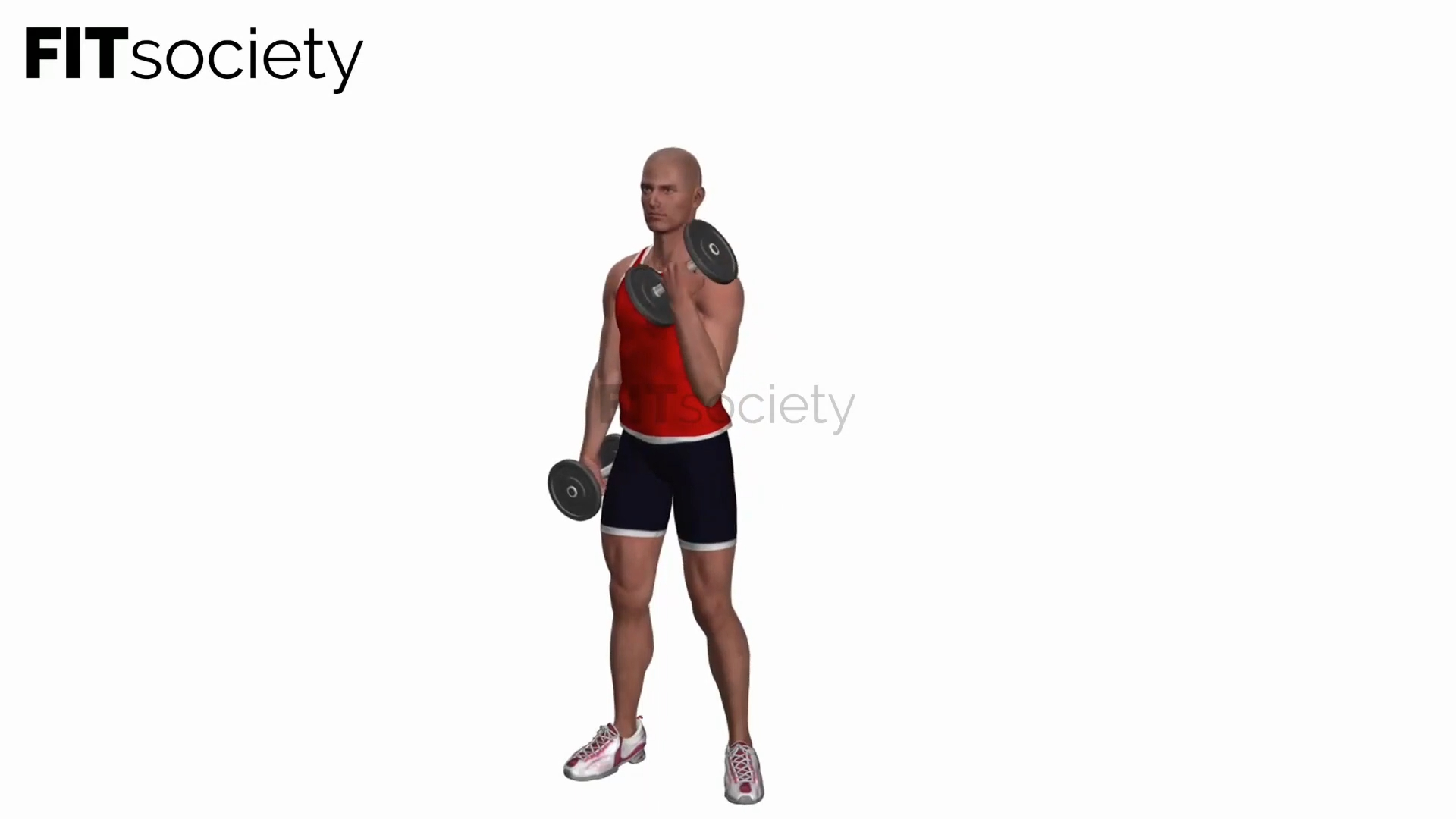
Begin by standing with your feet shoulder-width apart, holding a dumbbell in each hand with your palms facing forward.
-
2
Keep your elbows close to your body, exhale, and curl the dumbbells toward your shoulders. Focus on moving only your forearms.
-
3
Squeeze your biceps at the top of the movement for one second.
-
4
Inhale and slowly lower the dumbbells back to the starting position.
-
5
Repeat for the desired number of repetitions.
Benefits
- Strengthening and enlarging the biceps.
- Improved grip strength.
- Increased arm flexibility and function.
Common Mistakes
- ! Using too much weight, which can lead to poor form.
- ! Moving the elbows during the exercise, which reduces its effectiveness.
- ! Lowering the weights too quickly, which makes the muscles less effectively trained.
Primary Muscles
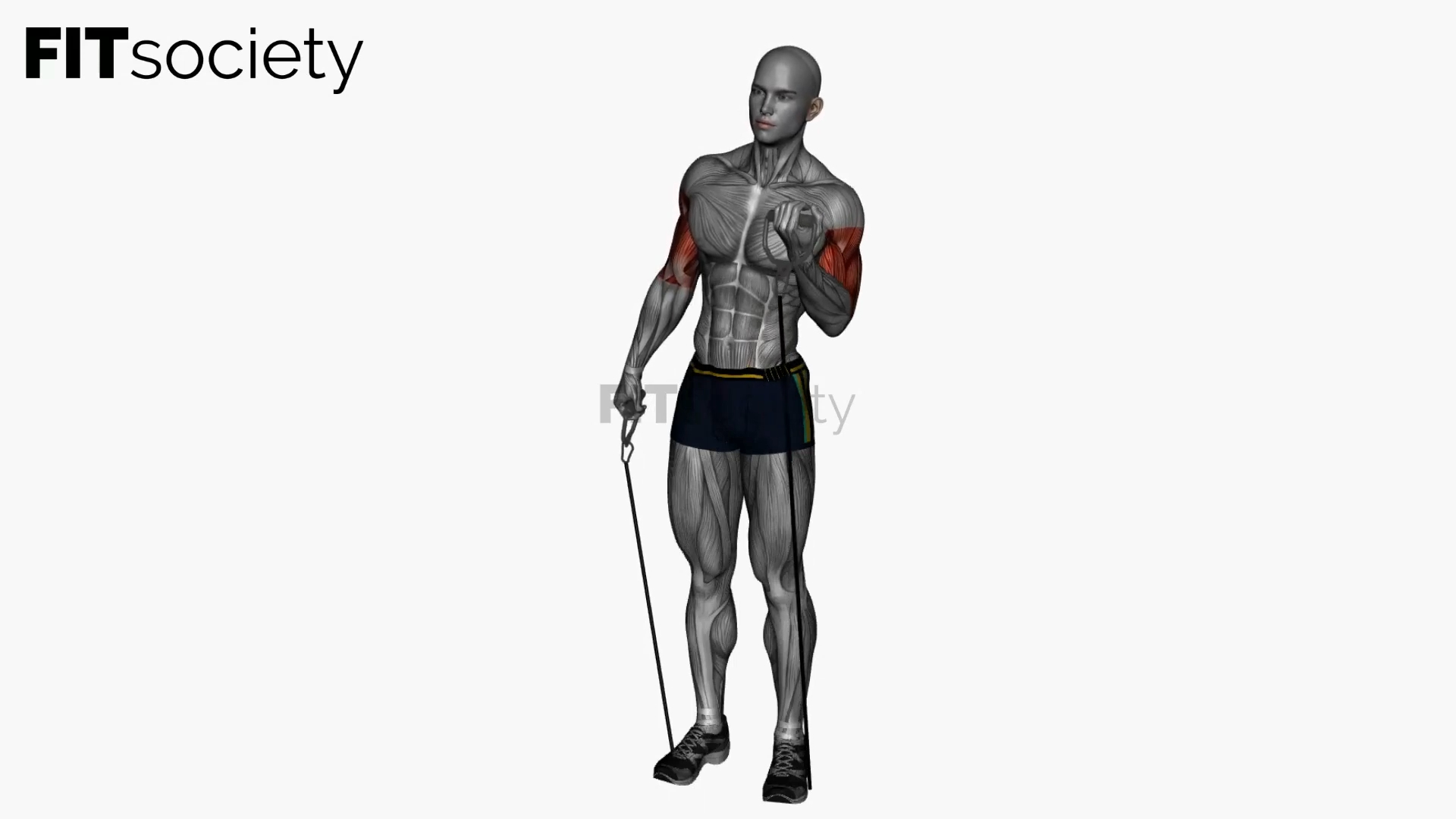
The primary muscle group trained with dumbbell curls is the biceps brachii. Secondary muscle groups include the brachialis and brachioradialis, which assist with the movement.
Possible Alternatives
- Hammer curls: Hold the dumbbells with a neutral grip (palms facing each other) for a variation that places more emphasis on the brachialis and brachioradialis.
- Concentration curls: Perform the curl while seated with your elbow against your inner thigh. This creates a stricter movement and greater isolation of the biceps.
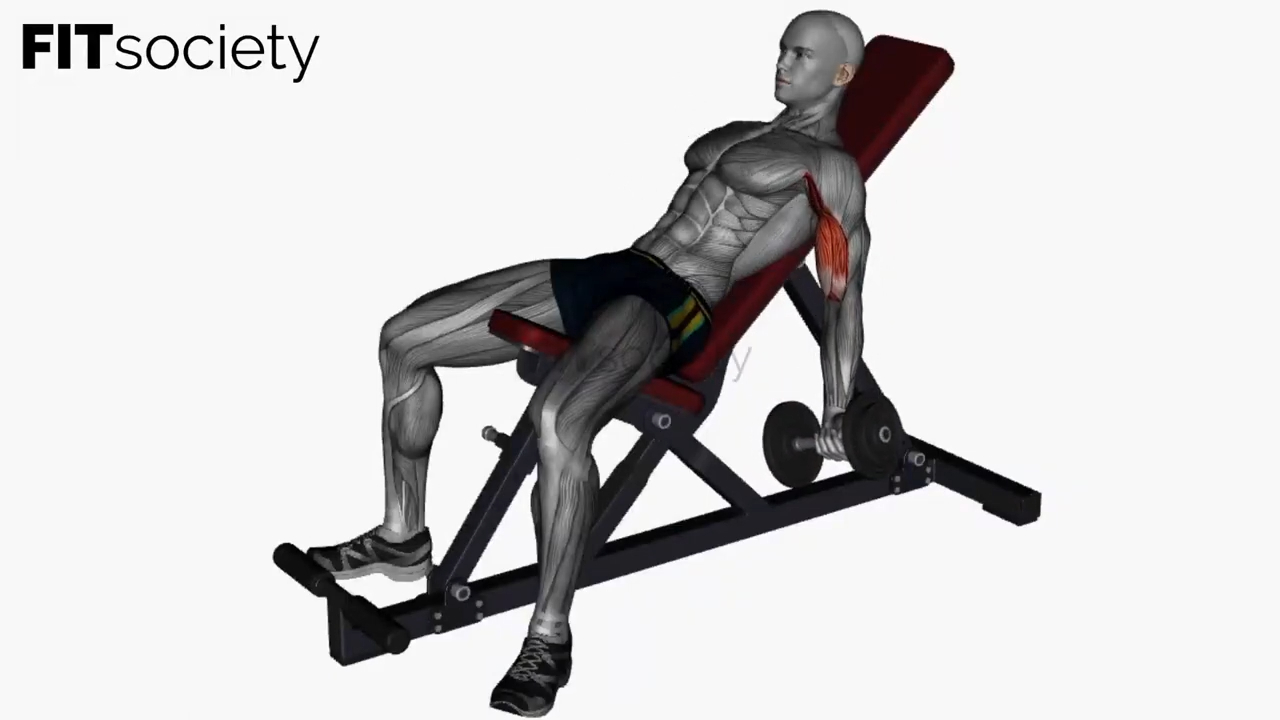
- Seated dumbbell curls: Performing the exercise while seated reduces the chance of cheating by moving the body.
Run your fitness business with more structure
- Planning, member management and coaching in one platform
- Built for coaches, studios and gyms
- Fewer separate tools, more overview