Back Extension
Back extensions target extending the back and aligning the upper body with the lower body. The latter is also a function of the glutes and hamstrings, similar to a (stiff-legged) deadlift.
The position of the machine on which you lie makes it possible to lower yourself deeper than with extensions on the floor or on a stability ball. This increases the contribution of the hamstrings and glutes. Excessive lowering should be avoided, however. This exercise is therefore also called the '45-degree back extension' to indicate the angle your upper body makes.
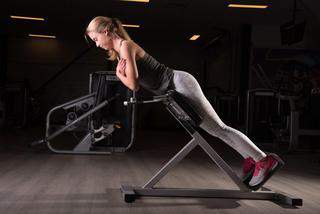
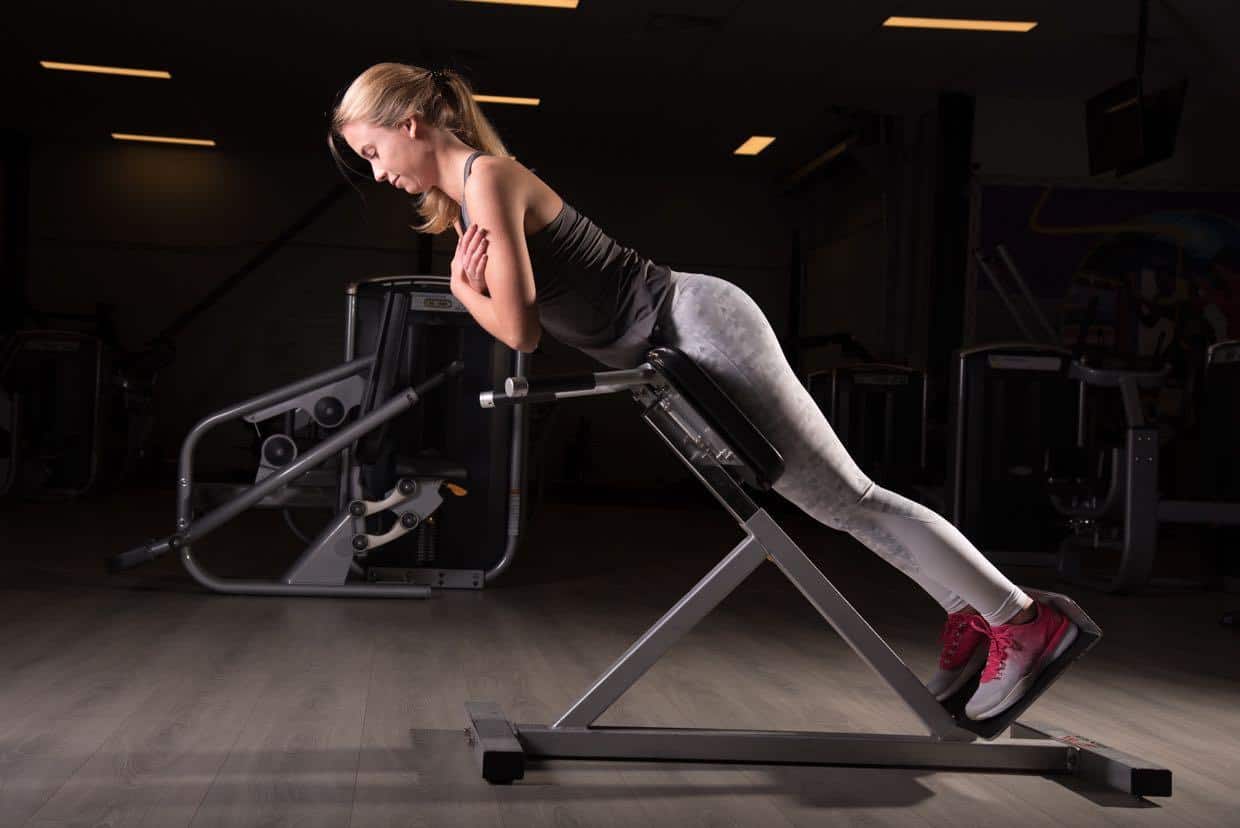
Back extension execution
-
1
Grip the handles and lie on the machine with your thighs supported.
-
2
Place your feet on the designated platform and position them securely with your heels against the back.
-
3
Now check whether the 'leg pad' is at the correct height. It should be slightly below your pelvis so that it can tilt freely. If it is at the correct height, move to the starting position; if not, adjust the height.
-
4
Move into the starting position by pressing up on the handles with your hands until your entire body is in one line, as when standing upright.
-
5
Now transfer the tension from your arms to your legs, glutes, and back so that you feel you can release the handles (the reverse version produces embarrassing YouTube videos).
-
6
Cross your arms over your chest.
-
7
Lower your upper body in a controlled manner until it is horizontal to the floor (your upper body has then formed a 45-degree angle relative to your legs).
-
8
Straighten your upper body again by pushing your pelvis forward (like a hip thrust).
Back extension
Primary muscles:
- Erector spinae ('back extensors')
- Hamstrings (biceps femoris, semitendinosus, semimembranosus)
- Glutes (gluteus maximus, medius, and minimus)
Back extension technique
The back extension is unfortunately also often called a 'hyperextension.' Hyperextension, however, is precisely what you should not do in this exercise. By extending the upper body not only until it is aligned with the legs but beyond that point, you increase the risk of back problems. This is risky for the vertebrae and intervertebral discs. Moreover, it adds little or nothing to the effectiveness of the exercise.
If you are doing the exercise for the first time, it may be wise to perform a few repetitions while keeping your hands on the handles. This prevents dangerous falls and injuries.
The resistance in the exercise can be changed by the position of the arms. The farther forward they move, the more difficult the exercise becomes. If this is still too light for the desired number of repetitions, you can hold a weight plate against your chest.
Alternatives
- Back extensions (on stability ball)
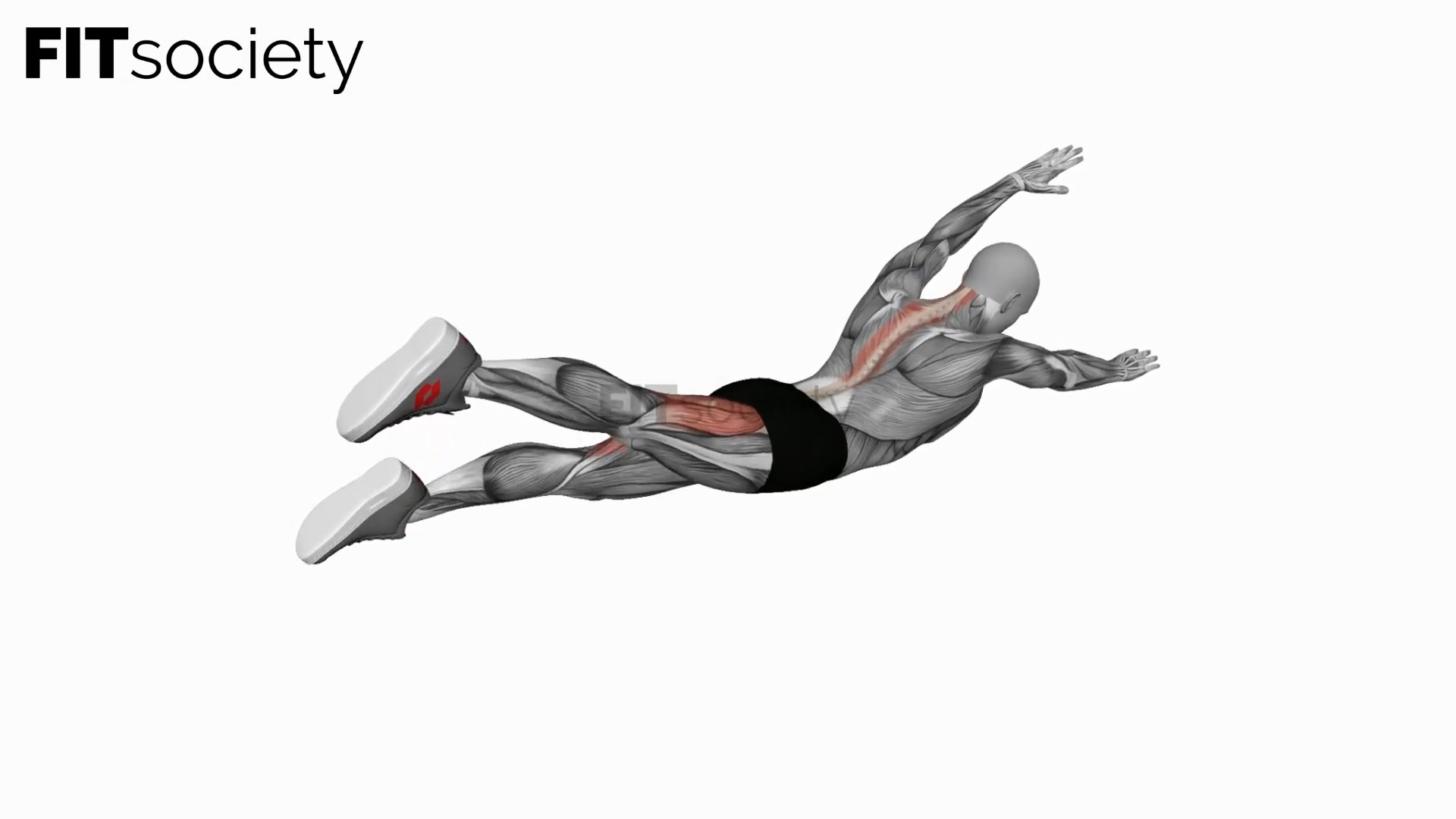
- Superman
Run your fitness business with more structure
- Planning, member management and coaching in one platform
- Built for coaches, studios and gyms
- Fewer separate tools, more overview