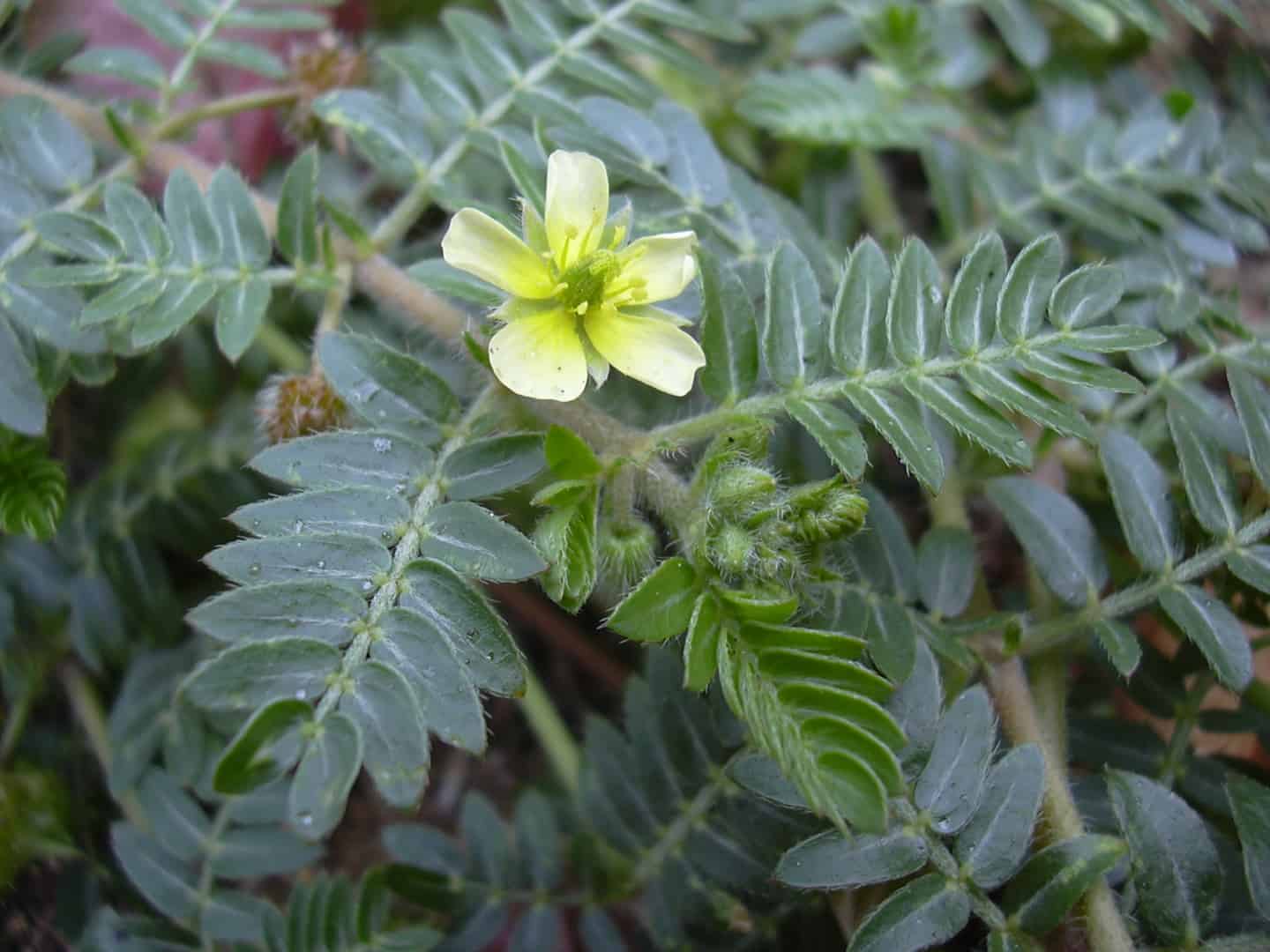
A plant whose effects have been both supported and refuted by various studies is Tribulus terrestris. Tribulus terrestris is used in Chinese medicine as an aphrodisiac, and in other Asian cultures the plant is also known as a remedy for increasing sexual drive. In Chinese it bears the name 'baj ju li' and is said to help increase libido. In addition, the plant is known for its apparent positive effect on muscle growth. Over the years, many studies have been carried out into the effect of the tribulus plant and its effects on libido and testosterone levels.
Table of contents
- Origin of Tribulus terrestris
- Use of Tribulus terrestris
- Muscle growth
- Studies on Tribulus terrestris
- Difference between manufacturer studies and independent studies
- Dangers of Tribulus terrestris
- Tribulus terrestris increases the risk of gynecomastia
- Tribulus terrestris as an NO booster and penis pump
- Conclusion
Origin of Tribulus terrestris
Tribulus terrestris is a small plant (belonging to the thistle-like plants) that grows in many places around the world, including Eastern and Southern Europe (especially Bulgaria), Asia, Africa and Australia. The plant contains steroidal saponins, steroid-like substances. A dried extract is made from the plant by mixing ground parts with a liquid that extracts all the substances.
The solvent is then evaporated so that only the concentrated substance remains. It is used in traditional Chinese medicine to improve the liver and kidneys. In Indian Ayurveda (Hindu health doctrine) it is used as a nerve calming agent, as an aphrodisiac and as a diuretic (water pill)(1).
The plant's name comes from Latin, where the word "Tribulus" literally means "problem".
Use of Tribulus terrestris
In many different cultures, the plant was used for multiple purposes. In Chinese medicine, for example, the plant was used to stimulate the function of:
- Kidneys
- Liver
- Digestion
- High blood pressure
- Libido
In the sports world it is assumed that increasing libido, through a positive effect on testosterone levels, could mean that supplementation with tribulus has a positive influence on muscle growth.
Muscle growth
Tribulus could have a positive effect on testosterone levels, thereby stimulating libido. Because of the assumed rise in testosterone, the plant may have a possible anabolic effect. The theoretical idea behind this is that the plant increases the LH hormone produced by the pituitary gland. The amount of LH hormone has a positive effect on testosterone levels.
Studies on Tribulus terrestris
A study in the 1970s showed that the tribulus plant had a positive effect on strengthening libido. This potency-enhancing effect is partly caused by its effect on nitric oxide levels. This level increases when tribulus is taken, causing the vessel walls to widen and blood pressure to fall. This improves circulation. That is why you also find this herb in many potency pills, because tribulus enhances the formation of an erection. Because the vessel walls widen, blood flow in the penis gets going. The improvement in erection therefore comes from better blood circulation, not from an increase in testosterone, which was assumed for a long time.
In a more recent study by the University of Nebraska, it was concluded that the effect of Tribulus terrestris for athletic purposes is negligible. The plant would not contribute to more muscle mass or more strength. During an 8-week study period, 15 athletes were tested with a daily dose of 3.21 milligrams of tribulus per kilogram of body weight, while another group was given a placebo. After the 8-week period, it turned out that the placebo group could perform more repetitions on the leg press than the group that received tribulus daily.
Difference between manufacturer studies and independent studies
The studies that claim to have proven that the extract of the plant Tribulus contributes to muscle recovery and fat loss were almost all funded by the manufacturer, the Bulgarian company Sopharma. Studies performed by independent researchers tended to show the opposite. In some of these studies, the participants in the group that had received a placebo actually had greater strength gains than those in the group that had received Tribulus terrestris. Although Tribulus contains steroid-like substances, they do not work as such. This is therefore not a reason why Tribulus would contribute to muscle growth. The testosterone-raising properties of Tribulus, but also of fenugreek, have also been refuted several times. This was done, among others, by researchers from The Swiss Laboratory for Doping Analyses (2). They investigated the possibility that athletes could be accused of doping use because of changed hormone levels caused by Tribulus. Their studies showed that Tribulus did not appear to have this effect.
Although studies from Bulgaria, Sopharma's home base, are usually positive (not entirely coincidentally), the Bulgarian researchers Neychev and Mitev were also less enthusiastic (3). They studied 20 young men aged 20-36. They divided them into three groups: one group received 10 mg Tribulus per kilogram of body weight, the second group received 20 mg, and the third group received a placebo as a control group. They saw no significant differences between the test groups and the control group.
There was no significant difference between Tribulus terrestris supplemented groups and controls in the serum testosterone..... The findings in the current study anticipate that Tribulus terrestris steroid saponins possess neither direct nor indirect androgen-increasing properties.
V.K. Nechev, Medical University Sofia
American researchers from the University of Nebraska also added their bit to the Tribulus unmasking (4). They looked at the influence of Tribulus on body composition and training performance in strength training. Fifteen subjects were randomly assigned to a test group and a control group. They did give less Tribulus than the Bulgarians, namely 3.21 mg per kilogram of body weight. Weight, body composition, maximum strength, diet and mood were examined before and after the 8-week diet and training program. Tribulus turned out to have no positive effect on either body composition or performance.
There were no changes in body weight, percentage fat, total body water, dietary intake, or mood states in either group. Muscle endurance (determined by the maximal number of repetitions at 100-200% of body weight) increased for the bench and leg press exercises in the placebo group (p <.05; bench press +/-28.4%, leg press +/-28.6%), while the tribulus group experienced an increase in leg press strength only (bench press +/-3.1%, not significant; leg press +/-28.6%, p <.05). Supplementation with tribulus does not enhance body composition or exercise performance in resistance-trained males.
J. Antonio, University of Nebraska
The studies used various dosages of Tribulus terrestris, from less than 200 mg per day (3.21 mg per kg body weight) to more than 2000 mg (20 mg per kg body weight). Tribulus is sold in many different dosages. It is sold in tablets of less than 600 mg up to as much as 1500 mg. The recommended amounts also vary, for example from 1 x 600 mg to 3 x 800 mg. In any case, it cannot be stated that the amounts used in studies were too low.
Run your fitness business with more structure
- Planning, member management and coaching in one platform
- Built for coaches, studios and gyms
- Fewer separate tools, more overview

Dangers of Tribulus terrestris
Finally, there are the possible dangers. The plant can contain harmful fungi (5). These are also sometimes found in herbal preparations. These fungi can carry toxins, mycotoxins. One of these toxins, zearalenone, acts on the female hormone estrogen and female reproductive organs. In animals, researchers observed loss of aggression, motor disorders and even homosexual behavior. I say "even", not because this would be the worst side effect, but because it is striking for products that are supposed to increase testosterone and therefore make you more masculine (incidentally, any possible link between testosterone and homosexuality is highly controversial).
In the long term, it could actually cause a decrease in libido and a deterioration in semen quality, and it can be harmful to the skin and nerves. In addition, it may lower testosterone production. Exactly the opposite, then, of what is attributed to the plant. In Australia, a word has even arisen for a disease that causes motor disorders due to Tribulus in sheep: "Tribulus staggers", or "staggering disease caused by Tribulus" (6).
Tribulus terrestris increases the risk of gynecomastia
British doctors reported in a case study on a 21-year-old man who had a lump in his left breast (7). The excess breast tissue was surgically removed. Two weeks later, the wound had healed completely and the result was satisfactory. Three months later, however, during a follow-up appointment, it turned out that new, benign breast tissue had grown again in the left breast. The tissue was examined and turned out to be normal breast tissue with the possibility of gynecomastia. This female breast formation is often seen in anabolic steroid users because of aromatase, the conversion of anabolic steroids into the female hormone estradiol. His hormone balance was examined and this showed that follicle-stimulating hormone (FSH), luteinizing hormone (LH) and testosterone had decreased.
Although the man did strength training, he did not state that he had used anabolic steroids. He did say, however, that he was taking Tribulus terrestris tablets as an alternative to anabolic steroids. Based on the assumption that this may have caused his symptoms, he was advised to stop taking Tribulus. After two months, his hormone balance had returned to normal values and the swelling in his breast had disappeared completely:
On closer questioning at this stage, the patient said that he had been taking a non-hormonal preparation derived from a plant called Tribulis terrestris, in the form of tablets as a steroid alternative to supplement his weight-training. On the assumption that this substance had caused the hormonal imbalance and hence gynaecomastia, he was advised to discontinue taking them. Two months later his sex-hormones were re-checked and they had improved, FSH 11 IU/l, LH 6.1 IU/l, testosterone 15 nmol/l. The swelling in his left breast had also completely resolved.
J.K. Jameel, University of Hull
The reason that reduced FSH, LH and testosterone levels in anabolic steroid users more often show such decreases after a cycle is that externally introduced anabolic steroids cause the body's own production to decrease and often stop completely. The researchers took into account the possibility that the steroid-like substances in the administered Tribulus had the same effect. So the components are steroid-like substances, but they supposedly do not work as such when it comes to increasing testosterone or its effects, while they may do so when it comes to negative side effects. "Great, then!"
I do want to add a serious caveat to this study. First, of course, this is only one case. More importantly, the road to muscle mass is paved with bodybuilders who did not dare admit their anabolic steroid use to doctors. Now I, as a natural bodybuilder, will be the last person to say: "Oh, he does strength training and has gynecomastia, so he uses anabolic steroids". I know from experience how awful it is to be accused of using anabolic steroids while you put so much effort into building a good physique clean.
However, the possibility must be taken into account that he did use them and that his symptoms were not caused by tribulus. Although it fits perfectly into my trashing article about tribulus, I am even inclined to assume that this was a lying user. Drawing a conclusion from one study with a population of one person and based on what he himself says he did or did not use is not very scientific. Studies under more controlled conditions and with more people are therefore needed to confirm this, and I have not been able to find them yet.
Tribulus terrestris as an NO booster and penis pump
Is there nothing positive to report about Tribulus terrestris, then? Yes, there is. Tribulus is sometimes mentioned as a libido-enhancing remedy. The increase in libido is then attributed to an increase in testosterone. However, you have just read that Tribulus terrestris does not work by increasing testosterone. This does not mean that Tribulus could not increase libido through the hormonal system.
That has a different cause than the assumed increase in testosterone. Researchers from Kuwait University looked at the influence of Tribulus terrestris extract on the (high) blood pressure of rats (8). They saw that blood pressure was lowered when Tribulus was administered. They suspected that this was due to the relaxing effect on the muscles of the arteries, in which nitric oxide (NO) plays a role.
It was concluded that methanolic and aqueous extracts of Tribulus terrestris possess significant antihypertensive activity in spontaneously hypertensive rats. The antihypertensive effects appeared to result from a direct arterial smooth muscle relaxation possibly involving nitric oxide release and membrane hyperpolarization.
O.A. Phillips, Kuwait University
Tribulus as an NO booster, then. Put very briefly, an increase in nitric oxide causes blood vessels to widen, which leads to better oxygen uptake and in turn to better performance. Besides better performance in the gym, this could also lead to better performance in bed because of an improved pump of blood to the penis. Since the studies on this have mainly been done in rats, I would not throw away the little blue pills just yet if you normally need them to get your young man up.
Researchers from Singapore also saw increased libido under the influence of terrestris. They looked at the effect of the steroid-like substance protodioscin in Tribulus on the erectile function of 24 rabbits (9).
....indicate that PTN has a proerectile activity. The enhanced relaxant effect observed is probably due to increase in the release of nitric oxide from the endothelium and nitrergic nerve endings, which may account for its claims as an aphrodisiac. However, further study is needed to clarify the precise mechanism of its action."
P.G. Adaikan, National University of Singapore
Conclusion
Tribulus, like fenugreek, is an herb whose effects have often been the subject of debate. The various studies over the years have repeatedly shown a positive influence on libido. This has virtually little effect on muscle growth, as more recent studies show. Because Tribulus has a positive effect on the vessel walls, it can be a useful remedy when you struggle with potency problems. The assumption that it would have a positive effect on testosterone levels has not been proven in more recent studies. If you want to achieve more muscle growth, supplementation with tribulus is less suitable for that.
References
- M.D.Ukani. A review on the ayurvadic herb tribulus terestris L. Anc Sci Life. 1997 Oct-Dec; 17(2): 144-150.
- C. Saudan et. al.Short term impact of Tribulus terrestris intake on doping control analysis of endogenous steroids.Forensic Sci Int. 2008 Jun 10;178(1):e7-10. Epub 2008 Feb 20.
- Neychev VK and Mitev VI. The aphrodisiac herb Tribulus terrestris does not influence the androgen production in young men. Journal of Ethnopharmacology. 101.1-3 (2005):319-23.
- Antonio J et al. The effects of Tribulus terrestris on body composition and exercise performance in resistance-trained males. International Journal of Sport Nutrition & Exercise Metabolism. 10,2 (2000) :208-15.
- Abeywickrama K, Bean GA. Cytotoxicity of Fusarium species mycotoxins and culture filtrates of Fusarium species isolated from the medicinal plant Tribulus terrestris to mammalian cells.Mycopathologia. 1992 Dec;120(3):189-93.
- Bourke CA. A novel nigrostriatal dopaminergic disorder in sheep affected by Tribulus terrestris staggers. Research in Veteranary Science. 43,3 (1987) :347-50.
- Jameel JK et al. Gynaecomastia and the plant product “Tribulis terrestris” Breast. 13,5 (2004) :428-30.
- Phillips OA et al.Antihypertensive and vasodilator effects of methanolic and aqueous extracts of Tribulus terrestris in rats.J Ethnopharmacol 2006 Apr;104 (3): 351-5.
- Adaikan PG, Gauthaman K, Prasad RN, Ng SC. Proerectile pharmacological effects of Tribulus terrestris extract on the rabbit corpus cavernosum. Ann Acad Med Singapore. 2000 Jan;29(1):22-6.
Curious how FITsociety fits your business?
See how intake, training, payments and communication come together.
Start a free trial and explore the workflow at your own pace.

Leave a comment
Your comment will be reviewed before it becomes visible.