Dumbbell Standing Both Arms Kickback
The Dumbbell Standing Both Arms Kickback is an effective exercise for strengthening your triceps. This exercise offers a unique way to train both arms simultaneously, providing efficient and balanced muscle development.
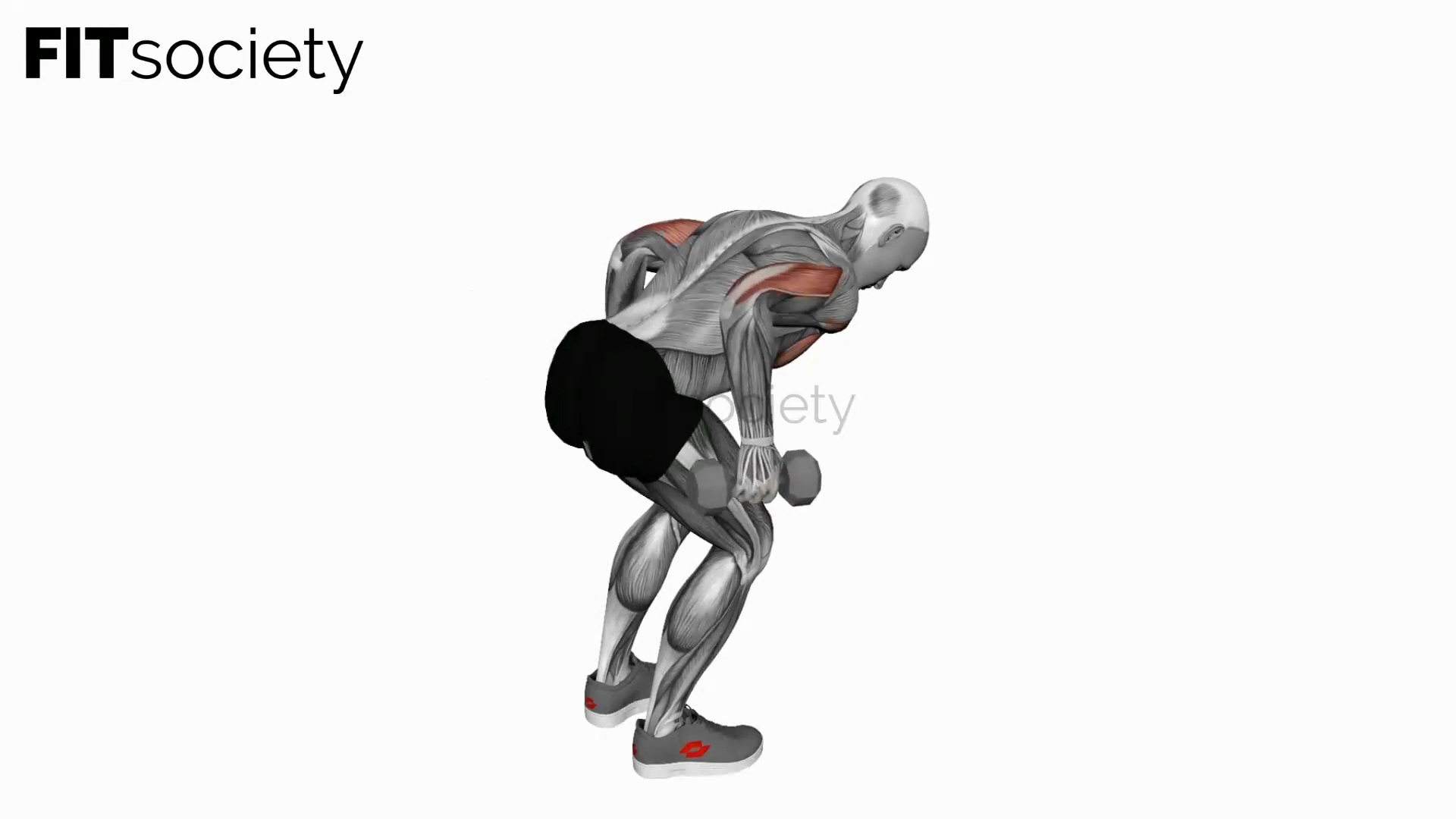
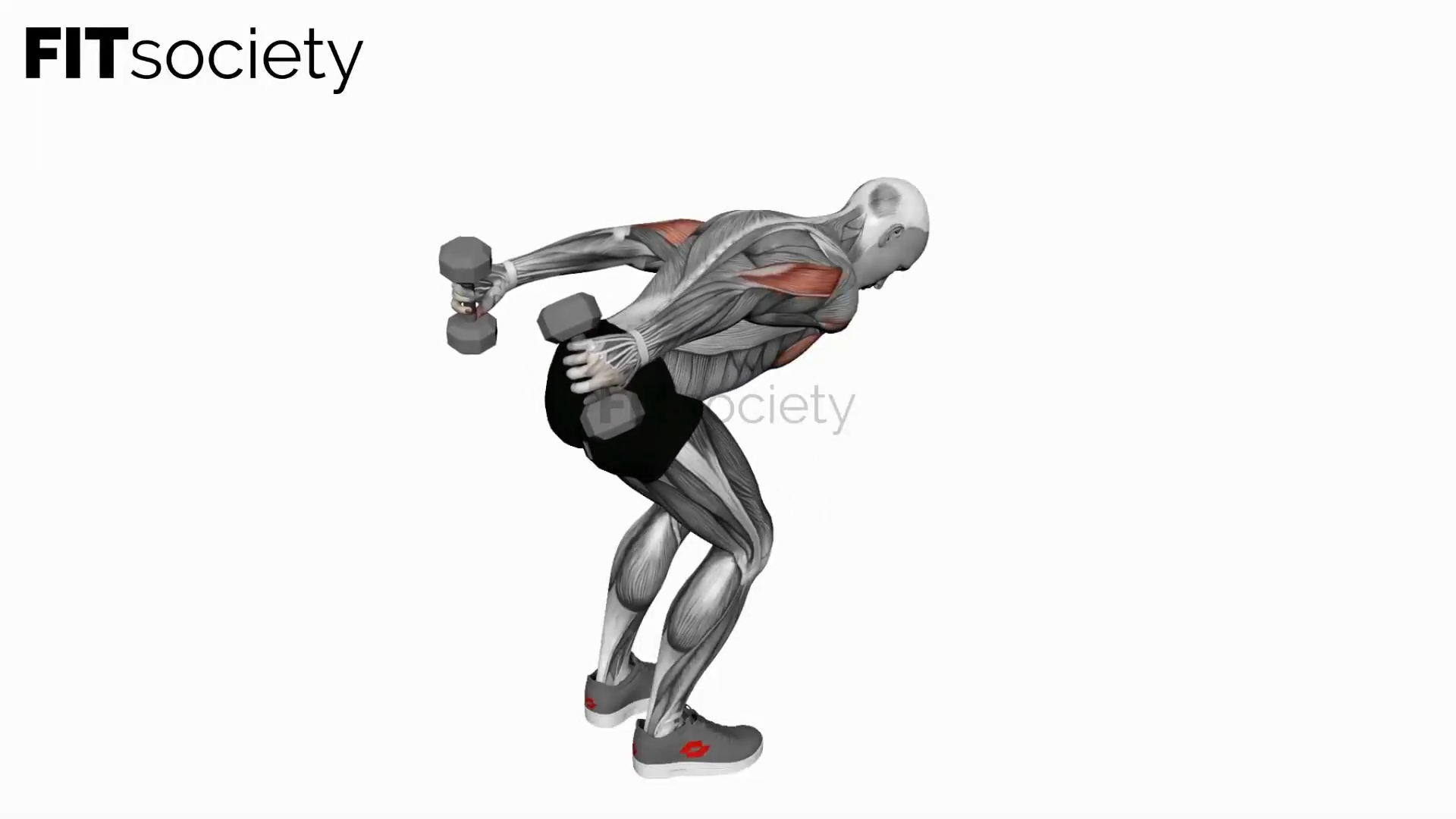
Execution
-
1
Begin by holding a dumbbell in each hand. Stand with your feet shoulder-width apart.
-
2
Bend your knees slightly and lean forward from your hips. Keep your back straight.
-
3
Keep your elbows close to your body and bend them so that your forearms are parallel to the floor.
-
4
Exhale and fully extend your arms backward without moving your elbows.
-
5
Squeeze your triceps at full extension.
-
6
Inhale and slowly return to the starting position.
Benefits
- Strengthens and defines the triceps.
- Improved arm strength that is useful for daily activities and other sports.
- Can help improve posture by strengthening the upper-back muscles.
Common Mistakes
- ! Leaning too far forward; keep your back straight and lean forward only slightly.
- ! Moving your elbows during the exercise; keep them in place for maximum effectiveness.
- ! Performing the movement too quickly; focus on the quality of the movement, not the speed.
Targeted Muscles
This exercise primarily targets the triceps brachii, but also engages the deltoids (shoulders) and the upper-back muscles for stability.
Possible Alternatives
- For beginners: reduce the weight of the dumbbells or perform the exercise without weight.
- To increase the intensity: use heavier dumbbells or add a resistance band around your wrists.
- Alternatively, the exercise can also be performed seated on a bench for greater stability.
Run your fitness business with more structure
- Planning, member management and coaching in one platform
- Built for coaches, studios and gyms
- Fewer separate tools, more overview