Dumbbell Seated Bench Extension
The Dumbbell Seated Bench Extension is an effective exercise for strengthening your triceps. This exercise offers a unique way to isolate your arms and focus on the triceps muscles, resulting in strong and well-defined arms.
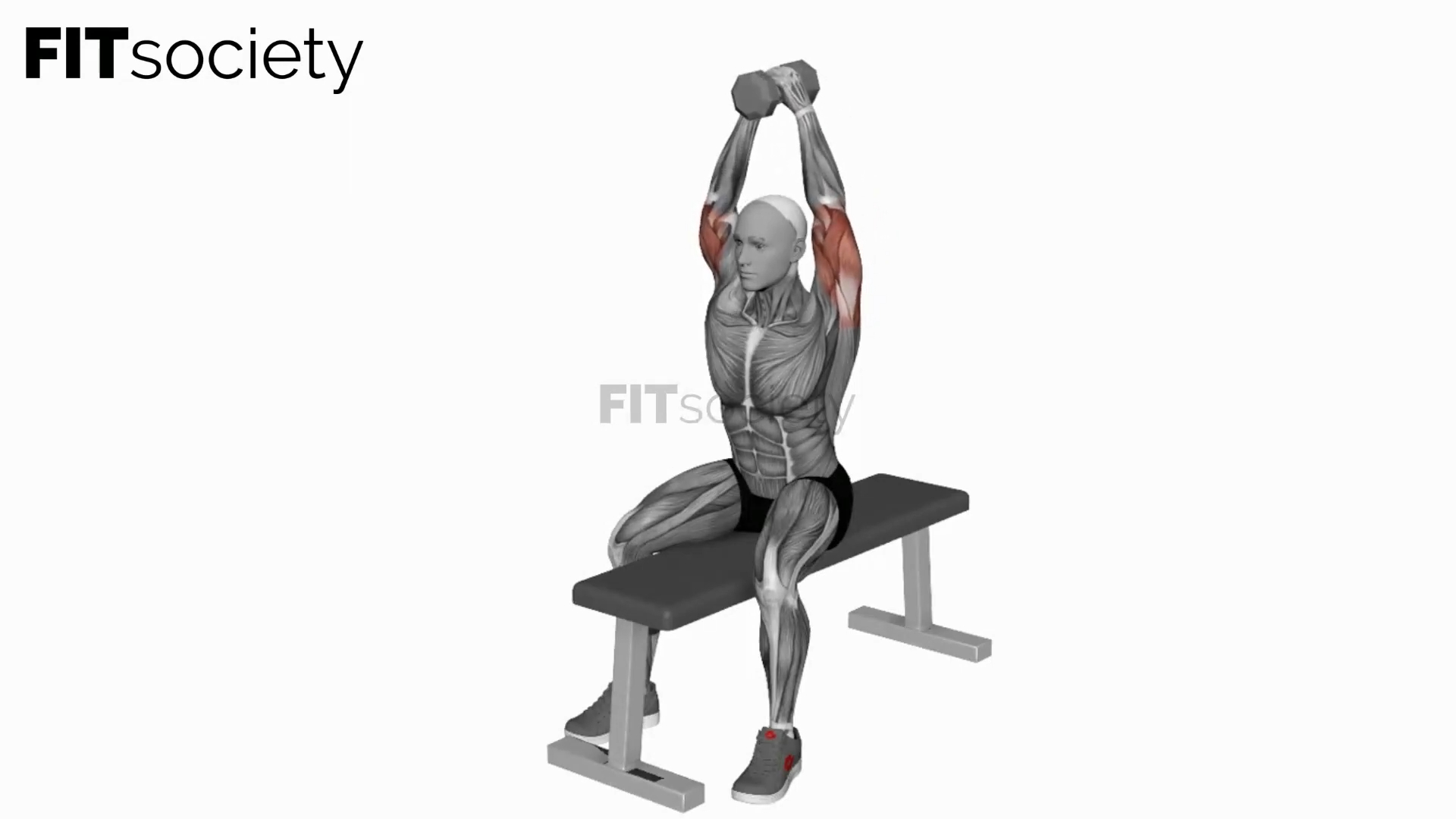
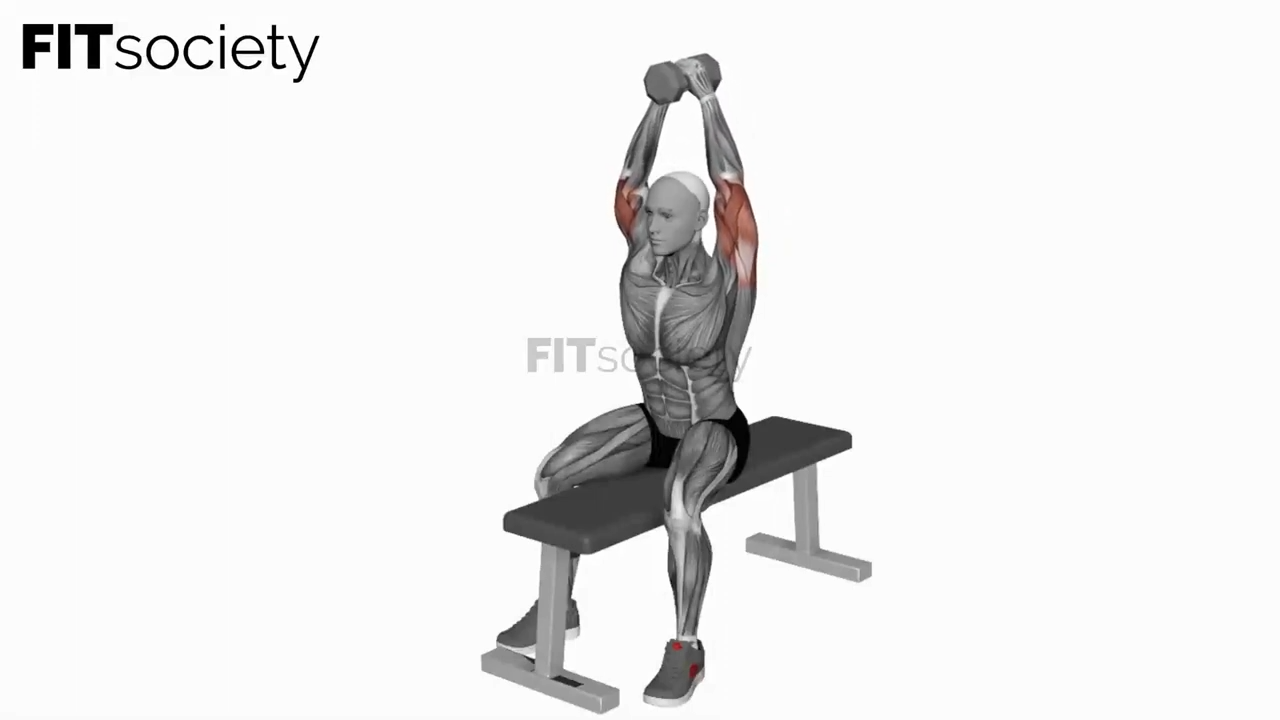
Execution
-
1
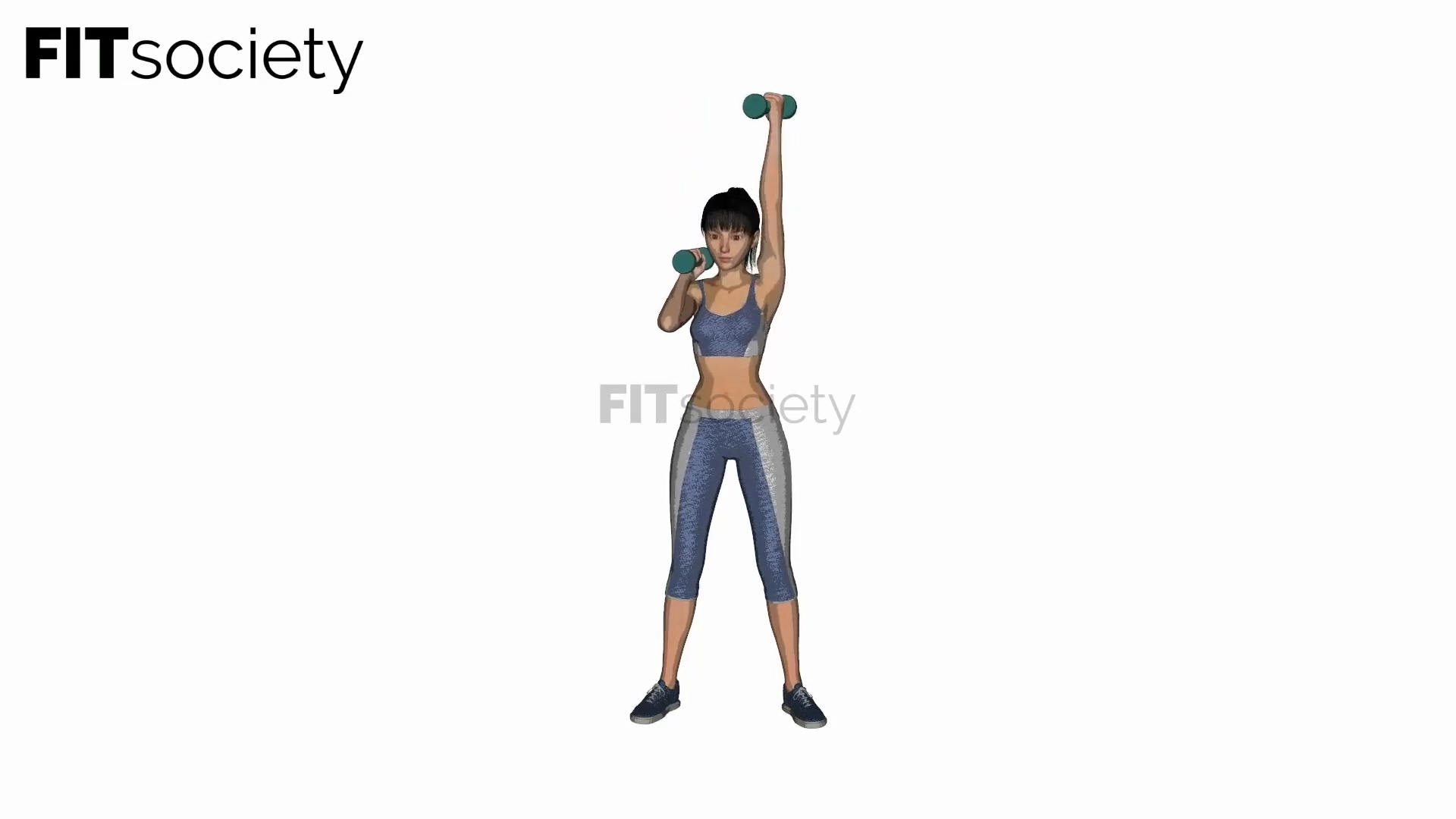
Find a bench and sit down with a dumbbell in each hand. Hold the dumbbells overhead with your arms fully extended.
-
2
Inhale and slowly bend your elbows to lower the dumbbells behind your head. Make sure your elbows point forward and do not flare out.
-
3
Stop when you feel a good stretch in your triceps.
-
4
Exhale and use your triceps to bring the dumbbells back to the starting position.
-
5
Repeat for the desired number of repetitions.
Benefits
- Strengthens and defines the triceps.
- Improved arm strength that is useful for both daily activities and other sports.
- May help reduce arm fat through muscle building.
Common Mistakes
- ! Performing the exercise too quickly: Use a controlled movement to achieve maximum muscle activation.
- ! Allowing the elbows to flare out too far: This can lead to less effective training and possible injuries.
- ! Using weights that are too heavy: Start with a lighter weight to ensure proper form.
Primary Muscles
This exercise primarily targets the triceps brachii, but also lightly engages the shoulders and upper back muscles for stability.
Possible Alternatives
- To increase the intensity, try performing the exercise standing to engage more stabilizing muscles.
- Use an EZ bar instead of dumbbells for a different grip and muscle activation.
- For beginners, performing the exercise with one arm at a time can help them focus on technique.
Run your fitness business with more structure
- Planning, member management and coaching in one platform
- Built for coaches, studios and gyms
- Fewer separate tools, more overview