Execution
-
1
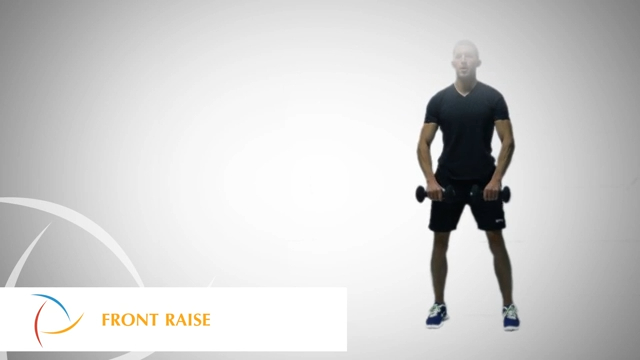
Begin standing with your feet shoulder-width apart, holding a dumbbell in each hand with your palms facing you.
-
2
Keep your back straight and your knees slightly bent.
-
3
Exhale and slowly and controllably raise the dumbbells to shoulder height. Keep your elbows slightly bent.
-
4
Hold the top position briefly, then slowly lower the dumbbells back to the starting position while inhaling.
Benefits
- Strengthens the shoulder muscles, contributing to better performance in other exercises and daily activities.
- Improves posture by strengthening the shoulders and upper back.
- May help prevent shoulder injuries by building stability and strength.
Common Mistakes
- ! Lifting the weights too quickly: This can lead to less control and possible injuries. Focus on a slow, controlled movement.
- ! Using weights that are too heavy: Start light and gradually increase the weight to prioritize technique over strength.
- ! Arching your back during the exercise: Keep your back straight to maximize the effectiveness of the exercise and prevent injuries.
Key Muscles
The Front Raise primarily targets the anterior deltoids (the front of your shoulders). The upper chest muscles and trapezius (neck muscles) are also trained slightly.
Possible Alternatives
- Barbell Front Raise: For a slightly different load and to train both arms simultaneously.
- Plate Front Raise: Use a weight plate instead of dumbbells for variety.
- Seated Front Raise: For those who need extra stability or want to reduce strain on the lower back.
Run your fitness business with more structure
- Planning, member management and coaching in one platform
- Built for coaches, studios and gyms
- Fewer separate tools, more overview