Dumbbell Standing Overhead Press
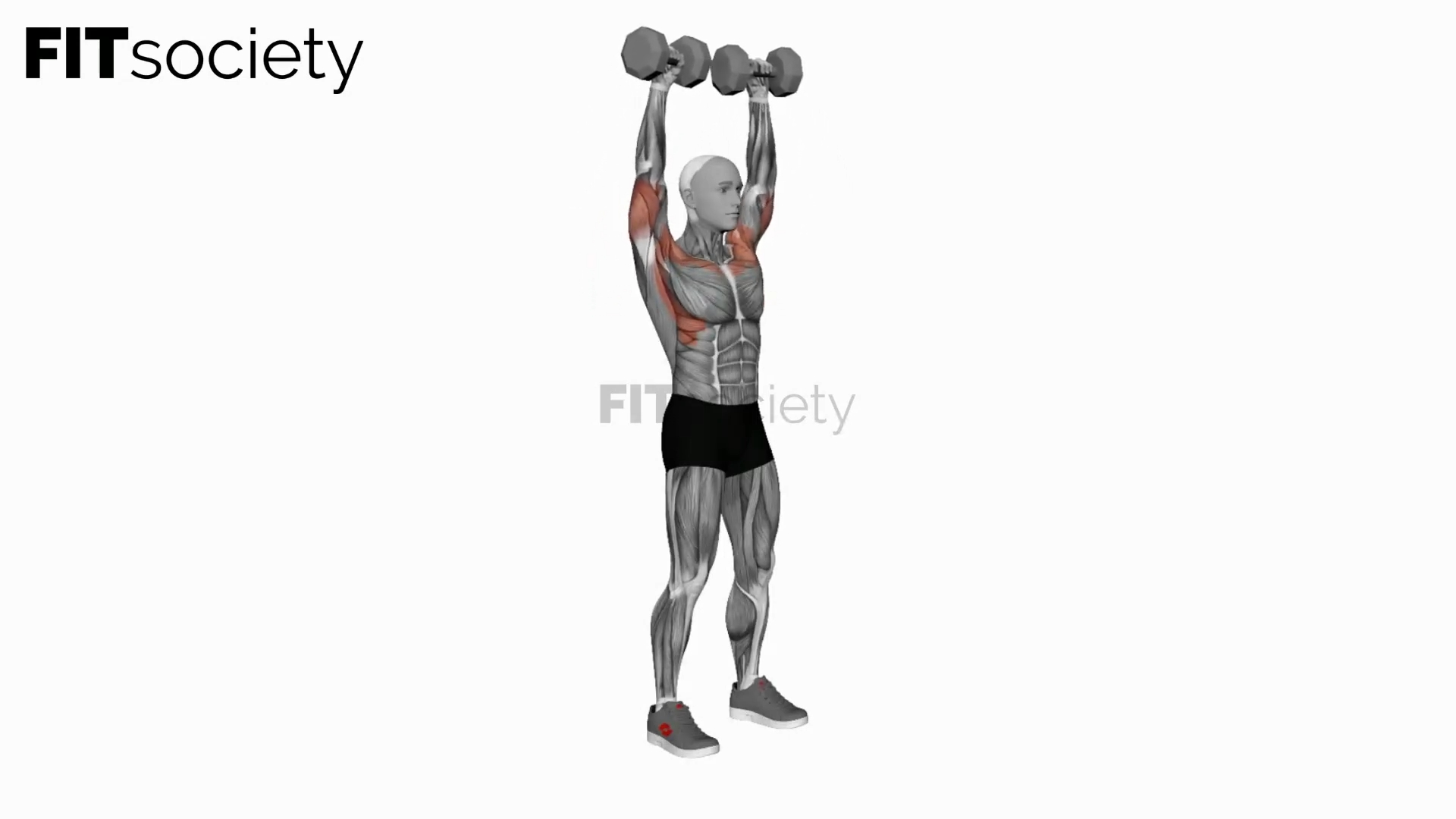
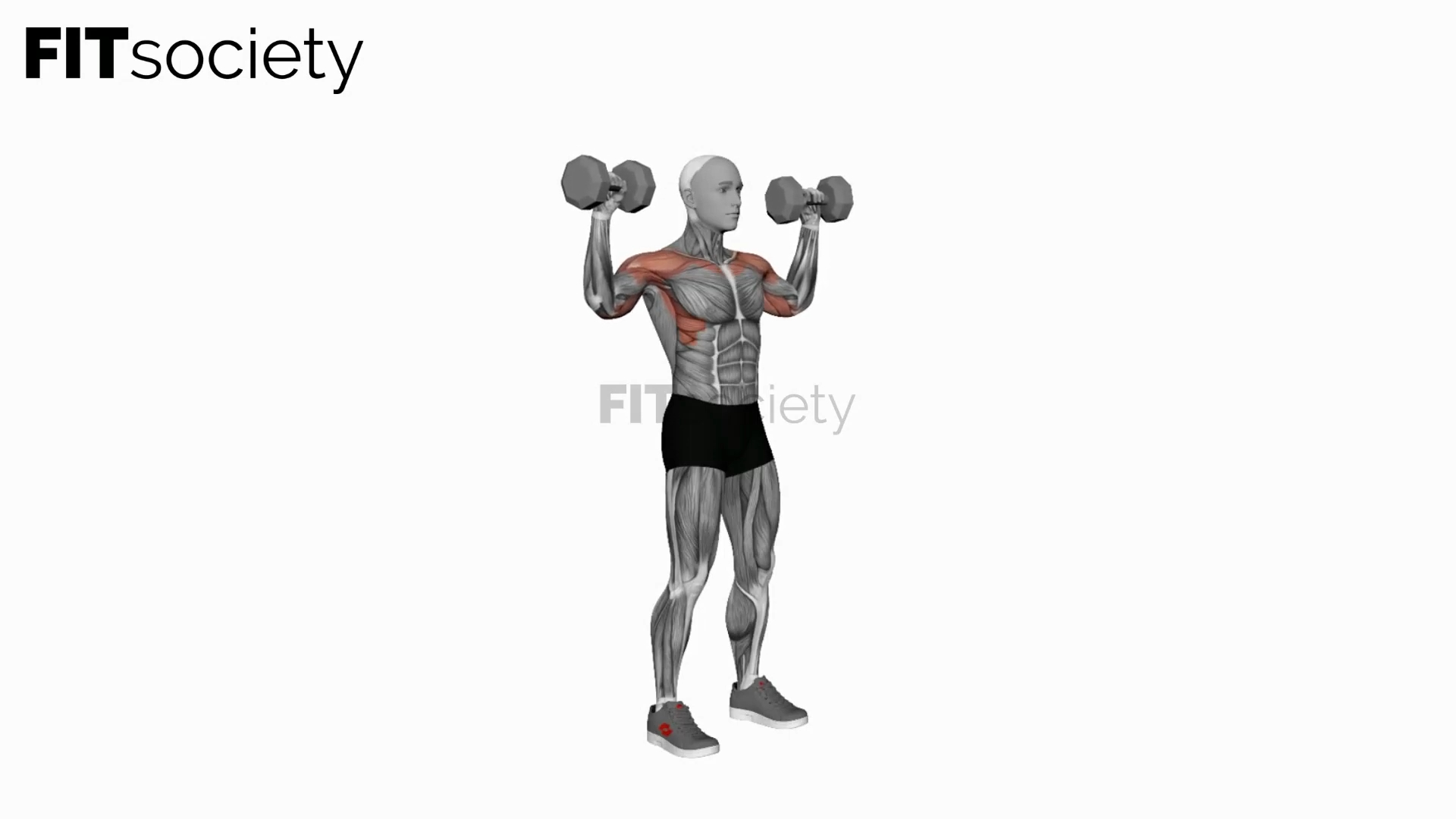
The Dumbbell Standing Overhead Press is a powerful exercise that targets the upper body, particularly the shoulders, arms, and upper back. This exercise offers a unique combination of strength, stability, and coordination, helping you build muscle while also improving your posture and functional strength.
Benefits
- Improves shoulder stability and mobility.
- Strengthens the upper-body muscles for better posture.
- Helps develop symmetrical muscle strength by training each arm separately.
Common Mistakes
- ! Using weights that are too heavy, causing your form to break down. Start light and focus on proper technique.
- ! Overarching your back during the exercise. Keep your core tight to protect your back.
- ! Pressing the dumbbells too far forward or backward. Make sure your arms stay in line with your ears.
Instructions
- Begin by standing with your feet shoulder-width apart, holding a dumbbell in each hand.
- Hold the dumbbells at shoulder height, with your elbows bent and your palms facing forward.
- Inhale and press the dumbbells overhead until your arms are fully extended.
- Pause briefly at the top, then exhale as you slowly lower the dumbbells back to the starting position.
Target Muscles
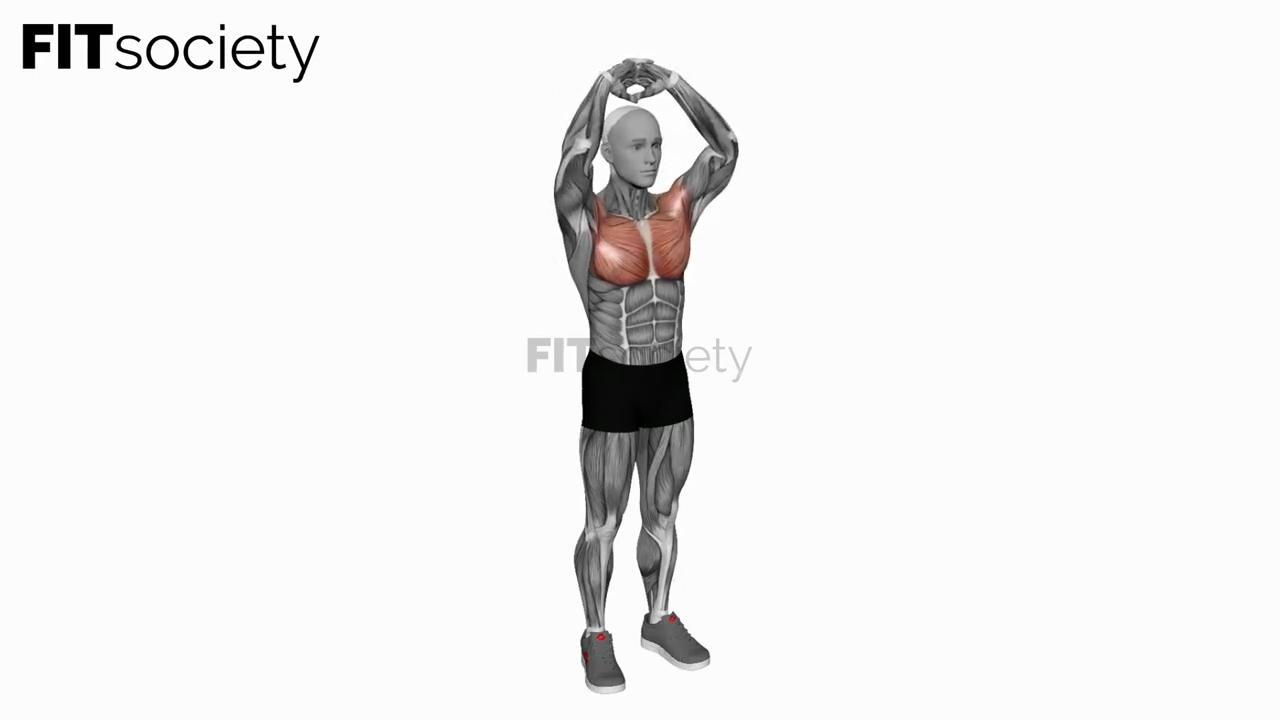
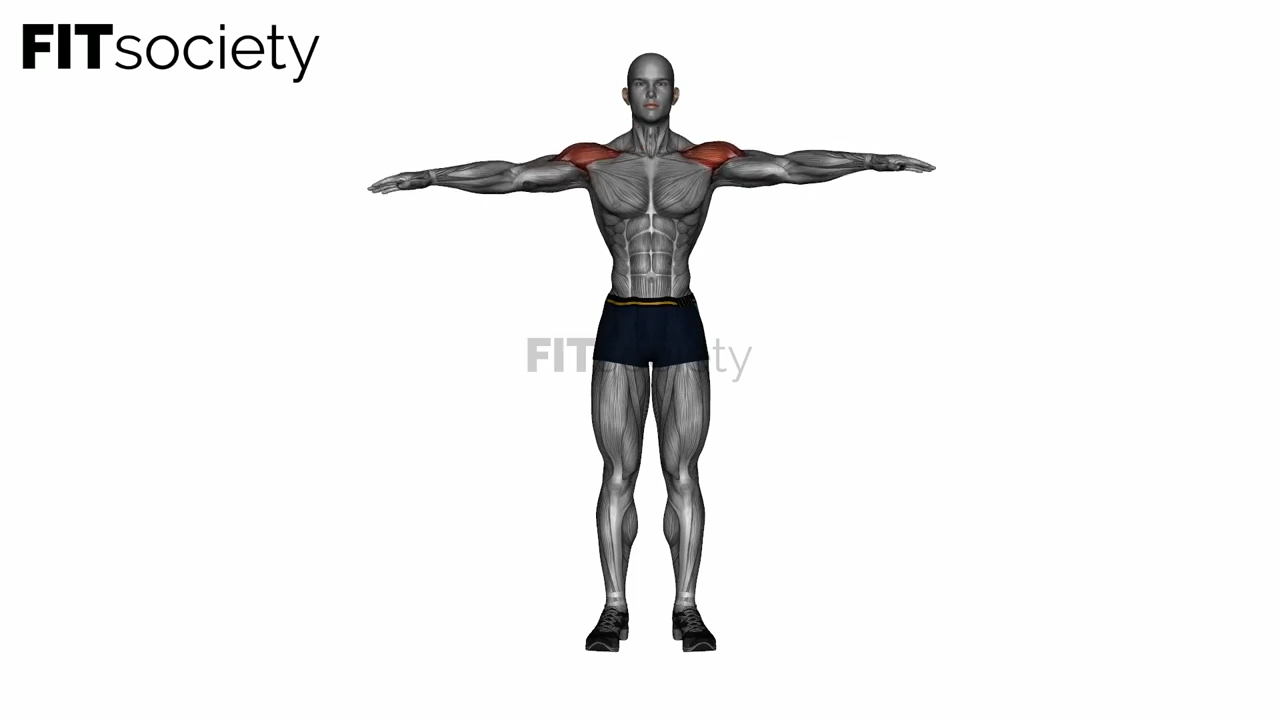
This exercise primarily trains the deltoids (shoulders), triceps (back of the arms), and, to a lesser extent, the upper trapezius muscles (upper back).
Possible Alternatives
- For beginners: Use lighter weights or no weights at all to master the movement and technique.
- To increase the intensity: Add more weight or increase the number of repetitions.
- As a variation: Try performing the exercise seated to increase lower-back stability.
Run your fitness business with more structure
- Planning, member management and coaching in one platform
- Built for coaches, studios and gyms
- Fewer separate tools, more overview