Dumbbell Seated Shoulder Press
The Dumbbell Seated Shoulder Press is an effective exercise for strengthening your shoulders and upper body. This exercise offers a unique combination of stability and strength training, contributing to better posture and functional strength.
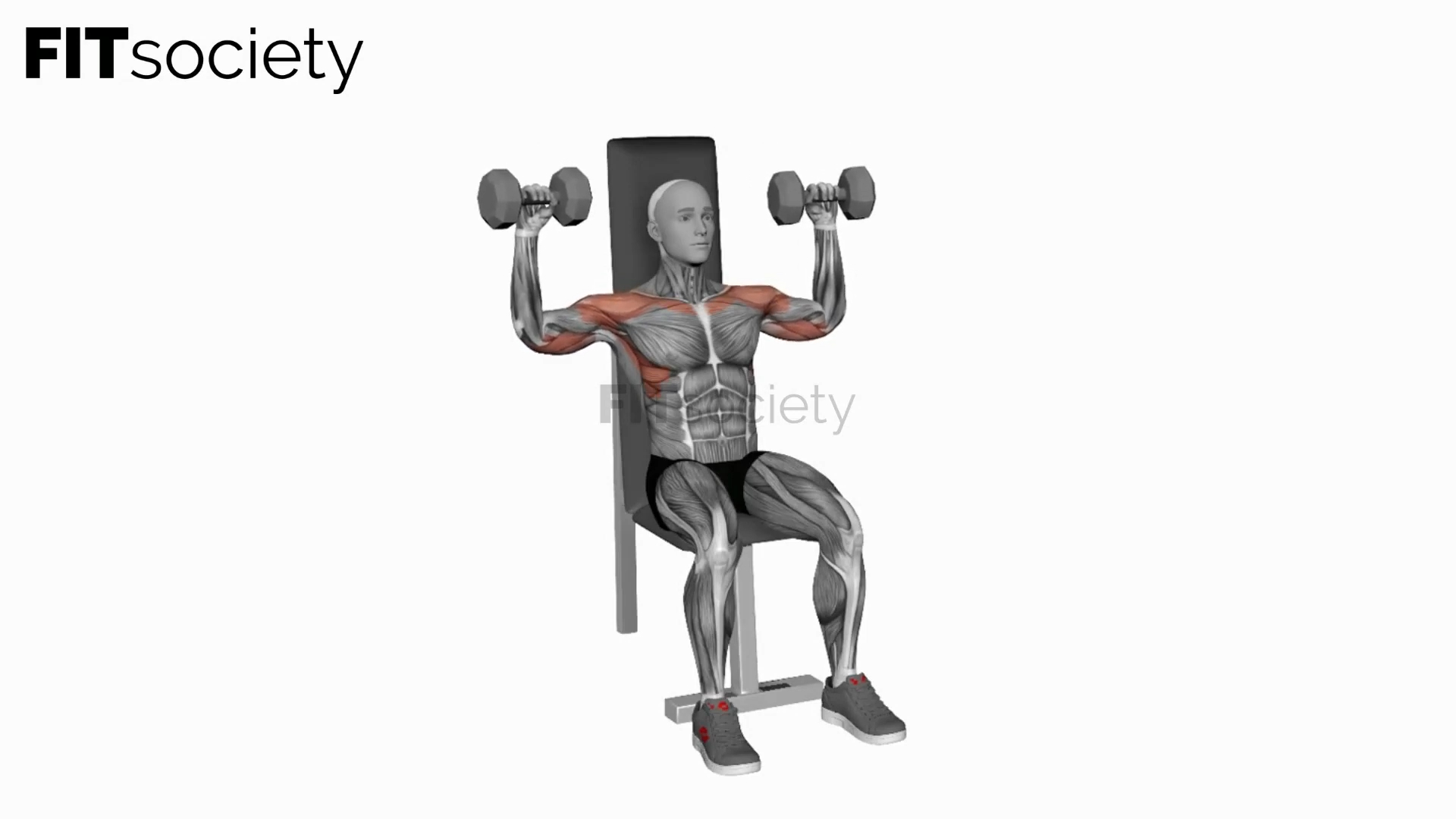
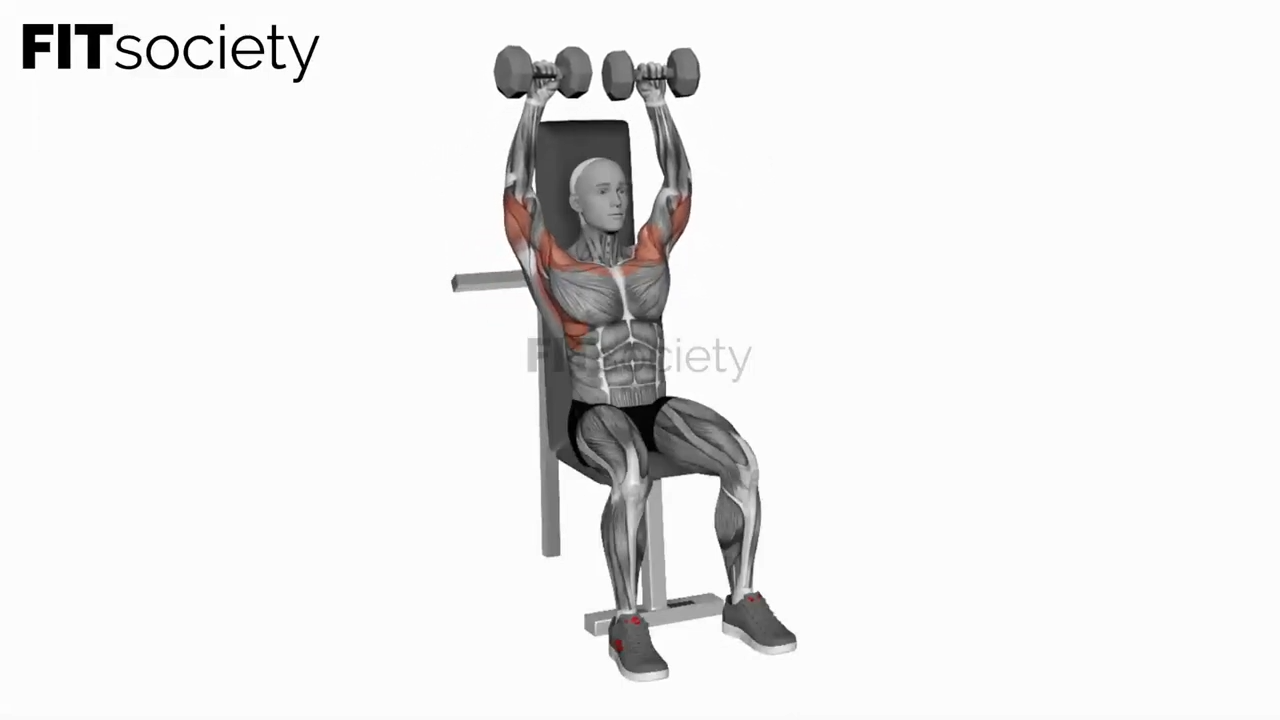
Execution
-
1
Find a bench and sit upright with your feet firmly on the floor.
-
2
Hold a dumbbell in each hand at shoulder height, with your palms facing forward.
-
3
Exhale and press the dumbbells upward until your arms are fully extended overhead.
-
4
Pause briefly at the top, then inhale as you slowly lower the weights back to the starting position.
Benefits
- Improves shoulder stability.
- Increases the strength and size of the shoulder muscles.
- Helps improve overall upper-body strength.
- May contribute to better posture.
Common Mistakes
- ! Performing the movement too quickly: use a controlled movement to prevent injuries and maximize the effectiveness of the exercise.
- ! Using weights that are too heavy: this can lead to improper form and potential injuries.
- ! Not keeping your back straight: make sure your back remains straight throughout the exercise to increase effectiveness and prevent injuries.
Main Muscles
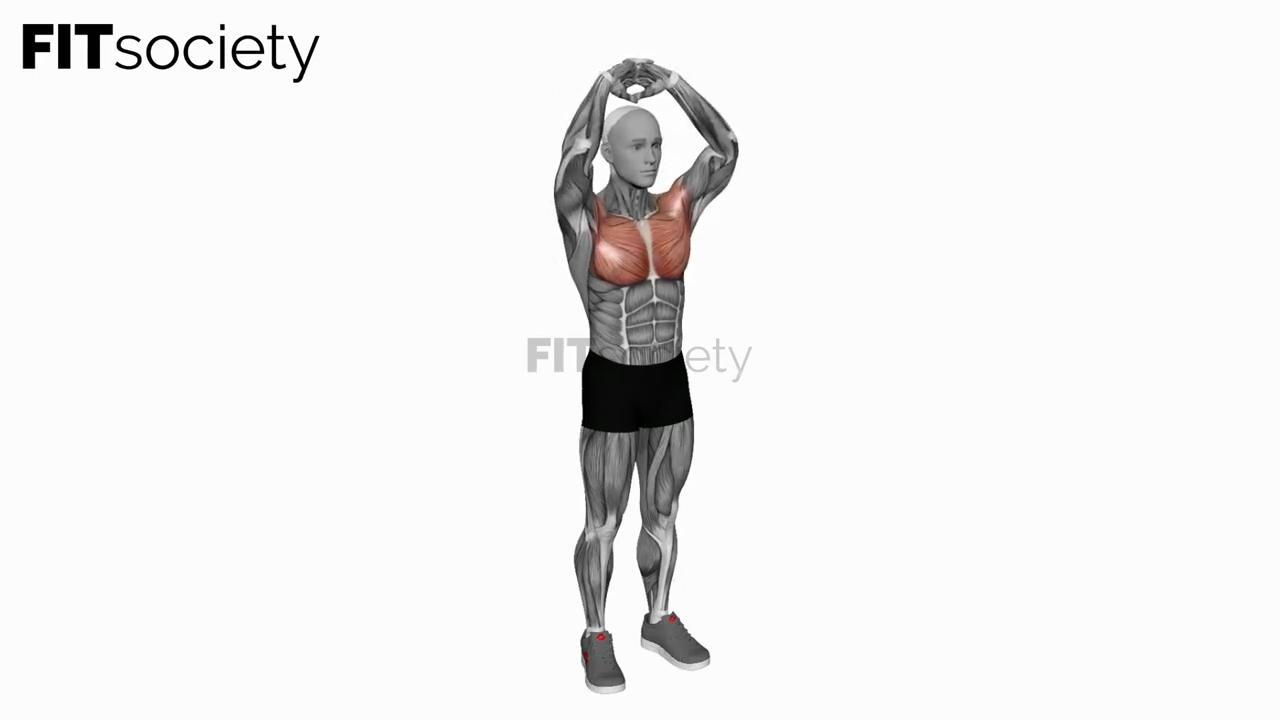
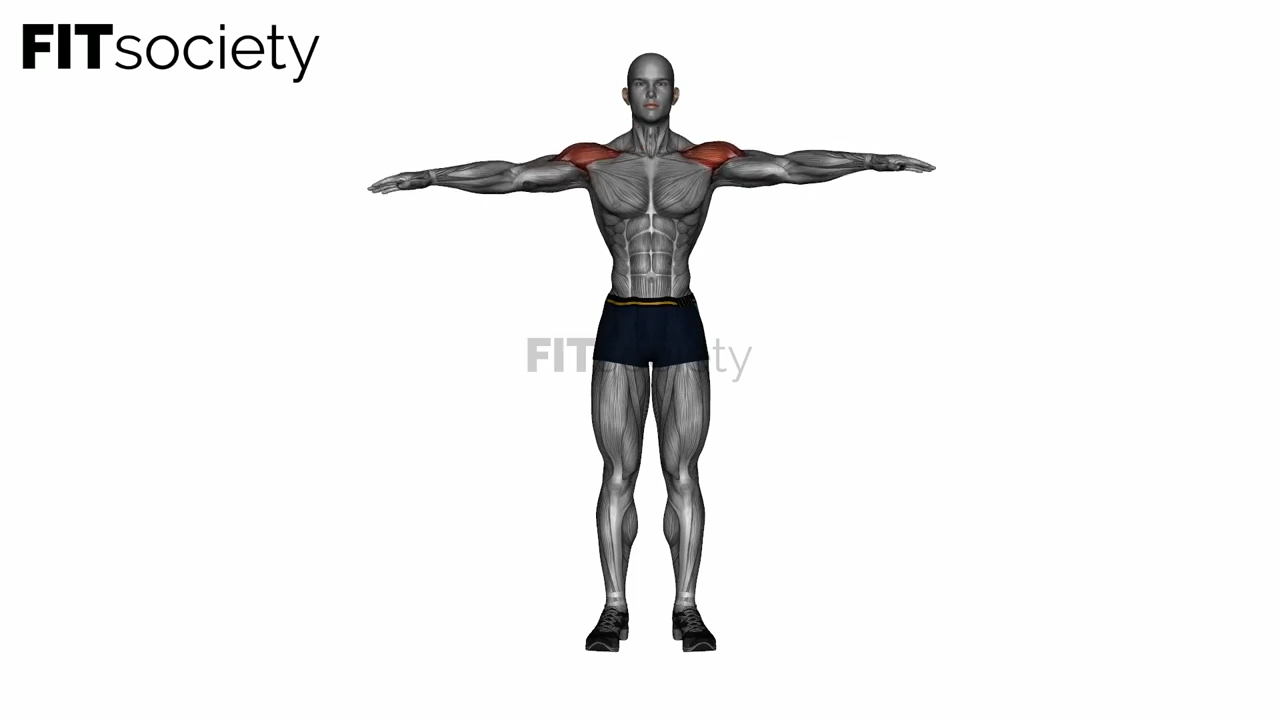
This exercise primarily targets the deltoids (shoulder muscles), while also training the triceps (the back of your upper arms) and, to a lesser extent, the upper chest muscles.
Possible Alternatives
- Standing Shoulder Press: For those who want to increase lower-body stability.
- Arnold Press: A variation that places more emphasis on the anterior and lateral deltoids.
- Dumbbell Push Press: For a more explosive variation that also engages the legs and hips.
Run your fitness business with more structure
- Planning, member management and coaching in one platform
- Built for coaches, studios and gyms
- Fewer separate tools, more overview