Barbell Standing Military Press
The Barbell Standing Military Press is a powerful compound exercise that targets the upper body, particularly the shoulders. This exercise not only offers the opportunity to build impressive shoulder strength, but also improves your posture and stability.
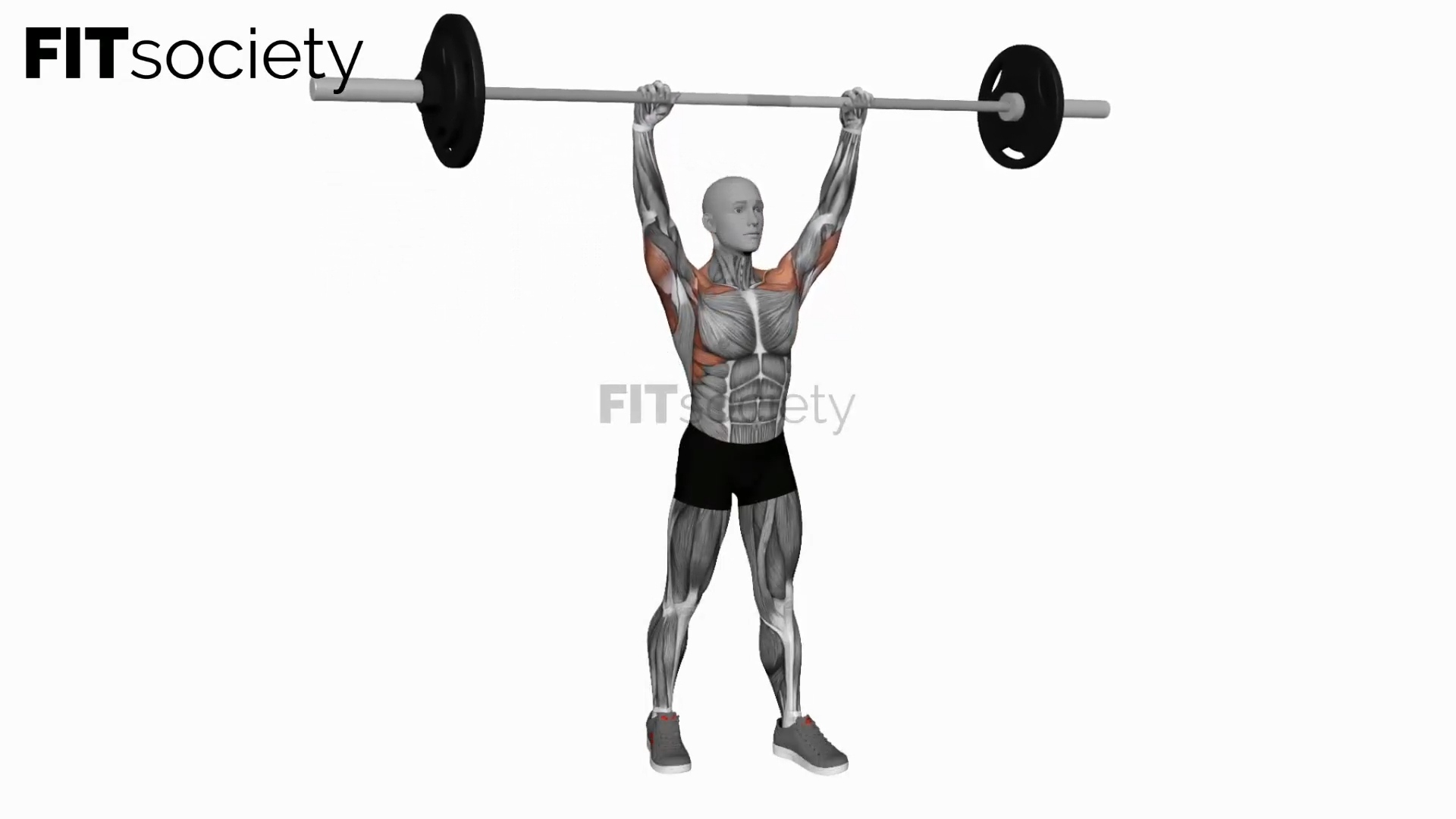
Execution
-
1
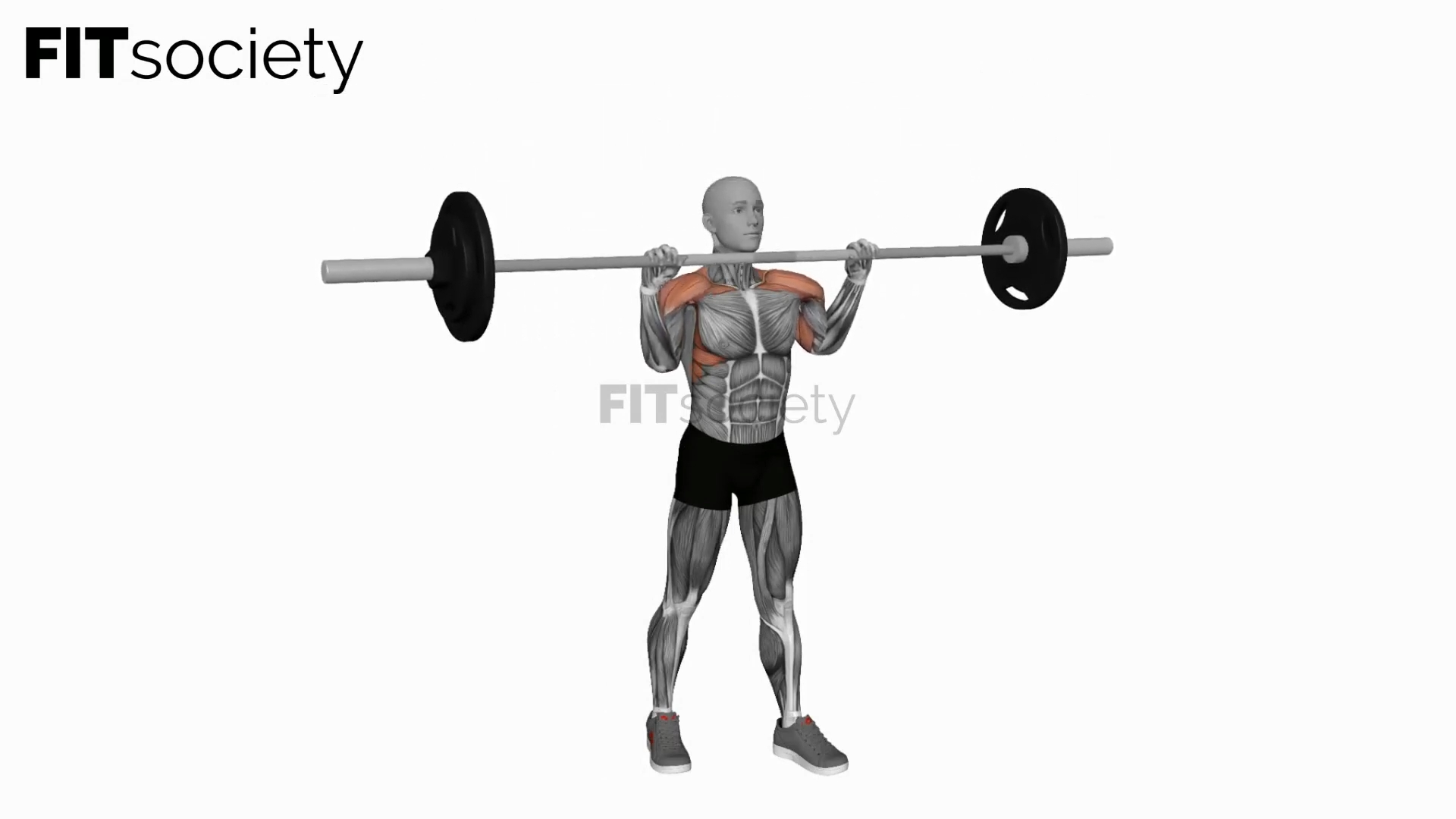
Begin by placing the barbell at chest height using a squat rack.
-
2
Grip the barbell slightly wider than shoulder-width apart with your palms facing forward.
-
3
Step away from the rack and place your feet shoulder-width apart.
-
4
Inhale and press the barbell overhead until your arms are fully extended.
-
5
Slowly and under control, lower the barbell back to the starting position while exhaling.
-
6
Repeat for the desired number of repetitions.
Benefits
- Improves overall shoulder strength and mass.
- Increases core and upper-back stability.
- Helps improve posture by strengthening the back muscles.
- May contribute to better performance in other exercises and sports.
Common Mistakes
- ! Using too much weight: Begin with a weight that allows you to perform the exercise correctly to prevent injuries.
- ! Incorrect posture: Make sure your back is straight and your core is engaged throughout the exercise.
- ! Performing the exercise too quickly: Perform the movement under control to ensure maximum muscle activation.
Primary Muscles
The primary muscle groups trained with the Barbell Standing Military Press are the deltoids (shoulders), trapezius (upper back), and, to a lesser extent, the triceps. The core muscles are also engaged for stability.
Possible Alternatives
- Dumbbell Shoulder Press: A good variation if you want to develop more stability and balance.
- Push Press: Add a little leg drive to press more weight and increase the intensity.
- Arnold Press: A variation that offers a greater range of motion and targets the shoulder muscles in a unique way.
Run your fitness business with more structure
- Planning, member management and coaching in one platform
- Built for coaches, studios and gyms
- Fewer separate tools, more overview