Reverse Lunge With Resistance Band
The Reverse Lunge With Resistance Band is a dynamic exercise that promotes strength and stability in your lower body. Adding a resistance band makes the exercise more intense, leading to greater muscle activation and improved balance.
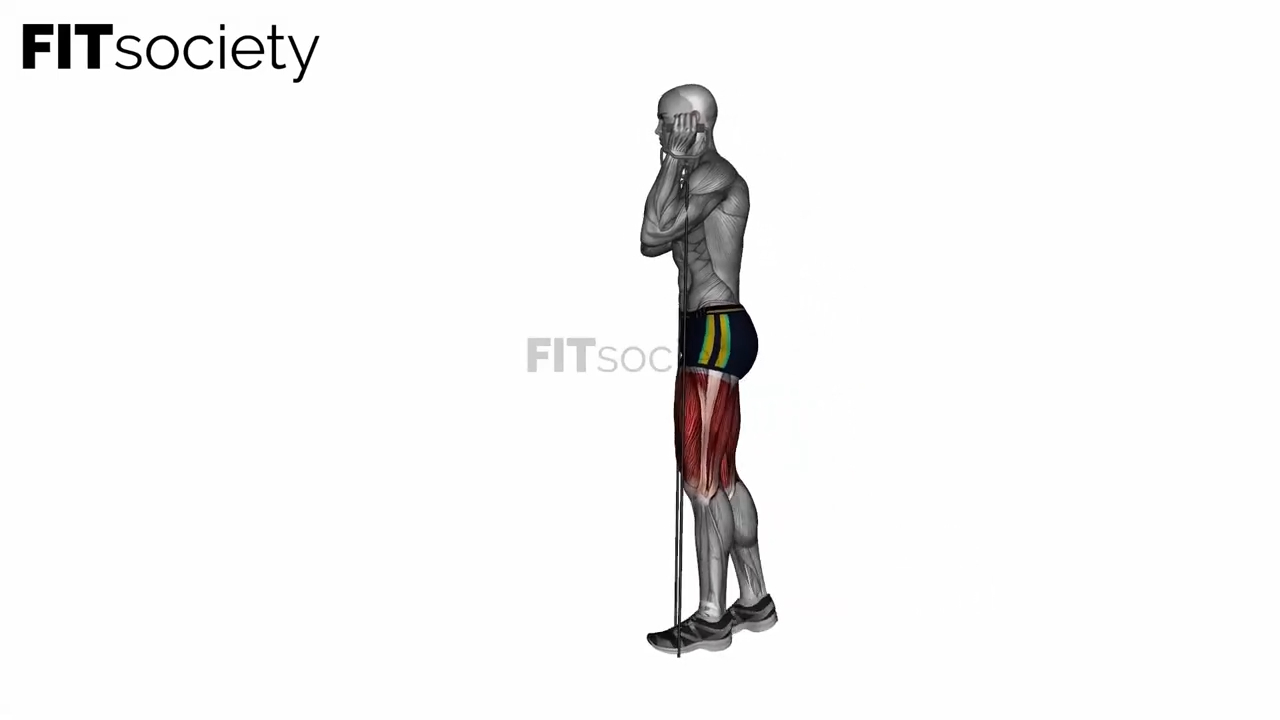
Execution
-
1
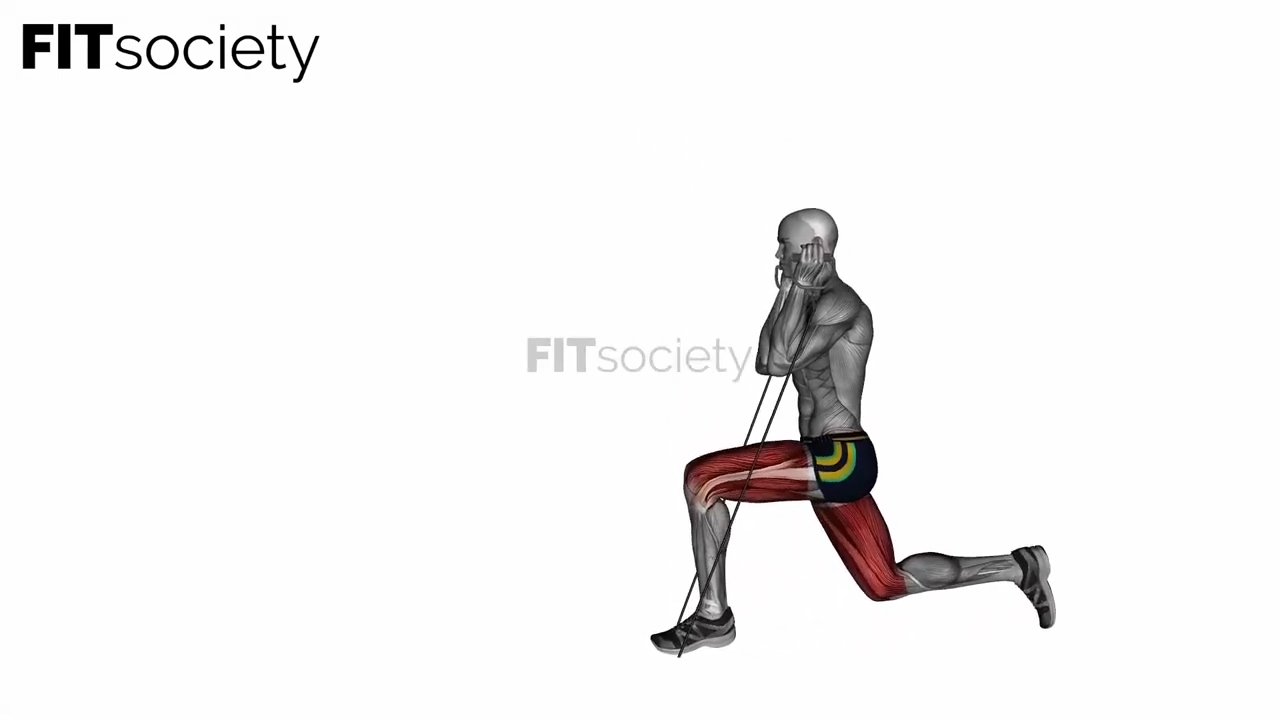
Start by attaching a resistance band to a fixed point at ankle height. Place the band around the ankle farthest from the attachment point.
-
2
Stand facing away from the attachment point, with your feet hip-width apart.
-
3
Brace your core and take a large step backward with the leg without the band while bending your front knee to move into a lunge position.
-
4
Make sure your front knee does not move past your toes and keep your back knee low, almost touching the ground.
-
5
Push yourself back to the starting position using the strength of your front leg.
-
6
Repeat the movement for the desired number of repetitions before switching legs.
Benefits
- Improves lower-body strength and stability.
- Increases muscle activation through the resistance band, leading to faster muscle growth.
- Helps improve balance and coordination.
Common Mistakes
- ! Leaning too far forward, which can place pressure on the knees.
- ! Not lowering the back knee enough, which reduces the effectiveness of the exercise.
- ! Failing to keep the core braced, which can lead to poor posture and back pain.
Key Muscles
This exercise primarily targets the quadriceps and gluteus maximus. The hamstrings and core muscles are also trained secondarily for stability.
Possible Alternatives
- For a lighter variation, you can leave out the resistance band and perform the exercise without additional resistance.
- To increase the intensity, you can use a heavier resistance band or hold dumbbells in both hands during the exercise.
Run your fitness business with more structure
- Planning, member management and coaching in one platform
- Built for coaches, studios and gyms
- Fewer separate tools, more overview