Dumbbell Overhead Lunge
The Dumbbell Overhead Lunge is a dynamic exercise that combines strength, balance, and coordination. Adding weights overhead increases the challenge for your upper body while your legs and core work hard to maintain stability.
Execution
-
1
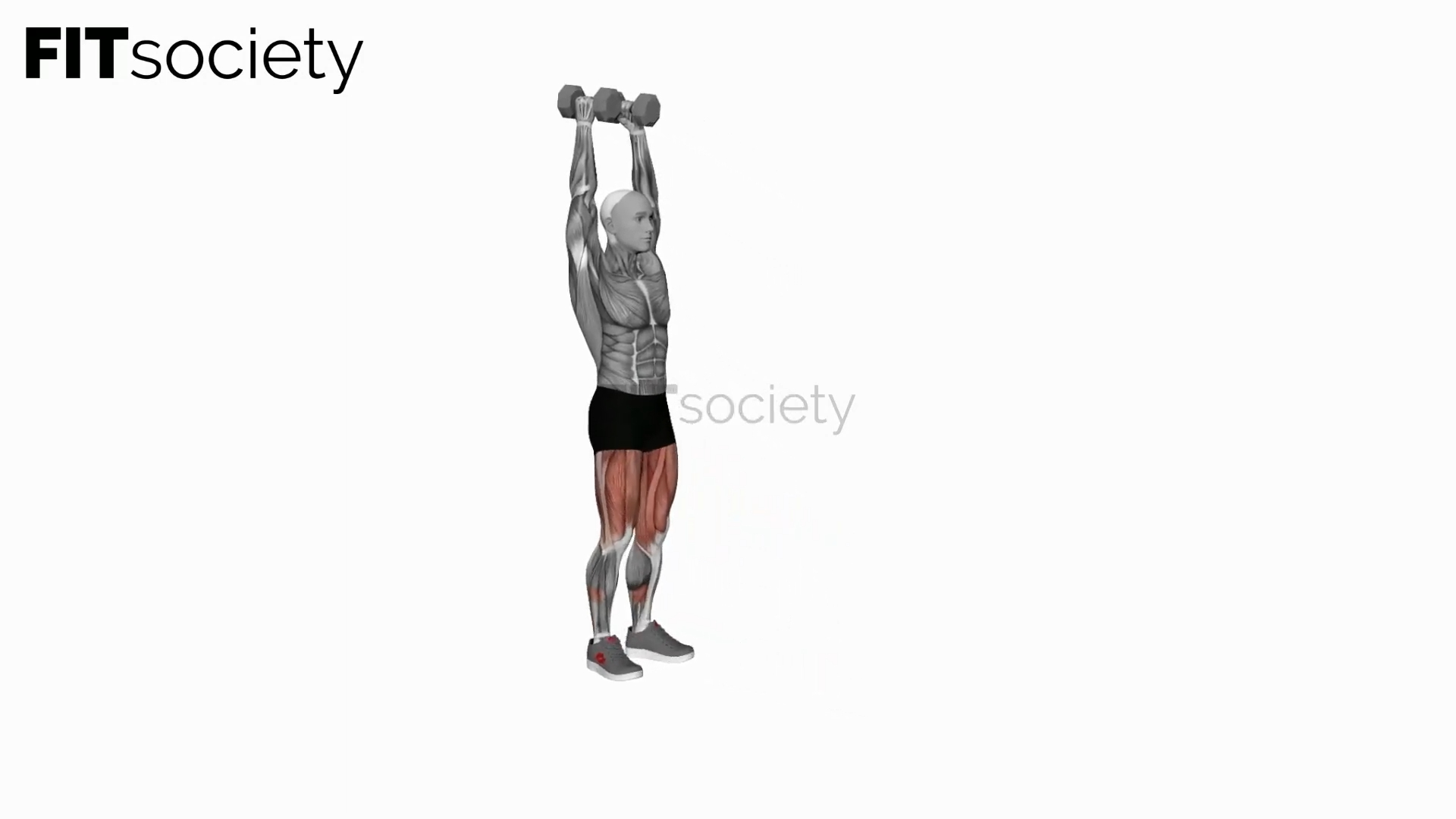
Begin standing with your feet hip-width apart, holding a dumbbell in each hand.
-
2
Fully extend your arms overhead, with the dumbbells close together.
-
3
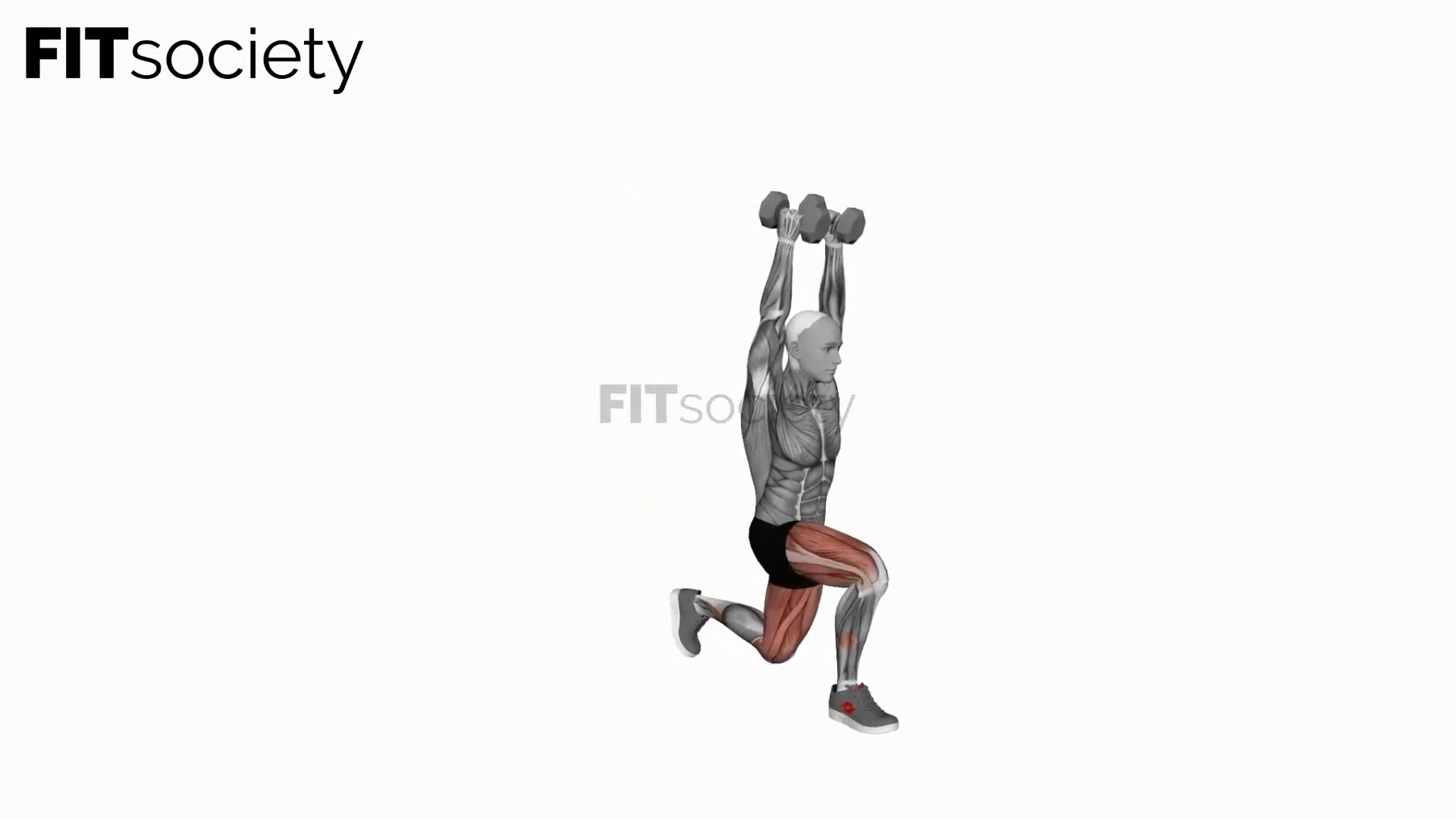
Take a large step forward with your right foot and bend both knees to lower into a lunge position. Make sure your front knee does not move past your toes.
-
4
Push yourself back to the starting position by driving through your heels.
-
5
Repeat the movement with your left leg and continue alternating.
Benefits
- Improves overall body strength and muscular endurance.
- Increases core stability and balance.
- Enhances coordination between the upper and lower body.
- Burns more calories by combining strength and movement.
Common Mistakes
- ! Failing to keep the dumbbells stable overhead can lead to imbalance and injury.
- ! Taking excessively large steps can place additional pressure on your knees.
- ! Failing to brace your core during the exercise can lead to poor posture and back pain.
Targeted Muscles
This exercise targets the quadriceps, hamstrings, glutes, shoulders, triceps, and core.
Possible Alternatives
- For beginners: Perform the lunge without weights or with the dumbbells held at your sides.
- To increase the intensity: Increase the weight of the dumbbells or add a twist to the lunge to engage the obliques more.
- As an alternative to the overhead position: Hold the dumbbells at shoulder height to place less stress on the shoulders.
Run your fitness business with more structure
- Planning, member management and coaching in one platform
- Built for coaches, studios and gyms
- Fewer separate tools, more overview