Cycle Ergometer
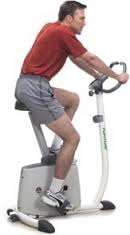
The cycle ergometer, also known as the stationary bike, is an effective cardio exercise that helps improve your endurance and burn calories. It is a low-impact exercise, which means it is gentle on your joints and ideal for rehabilitation or if you are new to fitness.
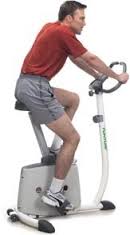
Execution:
-
1
Adjust the seat height so that your knee is slightly bent when the pedal is in its lowest position.
-
2
Sit on the bike and place your feet on the pedals. Make sure your feet are firmly secured with the straps.
-
3
Grip the handlebars for stability or rest your hands lightly on the sensors to measure your heart rate.
-
4
Begin pedaling and set the resistance to a challenging level at which you can still talk.
-
5
Keep your back straight and look forward. Make sure you do not lean forward on the handlebars.
-
6
Pedal consistently and at an even pace for the duration of your workout.
Benefits:
- Improves cardiovascular fitness
- Burns calories, which may help with weight loss
- Strengthens the leg muscles
- Low-impact and therefore less stressful on the joints
Common Mistakes:
- ! Using too much resistance, causing you to fatigue quickly
- ! Setting the seat too low, causing your knees to bend too much
- ! Leaning forward, which places additional pressure on your hands and shoulders
- ! Pedaling too quickly without resistance, making it less effective
Primary Muscles:
- Quadriceps (front of the thighs)
- Hamstrings (back of the thighs)
- Calf muscles
- Glutes (buttocks)
- Core (for stability)
Possible Alternatives:
- Increase the resistance for a more strength-focused workout
- Add interval training by alternating between high-intensity periods and rest periods
- Use a recumbent bike for a different seating position and less strain on the back
- Try a spinning class for a group experience and extra motivation
Run your fitness business with more structure
- Planning, member management and coaching in one platform
- Built for coaches, studios and gyms
- Fewer separate tools, more overview