Barbell Bent-Knee Good Morning
The good morning is an exercise that primarily targets the hamstrings, glutes, and the muscles in the lower back and along the spine. The hamstrings and glutes must work hard to bring the torso upright by aligning the thighs and back. The erector spinae, which runs along the spine, helps straighten the back.
Other muscles mainly work as stabilizers. These include the calves, muscles in and around the pelvis, and of course the abdominal muscles. The muscles in the upper back and shoulders are primarily engaged in holding and stabilizing the barbell.
Performing the exercise with bent knees shifts the emphasis from the lower-back and hamstring muscles to the glutes. This creates greater hip flexion (the angle between the thighs and torso becomes smaller), which must be followed by greater extension. As a result, the exercise closely resembles the squat. However, the emphasis here is on moving the glutes backward and bringing them forward again. In the squat, the emphasis is on lowering through the legs, with the torso tilting forward to maintain balance.
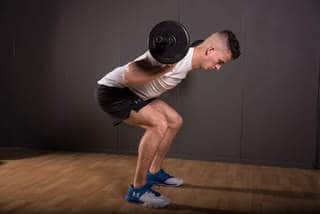
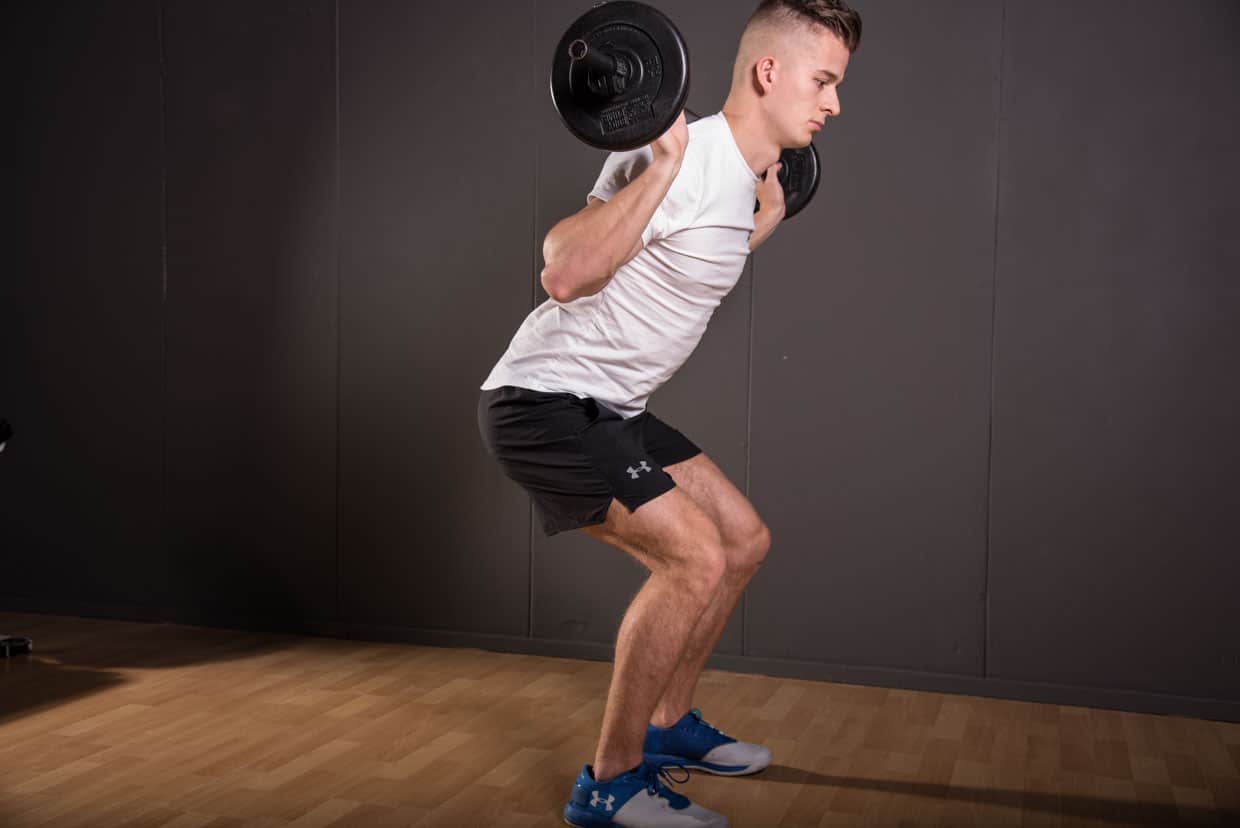
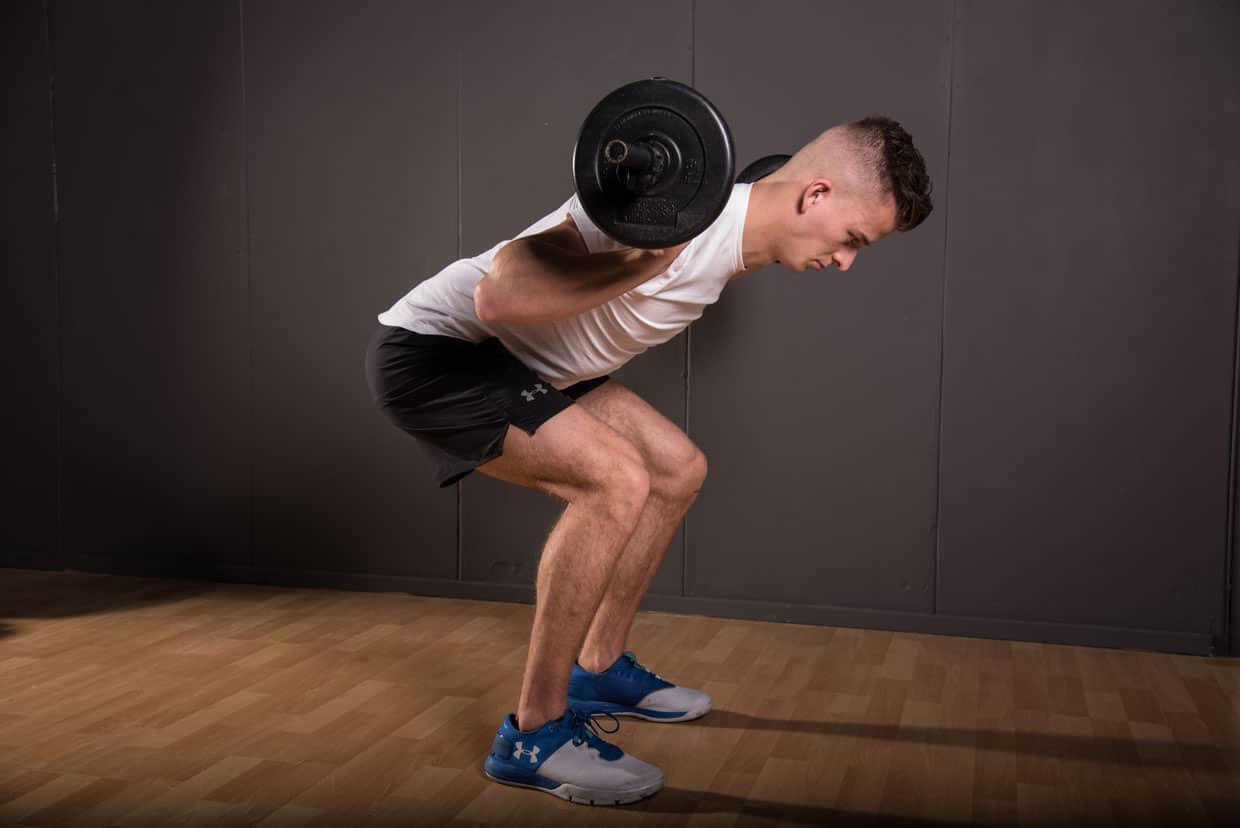
Barbell bent-knee good morning execution
-
1
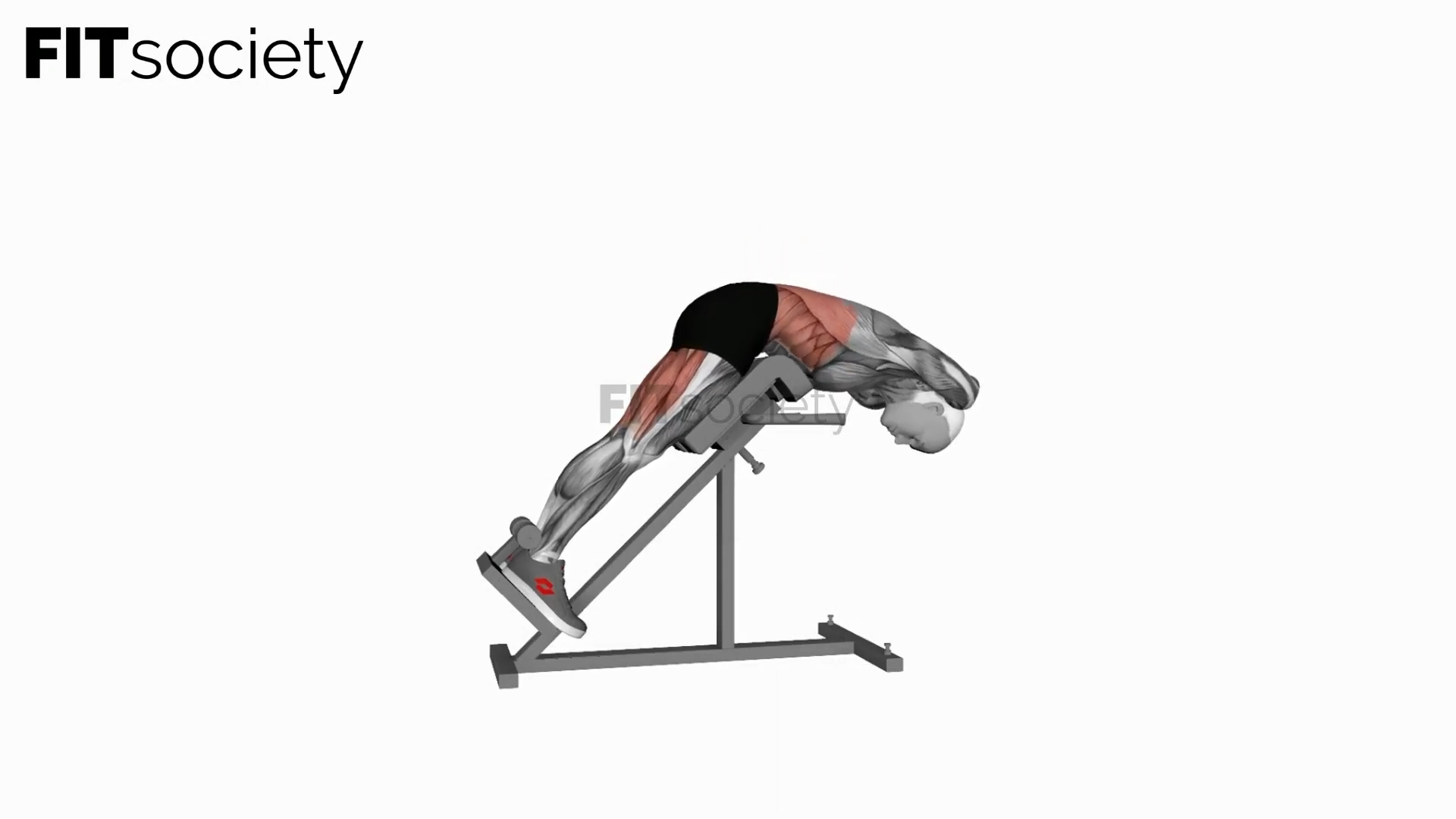
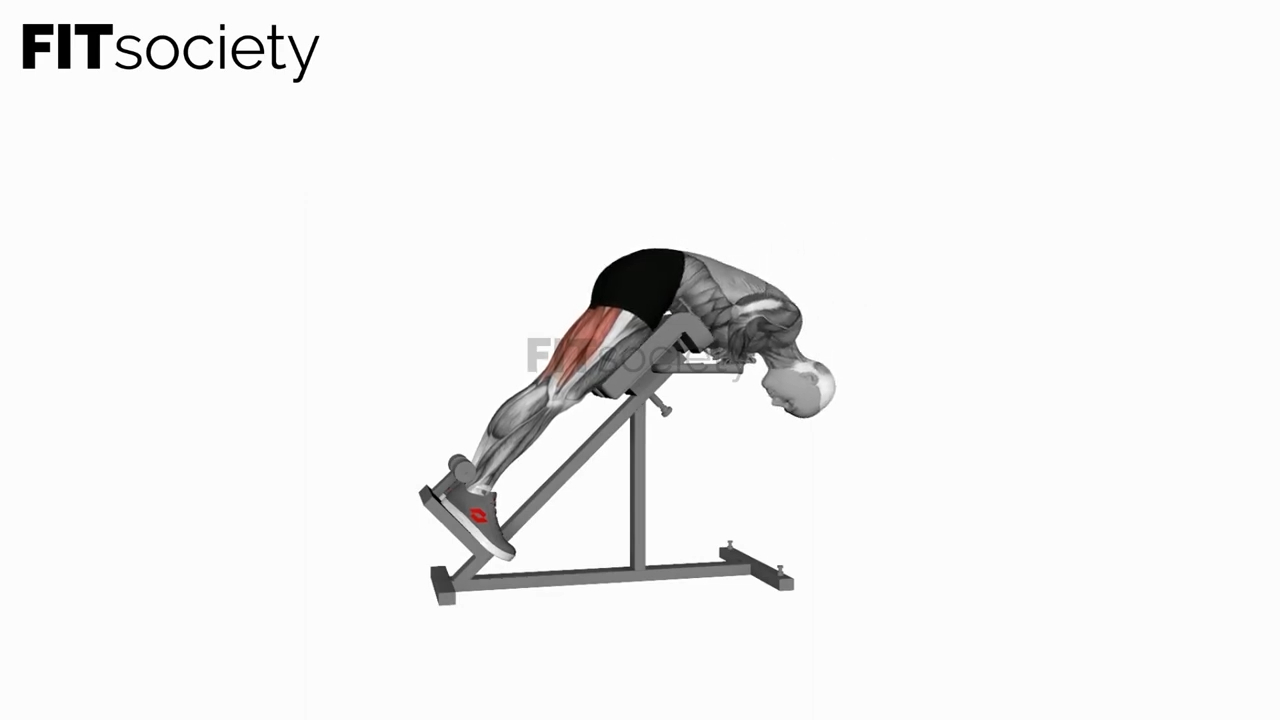
Move your glutes backward and your chest downward. Keep your back slightly more arched than its natural curvature. Bend your knees to bring your glutes far enough backward.
-
2
Raise yourself back up by driving your pelvis forward and extending your back.
Barbell bent-knee good morning
Muscles involved:
Legs:
- Hamstrings
Glutes:
- Gluteus maximus, medius, and minimus
Abdominals:
- Rectus abdominis (rectus abdominis muscle)
- External oblique
- Internal oblique
- Transversus abdominis (transverse abdominal muscle, ‘corset muscle’)
(Lower) back and spine:
- Erector spinae
- Lumbar multifidus
- Quadratus lumborum
Back and neck:
- Latissimus dorsi
- Trapezius
- Rhomboideus
- Levator scapulae
Shoulders:
- Deltoideus
Barbell bent-knee good morning
- Make sure any weight plates on the barbell are securely locked in place.
- Place the barbell across the top of the trapezius (upper back).
- Ensure that your hands are evenly spaced by checking the markings on the barbell.
- Place your feet shoulder-width apart.
- Stand upright with your knees only slightly bent.
Barbell bent-knee good morning technique
Good mornings can create major differences in the muscles involved with small adjustments.
For example, you can maintain the (natural) curvature of your back throughout the movement. The lower (fibers of the) muscles along the spine then have an active role during the ascent, while the upper ones only stabilize them. If you want to train the muscles along the entire length of the spine, this is also possible. At the end of the forward bend, you then round your back. The ascent begins by arching the back before you rise from the middle.
Remember that you perform this bent-knee variation to move the glutes backward and forward. The emphasis is therefore not on tilting the torso forward.
With the good morning , controlling the barbell may prove more difficult than with, for example, squats. Because the torso tilts farther forward from the hips, the barbell may tend to drop during the ascent. To control the barbell as comfortably and effectively as possible, proper hand placement can help. First determine how high you want the barbell to sit on your back. Then place your hands at a width that keeps your elbows tucked against the sides of your body.
Alternatives
- Stiff-legged deadlift
- Deadlift
Run your fitness business with more structure
- Planning, member management and coaching in one platform
- Built for coaches, studios and gyms
- Fewer separate tools, more overview