T-Push-Ups
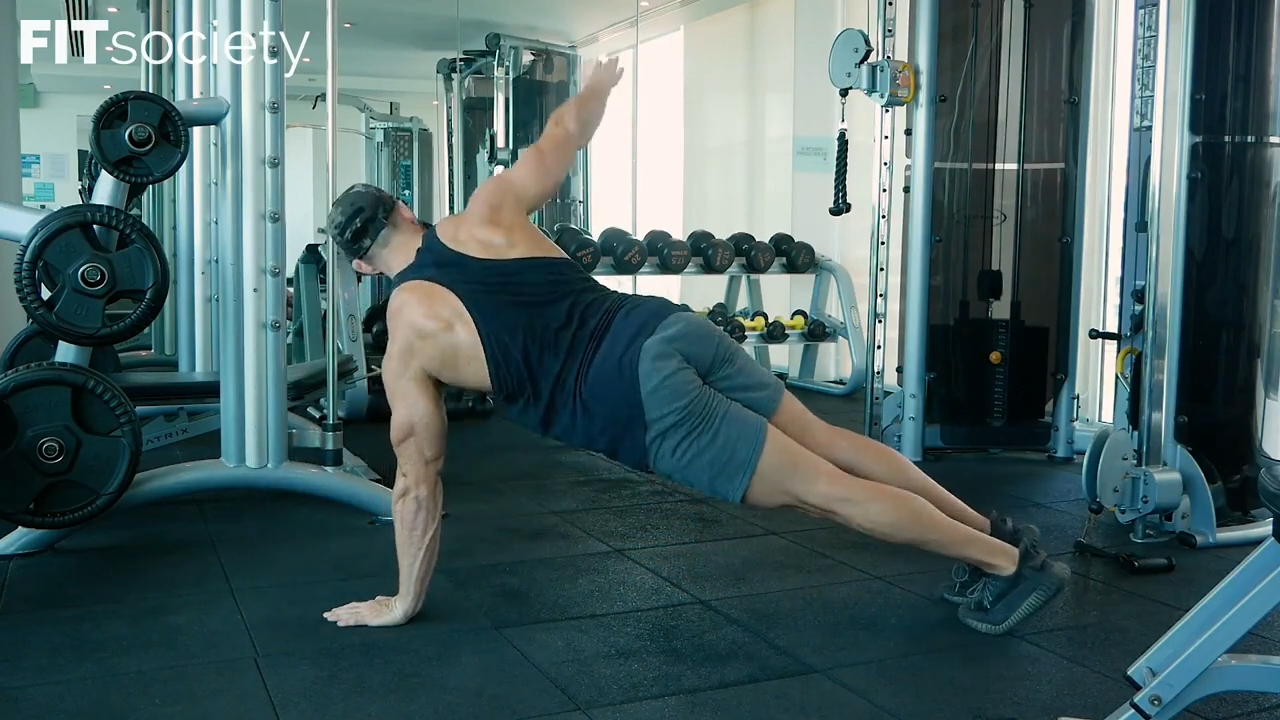
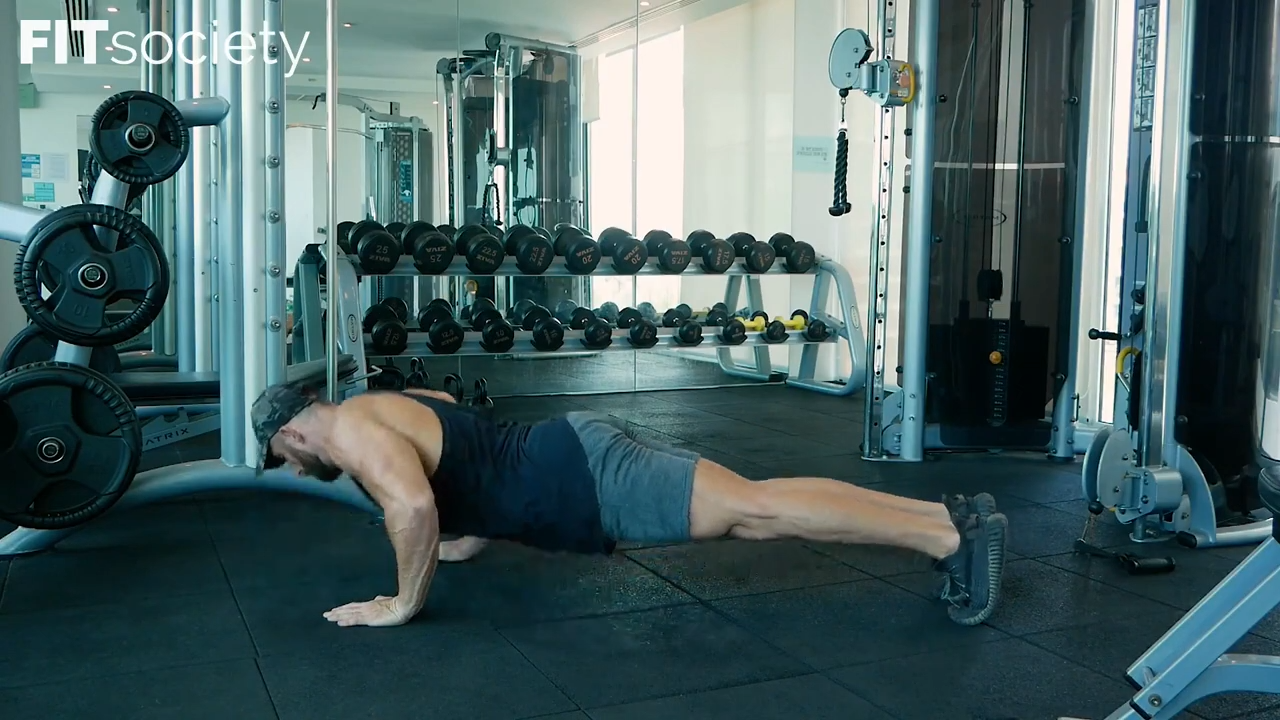
Introduction: T-push-ups are a dynamic variation of the classic push-up, involving a rotational movement that challenges your torso and arms. This exercise not only strengthens your chest and arms but also improves your balance and coordination.
Execution: Begin in a standard push-up position with your hands shoulder-width apart. Keep your body in a straight line from your head to your heels. Lower yourself toward the floor and push yourself back up. Once at the top, lift your right arm and rotate your body to the right so that you form a “T.” Your right arm points toward the ceiling and your body is turned sideways. Return to the starting position and repeat the movement on the other side. Alternate between left and right after each push-up.
Key Muscles: This exercise primarily trains the chest muscles, triceps, and deltoids. Your core muscles, including the obliques, are also heavily engaged to stabilize your body during the rotational movement.
Benefits: T-push-ups help build strength in the upper-body muscles and improve your stability and coordination. The rotational movement also strongly engages your core, contributing to better posture and balance.
Common Mistakes: A common mistake is not fully rotating the body or allowing the hips to drop during the exercise. Make sure your body remains in a straight line and rotate fully so that your arm points straight upward. This ensures maximum activation of the muscles involved.
Possible Alternatives: To increase the intensity, you can wear a weighted vest. Beginners can simplify the exercise by keeping their knees on the floor during the push-up phase. Another variation is to perform the T-push-up on an elevated surface, such as a bench, to make the movement less intense.
```Run your fitness business with more structure
- Planning, member management and coaching in one platform
- Built for coaches, studios and gyms
- Fewer separate tools, more overview