Decline Dumbbell Chest Press
The Decline Dumbbell Chest Press is an effective exercise for strengthening and defining the lower chest muscles. This variation of the traditional chest press places greater emphasis on the lower part of the chest, supporting complete chest development.
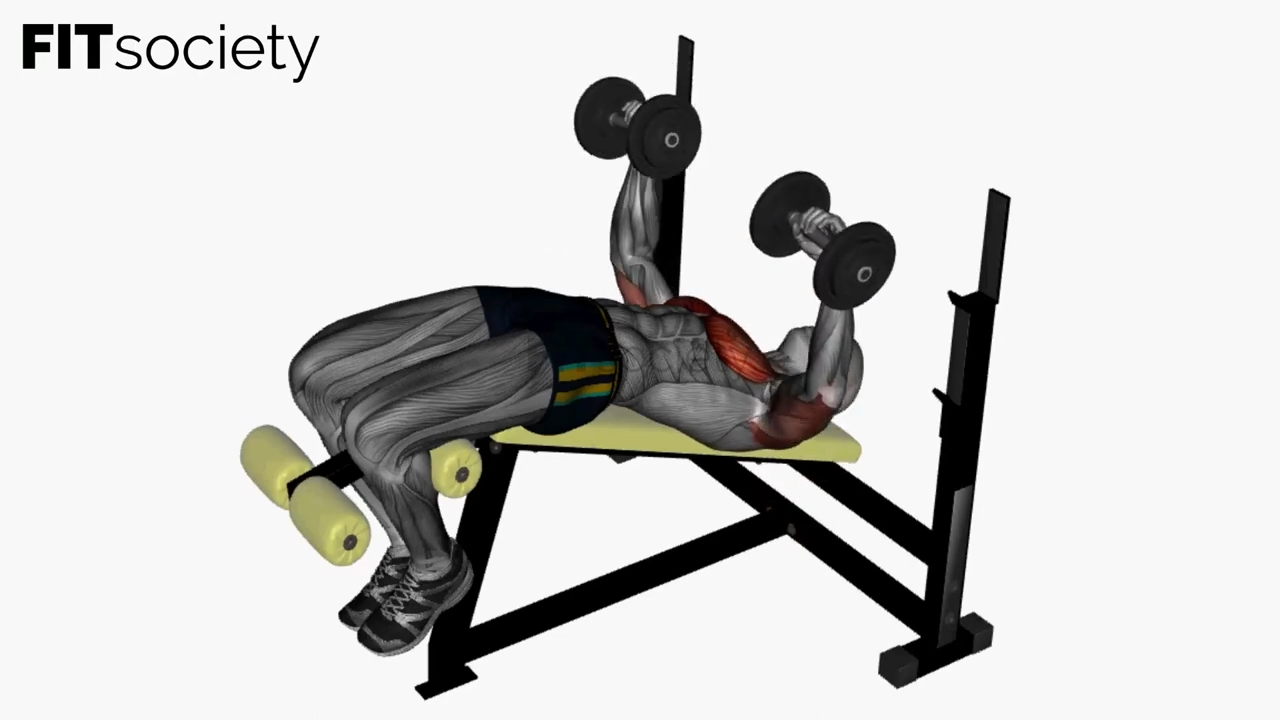
Execution
-
1
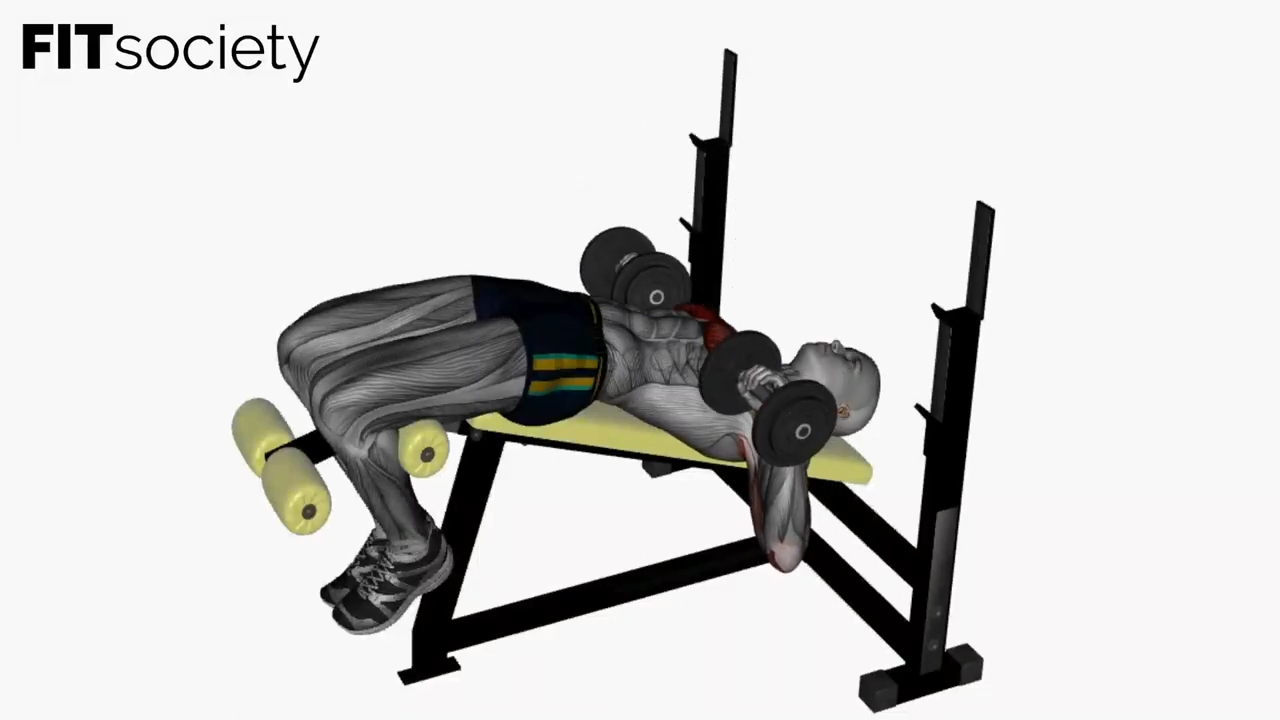
Find a decline bench and lie on it with your back. Make sure your feet are securely anchored.
-
2
Hold a dumbbell in each hand and position them above your chest with your arms extended. This is your starting position.
-
3
Slowly lower the dumbbells by bending your elbows until they are almost level with your chest.
-
4
Then press the dumbbells powerfully upward to the starting position while contracting your chest muscles.
-
5
Repeat for the desired number of repetitions.
Benefits
- Strengthens and defines the lower chest muscles.
- Improves muscular balance and symmetry in the chest.
- Increases overall upper-body strength.
Common Mistakes
- ! Lowering or pressing the weights up too quickly. Use a controlled movement.
- ! Allowing the dumbbells to move too far outward or inward. Keep them above your chest.
- ! Not fully extending your arms at the top of the movement.
Primary Muscles
This exercise primarily targets the lower portion of the pectoralis major (chest muscle). The triceps and anterior deltoids are also trained as secondary muscle groups.
Possible Alternatives
- If you do not have access to a decline bench, you can perform a similar movement on a flat bench or use push-ups with your feet elevated.
- For more variety and challenge, try the exercise with a barbell or perform it on a stability ball to engage your core more.
Run your fitness business with more structure
- Planning, member management and coaching in one platform
- Built for coaches, studios and gyms
- Fewer separate tools, more overview