Seated dumbbell bent over row
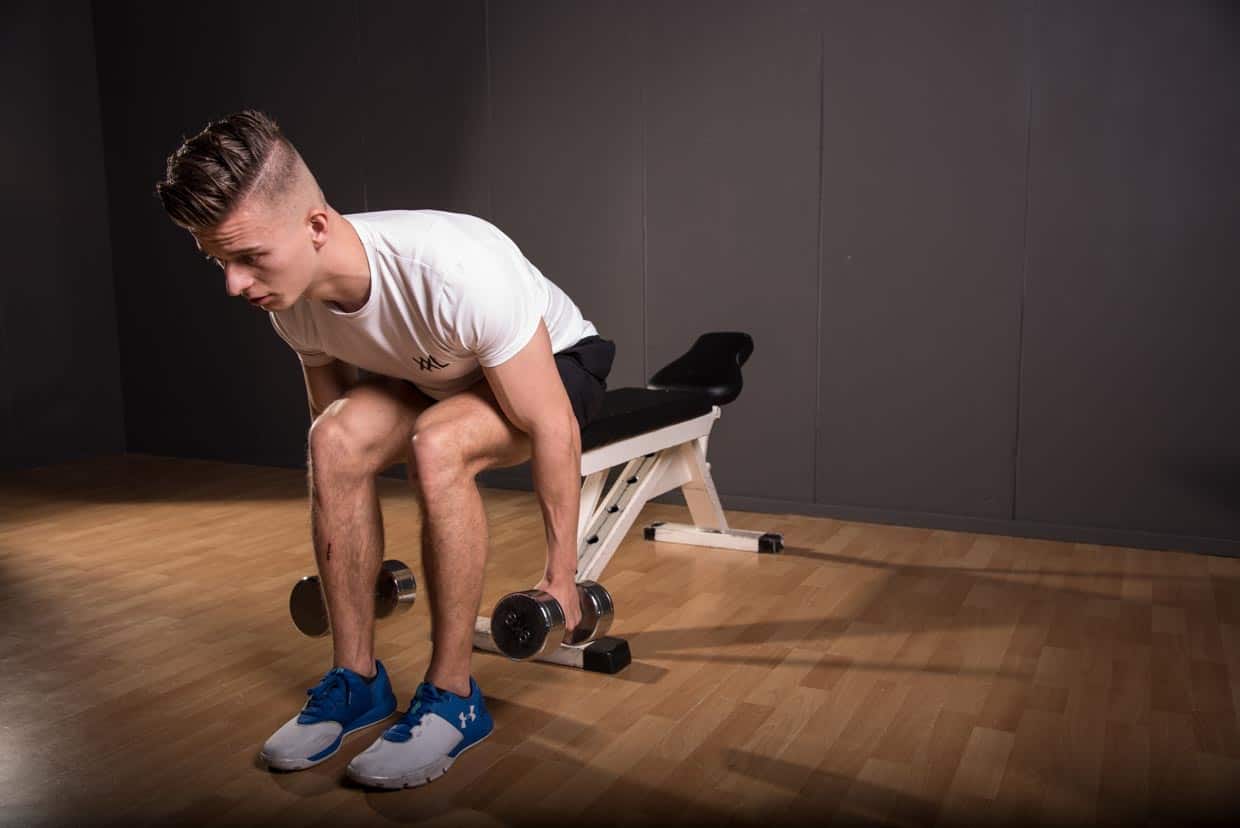
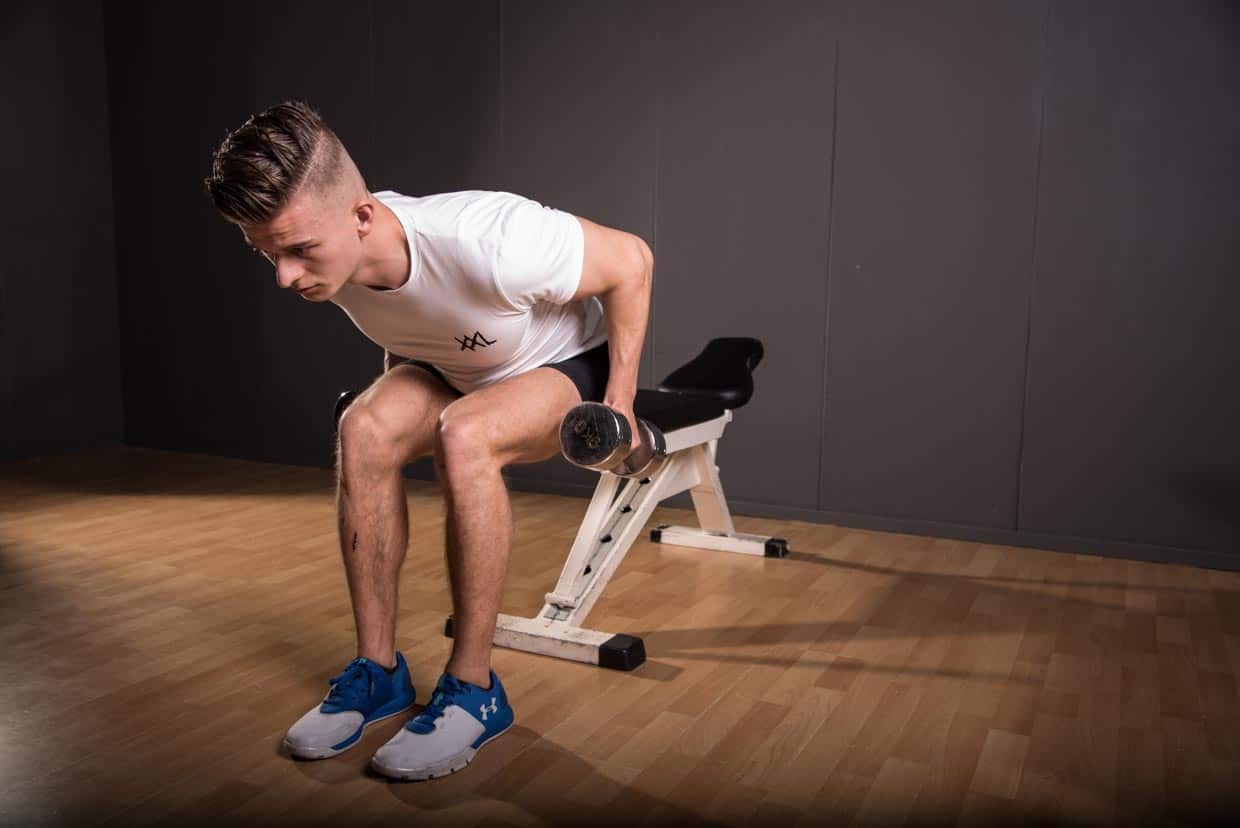
The seated dumbbell bent-over row trains the back by drawing the upper arms behind the body. Leaning the torso forwards puts the dumbbells below the shoulders so that gravity resists the rowing movement. Sitting on the end of a bench reduces the work needed from the legs to hold this position.
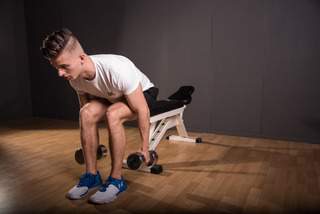
Execution
-
1
Select a pair of dumbbells you can move without swinging your torso.
-
2
Sit on the end of a bench with its length behind you and your feet about hip-width apart.
-
3
Hinge forwards until the dumbbells hang close to the floor beside your legs, palms facing inwards. Keep the natural curve of your back and look at a point on the floor slightly ahead.
-
4
Draw your elbows towards and slightly past your sides.
-
5
Lower the dumbbells slowly until your arms are extended again.
Muscles worked
- Latissimus dorsi.
- Rear deltoids, middle trapezius and rhomboids.
- Biceps, brachialis and brachioradialis, which bend the elbows.
- Shoulder stabilisers and trunk muscles.
Technique
Both hands hold weights, so neither hand supports the torso as in a one-arm row. Keep your trunk steady throughout the repetition. Do not lean farther down as you lower the weights or lift your chest to help pull them up.
Think about moving the elbows backwards. The back muscles act on the upper arms; pulling mainly with the hands can turn the movement into an arm exercise. Use a manageable range rather than forcing the elbows far behind the body.
Alternatives
- T-bar row.
- One-arm dumbbell row.
- Seated cable row.
- Chest-supported dumbbell row.
- Kneeling cable row.
Run your fitness business with more structure
- Planning, member management and coaching in one platform
- Built for coaches, studios and gyms
- Fewer separate tools, more overview