Weighted Twisting Sit-Up
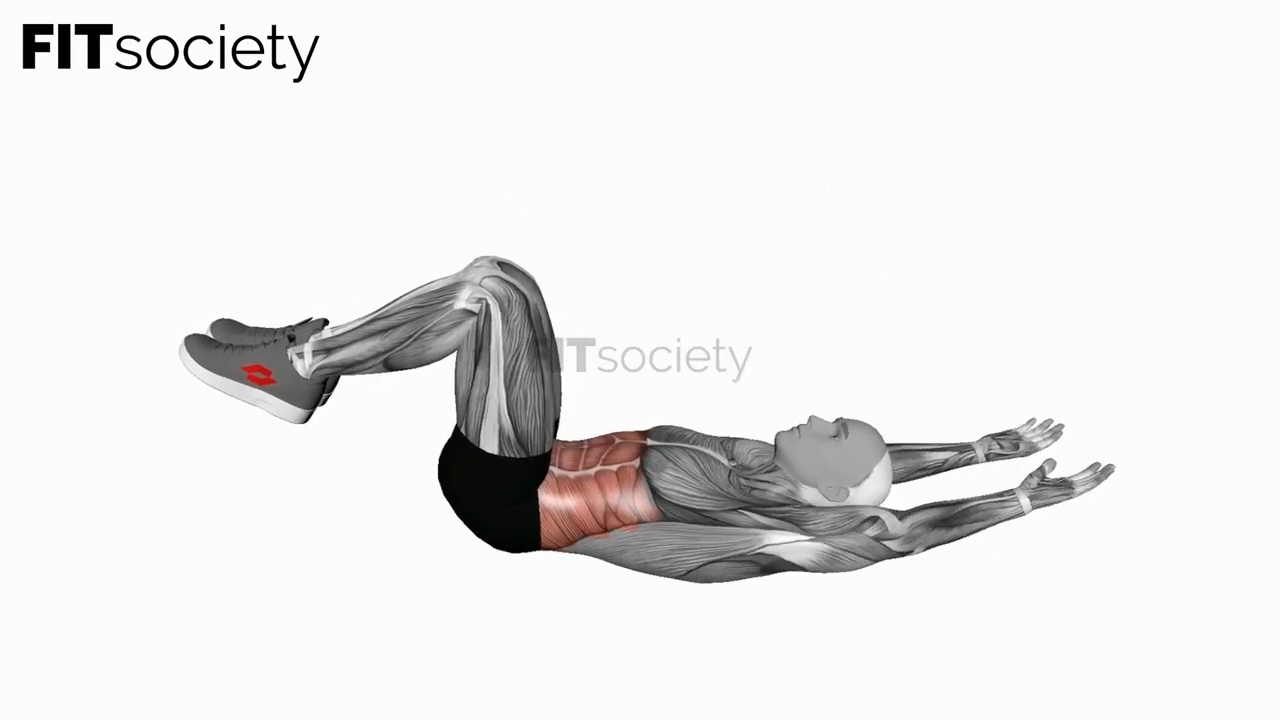
The Sit-Up is a ‘classic’ exercise for the abdominal muscles (see technique). The exercise contains two important elements: rounding the back and raising the upper body. This ‘twisting variation’ adds a third element: rotating the torso.
The rectus abdominis (the basis of the ‘six-pack’) draws the sternum toward the pelvis by rounding the back.
The rectus femoris brings the thigh toward the pelvis and the bottom of the spine, and vice versa. It is a so-called hip flexor and, in a standing position, therefore brings the thigh forward from the hip joint. In the lying position of the Sit-Up, this brings the entire upper body toward the legs. The weaker sartorius assists the rectus femoris in this. Shorter muscles that connect the pelvis to the thigh, the psoas major and iliacus, also play an important role in flexion from the hip.
The oblique abdominal muscles at the sides come into action by initiating rotation of the torso. A weight plate is held to provide resistance in this movement. This naturally also provides more resistance in the Sit-Up movement itself, placing greater demands on the legs and rectus abdominis as well.
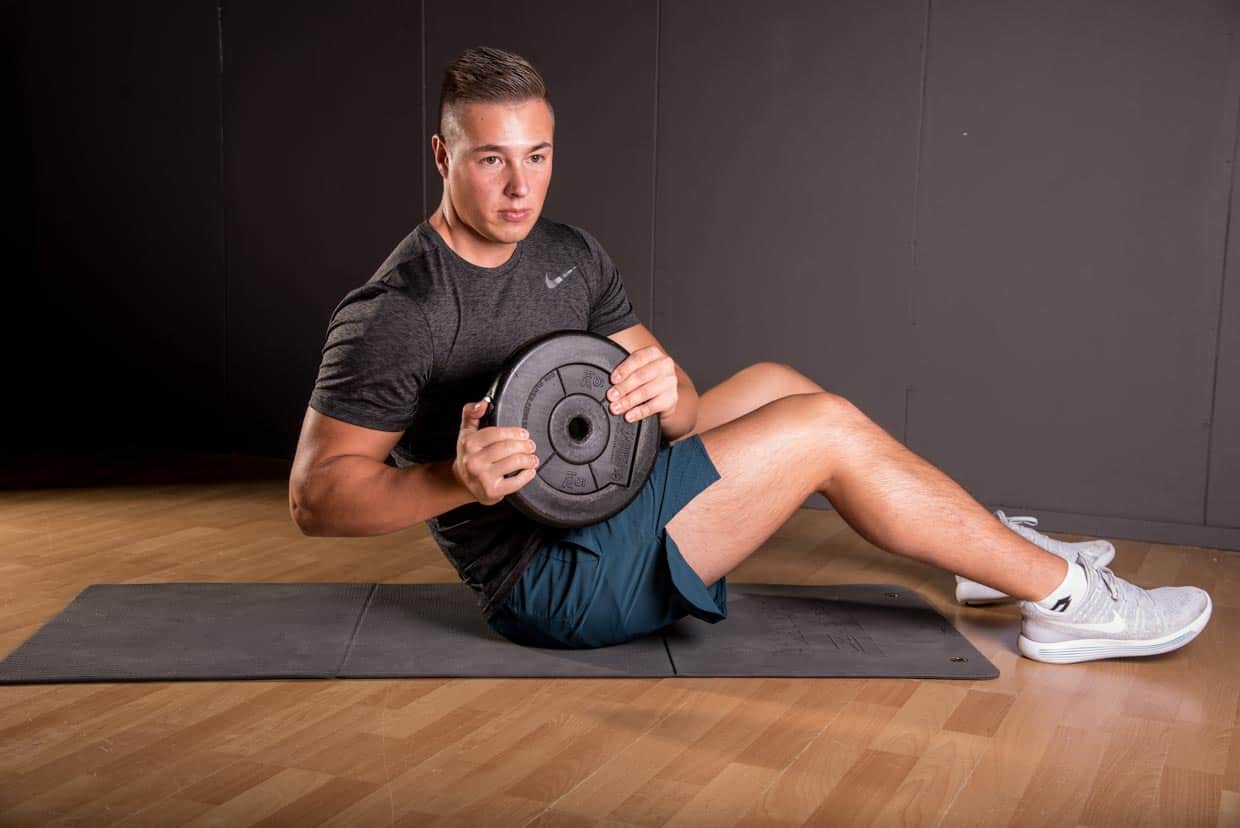
Weighted Twisting Sit-Up execution
-
1
Lie on the floor with the weight plate as high on the chest as possible. Keep your feet flat on the floor.
-
2
Place the weight plate as high on the chest as possible. This is your starting position.
-
3
Bring your chest toward your pelvis by contracting the abdominal muscles. Focus on curving the spine (rounding the back). Continue looking upward to prevent the neck from curving along with it. Your upper back has now lifted off the floor.
-
4
In one smooth movement, continue raising the rest of the upper body.
-
5
At the same time, initiate rotation to one side so that you are facing sideways when you reach the top.
-
6
Slowly bring and rotate the upper body back down and backward.
-
7
Extend the back until you almost touch the bench.
Weighted Twisting Sit-Up
Active muscles:
Abdomen:
- Rectus abdominis (straight abdominal muscle)
- Obliquus externus abdominis (external oblique muscle)
- Obliquus internus abdominis (internal oblique muscle)
- Musculus transversus abdominis (transverse abdominal muscle, or ‘corset muscle’)
Pelvis:
- Psoas major
- Iliacus
Legs:
- Rectus femoris
- Sartorius
The Sit-Up is a ‘classic’ exercise for the abdominal muscles (see notes). The exercise contains two important elements: rounding the back and raising the upper body. This ‘twisting variation’ adds a third element: rotating the torso.
The rectus abdominis (the basis of the ‘six-pack’) draws the sternum toward the pelvis by rounding the back.
The rectus femoris brings the thigh toward the pelvis and the bottom of the spine, and vice versa. It is a so-called hip flexor and, in a standing position, therefore brings the thigh forward from the hip joint. In the lying position of the Sit-Up, this brings the entire upper body toward the legs. The weaker sartorius assists the rectus femoris in this. Shorter muscles that connect the pelvis to the thigh, the psoas major and iliacus, also play an important role in flexion from the hip.
The oblique abdominal muscles at the sides come into action by initiating rotation of the torso. A weight plate is held to provide resistance in this movement. This naturally also provides more resistance in the Sit-Up movement itself, placing greater demands on the legs and rectus abdominis as well.
Weighted Twisting Sit-Up technique
The abdomen cannot only be viewed from the front, but also from the side. The transverse abdominal muscles at the sides pull the abdominal wall inward and thus prevent the abdomen from protruding. This variation of the Sit-Up deliberately engages the oblique abdominal muscles. Training these as well could therefore make your waist circumference smaller. Like a corset being tightened.
At the same time, however, the muscle bellies of the rectus abdominis become thicker. This creates deeper lines when viewed from the front, but also causes the abdomen to protrude further when viewed from the side.
Sit-Ups or Crunches?
As mentioned, the Sit-Up can be divided into two movements. In the second part of the movement, the aforementioned muscles in the legs and pelvis play an important role. Sit-Ups are often performed for stronger or more attractive abdominal muscles. The Sit-Up also places a greater load on the spine while the abdominal muscles themselves work less hard than during a Crunch. In this case, ‘a classic exercise’ therefore also partly means ‘outdated’. Sit-Ups have declined greatly in popularity in favor of the Crunch, which is essentially only the first part of the Sit-Up is.
In this ‘twisting’ variation, the Crunch offers an even greater advantage: The rotation is initiated while the upper body is still almost completely horizontal. As a result, gravity can provide more resistance to the rotation than when the body has already been raised further.
Alternatives
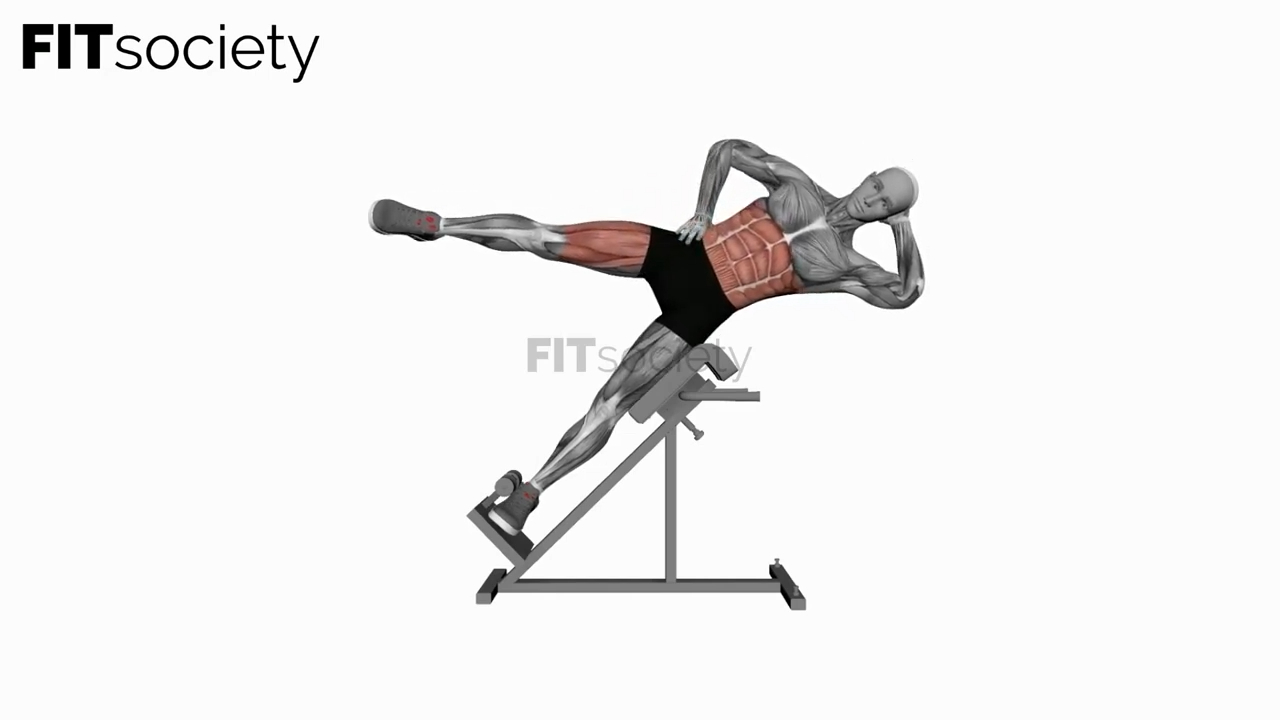
- Side Crunch
- Decline Crunch
- Crunch Machine
- Cable Kneeling Crunch
Run your fitness business with more structure
- Planning, member management and coaching in one platform
- Built for coaches, studios and gyms
- Fewer separate tools, more overview