Weighted Crunch on Stability Ball
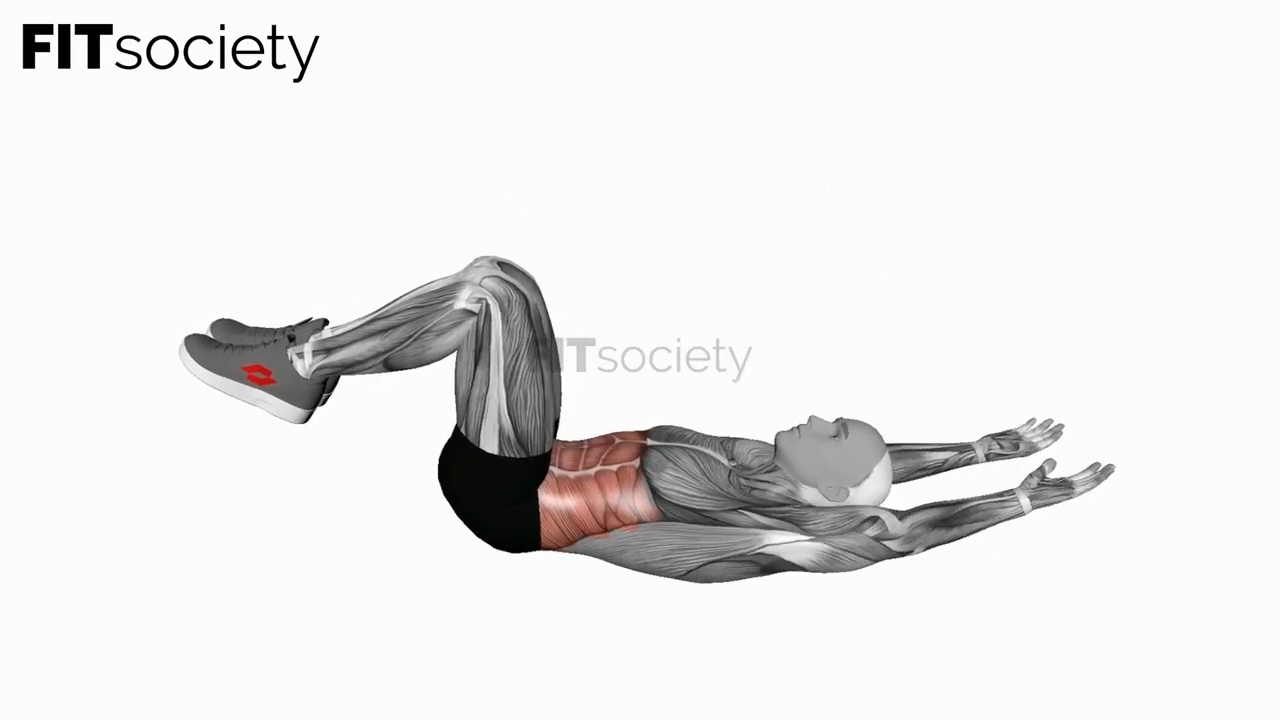
The (abdominal) crunch is one of the best-known abdominal exercises. The rectus abdominis (the basis of a ‘six-pack’) pulls the sternum toward the pelvis by rounding the back.
The obliques at the sides stabilize the core by resisting lateral flexion and rotation. The transversus abdominis (beneath the obliques) pulls the abdominal wall inward and thereby acts as a natural weightlifting belt to stabilize the core. Performed on a stability ball, these muscles may have to work harder.
Placing additional weight on the chest increases the resistance.
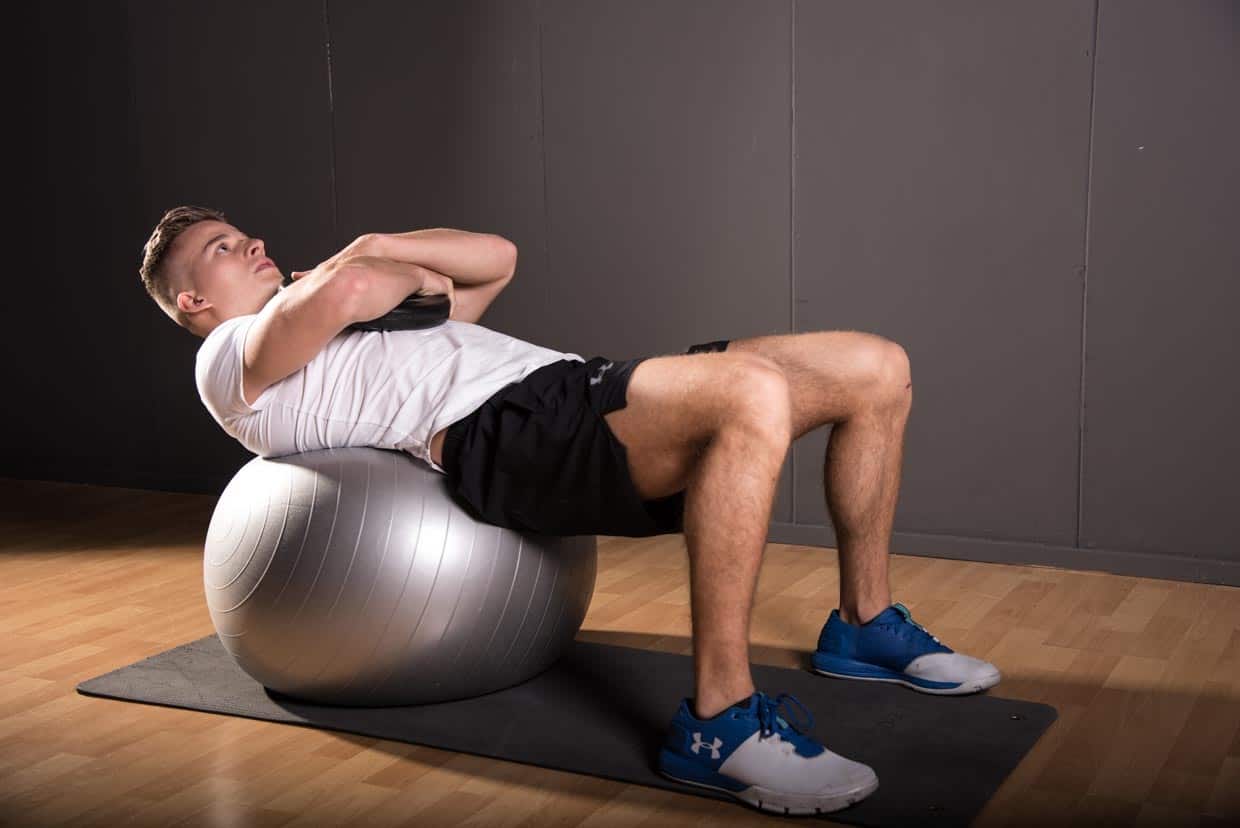
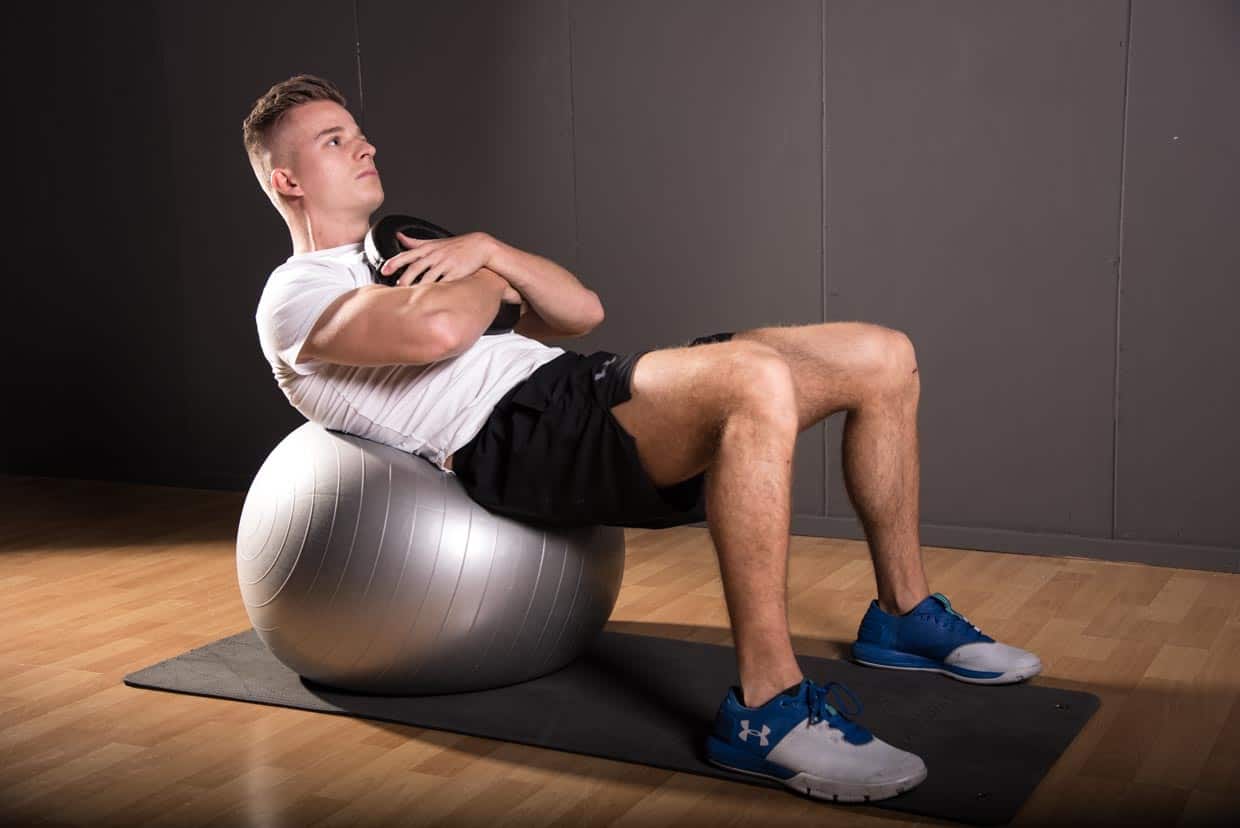
Weighted Crunch on Stability Ball execution
-
1
Lie with your back on the stability ball with a weight on your chest. Ensure that the ball is positioned in the natural curve of your back. Place the weight as high on your chest as possible.
-
2
Place your feet flat on the floor.
-
3
Cross your forearms over your chest.
-
4
Straighten your back and then round it by bringing your chest toward your pelvis.
-
5
Hold the tension for 1 to 2 seconds.
-
6
Slowly return your chest backward and downward.
Weighted Crunch on Stability Ball
Active muscles:
- Rectus abdominis
- External oblique
- Internal oblique
- Transversus abdominis (corset muscle)
Weighted Crunch on Stability Ball technique
Do not place the weight too low on your chest or even on your abdomen. It then adds little resistance, like placing a weight in the middle of a seesaw.
In addition to the stabilizing muscles at the sides having to work harder because of the ball, the involvement of the leg muscles also changes.
Leg muscles
During the exercise, one of the upper-leg muscles is often also engaged unconsciously. The rectus femoris is one of the quadriceps muscles. It is the only quadriceps muscle that crosses not only the knee joint but also the hip joint.
The rectus femoris brings the thigh toward the pelvis and the lower part of the spine, and vice versa. It is a hip flexor and therefore brings the thigh forward from the hip joint. This also happens when the torso is brought too far toward the thigh during an abdominal crunch, causing it to begin to resemble a sit-up.
On a stability ball, you are less inclined to tilt from the hips, so the rectus femoris is also used less during the active movement.
However, the leg muscles have to work harder to stabilize than during a normal crunch. The hamstrings and calves, for example, prevent you from rolling off the ball.
Greater range of motion
The range of motion also changes on the stability ball. Your back does not lie flat on the floor but tilts backward due to the curvature of the ball (hyperextension). You therefore move from an arched position to a straight position and then continue to a rounded back. You skip the first step during normal crunches.
Bosu Ball as an alternative
The Bosu Ball can be used as an alternative: a half ball with a flat surface on the underside. This preserves the greater range of motion, while the legs and obliques have to work less hard to stabilize.
Run your fitness business with more structure
- Planning, member management and coaching in one platform
- Built for coaches, studios and gyms
- Fewer separate tools, more overview