V-Up
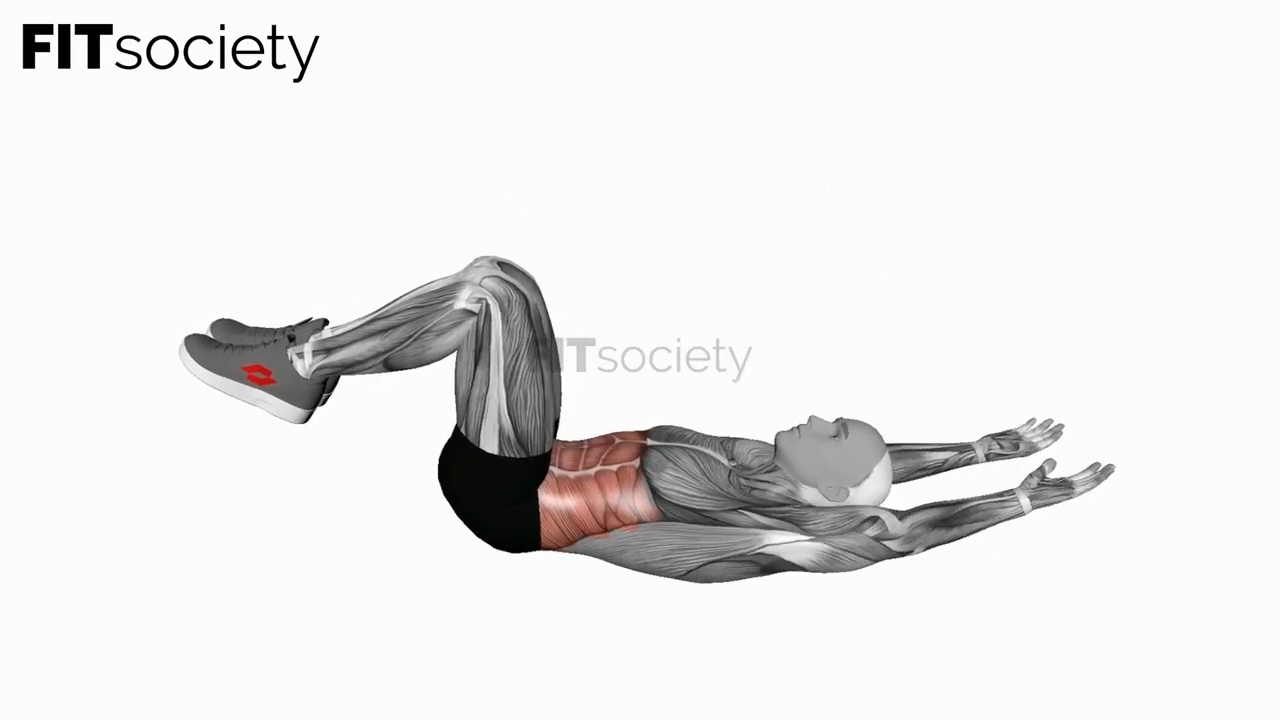
The V-Up is a combination of the Sit Up and Lying Leg Raise. It is a relatively difficult variation that should be avoided by beginners and/or people with lower back problems.
The rectus abdominis (the basis of a ‘six-pack’) draws the sternum toward the pelvis by rounding the back. The oblique abdominal muscles on the sides stabilize the core by limiting lateral tilting and rotation. The transverse abdominis (beneath the oblique abdominal muscles) draws the abdominal wall backward and thus acts as a natural weightlifting belt to stabilize the core.
Hip flexors in the legs and pelvis work to raise the legs.
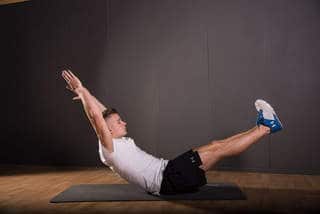
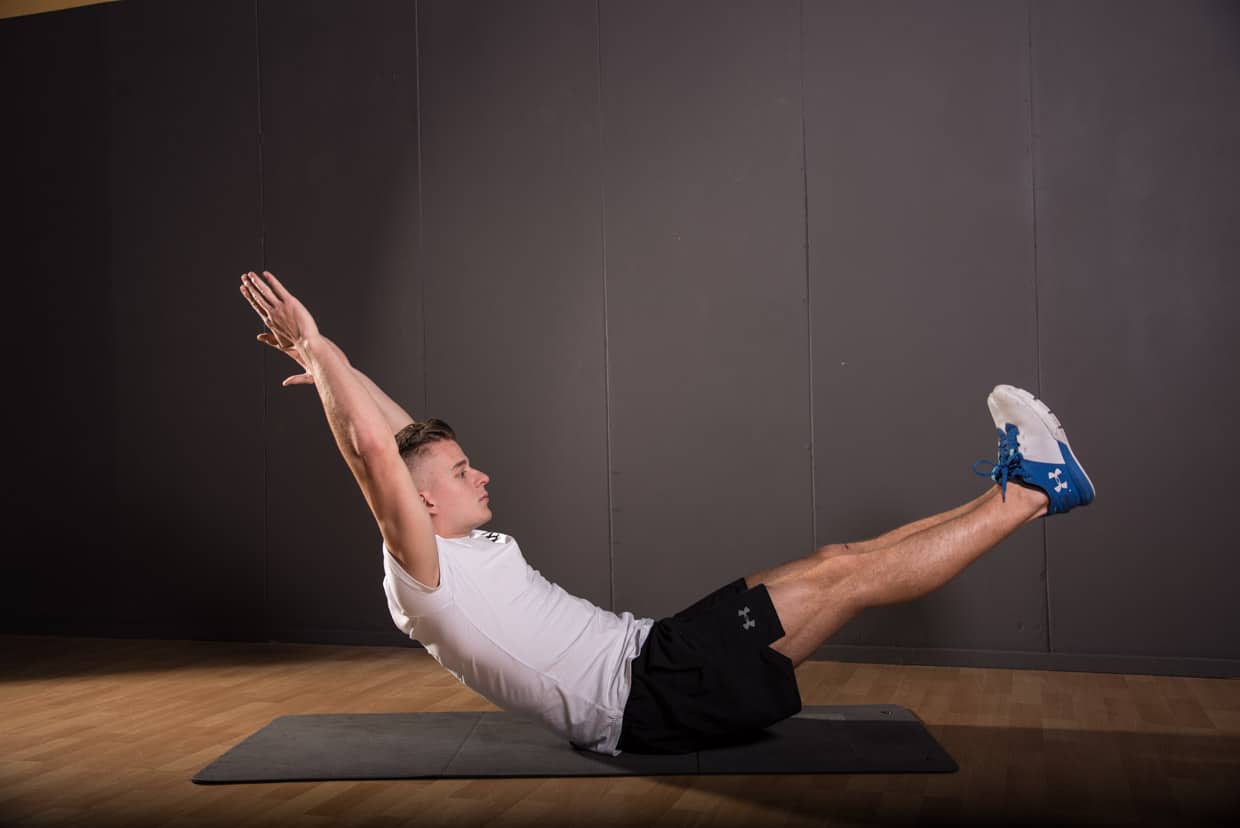
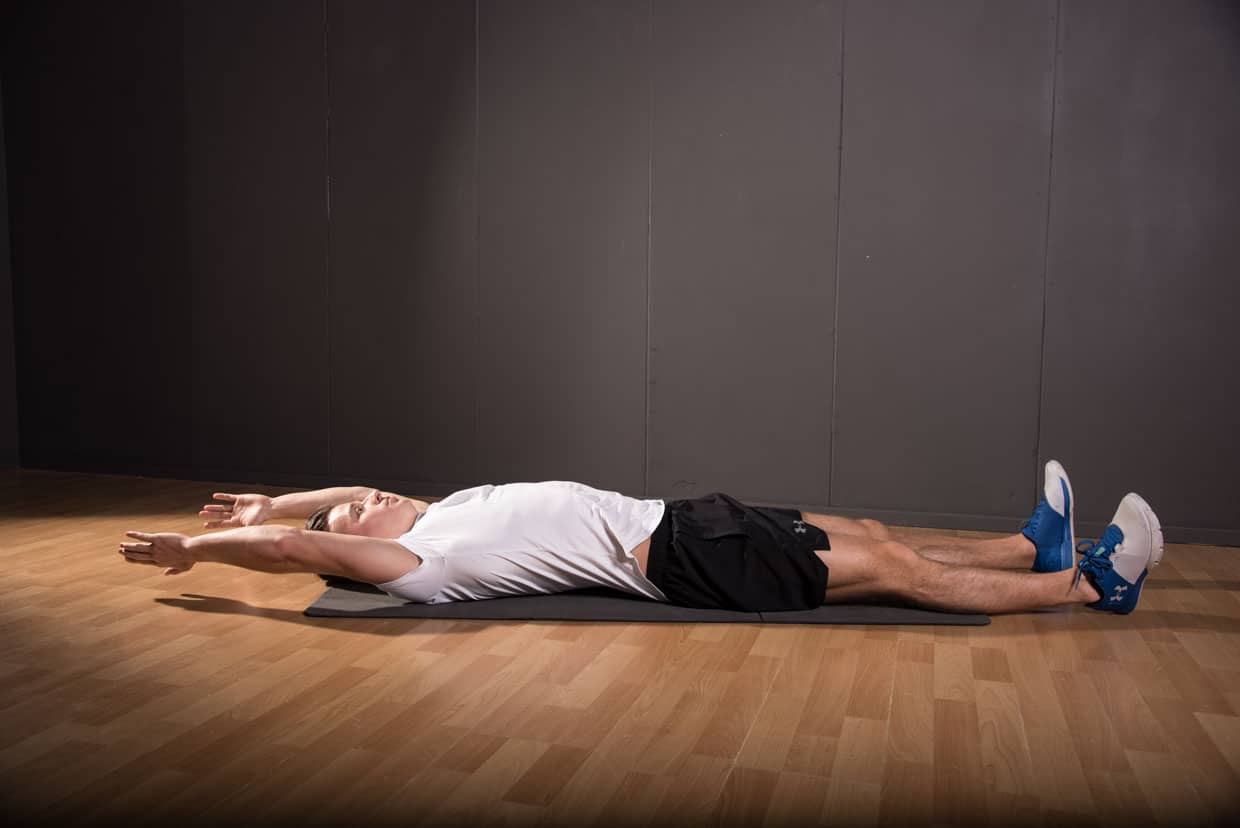
V-Up execution
-
1
Lie on your back on the floor.
-
2
Extend your hands straight upward.
-
3
Bring your chest toward your pelvis by contracting your abdominal muscles. Then raise your entire upper body slightly.
-
4
At the same time, raise your legs to form a ‘V’ with your legs and upper body. This brings your extended hands closer toward your feet.
-
5
Hold the tension for 1 to 2 seconds.
-
6
Slowly return to the lying position.
V-Up
Active muscles:
Abdomen:
- Rectus abdominis (straight abdominal muscle)
- Obliquus externus abdominis (external oblique muscle)
- Obliquus internus abdominis (internal oblique muscle)
- Musculus transversus abdominis (transverse abdominal muscle, or ‘corset muscle’)
Pelvis (depending on execution):
- Psoas major
- Iliacus
Legs (depending on execution):
- Rectus femoris
- Sartorius
V-Up technique
Try not to move from your shoulders and arms. Your arms remain perpendicular to your torso and move toward your feet due to the tilting of your upper body and legs.
Train your abs or legs?
When training the abs, muscles in the pelvis and upper legs are often also engaged unconsciously. The rectus femoris is one of the quadriceps muscles. It is the only quadriceps muscle that crosses not only the knee joint but also the hip joint.
The rectus femoris brings the thigh toward the pelvis and the lower part of the spine, and vice versa. It is a so-called hip flexor and therefore brings the thigh forward from the hip joint. Shorter muscles that connect the pelvis to the thigh, the psoas major and iliacus, also play an important role in hip flexion.
If you want to place less emphasis on these muscles in the legs and pelvis, you could choose a Crunch as an alternative. This could be performed on a decline bench (lying at an incline with the head lower) if you find the regular Crunch too light.
Alternatives
- Crunches (arms down)
- Sit Ups
- Decline Crunch
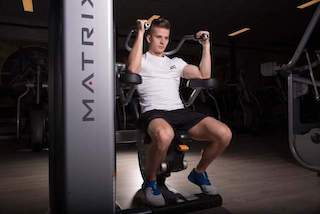
- Crunch Machine
- Cable kneeling Crunch
- Ball Crunch
Run your fitness business with more structure
- Planning, member management and coaching in one platform
- Built for coaches, studios and gyms
- Fewer separate tools, more overview